Table runners are versatile table accessories: long, narrow strips of fabric usually placed on a table for decoration. Depending on the colour, pattern and texture you choose, a table runner can make a subtle or bold change to a table setting.
A seasonal or festive runner can help shift the mood of a room, while a new design can refresh an everyday dining arrangement. Like other table linen, runners come in a range of designs and sizes. They can also help define where serving dishes, centrepieces or place settings sit on the table.
5 Ways to Decorate Your Dining Area with Table Runners
1. The Traditional Approach
Place a table runner lengthwise through the middle of the dining table. This classic layout draws attention down the table and leaves room for serving dishes or a centrepiece along the runner. You can also use more than one runner along the table rather than limiting the arrangement to the centre. It is a useful approach when you want to emphasise the length of the table.
2. The Width-wise Approach
For a modern variation, place runners across the width of the table rather than along its length. Each runner can sit in front of a place setting, much like an extended placemat. This arrangement can create clear visual sections across the table and works especially well when you want to highlight individual settings.
3. The Shorter Approach
A shorter runner placed in the middle of the table creates a focused setting without covering its full length. It keeps more of the tabletop visible while giving a centrepiece, bowl or serving arrangement a defined base. Choose the length according to the table and the amount of surface you would like to leave uncovered.
4. The Linen-on-Linen Approach
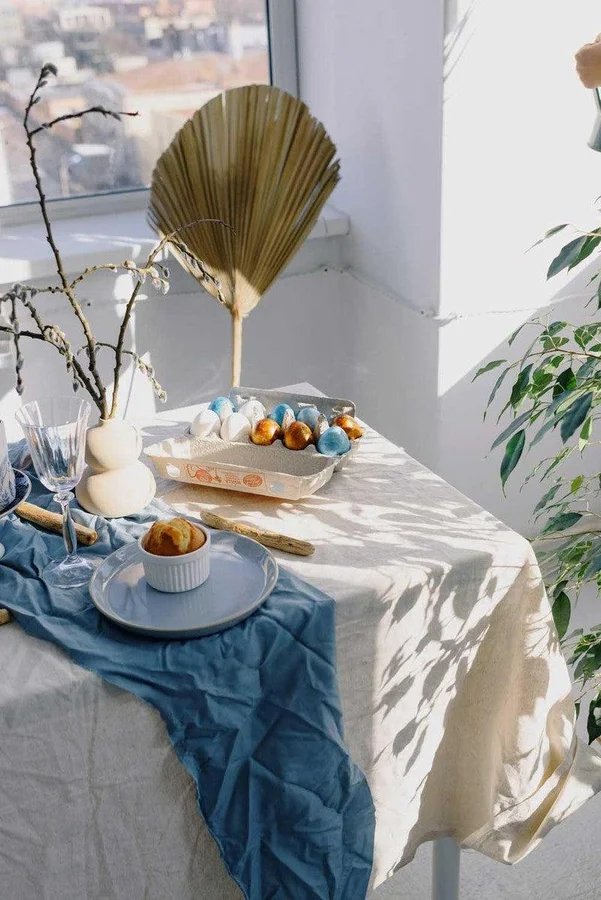
Layer a runner over a tablecloth for a fuller table setting. Contrast colours, patterns or textures so that both pieces remain distinct; for example, a patterned runner can stand out against a plain tablecloth. Before setting the table, check that the layers still leave enough room for place settings and serving dishes.
5. The DIY Approach
There is no single rule for styling a runner. Try two runners in an X formation, place one diagonally across the table, or position one slightly off-centre. Circular, square and rectangular tables all invite different arrangements, so experiment with what suits your table and the occasion.
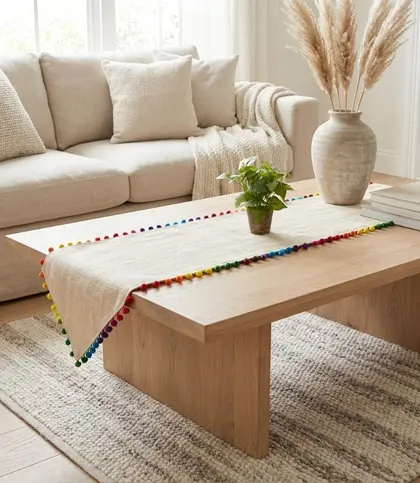
Table runners can suit modern, traditional, vintage or relaxed settings. Their use is not limited to dining tables: a centre table, workstation, study table or side table can also be styled with a runner. When choosing one, check the product page for dimensions and care instructions, then consider how it will work with your table shape and tableware.
Explore table runner options
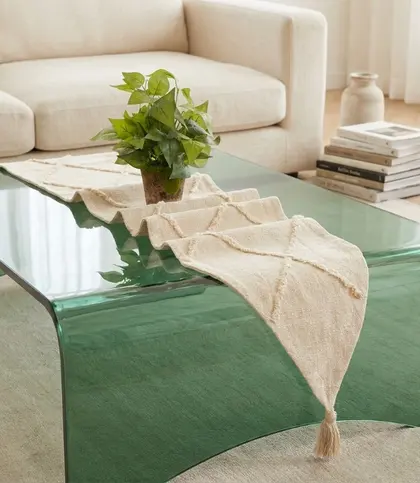
For a classic lengthwise setting, a crosswise arrangement or a layered look, compare these table runners. Check dimensions and care instructions on the product page before choosing.
₹588
₹1,199
51%OFF
₹588
₹1,199
51%OFF

₹499
₹999
50%OFF
Frequently Asked Questions
1. How do you decorate a dining table with a runner?
Start by measuring your table and deciding whether the runner will go lengthwise, crosswise or diagonally. Coordinate it with your tableware and any centrepiece, and leave enough clear space for diners and serving dishes.
2. What is a table runner, and how is it different from a tablecloth?
A table runner is a long, narrow piece of fabric placed along or across a table. It leaves much of the tabletop visible. A tablecloth covers a larger portion of the table and can also be used beneath a runner for a layered look.
3. Why use a table runner in a dining area?
A runner can add colour, pattern or texture to a dining setting, help frame a centrepiece and make it easy to vary the look of the table for different occasions.
4. How do I choose the right table runner for my dining table?
Consider the table’s shape and dimensions, the placement you plan to use, and how the colour or pattern works with your tableware. Review the product-page dimensions and care guidance before making a choice.
5. What are some creative ways to arrange a table runner?
Try a centred lengthwise placement, a diagonal arrangement, crosswise runners at individual settings, a shorter runner beneath a centrepiece, or two runners arranged in a crisscross pattern.
6. How do I care for and clean my table runner?
Follow the care instructions supplied with the runner. Deal with spills promptly where appropriate, store it clean and dry, and use the recommended washing, drying and ironing method for its fabric.
Related Reading
Keep exploring