Quick Answer
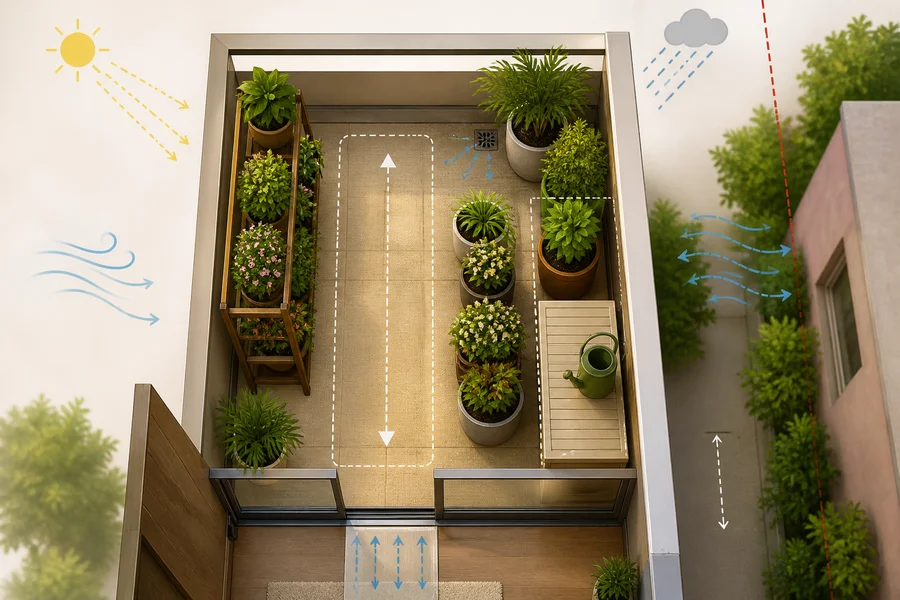
The best garden balcony design starts with constraints, not decoration. Measure the usable area, protect a clear route for entry and maintenance, assess sun, wind, rain and drainage, then add only the planter, stand, storage and seating zones you can safely access and maintain.
Definitions
Usable floor space
The area that remains available after accounting for doors, drains, fixed fixtures, access points, and the walking route.
Vertical space
Usable wall or corner height for freestanding plant stands or approved vertical systems, without assuming that walls, façades, railings, or shared structures can carry added weight.
Circulation path
A clear route to enter, exit, access drains and utilities, water plants, and use the balcony safely.
Maintenance zone
A small accessible area reserved for watering, pruning, cleaning, checking drainage, and moving containers when required.
Constraint-first planning
A layout method that resolves safety, access, light, weather, drainage, and maintenance limits before selecting decorative products.
Garden Balcony Design: Start With the Space You Actually Have
A balcony can look inviting without being packed with plants. In fact, a visually full arrangement may become difficult to water, clean, move through or manage during heavy rain and wind. The most useful design is one that supports everyday use rather than one that only looks complete on day one.
Use a simple decision sequence: measure the balcony, classify its conditions, mark access, create practical zones, place containers, and review the arrangement after watering or bad weather. This guide helps with layout planning; it does not provide structural approval, load certification or permission to alter a building.
- Prioritise entry, exit, drain access and ventilation before decorative features.
- Choose the smallest layout that meets your gardening needs.
- Treat every balcony as site-specific: light, wind, heat, rain and building rules can differ even within one apartment complex.
1. Measure the Balcony Before Choosing Planters
Measure the internal length and width of the balcony rather than relying on an advertised property size. Then map features that reduce usable area: the door swing, columns, drains, taps, electrical points, railings, fixed cabinets and any utility equipment.
Mark a continuous walking route first. You should be able to enter, leave, water plants, reach service points and clean the floor without squeezing around containers. The remaining area is your potential planting space, not the entire floor.
Record available corner and wall height if you are considering a freestanding stand. Do not assume that a wall, railing, façade, pipe or shared structure is suitable for attachment. Before buying, use removable tape, newspaper or paper cut-outs to test the footprint of pots, saucers and stands.
- Measure the width of the door opening and its swing area.
- Locate the drain and keep a direct route to it.
- Include saucers, plates and stand legs when testing a planter footprint.
- Leave room to lift, rotate or temporarily move containers.

From ₹399
₹599
18%OFF
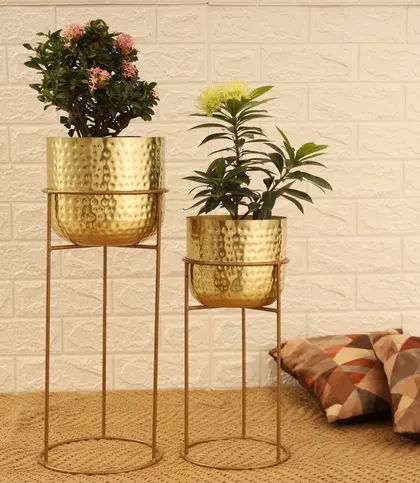
Pots & Planters

From ₹2,969
₹4,999
41%OFF
 FastDelivery
₹389
₹899
57%OFF

From ₹807
₹1,999
60%OFF
₹1,899
₹2,999
37%OFF

₹1,977
₹2,399
18%OFF
 FastDelivery
₹1,472
₹2,139
31%OFF

₹2,744
₹4,209
35%OFF

From ₹2,969
₹4,999
41%OFF
2. Match the Layout to Balcony Shape and Conditions
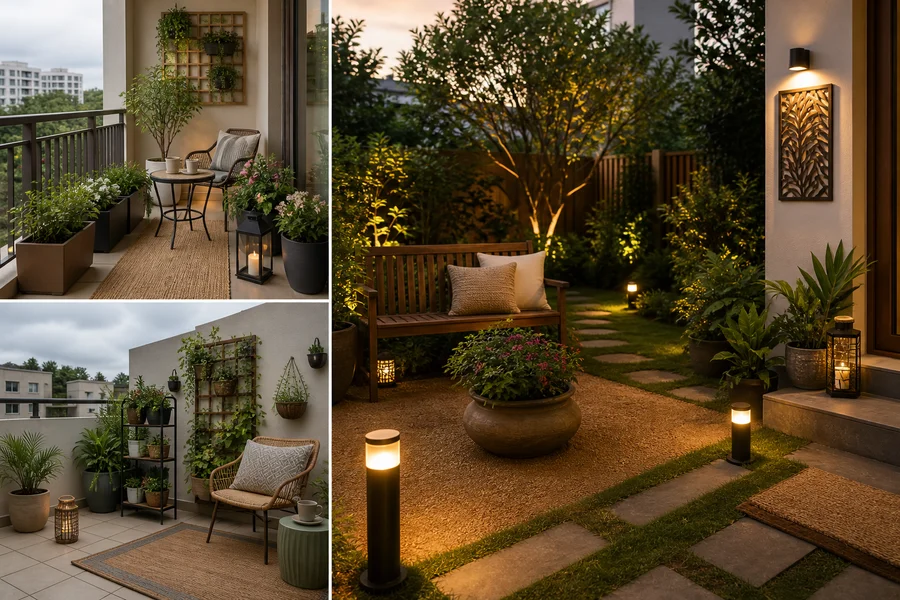
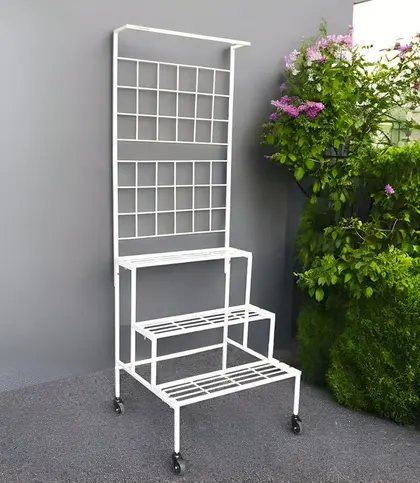
A narrow balcony usually works best with one planting line along a side or protected end, keeping the longest side open as the circulation route. A compact freestanding stand can add height without turning the centre of the balcony into an obstacle course.
For a square balcony, create a corner planting zone and retain a separate open-use or compact seating area. Avoid automatically filling every edge; a clear central area often makes a small balcony easier to use and clean.
A utility balcony needs a more restrained approach. Keep washing, drying, service equipment and drain access clear, and choose movable containers only where they do not interfere with these functions. In rented homes, freestanding pieces are generally easier to remove than drilled or permanent changes, but building and landlord rules still apply.
Sun, shade, wind and monsoon exposure should change the plan. Put sun-tolerant containers where they do not overheat the walkway or reduce airflow. In shade, use fewer, well-spaced containers and assess the actual light before committing. In windy locations, favour stable, low-centre-of-gravity arrangements; in rain-exposed locations, allow for splash, overflow, drying time and clear drains.
- Narrow: use a single-side planting line and preserve the long route.
- Square: group plants in a corner rather than crowding the perimeter.
- Utility: protect service access before adding greenery.
- Windy: avoid tall, unsecured or top-heavy arrangements.
- Monsoon-exposed: plan for runoff, floor cleaning and corrosion checks.
 FastDelivery
Sold Out
₹1,044
₹4,299
76%OFF
 FastDelivery
₹2,266
₹5,999
62%OFF
3. Build the Balcony Garden in Practical Zones
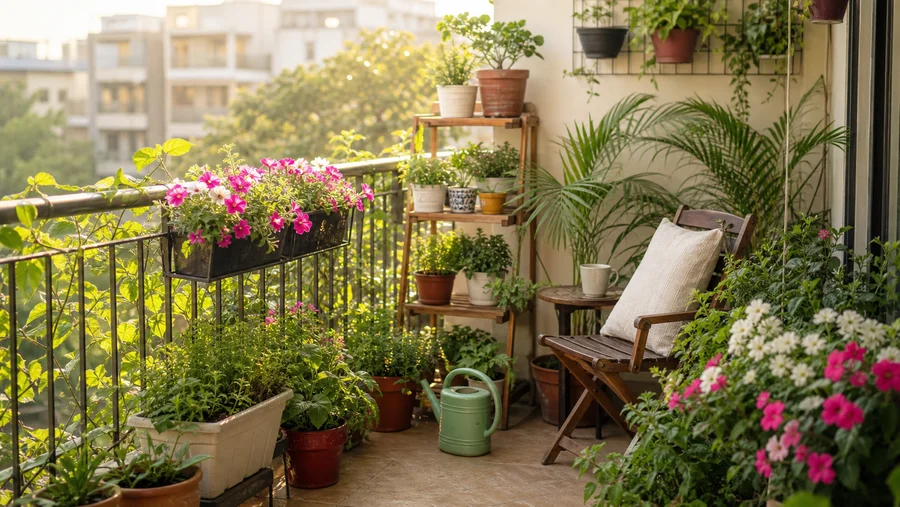
Divide the available area into only the zones your household will use. A container zone keeps pots with similar watering needs together and places them within easy reach. This reduces repeated trips across the balcony and makes missed watering less likely.
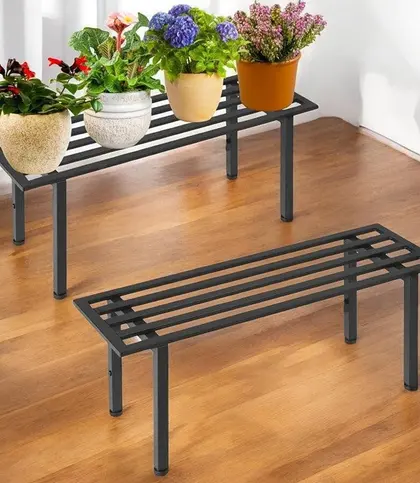
A vertical greenery zone can make a compact balcony feel layered, but it should remain freestanding or use only an approved solution. It must not obstruct daylight, ventilation, neighbour boundaries, access or maintenance. Add seating only after circulation and plant care access are protected.
Reserve a dry, accessible storage corner for small gardening-related items if needed, keeping it away from exits, drains and service equipment. Also retain a maintenance zone: enough free space to water, wipe the floor, rotate containers, inspect damp patches and move a pot when required.
- Container zone: group reachable pots by watering routine.
- Vertical greenery zone: use stable freestanding height variation.
- Seating zone: add only if it does not compromise circulation.
- Storage zone: keep small items dry, accessible and away from exits.
- Maintenance zone: preserve room for cleaning and rearranging.

From ₹809
₹1,050
21%OFF
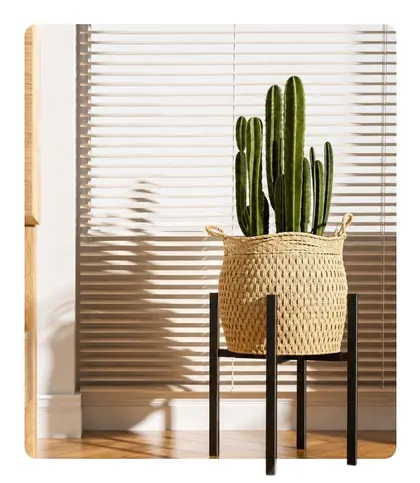
Planter Stand
 FastDelivery
₹801
₹3,999
80%OFF
 FastDelivery
₹4,909
₹12,199
60%OFF
 FastDelivery
₹2,849
₹8,199
65%OFF
From ₹809
₹1,050
21%OFF
FastDelivery₹2,266
₹5,999
62%OFF
 FastDelivery
₹1,514
₹4,599
67%OFF
 FastDelivery
₹4,909
₹12,199
60%OFF
 FastDelivery
₹1,339
₹3,999
67%OFF
4. Place Pots for Light, Access, Privacy, and Neighbour-Friendly Use
Keep containers inside the balcony boundary and away from edges where a pot could tip, fall or spill. Do not block doors, fire access, drains, ventilation openings, utility equipment or windows needed for daylight and airflow.
Layered height can work well when it is stable and accessible. Keep lower containers toward a side or front area where they remain easy to inspect, and place taller plants nearer a protected wall or corner when light and stability allow. Avoid turning a railing into a display structure unless permissions and professional assessment specifically support an installation.
For privacy, aim for partial and permeable greenery rather than a dense wall that restricts ventilation or daylight. Grouping containers can make watering more efficient, but do not create one concentrated heavy cluster without checking building guidance and seeking qualified advice when weight or structural condition is uncertain.
If you rent, a movable arrangement gives you more flexibility for repairs, cleaning and changing house rules. Confirm landlord, society or building permissions before installing anything that changes the balcony permanently.
- Keep all pots clear of door movement and drain access.
- Position taller elements in protected locations, not at exposed edges.
- Use greenery to soften views without sealing off airflow.
- Check that watering or fallen leaves will not affect neighbouring homes.
Outdoor & Balcony Finds
 FastDelivery
₹89
₹479
81%OFF
 FastDelivery
₹621
₹1,399
56%OFF
FastDelivery₹4,909
₹12,199
60%OFF

₹949
₹1,199
21%OFF
 FastDelivery
₹291
₹3,999
93%OFF
 FastDelivery
₹1,726
₹5,391
68%OFF

₹945
₹1,195
21%OFF
FastDelivery₹801
₹3,999
80%OFF
5. Plan Drainage and Low-Maintenance Care
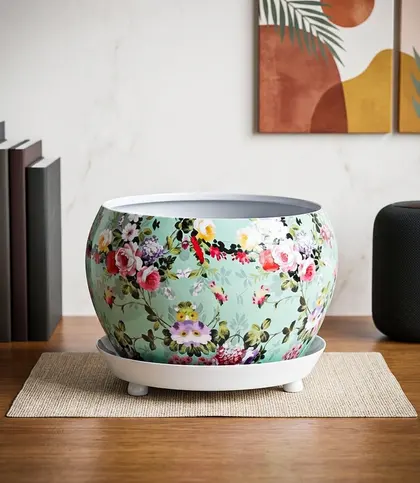
Drainage planning prevents a garden layout from becoming a floor-cleaning problem. Use appropriately sized saucers or planters supplied with plates where suitable, but empty standing water promptly. These measures can help manage runoff; they do not guarantee that all leakage, staining or overflow will be prevented.
Keep drainage outlets clear at all times. Do not direct runoff toward neighbours, façades, electrical points or shared areas, and never seal or obstruct a required drain. Before finalising placement, water containers carefully and observe where water travels. Repeat the check during monsoon conditions when practical.
If daily care time is limited, choose fewer containers, group them by watering needs and ensure every plant can be reached without moving furniture. Material is also a maintenance decision: lighter plastic pots may be easier to reposition, while terracotta provides a natural look but needs more careful handling when moving and cleaning.
- Check plates and saucers after watering so water does not remain stagnant.
- Leave a clear path for floor wiping and drain inspection.
- Keep leaves, soil and pot feet from collecting around the outlet.
- Choose an arrangement you can maintain during rain, travel or busy weeks.
₹832
₹1,599
48%OFF

₹1,253
₹1,599
22%OFF
6. Use This Balcony Layout Checklist Before Buying
Run through this checklist with your proposed arrangement before purchasing more containers or accessories. If a layout fails an access, drainage or maintenance check, simplify it before considering style.
Style should be the final filter, not the first one. Once the practical plan works, you can choose a minimal, natural, modern or bohemian direction through compatible materials, colours and proportions.
- Space: Have you measured every pot, saucer and stand footprint?
- Access: Can someone enter, exit, water, clean and reach the drain comfortably?
- Conditions: Does each proposed location match the actual sun, shade, wind, heat and rain exposure?
- Neighbour impact: Could water, leaves, shade, airflow or overhanging objects affect others?
- Care: Can the household realistically maintain every container where it sits?
- Flexibility: Can the arrangement move for cleaning, repairs, severe weather or changing rental conditions?
- Style: Does the final look suit the home without reducing usability?
7. Complete Safety and Permission Checks
Do not judge a balcony’s load capacity by its size or appearance. The combined weight of containers, wet growing media, plants, stands, stored items and water can be significant. When weight limits or structural condition are uncertain, consult the building authority or a qualified professional.
Do not attach heavy items to railings, façades, pipes or shared structures without permission and professional assessment. Freestanding items also need sensible placement: children and pets should be kept away from unstable, sharp, breakable, toxic or easily tipped arrangements.
Keep exits, fire-safety equipment, service access and ventilation routes clear. Check landlord, apartment association, municipal and building rules before making permanent changes or positioning items near common areas.
- Review stability after arranging, watering and cleaning.
- Remove or relocate items that tip, crack, leak or obstruct access.
- Do not rely on generic claims about balcony weight capacity.
- Recheck permissions if your layout changes from movable pots to any fixed installation.
The Practical Garden Balcony Design Decision
Choose the smallest balcony garden layout that supports your household’s actual gardening and everyday-use needs while preserving access. For many small or rented balconies, a modest group of movable floor planters and one stable freestanding stand is a sensible place to begin.
Select products by footprint, stability, material, drainage support and ease of movement rather than appearance alone. Add storage or further styling only when the maintenance routine calls for it. After the first watering, and again during strong wind or heavy rain, reassess the layout before treating it as final.
- Measure and mark the route before shopping.
- Start with movable, reachable containers.
- Keep drains, exits, airflow and utilities clear.
- Expand only after observing real site conditions.
Final Verdict
- A practical garden balcony design protects circulation, drain and utility access before it adds greenery or décor.
- For most small or rented balconies, begin with a modest group of movable planters and a stable freestanding stand, then observe watering, wind and monsoon conditions.
- Choose products only after the layout has passed access, maintenance, neighbour-impact, safety and permission checks.
FAQs
How should I measure a balcony for a garden layout?
Measure the internal length and width, then mark door swings, columns, drains, taps, electrical points, fixed storage, utility equipment and the clear route needed for entry, cleaning and watering. Test planter footprints with paper or removable floor markers before buying.
What is the best garden balcony design for a narrow balcony?
A narrow balcony usually benefits from a single planting line along one side or end, with the longest possible walking route left open. Use compact, freestanding height variation instead of filling the centre or both sides with pots.
How do I arrange planters without blocking the walking path?
Mark the circulation path first and treat it as non-negotiable. Place containers only in the remaining space, while leaving enough room to reach doors, drains, service points and every plant for watering and cleaning.
Where should I place pots on a windy or sunny balcony?
On a sunny balcony, position containers so they do not obstruct ventilation or make the walkway uncomfortable. On a windy balcony, use stable, low-centre-of-gravity arrangements in protected locations and avoid unsecured tall or top-heavy items.
How can I manage balcony planter drainage without staining walls?
Use correctly sized saucers or plate-supported planters where suitable, empty standing water, and keep drains clear. Test water flow before finalising the layout, especially in monsoon weather, and do not direct runoff towards walls, electrical points, neighbours or shared areas.
Can I use vertical planters in a rented apartment balcony?
Freestanding tiered stands are generally more flexible than permanent installations in a rented home. Do not assume you can attach items to walls, railings, façades or pipes; confirm permissions with the landlord or building management first.
How much maintenance does a balcony garden need?
Maintenance depends on the number of containers, exposure to heat and rain, plant needs and how easy the layout is to reach. A smaller grouping of accessible pots is usually easier to water, clean, inspect and rearrange than a densely packed display.
What balcony safety checks should I make before adding planters?
Check access to exits, drains, utilities and ventilation; assess tipping and fall risks; consider children and pets; and verify building, landlord or society rules. Do not assume the balcony can support a particular combined load, and seek qualified advice if structural capacity is uncertain.
Keep exploring