Quick Answer
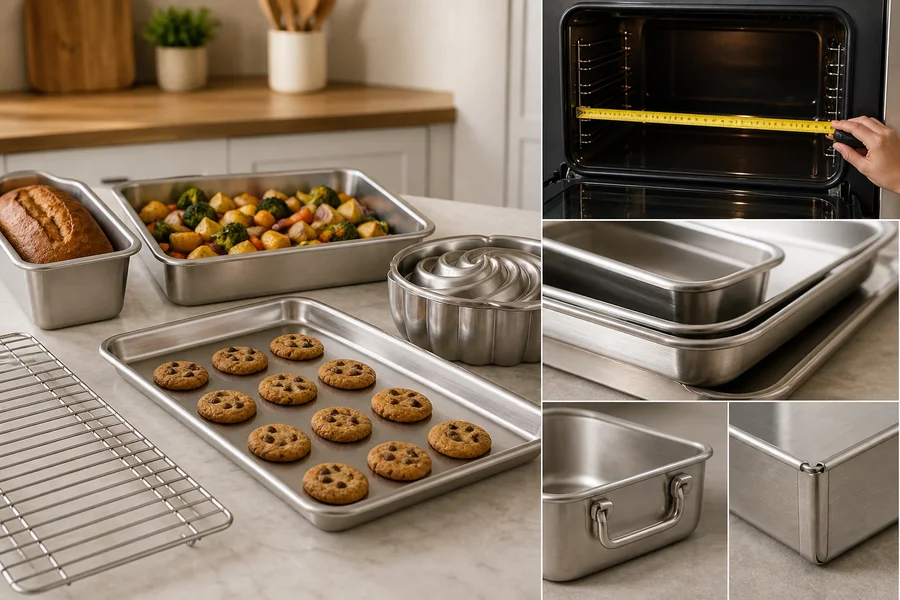
The best stainless steel bakeware is the type that fits your task and oven: choose a sheet for broad, shallow baking, a tray for raised-edge cooking or roasting, a tin or mould for batters, and a rack for specified support or airflow. Before buying, verify usable dimensions, steel specification, construction, temperature limits and care instructions. Stainless steel is durable and reusable, but it is not inherently non-stick and may not be the best material for every recipe.
Definitions
Baking sheet
A generally flat oven-safe surface used for cookies, pastries, vegetables, roasting, or other foods that do not require deep sides.
Baking tray
An oven vessel with raised edges that helps contain food, juices, or batters and can suit general baking or roasting.
Baking tin
A shaped or straight-sided vessel designed for cakes, loaves, brownies, or similar batters.
Baking mould
A moulded bakeware piece used to create a particular cake, bread, dessert, or decorative shape.
Oven rack
A slatted or perforated support that holds bakeware or food inside the oven and can assist airflow, positioning, or cooling when specified for those uses.
Steel grade
The manufacturer’s identified stainless steel composition or grade; it should be treated as a specification to verify rather than an automatic guarantee of performance or safety.
Best Stainless Steel Bakeware: Start With the Task
There is no one best stainless steel bakeware piece for every kitchen. The right choice depends on what you bake most often, the usable space in your oven, the number of portions you make, and how the piece is constructed.
This guide focuses on oven bakeware: stainless steel baking sheets, trays, roasting trays, tins, moulds and racks. It does not cover general cookware such as kadais, saucepans or frying pans.
Stainless steel can be a practical option when you want a rigid, reusable piece that can stand up to regular use. It is not automatically non-stick, however, and its baking results can differ from aluminium, glass, silicone and coated bakeware.
- Start with the recipe, then choose the form.
- Measure your oven before deciding on a size.
- Read the exact product specification rather than relying on appearance alone.
Match Stainless Steel Bakeware to Common Baking Tasks
Choosing the right shape is more useful than looking for a universal material winner. A broad, shallow piece behaves differently from a deep-sided tray or a loaf tin, so let the food determine the starting point.
Baking sheets suit cookies, biscuits, pastries, flat vegetables and other foods that benefit from an open surface. Baking trays and roasting trays are useful when raised edges are needed to contain food, juices or drips during oven cooking.
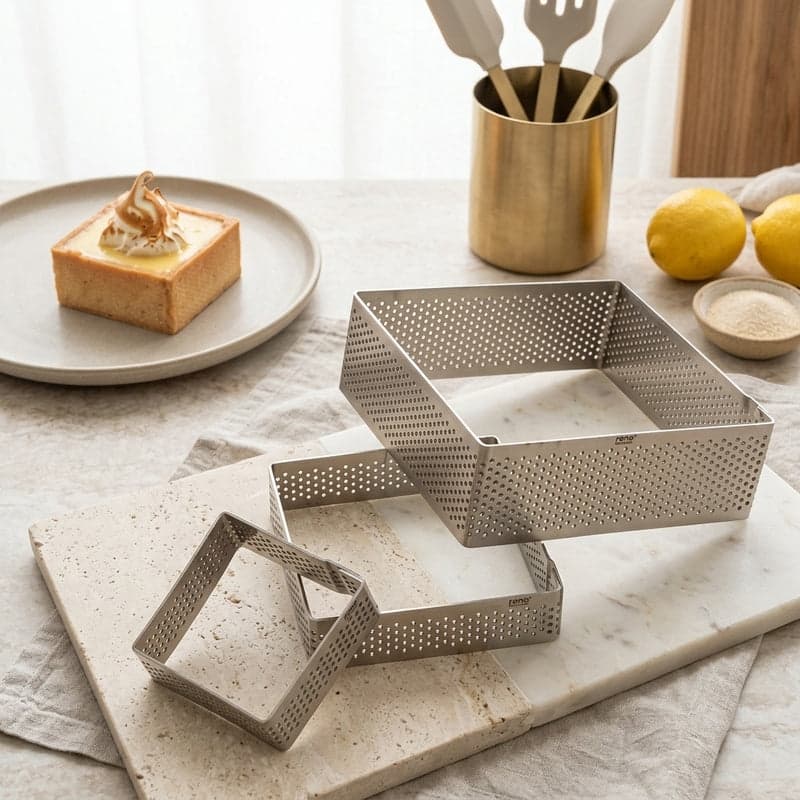
For cakes, brownies, breads and loaves, a baking tin gives the batter structure. Moulds are better suited to shaped cakes, breads and presentation-led bakes, but check how easily the recipe will release and how accessible the details are for cleaning. Use an oven rack only where the product is specifically designed for oven support, airflow, positioning or cooling.
- Choose a sheet for flat foods and batch baking.
- Choose a tray or roasting tray for containment and deeper sides.
- Choose a tin or mould when the recipe depends on a defined shape.
- Choose a rack only for its stated oven or cooling use.
Choose the Right Shape, Capacity, and Dimensions
Measure the usable oven cavity rather than relying on a nominal oven size. Note the width, depth and height available at the rack position you use, along with door clearance and any protruding rails. A tray that enters the oven may still be awkward to turn or remove.
Compare internal and external dimensions. Handles, thick rims and rolled edges can reduce usable base area or affect fit. Side height matters too: a shallow sheet is efficient for flat foods, while a deeper tray is more suitable when juices or a larger volume need containing.
Match capacity to your normal batch size without crowding the food. Space around pieces can matter for airflow, particularly for cookies, vegetables and roasting. Also consider where the bakeware will live when it is not in use; oversized pieces can be inconvenient in both the oven and the cupboard.
- Check oven width, depth, height and rack clearance.
- Compare usable internal space as well as outer dimensions.
- Choose flat, shallow, deep, round, square, loaf or shaped formats based on your regular recipes.
- Confirm that storage space accommodates the rim, handles and overall footprint.
What to Check: Grade, Thickness, Construction, Rims, Seams, and Finish
Look for a clearly stated stainless steel or food-grade steel description. A vague material label is not proof of a particular grade, composition or performance level, so use the manufacturer’s wording as the reference point.
Thickness can be a useful indicator of rigidity, but it is only one part of the design. A thicker piece is not automatically better at every baking task; shape, base design, dimensions and construction also affect handling and heat response.
Examine the visible details. A stable base, neatly formed rim, secure joins and smooth seams can make a piece easier to lift, wash and store. A smooth finish with few residue-trapping crevices is generally more practical, provided it is cared for according to the maker’s instructions.
Weight and rigidity can offer helpful clues when handling a piece in person, but they should not replace verified specifications about material, construction or intended use.
- Verify the stated steel description or grade where supplied.
- Assess thickness alongside shape and construction.
- Check that rims, seams and joins feel stable and well finished.
- Avoid treating weight alone as evidence of quality or performance.
Oven Compatibility, Handling, Sticking, Warping, and Browning
Confirm the stated oven compatibility and maximum temperature before use. Do not assume a stainless steel item is suitable for every oven mode, grill, broiler, dishwasher, stovetop or open-flame application. These limits depend on the individual design and manufacturer guidance.
Stainless steel is not inherently non-stick. Depending on the recipe, common release measures may include greasing, lining with parchment or using another method specified for the bake. These steps can help, but no method prevents sticking in every situation.
Browning is shaped by the recipe, oven temperature, rack position, airflow, material, thickness and the condition of the baking surface. Stainless steel should not be expected to guarantee even, faster or deeper browning. If a particular browning profile is important, compare materials based on the recipes you make most.
Warping risk also varies. Construction, dimensions, thickness, high heat and sudden temperature changes can all matter. Let hot bakeware cool as directed before washing, and avoid thermal shock. For safer handling, look at rim shape, handle design, balance and weight, then use suitable oven gloves when removing hot pieces.
- Verify the temperature limit and approved oven modes.
- Plan for greasing, lining or other release practices where needed.
- Avoid abrupt temperature changes with hot bakeware.
- Check that the piece can be lifted securely with oven gloves.
Stainless Steel vs Aluminium, Glass, Silicone, and Coated Bakeware
Stainless steel is worth considering when you value a rigid, reusable piece with a durable-feeling structure. Its trade-offs can include a need for more deliberate release practices and a different heat response from other materials.
Aluminium can be a better fit when quick heat response or a certain browning behaviour is your priority. Check its gauge, finish, care requirements and whether it has a coating. Glass can suit bakes where visibility and heat retention are useful, but it is heavier and should be used only within its stated oven and thermal-shock guidance.
Silicone can be useful for selected moulding tasks because of its flexibility and release characteristics. It may need a supporting tray for stability, and its temperature limit and cleaning requirements should be checked. Coated bakeware can offer easier release while the coating remains intact, but care restrictions, utensil guidance, temperature limits and warranty terms deserve close attention.
The best material is the one that suits the recipe, desired release, browning preference, storage space and maintenance routine. No single bakeware material is universally superior.
- Choose stainless steel for rigidity and reusable everyday bakeware.
- Consider aluminium for recipes where heat response is a key concern.
- Consider glass for visibility and heat retention, within its care guidance.
- Consider silicone for flexible moulds and coated bakeware for release-focused tasks.
Cleaning, Drying, Storage, and Specification Checks
Allow hot bakeware to cool in line with the manufacturer’s guidance before washing or exposing it to a major temperature change. Follow the listed cleaning method rather than assuming that every stainless steel item is dishwasher safe or suitable for abrasive cleaners.
For baked-on residue, soak the item when appropriate and use non-damaging tools that suit its finish. Dry thoroughly after cleaning to reduce water spots and prevent moisture from sitting in seams, rims or stacked surfaces.
Store sheets and trays vertically where practical, or place protective separators between stacked pieces. This can help reduce surface marks and protect rims from knocks or distortion. Before purchase, read the listing for material wording, dimensions, temperature range, care directions, included accessories and warranty coverage.
- Cool, clean and dry bakeware according to its stated care guidance.
- Use soaking and suitable non-abrasive tools for residue.
- Protect surfaces and rims when stacking or storing.
- Compare task, internal size, construction, oven limit, handles, care method, storage fit and warranty before buying.
The Practical Verdict: Which Stainless Steel Bakeware Should You Choose?
Choose a stainless steel baking sheet if broad, shallow surface area is the main need. Choose a baking tray or roasting tray if raised edges and food containment are more useful. For cakes, loaves, brownies and shaped bakes, select a tin or mould that supports the recipe’s form. Choose an oven rack only when its stated purpose is support, airflow, positioning or cooling.
Stainless steel makes the most sense when you want a rigid, reusable bakeware option and can verify that its dimensions, construction, oven limits and care needs work for your kitchen. Choose another material when faster heat response, easier release, greater flexibility, oven visibility or a particular browning profile matters more.
The final decision should rest on the exact listing and manufacturer instructions. Material labels alone do not establish fit, temperature compatibility, release performance or long-term durability.
- Sheet: cookies, pastries, flat vegetables and shallow baking.
- Tray or roasting tray: oven cooking with raised-edge containment.
- Tin or mould: cakes, loaves, brownies and shaped batters.
- Rack: specified support, airflow, positioning or cooling.
Final Verdict
- Buy stainless steel bakeware for a durable, rigid and reusable option when the exact dimensions, construction and oven limits suit your needs.
- Choose the subtype by task: sheets for flat foods, trays for contained oven cooking, tins and moulds for batters, and racks for their specified support or airflow role.
- Consider aluminium, glass, silicone or coated bakeware when their release, heat response, visibility, flexibility or browning characteristics better match the recipe.
- Always verify the individual product’s material wording, usable dimensions, care instructions and compatibility before purchase.
FAQs
Which baking tasks are best suited to stainless steel bakeware?
Stainless steel sheets can suit cookies, biscuits, pastries and flat vegetables. Trays and roasting trays are useful for foods needing raised sides, while tins and moulds support cakes, brownies, loaves and shaped bakes. Use an oven rack only when it is specified for oven support, airflow or cooling.
What size stainless steel baking tray should I buy?
Measure your oven’s usable width, depth, height and rack clearance first. Then compare the tray’s external dimensions with its internal base area and side height. Choose a size that fits your normal portion size while leaving room for airflow and safe removal.
Does stainless steel bakeware warp in the oven?
Warping can vary with construction, thickness, dimensions, heat level and sudden temperature changes. Stainless steel is not automatically warp-proof. Follow the stated temperature limit and allow hot bakeware to cool according to the manufacturer’s guidance before washing.
How can I prevent food from sticking to stainless steel bakeware?
Use a release approach that suits the recipe, such as greasing or parchment where appropriate. Stainless steel is not inherently non-stick, and results can vary with the food, surface condition, oven temperature and preparation method.
Is stainless steel better than aluminium for baking?
Neither is universally better. Stainless steel can be a strong choice for rigidity and repeated use, while aluminium may suit recipes where heat response or browning behaviour is more important. Compare the exact construction and the needs of the recipe.
Can stainless steel bakeware go in every oven?
No. Check the manufacturer’s stated temperature range and approved oven modes. Compatibility with convection, fan settings, grills, broilers, dishwashers, stovetops and open flames depends on the individual product.
How do I clean and store stainless steel bakeware?
Let it cool as directed, use the listed cleaning method, soak residue when suitable and dry thoroughly. Store pieces vertically or with protective separators to reduce scratches, trapped moisture and damage to rims.
What should I check before buying stainless steel bakeware?
Check the intended task, usable internal dimensions, external fit, steel description, construction, rigidity, rim and seam quality, handles, oven temperature limit, care method, storage fit and warranty details.
Keep exploring