


Best Cookware for Gas Stove: A Practical Buying Guide
Quick Answer
There is no single best cookware for every gas-stove kitchen. Stainless steel is a versatile everyday starting point; cast iron suits heat-retaining, high-heat cooking; hard-anodized cookware offers practical lighter handling; and coated cookware helps with lower-stick cooking and easier cleanup. In every case, choose a flat, stable base, secure handles and a pan size that matches your burner.
Definitions
Heat response
How quickly cookware heats up or cools down when the gas flame is changed.
Heat retention
How well cookware holds heat after reaching temperature; high retention can support steady cooking but may make adjustments slower.
Heat distribution
How evenly heat spreads across the cooking surface, reducing concentrated hot spots.
Triply cookware
Cookware made with multiple bonded metal layers, commonly including stainless steel and a heat-conductive core, designed to improve distribution and responsiveness.
Hard-anodized cookware
Aluminium cookware treated to create a harder surface, often chosen for practical everyday cooking and comparatively light handling.
Coated cookware
Cookware with a nonstick or other cooking surface coating over a base material; performance and care depend on the specific coating and manufacturer instructions.
Best Cookware for a Gas Stove: The Short Answer
The best cookware for a gas stove depends on what you cook, how quickly you want the pan to react to flame changes, and how much weight and maintenance suit your routine. Material matters, but construction matters just as much: a stable, flat base and sensible burner match can make a major difference to daily performance.
For a versatile everyday foundation, consider well-constructed stainless steel. Choose cast iron when strong heat retention and high-heat cooking matter more than light handling. Hard-anodized pieces can be practical for regular use, while coated pans are useful for lower-stick cooking and easier cleanup when used according to their instructions.
This guide focuses on direct gas-flame cooking. Unlike induction or electric cooking, gas delivers adjustable heat directly to the base, so burner size, flame control and pan stability deserve particular attention.
- Choose by cooking task and construction, not by a material label alone.
- Keep the flame mostly under the base rather than letting it climb far up the sides.
- A home kitchen often benefits more from a few complementary pan types than a full set in one material.
₹2,619
₹3,495
25%OFF
How a Gas Flame Affects Cookware Performance
Gas stoves offer immediate visual and manual control: raise the flame and the pan responds; lower it and the heat input drops quickly. However, the flame is concentrated rather than spread across a smooth heating zone. A thin, warped or poorly matched base can therefore develop more pronounced hot spots.
It helps to separate three ideas. Heat response is how fast a pan reacts when you change the flame. Heat retention is how long it holds temperature once hot. Heat distribution is how evenly that heat spreads across the cooking surface. A pan can be strong in one area without being the best choice in all three.
Match the pan to the burner. The active flame should heat the base rather than extend excessively around the sidewalls. An undersized vessel over a large flame can be hard to control, while a very wide pan on a small burner may heat unevenly around its edges.
- Fast response is helpful for tadka, milk and quick flame adjustments.
- Higher retention can support frying and steady, high-heat cooking.
- A level pan with good contact on the burner grate is essential for safe, comfortable stirring.
Stainless Steel, Cast Iron, Hard-Anodized, or Coated: Which Is Right?
Each material category can work well on gas when the pan is appropriately built and used for the right task. Rather than looking for a universal winner, consider how you cook most often and which trade-offs you are comfortable making.
Aluminium may appear as a core or base in different cookware designs because it conducts heat efficiently. But the overall build, including thickness, bonded layers, cooking surface and handle attachment, determines how the piece feels and performs on a gas burner.
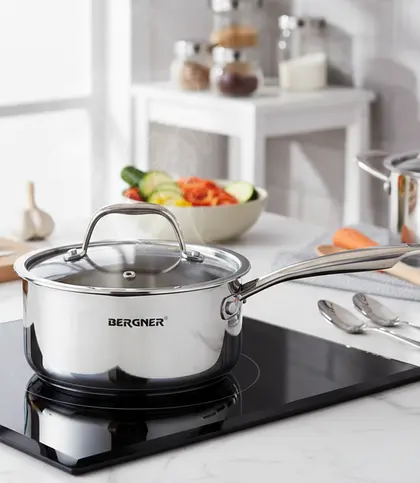
- Stainless steel: A durable, versatile choice for sautéing, curries, simmering and covered cooking. A thick or layered base can support more even heat distribution.
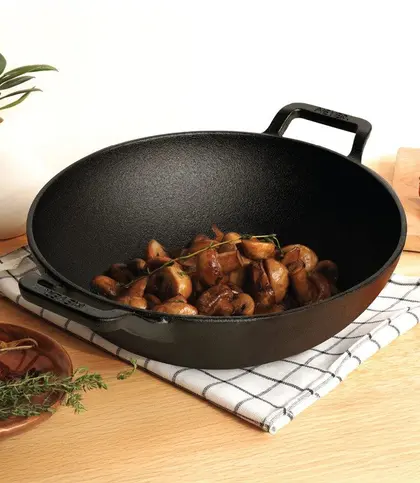
- Cast iron: Well suited to heat-retaining frying, rotis and other high-heat tasks. It is heavier and generally needs more attention than lighter alternatives.
- Hard-anodized: A practical option for everyday cooking that is often easier to lift than cast iron. Check the exact base, surface, handles and care guidance.
- Coated cookware: Helpful for delicate foods, lower-stick cooking and convenient cleanup. Use moderate heat and follow the product-specific utensil and care instructions.
₹2,767
₹3,845
28%OFF
Check the Base, Thickness, Heat Distribution, and Stability
Start by looking at the underside. A cookware base should sit flat and securely on the burner grate without rocking. A stable pan is easier to stir, lift and use with confidence, especially when it is full of hot food.
There is no single ideal thickness for every pan. Very thin bases may heat unevenly under a concentrated flame, while very heavy bases can take longer to respond when the flame changes. Look instead for construction that feels proportionate to the pan’s size and intended task.
For stainless steel, bonded or layered construction can help heat spread more evenly when it is well designed. Inspect cookware before use and during replacement decisions for warping, dents, loose handles or damaged surfaces.
- Choose a base diameter that works with your usual burner, not just the pan’s overall rim diameter.
- Check that the pan remains balanced when you stir, flip or lift food.
- Avoid cookware with visible warping or a damaged cooking surface.
- Make sure broad pans do not leave large areas of the cooking surface beyond the main flame zone.
₹499
₹1,129
56%OFF
Match Cookware to Frying, Simmering, Rotis, Curries, and Tadka
The most useful cookware choice begins with your regular meals. A pan that is excellent for rotis may not be the most convenient vessel for a small tempering, and a compact saucepan is rarely the best option for batch frying.
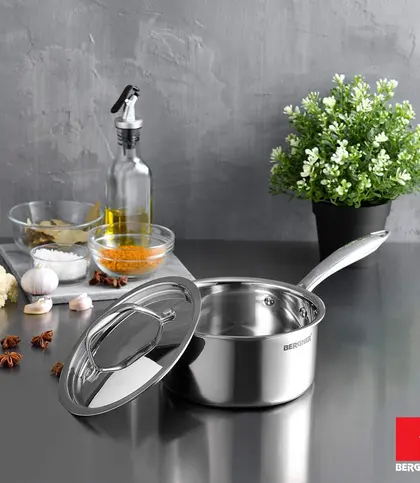
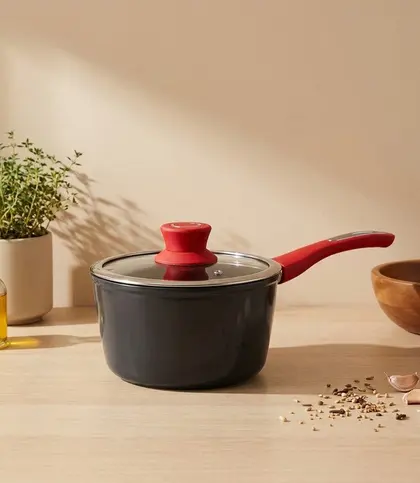
For frying, choose a stable kadhai or deep pan with enough capacity for food and oil to remain comfortably below the rim. Cast iron and well-constructed kadhais can appeal to cooks who value heat retention. For simmering, a saucepan or covered pan in a manageable size makes it easier to regulate heat and limit unnecessary heat loss.
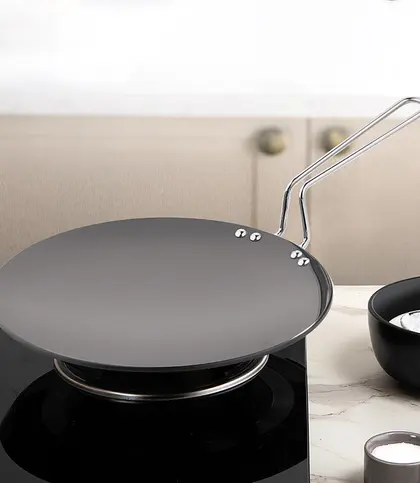
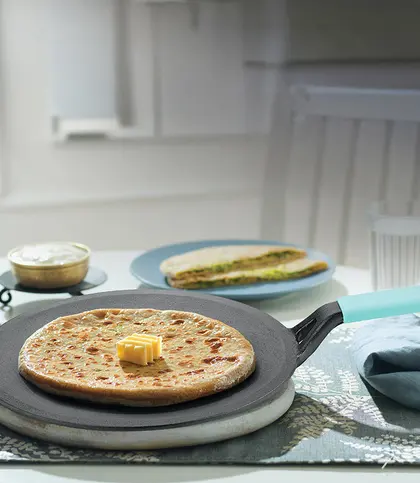
For rotis, a cast-iron tawa suits those who enjoy a heat-retaining traditional surface, while a hard-anodized tawa can be easier to handle for everyday use. For curries, choose capacity, a well-fitting lid and a handle arrangement that feels secure when the pan is full. For tadka, a small stable pan with responsive behaviour is easier to control than a large, heavy vessel.
The same kitchen may benefit from more than one material or pan type: for example, a kadhai for curries and frying, a tawa for flatbreads, and a compact saucepan for smaller simmering jobs.
- Frying: Prioritise stability, capacity and heat retention.
- Simmering: Prioritise controllable heat, a lid and a practical volume.
- Rotis: Choose between retention-focused cast iron and lighter everyday handling.
- Curries: Look for comfortable handles, usable capacity and lid fit.
- Tadka: Choose a small pan that is easy to control over a low-to-medium flame.
₹2,279
₹3,045
25%OFF
Balance Weight, Handles, Lids, Cleaning, Durability, and Budget
The best pan on paper may not be the best pan for your home if it is uncomfortable to lift, difficult to wash or too demanding for your routine. Cast iron can feel substantial and retain heat well, while lighter cookware may be easier to stir, transfer and clean frequently.
Check handle attachment and balance closely. Handles should feel secure, provide a comfortable grip and be positioned with reasonable clearance from direct flame. On a pan with a lid, assess whether the lid sits properly and whether its knob remains manageable during normal cooking.
Cleaning and maintenance should influence your decision. If you prefer simpler cleanup, choose a surface and care routine you will realistically follow. Durability depends on the quality of construction, appropriate heat use and, where relevant, respecting coating-specific guidance. A higher price alone does not ensure better gas-stove performance.
- Choose weight you can comfortably lift when the pan is full.
- Prefer securely attached handles that support the vessel’s loaded weight.
- Select a well-fitting lid if you regularly simmer curries, dals or sauces.
- Match the surface to your willingness to season, hand-wash or use gentler utensils.
₹1,749
₹2,439
28%OFF
Gas-Stove Cookware Buying Checklist
Use this checklist before buying a kadhai, saucepan, tawa, stock pot or pressure cooker. It keeps the decision focused on how the cookware will actually behave on your gas stove rather than on appearance alone.
- Choose the material for your main cooking task, not simply for its finish.
- Confirm that the cookware is labelled or listed as suitable for gas-stove use.
- Check that the base is flat, stable and does not rock on the burner grate.
- Match the pan diameter and capacity to your typical portions and burner size.
- Look for adequate thickness or layered construction without choosing a pan that is impractical to handle.
- Ensure handles are secure, comfortable and kept as far from direct flame as the design allows.
- Check lid fit if covered cooking is part of your routine.
- Read the cleaning, heat and utensil instructions for the cooking surface.
- Inspect for warping, cracks, loose parts and any damaged coating before use.
- Choose the pan shape that fits the task: kadhai for frying and curries, saucepan for smaller simmering, tawa for flatbreads, and larger pots for batch cooking.
Final Verdict: Choose by Cooking Pattern, Not a Single ‘Best’ Material
Stainless steel is a versatile starting point for many gas-stove kitchens, especially in a well-constructed pan with a substantial or layered base. Cast iron is a strong choice for heat-retaining frying and rotis if its weight and care needs suit your routine. Hard-anodized cookware can offer practical daily handling, while coated cookware suits lower-stick cooking when its product-specific instructions are followed.
For many homes, the most useful setup is a combination of purpose-fit pieces rather than a full set in one material. Before choosing, confirm gas compatibility, base stability, burner fit, handle security and cleaning needs, then browse cookware by material, pan type, size and intended use.
₹999
₹1,495
33%OFF
Final Verdict
- Choose cookware according to your main cooking tasks, preferred handling and maintenance routine.
- Prioritise a flat, stable base, secure handles and a size that suits your usual burner.
- A small mix of complementary pans is often more practical than relying on one material for every task.
FAQs
Which cookware materials perform best on a gas stove?
Stainless steel, cast iron, hard-anodized and coated cookware can all perform well on gas. The right choice depends on whether you prioritise versatility, heat retention, lighter handling or lower-stick cooking, as well as the pan’s base construction and stability.
Is stainless steel cookware good for a gas stove?
Yes. Stainless steel is a durable, versatile option for sautéing, curries, simmering and covered cooking. Look for a flat base and, where available, well-constructed layered or bonded construction to support even heating.
Is cast iron suitable for direct gas flame?
Cast iron is commonly used over direct gas flame and is valued for heat retention in frying, rotis and high-heat cooking. Its weight and maintenance requirements mean it may not suit every cook or every task.
What cookware base is best for gas stoves?
A flat, stable base that sits securely on the grate and is proportionate to the burner is the most important feature. The base should not rock, be visibly warped or extend so far beyond the main flame that heating becomes difficult to manage.
Which pans are best for Indian cooking on gas?
A practical mix can include a kadhai for curries and frying, a saucepan for smaller simmering tasks, a tawa for rotis and dosas, and a small pan for tadka. Select the material for each piece according to how you cook and handle cookware.
How thick should cookware be for a gas stove?
There is no one ideal thickness because material, diameter and construction all matter. Avoid assuming that heavier is always better; look for a base that heats evenly enough for its intended task while remaining comfortable to lift and responsive enough for your cooking style.
Is nonstick cookware safe to use on a gas stove?
A coated pan may be suitable for gas use when the product instructions say so and the surface is intact. Use the heat level, utensils and cleaning method specified by the manufacturer, and replace cookware with damaged coating or other visible defects.
How do I choose stable cookware for a gas burner?
Place the cookware on the grate, if possible, and check that it sits level without rocking. Choose a base sized sensibly for your burner, inspect handle attachment, and avoid pans with warping, dents, loose parts or an unstable balance when empty.