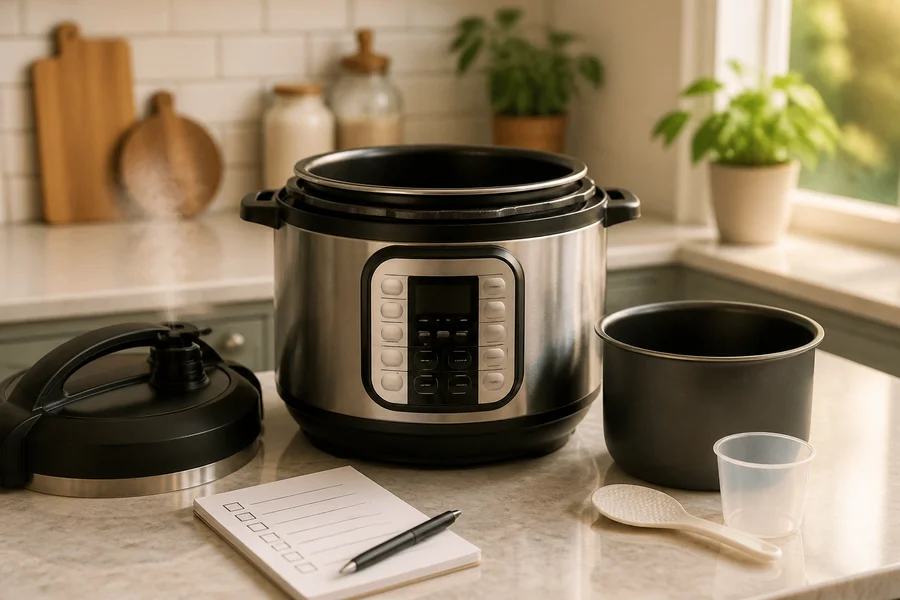
Best Electric Pressure Cooker 2021: What to Check Today
Quick Answer
The best electric pressure cooker for a 2021 search is not automatically a model recommended in 2021. Use older reviews as a reference, then verify the exact current model, manual, safety information, capacity, controls, cleaning needs, spare parts, warranty, and regional support before choosing.
Definitions
Electric pressure cooker
An electrically powered countertop cooker that regulates heat and pressure through built-in controls, sensors, and safety mechanisms.
Capacity
The stated volume of the cooker’s inner pot. Usable pressure-cooking capacity may be lower because the pot should not be filled to its maximum for every preparation.
Preset
A programmed cooking mode designed around a food category or cooking style. Presets vary by model and should not be assumed to deliver identical results across brands.
Current verification
Checking present-day model availability, documentation, warranty terms, safety information, and replacement-part support rather than relying only on a 2021 review or ranking.
Best Electric Pressure Cooker 2021: What to Check Today
A search for the best electric pressure cooker in 2021 may lead to an older review, an earlier version of a product, or a model that has since changed. That does not make the information useless, but it does mean that a historical recommendation needs checking before it guides a purchase today.
Rather than naming an unverified universal winner, use a practical comparison framework. The best choice is a currently supported electric pressure cooker whose usable capacity, documented safety measures, controls, maintenance requirements, and after-sales support fit your household. This guide covers electric countertop pressure cookers only, not stovetop models.
- Begin with the exact model number, not the product family name alone.
- Match the cooker to typical batch size and kitchen space.
- Read the current manual and warranty before treating a past recommendation as relevant.
Why a 2021 Recommendation Needs Current Verification
Product names can remain similar while capacities, included accessories, control panels, electrical specifications, or warranty conditions change. A similar-looking successor may not have the same functions or compatible replacement parts as the model mentioned in an older article.
Before considering any historical recommendation, locate the exact model number and review its current listing and model-specific manual. Check that operating instructions, safety warnings, electrical requirements, warranty details, and troubleshooting guidance are accessible for the version you are considering.
Availability matters after purchase as well. A lower initial cost can be less useful if sealing rings, inner pots, valves, lids, or other user-serviceable accessories cannot be sourced when needed.
- Confirm the exact model number shown on the rating label or current product documentation.
- Check whether the manual explains filling limits, cleaning, pressure release, and fault handling.
- Look for current regional warranty and support information.
- Treat claims about best value, performance, and availability as time-sensitive.
Choose Capacity by Household Size and Batch Volume
Capacity should suit both the number of people at home and the quantity you usually want to prepare at one time. A small cooker can be sensible for compact kitchens and modest portions when large batches are uncommon. A medium capacity is often flexible for everyday meals and occasional leftovers, while a large model may suit family cooking, entertaining, or planned batch preparation.
Do not choose by headcount alone. Consider whether you prefer leftovers, how much counter or storage space is available, and the minimum practical quantity you expect to make. Also allow enough clearance to open the lid and release steam according to the manufacturer’s instructions.
The full volume of an inner pot is not always the usable pressure-cooking volume. Review the manual’s maximum-fill guidance, especially for foods that expand or foam, and compare that guidance with your normal batch size.
- Choose a small capacity for limited space and smaller routine portions.
- Consider a medium capacity for flexible everyday cooking and leftovers.
- Consider a large capacity for bigger households and planned batches.
- Check footprint, storage needs, lid clearance, and maximum-fill markings.
Safety Controls and Certification Checks
Safe operation depends on the model’s documented design and on following its instructions. Look for a lid-locking or lid-position safeguard that prevents normal pressure operation when the lid is not correctly secured. Clear guidance for steam release and opening the cooker is equally important because hot steam requires careful handling.
Review manufacturer documentation for pressure-management features, temperature monitoring, over-pressure protection, and protection against overheating or dry operation where these are specified. The presence and description of these mechanisms vary by exact model, so avoid relying on broad marketing language or user reviews alone.
Check the rating label and electrical requirements for your region. Any applicable compliance markings should be considered alongside accessible, model-specific instructions covering operation, cleaning, troubleshooting, and safe limits.
- Look for clear lid-locking and pressure-release instructions.
- Review the manual for documented pressure and temperature safeguards.
- Confirm electrical requirements and applicable compliance information for your market.
- Choose a model with readable warnings, limits, and troubleshooting guidance.
Useful Presets Versus Unnecessary Functions
A long list of presets does not automatically make an electric pressure cooker easier to use. Preset names and default settings differ between models, and a useful program is one that simplifies a task you repeat rather than adding a control you rarely touch.
Prioritise controls that give you practical oversight. Adjustable cooking time, a clear manual mode, pressure adjustment where supported, selected temperature controls, and keep-warm settings can be more valuable than specialised labels. A readable display should make it clear whether the cooker is building pressure, cooking, or in a release stage.
Delay start may suit some routines, but use it only in line with the manufacturer’s food-safety guidance and operating instructions. Check whether settings can be changed or cancelled safely and whether the control panel is intuitive enough for everyone who will use it.
- Favour adjustable time and a clear manual mode.
- Consider pressure, temperature, and keep-warm controls only if they suit your routine.
- Assess delay start against the manufacturer’s instructions.
- Choose an easy-to-read display over an excessive preset count.
Inner-Pot Material, Cleaning, and Replacement Parts
The inner pot affects everyday cleaning and care. Stainless steel pots are often valued for their tolerance of regular use, though some preparations may need more attentive cleaning depending on the surface design and food involved. Nonstick pots can make food release and routine washing easier, but their coating needs the utensils and cleaning methods specified by the manufacturer.
Look beyond the pot itself. Check whether the sealing ring, steam-release components, lid parts, condensation collector, and inner pot can be removed and cleaned as instructed. If pot weight, handles, interior markings, or dishwasher guidance matter in your kitchen, compare those details before buying.
Replacement access is particularly important for a model first reviewed years ago. Confirm whether replacement inner pots and sealing rings are offered for the exact version, and whether the manufacturer approves or discourages third-party parts.
- Choose stainless steel or nonstick based on your cleaning routine and care preferences.
- Check which parts can be removed for cleaning.
- Follow the supplied care guidance and avoid abrasive cleaners where prohibited.
- Verify replacement-pot and sealing-ring compatibility for the exact model.
Warranty, After-Sales Support, and Model Verification
Warranty and support can be as important as cooking functions, especially when comparing an older recommendation. Read the warranty period, exclusions, registration requirements, proof-of-purchase rules, and service process before making a decision. These terms may vary by region and model.
A well-supported option should have accessible manuals, troubleshooting information, and a clear contact route for customers in your region. Ask whether frequently replaced components, including sealing rings, valves, lids, and inner pots, can be ordered separately.
Verify the exact model and included accessories before purchase. Closely named versions may differ in capacity, electrical requirements, included parts, or controls. Current documentation should carry more weight than a historical ranking or award.
- Read warranty exclusions and service terms before purchase.
- Confirm support is available where you live.
- Ask about access to sealing rings, valves, lids, and inner pots.
- Match the model number to its manual and included accessories.
Electric Pressure Cooker Buying Checklist
Use this checklist when comparing models. It keeps the decision focused on information that can be checked now, rather than on a legacy ranking that may no longer reflect the product or its support.
- Capacity fits your normal batch volume, available space, and leftovers preference.
- The exact model number and current specifications are clear.
- The manual covers filling limits, pressure release, cleaning, and troubleshooting.
- Documented safety controls and applicable compliance information are available.
- The controls cover functions your household will genuinely use.
- Inner-pot material and cleaning requirements suit your routine.
- Replacement parts and compatible accessories can be checked for the exact model.
- Warranty and after-sales support are accessible in your region.
- The choice is based on current evidence, not only on a 2021 review.
Final Verdict: What Makes the Best Choice Today?
There is no responsible universal winner based solely on a 2021 ranking. For a smaller household, a compact capacity, straightforward controls, easy cleaning, and dependable support may matter most. For family cooking or larger planned batches, prioritise usable capacity, clear fill guidance, service access, and replacement-part availability.
The best electric pressure cooker is the currently verifiable model that meets your household’s practical needs. Confirm documentation and support first, then compare capacity, safety controls, useful functions, inner-pot care, and warranty terms. Historical recommendations can narrow your research, but they should not replace a present-day check.
- Use compact, simple models for smaller routine batches where appropriate.
- Prioritise usable volume and parts access for family or batch cooking.
- Let current model verification outweigh older awards and rankings.
Final Verdict
- Do not select an electric pressure cooker solely because it was praised in 2021.
- Choose the exact currently supported model that matches your batch size, space, controls, cleaning preferences, and regional support needs.
- Make current documentation, safe operating guidance, replacement-part access, and warranty terms central to the final decision.
FAQs
What capacity electric pressure cooker is best for a family?
A larger capacity may suit family meals, regular leftovers, entertaining, or batch cooking, but compare the manual’s usable fill limits rather than relying only on the advertised pot volume. Also consider counter space, storage, and whether you will regularly make larger quantities.
Which safety features should an electric pressure cooker have?
Look for clear documentation of a properly secured lid safeguard, pressure-release instructions, and documented pressure and temperature protections where specified by the manufacturer. Review the model-specific manual, rating label, electrical requirements, and applicable regional compliance information.
Are electric pressure cooker models from 2021 still worth buying?
They may be worth considering only after current verification. Confirm the exact model, current manual, safety instructions, regional warranty, service access, and availability of parts such as sealing rings and inner pots. Do not assume an older review reflects the current version or support status.
Which electric pressure cooker presets are actually useful?
Useful presets are the ones that simplify cooking you do often. Adjustable time, a clear manual mode, keep-warm settings, and pressure or temperature adjustments where supported can be more useful than a large list of specialised preset names.
What inner-pot material is easiest to clean?
Nonstick inner pots can make routine food release and washing easier when cared for according to the manufacturer’s instructions. Stainless steel pots may need more attentive cleaning for some foods, but preferences vary by surface design, preparation, and the care guidance for the exact model.
Can replacement parts and warranty support affect the buying decision?
Yes. Sealing rings, valves, lids, and inner pots may need replacement over time. A model with accessible regional support, clear warranty terms, and available compatible parts can be a more practical long-term choice than one with uncertain service or accessories.
Keep exploring