


Best Nonstick Induction Cookware: A Practical Buying Guide
Quick Answer
The best nonstick induction cookware is the piece that has clearly stated induction compatibility, a stable flat base suited to your hob, a useful size for your meals, and care requirements you can follow. Do not assume a nonstick pan will work on induction simply because it is aluminium or looks sturdy.
Definitions
Induction-compatible cookware
Cookware designed with a base that can interact with an induction hob. Confirm this through the product listing or manufacturer specifications rather than assuming it from the coating or material.
Magnetic base
A cookware base that responds to a magnet. This can be an indicative in-store check for induction use, but product documentation remains the primary confirmation.
Flat base
A base that makes stable, broad contact with the induction surface, helping the hob detect the pan reliably and support more consistent heating.
Nonstick coating
A surface treatment intended to reduce food sticking and make cooking and cleaning easier. Its lasting performance depends on the product design, intended use, and care.
Best Nonstick Induction Cookware: What to Look For
There is no single best nonstick induction cookware option for every kitchen. The right choice depends on whether the pan is explicitly made for induction, how its base is built, the food you cook most often, and how comfortably it fits into daily use.
Start with compatibility, then compare the base, cooking size, coating information, handle, lid, weight, oven instructions, and care guidance. Specifications can vary even within a brand or range, so check the details for the exact item before buying.
- Confirm induction compatibility separately from nonstick performance.
- Match the pan’s usable cooking area to your hob zone and usual meal size.
- Treat documented specifications and use instructions as more useful than appearance or broad marketing labels.
How to Verify Induction Compatibility Before Buying
Look for clear wording such as “induction-compatible”, “induction-safe”, or “suitable for induction” in the listing or manufacturer information. This is the most dependable starting point because nonstick surfaces and aluminium bodies alone do not confirm that a hob can detect the cookware.
When shopping in person, a magnet that adheres to the base can provide a useful secondary indication. It should not replace the stated product specification, and it does not tell you how well a particular pan will perform on every hob.
Also check that the base is flat and sensibly proportioned for the induction ring. A pan with a very small base may not suit a larger zone, while a warped or uneven base can affect stable contact.
- Do not infer induction use from a general “kitchen cookware” label.
- Check the base diameter where it is provided; rim diameter and base diameter are not necessarily the same.
- For a compact lidded option, Bergner Induction Safe Frying Pan With Lid - 1000 ml/7 Inches is explicitly described as induction-safe. Confirm its coating details and full care guidance before deciding.
Base Construction and Even Heating
For induction cooking, prioritise a stable, induction-ready base with broad contact on the hob. Clear construction details are helpful because they give you a better basis for comparison than material names alone.
A well-distributed base may help reduce uneven cooking and hot spots, although actual results can vary with the pan design, food, heat setting, and induction cooktop. Aluminium can make a pan easier to handle and responsive to heat, but it requires an induction-compatible base. Stainless steel or multi-layer designs may add stability or durability depending on the construction.
An 8-inch frying pan such as Bergner Induction Safe Frying Pan - 1000 ml/8 Inches is explicitly described as induction-safe and can be a useful size to compare for everyday cooking. Check the listing for its nonstick-coating specification, full construction details, and care instructions.
- Choose a base that sits flat rather than rocking on the hob.
- Look for specific construction information instead of assuming performance from a material name.
- Use moderate, appropriate heat in line with the product instructions; induction heat can respond quickly.
Choosing Pan and Cookware Sizes for Household Needs
Size should reflect everyday meals, not simply the largest pan that fits your budget or storage shelf. For one person or very small portions, a compact frying pan can be convenient for eggs, tempering, reheating, and single servings. Make sure its base is recognised by your hob zone.
For a small family, a medium frying pan or kadai is often more flexible for breakfast dishes, sautéed vegetables, stir-fries, and smaller family meals. Larger cookware can suit batch cooking, but only when its base matches the induction zone and the weight remains manageable.
Compare three separate measurements when they are available: the rim diameter, the usable cooking surface, and the base diameter. Capacity is equally important for deeper pans, saucepans, and kadais.
- A 7-inch pan can suit compact cooking tasks and limited storage.
- An 8-inch pan is often a practical everyday format, but suitability depends on meal patterns and hob size.
- Choose larger cookware only when you will use its capacity regularly and can store it comfortably.
Compare Coating, Handles, Lids, Weight, and Oven Safety
Read coating information carefully. Look for the stated coating type, intended use, and care guidance, rather than treating a broad marketing label as evidence of long-term durability. A useful product listing explains enough for you to judge whether the cookware suits your usual utensils, cooking style, and cleaning routine.
A handle should feel balanced for the pan’s size and appear securely attached. Consider the grip, the handle’s length, heat-management guidance, and whether it will fit your storage space. If you prefer lighter cookware, balance easy lifting against enough stability for confident use on the hob.
A lid can be valuable for simmering, reheating, and reducing splatter. Check whether it is included, whether it sits securely, and whether its knob or handle has separate heat limitations. Oven suitability also needs a complete check: the pan body, handle, lid, and maximum stated temperature may not share the same rating.
- Coating: Compare documented composition, intended use, and care requirements.
- Handle: Check comfort, balance, attachment, and heat-use guidance.
- Lid: Confirm whether it is included and whether it has separate limitations.
- Weight: Choose a manageable pan that still feels stable on the cooking zone.
- Oven use: Verify the complete item and its stated temperature limit, not just the pan body.
When a Cookware Set Offers Better Value Than Individual Pieces
A cookware set can make sense when several included pieces will genuinely earn a place in your routine. For example, a household that regularly uses a frying pan, saucepan, kadai, and lids may benefit from choosing coordinated cookware with similar care and storage needs.
Individual pieces are often more practical for a focused need, a small kitchen, or a home that already has suitable cookware. A single well-chosen pan can be more useful than a larger set containing duplicate sizes or pieces that remain unused.
Count useful pieces rather than the total number in the box. Check the induction compatibility, dimensions, care requirements, and oven limitations for every individual item in a set; do not assume the same specification applies throughout.
- Choose a set when it covers several real cooking tasks without duplication.
- Choose individual pieces when storage is tight or one cooking format is the clear priority.
- Make sure each pan in a set suits your induction hob and your regular meals.
Pre-Purchase Checklist for Indian Kitchens
Use this checklist before checkout to compare pans consistently. It helps keep the decision grounded in your cooktop, household size, and everyday habits rather than brand familiarity or a single headline feature.
- Compatibility: Is induction use explicitly stated, and is the base flat and appropriate for the hob zone?
- Construction: Are the base and multi-layer details described clearly enough to assess stability?
- Size: Do the diameter, capacity, and base dimensions suit common meals, storage, and household size?
- Coating: Are coating details and care requirements clearly provided?
- Handling: Is the handle comfortable, balanced, securely attached, and appropriate for the intended heat use?
- Lid: Is a lid needed, included, well-fitting, and subject to separate temperature limits?
- Weight: Can you lift and manoeuvre the cookware comfortably while it remains stable on the hob?
- Oven use: Are the pan, handle, lid, and maximum temperature addressed separately where needed?
- Value: Will every piece in a set be used often, or would one individual pan serve you better?
- Care: Can the household follow the stated utensil, cleaning, heat, and storage guidance?
The Practical Verdict
Choose the best-fit cookware rather than a nominal winner. Start by confirming induction compatibility, then select a stable base, useful size, clearly explained coating, and handle-and-lid combination that suits your regular cooking.
For compact kitchens or single portions, a clearly induction-safe small frying pan with a lid can be a sensible format when its coating and care details meet your needs. For everyday small-family cooking, compare medium frying pans, saucepans, or kadais according to construction, handling, and the meals you make most often.
A set is worthwhile only if its sizes solve several genuine cooking needs without creating duplicates or clutter. In every case, explicit induction compatibility and complete specifications should carry more weight than assumptions based on appearance, material, or pan category.
- Verify the exact product’s induction statement before purchase.
- Prioritise a pan you will use frequently and store easily.
- Check component-specific care and oven instructions before choosing.
Current non-stick induction cookware to compare
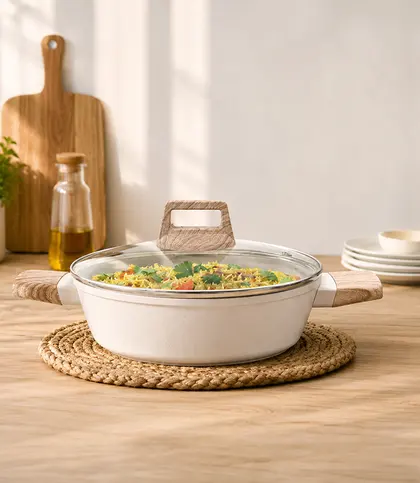
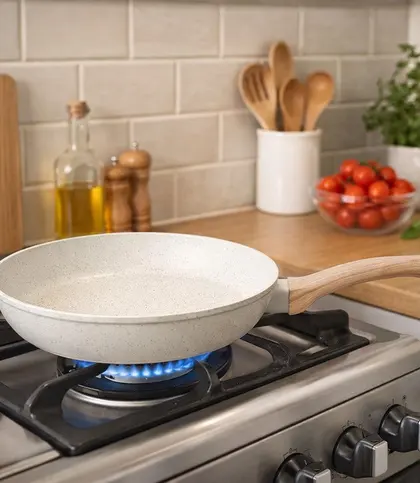
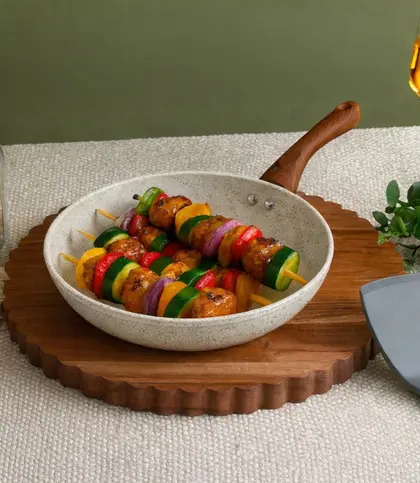
These current pans disclose both a non-stick or ceramic coating and induction compatibility in their product data. They span a lidded ceramic kadhai, a ceramic frying pan, and a 9.4-inch non-stick frying pan.
Confirm base diameter against the induction zone, actual pan dimensions, coating and care instructions, handle and lid construction, oven limits, utensil restrictions, warranty, and replacement guidance. Compatibility with induction does not guarantee the best fit for every hob.
 FastDelivery
₹1,749
₹2,999
42%OFF
 FastDelivery
₹1,449
₹2,499
42%OFF
₹949
₹2,999
68%OFF
Final Verdict
- The best nonstick induction cookware is the cookware that fits your hob and routine, not a universal top pick.
- Confirm induction compatibility first, then compare base stability, size, coating information, handling, lid design, weight, and stated limits.
- Buy a set only when each included piece has a clear role in your kitchen.
FAQs
How can I tell if nonstick cookware works on induction?
Check the listing or manufacturer information for an explicit induction-compatible or induction-safe statement. A magnet sticking to the base can be a useful secondary check in a store, but it should not replace documented specifications for the exact product.
What type of base is best for induction nonstick cookware?
Look for a flat, stable induction-ready base with broad contact on the hob. Clear construction details are more useful than relying on material names alone, since performance depends on the complete design.
Which nonstick pan sizes suit a small family?
A medium frying pan or kadai is commonly versatile for breakfasts, sautéing vegetables, and smaller family meals. Compare rim diameter, usable cooking area, capacity, and base diameter before choosing.
Should I buy a cookware set or individual pieces?
Buy a set when you will use most of its pieces regularly and they fit your storage and cooking needs. Choose individual cookware when you need one specific pan, have limited storage, or already own useful pieces.
What should I check in nonstick cookware handles and lids?
Check whether the handle feels balanced, is securely attached, and has suitable heat-use guidance. For lids, check if one is included, how securely it fits, and whether the lid, knob, or handle has separate temperature limitations.
Can nonstick induction cookware be used in the oven?
Only if the manufacturer states that it is oven-safe. Check the maximum temperature and verify the rating for the pan body, handle, and lid separately, as these components may have different limits.
How do I compare cookware weight and coating durability?
Choose a weight that feels comfortable to lift while remaining stable on the hob. For coating, compare the stated type, intended use, and care requirements; avoid relying on broad durability claims without useful product information.
How should I care for nonstick cookware on an induction hob?
Follow the cookware maker’s guidance for heat level, utensils, cleaning, and storage. Avoid treating one general care rule as suitable for every coating or pan design, and use the stated instructions for the specific item.