


Best Microwave Bowls: A Safety-First Buying Guide
Quick Answer
The best microwave bowl is one the manufacturer explicitly identifies as microwave-safe and that suits the task at hand. Check the bowl and lid separately, leave room for food to bubble, avoid metallic details and damage, and follow the stated care limits for reheating or cooking.
Definitions
Microwave-safe marking
A manufacturer’s statement, symbol, or care instruction confirming that a specific bowl is suitable for microwave use under stated conditions.
Microwave-suitable plastic
Plastic explicitly identified by its manufacturer as suitable for microwave use; not every plastic bowl is microwave-safe.
Vented lid
A lid designed with an opening, valve, or vent that allows steam to escape during microwave use.
Headspace
The empty space between the food and the rim of the bowl, which helps accommodate bubbling, expansion, and stirring.
Best Microwave Bowls: Start With Safety, Not Material
A glass, ceramic, stoneware or plastic bowl is a good microwave choice only when the specific item is confirmed by its manufacturer for microwave use. Material influences weight, visibility and storage convenience, but it does not replace the label or care instructions.
Start by deciding what you need the bowl to do. A bowl for briefly reheating a snack has different capacity and lid needs from one used for soup, meal prep, leftover storage or longer microwave cooking. Then assess the label, material, size, shape, lid, handling and condition in that order.
- For reheating, prioritise clear microwave guidance, enough headspace and a stable shape.
- For microwave cooking, check whether the instructions support that use rather than assuming reheating approval covers it.
- For storing leftovers, assess the bowl and lid separately, especially if you expect to reheat food while covered.
Check Microwave-Safety Markings Before Buying
Use explicit manufacturer guidance as the main filter. Look for microwave-safe wording, a microwave symbol, product-care instructions, packaging details or a manufacturer listing that clearly identifies microwave use.
Check exactly what the guidance covers. A marking on a bowl does not automatically apply to its lid, seal, decoration or any accompanying accessory. If the information is absent or unclear, choose a different bowl or contact the manufacturer before microwaving it.
Words such as glass, ceramic, stoneware, food-safe and dishwasher-safe are not proof that an item can be used in the microwave.
- Confirm the guidance applies to the exact bowl, not merely a similar range.
- Read restrictions on microwave power, duration, empty heating and sudden temperature changes.
- Treat missing instructions as a reason not to use the item in the microwave.
Glass vs Ceramic vs Microwave-Suitable Plastic
Glass bowls can make it easy to see food while heating and offer a smooth, non-porous-feeling everyday surface. Confirm the bowl’s microwave marking and care limits, as not every glass bowl is intended for microwave use.
Ceramic and stoneware can be practical for individual meals and leftovers, but the glaze, construction, decoration and manufacturer instructions determine whether a particular piece belongs in the microwave. Do not assume a ceramic bowl is suitable because it looks sturdy.
Microwave-suitable plastic is lightweight and convenient for food storage and meal prep. Use it only when it is explicitly labelled for microwave use, and follow any temperature, duration and care guidance. A bowl approved for reheating may not necessarily be intended for extended cooking or especially hot, high-fat or high-sugar foods.
- Choose glass when food visibility matters to you, subject to the item’s care guidance.
- Choose ceramic or stoneware for the format and weight you prefer, after confirming its exact instructions.
- Choose microwave-suitable plastic when lighter handling and storage convenience are priorities.
- Let the manufacturer’s instructions decide suitability; let the material help decide everyday practicality.
Choose Capacity, Depth, Shape, and Handles for the Task
Capacity should leave room for the food to move. Small bowls around 200–300 mL can work for snacks, toppings and modest portions, provided food is not filled to the rim. Medium bowls around 400–600 mL can suit individual leftovers, porridge, soup or rice, depending on the headspace required.
For soups, sauces and foods that may bubble, a deeper bowl can be useful, but depth alone cannot prevent splashes or uneven heating. A rounded or gently sloped interior can make stirring easier, while a broad, stable base can make the bowl more manageable on the turntable and counter.
Handles or side grips may improve your hold, but they can become hot during use. Use oven gloves, a dry cloth or another appropriate heat-safe method when necessary, and handle heated bowls carefully.
- Leave visible headspace for bubbling, expansion and stirring.
- Avoid filling a bowl to the rim, particularly with liquids and sauces.
- Consider stackability and cupboard space if the bowls will double as meal-prep or leftover containers.
- Choose a size for your usual portion rather than trying to make one small bowl serve every task.
Assess Lids, Venting, and Spill Control
A lid can reduce splatter and make storage easier, but it needs its own microwave-use confirmation. A microwave-safe bowl does not make an unmarked lid suitable for heating.
When steam needs to escape, use a vented lid or follow the manufacturer’s directions for leaving the lid ajar. Do not tightly seal a container during heating unless the manufacturer provides a specific safe venting method. After heating, let food stand briefly and take care when opening the lid, as steam can escape quickly.
Headspace, a stable base and stirring where appropriate all help control spills. They also help distribute heat more effectively than simply heating food unattended in a tightly covered container.
- Confirm that both the bowl and lid are approved for microwave use.
- Use the lid’s vent as directed, or use a loose fit when instructions allow it.
- Stir suitable foods during heating and allow standing time before serving.
- Remember that a lid limits splatter; it does not guarantee that food cannot bubble over.
Damage, Metallic Trim, and Care Limits That Rule Out Use
Do not microwave bowls with cracks, chips, deep scratches, crazing, warping, loose handles or other structural damage. Heating can worsen existing defects, and a compromised bowl may be harder to handle safely.
The cautious buying choice is to exclude metallic bowls and bowls with metallic trim, gold or silver accents, metallic paint or foil-like details. Only consider such an item if its manufacturer gives specific microwave instructions for that exact product.
Care instructions matter after purchase as well. Observe any limits concerning heating duration, microwave power, thermal shock and empty heating. Do not heat an empty bowl unless the manufacturer expressly permits it.
- Replace a bowl if damage affects its structure or surface.
- Replace a lid that no longer fits securely or whose vent no longer functions as intended.
- Do not move a very cold bowl straight into intense heating unless its care instructions specifically allow it.
- Set aside any bowl whose microwave instructions cannot be found or confirmed.
A Quick Microwave Bowl Buying Checklist
Before buying, use this short checklist to compare bowls without relying on appearance alone. If any applicable safety check fails, do not choose that bowl for microwave use.
- Is the exact bowl labelled microwave-safe by its manufacturer?
- Is the lid separately labelled for microwave use and vented or designed for loose fitting?
- Does the capacity leave enough headspace for the food you heat most often?
- Is the shape stable, easy to stir and comfortable to handle carefully?
- Does the material match your preferences for visibility, weight, storage and everyday use?
- Are there cracks, chips, warping, metallic details or care restrictions that rule it out?
- Will you use it only for reheating, or does the manufacturer also support microwave cooking?
Which Bowl Type Fits Your Microwave Routine?
For a small single serving, look for a clearly labelled glass or ceramic bowl with enough room above the food. A 210 mL format, such as the one represented by Zeke Snack Bowl (210 ML Each) - Set Of Four, illustrates the scale that may suit snacks and modest reheating; verify the manufacturer’s microwave guidance before use.
For individual leftovers or moderate meals, a labelled 500 mL ceramic format such as Nivedya Serving Bowl (500 mL Each) - Set of Two may be a practical size. If your usual portions are more substantial, a 600 mL bowl such as Viiva Ceramic Serving Bowl - 600 mL represents a larger format, while still requiring sufficient headspace for the particular food.
For storing food before covered reheating, a bowl-with-lid design such as Ambar Serving Bowl with Lid (300 ML Each) - Set Of Two can be useful. Confirm that the lid itself is microwave-suitable and understand its venting instructions. For multiple small portions, a set such as Bohemian Mandala Ceramic Snack Bowls (250 mL Each) - Set of Six shows the appeal of several 250 mL bowls, but each bowl’s microwave instructions should be verified.
These examples describe capacity, material and format rather than product rankings or blanket safety endorsements.
- Small portions: choose a clearly labelled small bowl with extra room for bubbling.
- Everyday meals: select a medium bowl that accommodates stirring and your usual portion.
- Soups and saucy dishes: favour a stable bowl with adequate depth and headspace.
- Storage and reheating: check the bowl and lid independently.
- Meal prep: consider several matching bowls only after confirming the care guidance for each piece.
The Best Microwave Bowl Is the One That Matches the Label and the Task
The best microwave bowl is not defined by material alone. Start with explicit manufacturer approval, then choose a size, shape and handling format that fits the food you prepare most often.
Treat the lid, venting, decoration, condition and care limits as separate checks. If the bowl is damaged, has metallic detail, lacks clear microwave instructions or comes with an unsuitable lid, do not use it in the microwave until suitability is confirmed.
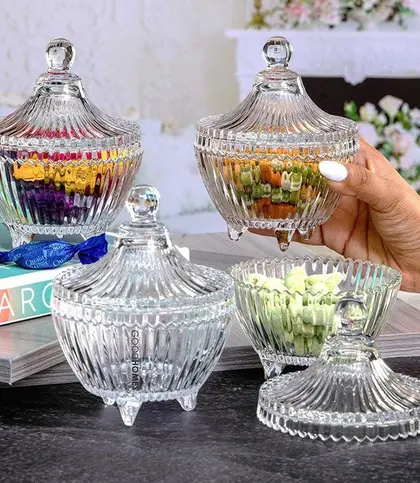
A microwave-safe glass bowl set to assess
The Zeke Snack Bowl set is currently listed as four 210 mL glass bowls, and its product data explicitly states dishwasher, freezer, and microwave-safe care. Use it as one verified glass example rather than assuming every glass or ceramic bowl is microwave-safe.
Before use, recheck the product page and packaging for the microwave-safe mark, temperature limits, heating duration, thermal-shock guidance, damage checks, and whether any lids or accessories must be removed. Stop using a bowl that is chipped, cracked, or otherwise damaged.
 FastDelivery
₹949
₹1,110
15%OFF
Final Verdict
- Choose a bowl only after every applicable check passes: exact manufacturer microwave guidance, task-appropriate capacity and shape, sound condition, no prohibited metallic details, and suitable care limits.
- When using a lid, confirm that it is separately approved for microwave use and follow its venting or loose-fitting instructions.
- Glass, ceramic, stoneware and microwave-suitable plastic can all be useful when the specific item is labelled for microwave use.
- Reject unclear labels, damaged bowls, metallic details and lids that are not separately confirmed for microwave use.
FAQs
Which markings show that a bowl is microwave-safe?
Look for explicit microwave-safe wording, a microwave symbol, product-care instructions or a manufacturer listing that identifies the exact bowl as suitable for microwave use. Check whether the guidance also applies to the lid and other accessories.
Are glass bowls better than ceramic bowls for microwaving?
Neither material is automatically better or automatically microwave-safe. Glass can offer food visibility, while ceramic can suit sturdy everyday serving. Choose between them based on the specific manufacturer guidance, handling preference, capacity and intended use.
Can microwave-suitable plastic bowls be used for cooking?
Only if the manufacturer’s instructions support microwave cooking, not merely reheating. Follow stated limits on heat, duration and use, particularly for longer heating tasks or foods that become very hot.
What size bowl is best for microwave meals?
A medium bowl around 400–600 mL often suits individual meals, but the right size depends on the portion and how much the food may bubble. Choose a bowl that leaves clear headspace rather than one that holds food to the rim.
Do microwave bowl lids need vents?
A vented lid, or a loose fit used according to the manufacturer’s directions, allows steam to escape. Do not tightly seal a bowl during heating unless the maker provides a specific safe venting method.
Can bowls with metallic trim go in the microwave?
The safest choice is to avoid bowls with metallic trim, gold or silver accents, metallic paint or foil-like decoration. Use one only when the manufacturer specifically confirms that exact item is suitable for microwave use.
How can I prevent microwave spills and hot spots?
Leave headspace, use a stable bowl, stir suitable foods during heating and allow standing time before serving. Use a lid only as directed, with proper venting, and take care when removing it because hot steam may escape.
When should I replace a microwave bowl?
Replace it when it develops cracks, chips, deep scratches, crazing, warping, loose handles or a deteriorating surface. Also replace or stop using it when the lid no longer fits or vents properly, or when its microwave-use instructions cannot be confirmed.