


Best Measuring Spoons Wirecutter: A Practical Buying Guide
Quick Answer
There is no single best measuring-spoon set for every kitchen. A practical choice has a useful range of everyday sizes, markings you can read quickly, bowls suited to your ingredients, storage that fits your kitchen, and care requirements you will realistically follow. This guide uses that buying framework without reproducing Wirecutter recommendations, testing, rankings, or a named winner.
Definitions
Capacity range
The set of spoon sizes included, considered in relation to the measurements used most often in everyday cooking and baking.
Readable markings
Measurement labels or engraved indicators that can be identified quickly and are less likely to disappear with regular use and washing.
Levelling
Removing excess dry ingredient from the top of a spoon to create a more consistent measured amount.
Nesting
A storage design in which smaller spoons fit inside or alongside larger ones to reduce the set’s footprint.
Ring-connected set
Spoons joined by a removable or fixed ring that keeps the set together but may limit independent placement during use.
Best Measuring Spoons Wirecutter: What This Guide Can and Cannot Tell You
If you are searching for the best measuring spoons through a Wirecutter-style lens, focus on the details that affect daily prep rather than expecting one universal winner. The right set depends on the recipes you make, the containers you use, how much storage you have, and how you prefer to wash and organise kitchen tools.
This is an independent practical buying guide, not a reproduction of Wirecutter recommendations, rankings, test results, or current picks. It will help you compare capacity range, marking visibility, bowl and handle shape, material, storage, jar access, levelling, and care so you can make a confident category-level decision.
- Choose for your most common task: mixed everyday cooking, baking, spice blending, or sticky ingredients.
- Check the small details that create friction, such as hard-to-read labels, bowls that do not reach into jars, or connectors that are awkward to clean.
- Use the final checklist to narrow choices for compact kitchens, routine cooking, baking, spice use, and value-focused buying.
What to Check Before Buying Measuring Spoons
Start with the listing details rather than appearance alone. Confirm the included spoon sizes, stated material, bowl dimensions, handle length, marking method, storage connection, and manufacturer care instructions. These specifications reveal far more about suitability than a decorative finish or a styled kitchen photo.
Also consider the ingredients you measure most. Fine dry powders, liquids, thick syrups, spice blends, and mixed recipe prep place different demands on a spoon’s bowl, rim, handle, and clean-up routine.
- Included sizes and whether the range suits your regular recipes.
- Marking placement and whether labels remain visible when the spoon is filled or held.
- Bowl width, depth, and shape for your jars, bags, canisters, and mixing bowls.
- Handle comfort and whether the spoon rests steadily on the counter.
- Storage format, including nesting, magnets, or a connecting ring.
- Cleaning guidance for the exact material, finish, and construction.
Essential Spoon Sizes and Readable Markings
A useful everyday set covers the small and larger measurements that recur across ordinary recipes. Having more than one practical size reduces the need to estimate, repeat a measure several times, or interrupt prep to wash the same spoon. Frequent bakers and people who make their own spice blends may benefit from a broader range, provided every piece remains easy to identify.
Markings can be stamped, engraved, embossed, or printed. Stamped and engraved labels are often easy to locate on metal pieces, while printed or moulded labels can be clear when new. How well any marking holds up depends on the specific construction, frequency of use, washing method, and manufacturer guidance.
Look closely at where labels sit. A measurement placed on the handle or an accessible outer surface is easier to check than one obscured by your fingers, ingredients, or a storage connector.
- Prioritise a complete practical range over decorative extras.
- Choose labels that contrast sufficiently with the spoon surface for quick reading.
- Check both sides of the spoon if you are left-handed or often work in a crowded prep area.
- Avoid assuming any marking method is permanently wear-proof; follow the stated care guidance.
Bowl and Handle Designs for Powders, Liquids, and Sticky Ingredients
Bowl shape has a direct effect on how a measuring spoon works. Narrow, elongated bowls can slide into many spice jars and slim containers more easily than wide round ones. The trade-off is that they can be slower to fill from a large flour bag or container of bulky ingredients.
Broader bowls can feel convenient for scooping powders and moving a straight edge across the rim to level dry ingredients. Very deep bowls may be less convenient when you need to scrape out honey, nut butter, or another sticky ingredient. Rounded interiors may empty neatly, while more defined rims can make levelling easier when thoughtfully designed.
Handle length affects reach and storage. A longer handle can help you access ingredients in a deep canister, while a compact handle may take up less drawer space. In either case, seek a grip that feels comfortable and a shape that does not roll or tip easily during prep.
- For spices: compare the narrowest bowl width with your usual jar openings.
- For dry powders: look for a rim that supports a consistent levelling motion.
- For liquids: choose a bowl that feels stable to fill and carry to the mixing bowl.
- For sticky ingredients: favour smooth interiors and uncomplicated joints that are easy to scrape and wash.
Stainless Steel Versus Plastic and Other Materials
Stainless steel measuring spoons are commonly chosen for their rigid feel and substantial construction. They may suit cooks who want a firm edge for levelling or prefer a tool that does not flex much when scooping. Weight, finish quality, joined sections, and corrosion performance can still vary between products, so stainless steel alone does not determine longevity or dishwasher suitability.
Plastic sets are usually lighter and may be a straightforward option for kitchens that value low weight or a lower-cost basic tool. Some designs have useful flexibility for storage or scraping, but surface wear and label visibility can differ widely. Examine the markings and care notes instead of treating plastic as a single performance category.
Silicone or silicone-accented designs may add grip or flexibility. Check how the softer material joins the spoon, whether seams could hold residue, and how the manufacturer says it should be cleaned and dried.
- Choose stainless steel when rigidity and a substantial feel matter most.
- Consider plastic when low weight and simple everyday handling are the priority.
- Inspect mixed-material designs for seams, cleaning access, and product-specific care instructions.
- Do not assume any material is automatically dishwasher-safe, rust-proof, odour-proof, or more hygienic.
Nesting, Magnetic, and Ring-Connected Storage Options
Storage is not merely a drawer-space issue; it changes how quickly you can retrieve a spoon mid-recipe. Nesting sets can work well in a compact drawer because the pieces occupy a smaller footprint together. However, you may need to separate pieces before measuring, which can slow down multi-step cooking.
Magnetic designs can make individual spoons easy to take off a suitable storage surface or keep together in a drawer. Before choosing one, consider where it will live and whether the magnetic connection feels secure enough for your storage routine. Magnetic parts and finishes should be cleaned according to the maker’s instructions.
Ring-connected sets keep all the spoons in one place and can reduce the chance of a small piece going missing. A removable ring provides flexibility, while a fixed connector may be more limiting when you want several spoons laid out independently during prep.
- Nesting: useful for limited drawer space and tidy storage.
- Magnetic: useful for quick individual access where a suitable storage surface is available.
- Ring-connected: useful for keeping a complete set together.
- Compare whether the set stores flat, cleans around its connector easily, and can be operated comfortably with one hand.
Jar Access, Levelling, Cleaning, Drying, and Care
Do not assume a set will fit every spice jar. Compare the width of the smallest bowl, as well as its handle profile, with the jars and containers you use at home. A slim bowl may reach into a jar comfortably, while a wide bowl can be more efficient for open canisters and large ingredient bags.
For dry ingredients, a level rim or defined straight edge can make a repeatable levelling technique easier. For liquids, assess whether the bowl holds a filled measure steadily enough to move without splashing and whether the handle stays secure in your grip.
Cleaning is simplest when pieces separate fully, interiors are smooth, and joints do not trap residue. After washing, let all parts dry thoroughly, especially around connectors, magnets, layered materials, or decorative finishes. Follow the manufacturer’s instructions for the specific set.
- Measure your most-used spice jar opening before buying a jar-focused design.
- Check that the spoon can be levelled without an awkward rim or handle angle.
- Look for accessible interiors when you often measure syrups, oils, or pastes.
- Review whether components detach for washing and whether the set can dry thoroughly.
- Use product-specific dishwasher and care guidance, particularly for printed marks and mixed materials.
A Practical Decision Checklist by Cooking Habit and Budget
The best way to decide is to identify the friction you want to remove. A cook who makes weeknight meals needs different features from a baker who measures dry ingredients repeatedly, or from someone who regularly reaches into narrow spice jars. Start with core function, then choose the material and storage style that makes that function easy to live with.
For a value-focused purchase, direct attention first to useful included sizes, legible markings, sturdy-feeling construction, comfortable handling, and uncomplicated cleaning. Decorative finishes and specialised storage can be worthwhile only after those essentials match your needs.
- Everyday cooking: choose a standard set with clear labels, practical core sizes, comfortable handles, and easy cleaning.
- Frequent baking: prioritise easy-to-read markings, stable bowls, predictable levelling, and a range that supports your recipes.
- Spice measuring: look for narrow jar-friendly bowls, clearly marked smaller pieces, and compact storage.
- Sticky ingredients: prefer smooth, scrape-friendly interiors with few residue-catching crevices.
- Small kitchens: compare nesting, magnetic, and ring-connected formats against your actual drawer, wall, or counter space.
- Before checkout: verify material, bowl and handle dimensions, marking method, included sizes, connection type, and cleaning instructions.
Final Decision: Match the Set to the Way You Measure
A strong measuring-spoon set is the one that removes your most frequent kitchen annoyance: missing sizes, unclear labels, poor jar access, awkward storage, or difficult cleaning. There is no generic winner that works equally well for every cook, ingredient, and kitchen layout.
Compare verified specifications with your own habits before choosing. This approach is more useful than relying on an unverified ranking, and it avoids treating any single product as the answer for every home.
- Choose a complete, clearly marked range for routine cooking.
- Put jar access and compact storage first if spices are your main use.
- Prioritise levelling-friendly bowls and durable-looking labels if you bake often.
- Keep construction simple and care manageable when buying on a budget.
Compare measuring spoons
Use the markings, bowl shape, and jar-access checklist above to assess this set. This is a catalog example, not a verified Wirecutter recommendation; confirm the included capacities on the product page.
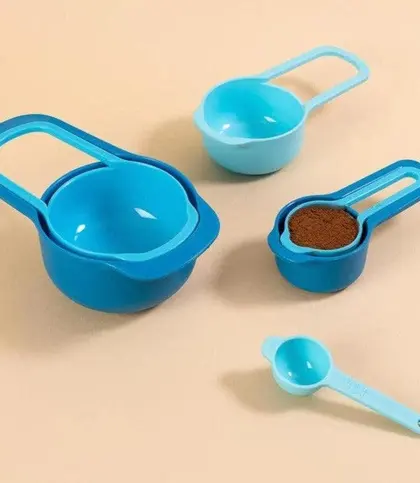
₹295

Final Verdict
- The best measuring spoons are habit-dependent rather than defined by one universal winner.
- For most kitchens, begin with a complete practical range, clearly readable markings, comfortable handles, and a design that is easy to wash and dry.
- Choose narrow bowls and compact storage for spice-focused cooking, broad level-friendly bowls for frequent baking, and simple construction when ease of care is the priority.
- Verify the set’s material, dimensions, marking method, included pieces, storage connection, and care instructions before purchasing.
FAQs
Which spoon sizes are essential for everyday recipes?
Look for a set that covers the small and larger measures that appear regularly in your usual recipes. A practical range lets you measure without repeated filling or estimating. If you bake often or prepare spice blends, a broader range may be useful, as long as the individual pieces remain clearly marked and easy to store.
Are measuring-spoon markings clear and durable?
Clarity and durability depend on the exact marking method, construction, finish, and care routine. Stamped, engraved, embossed, and printed markings can all be readable, but no method should be assumed to resist wear indefinitely. Check where the labels are placed and follow the manufacturer’s washing guidance.
Will measuring spoons fit inside spice jars?
Some will, but bowl width and handle shape matter more than the label “jar-friendly.” Compare the smallest bowl’s stated width with the openings of your own spice jars and containers. Narrow, elongated bowls are often easier to use in slim jars, while wider bowls can be better for open canisters.
What handle and bowl designs work best for liquids and powders?
For powders, a bowl with a defined, level-friendly rim can support consistent measuring. For liquids, choose a bowl that feels stable when filled and a handle you can grip securely. Wider bowls can be convenient for scooping from large containers, while narrower bowls improve access to smaller jars.
Are stainless-steel or plastic measuring spoons better?
Neither is automatically better. Stainless steel may offer a rigid, substantial feel, while plastic can be lighter and may suit simple everyday use. Compare the exact set’s markings, joints, finish, comfort, storage, and stated care instructions rather than choosing on material alone.
Are nesting, magnetic, or ring-connected spoons easier to store?
The easiest option depends on your kitchen. Nesting sets can save drawer space, magnetic sets can provide quick access where a suitable surface is available, and ring-connected sets help keep every spoon together. Consider your storage location, whether you need independent pieces during prep, and how easy connectors are to clean.
How easy are measuring spoons to level and clean?
A straight or clearly defined rim can make dry ingredients easier to level with a consistent technique. For cleaning, smooth interiors, separable pieces, and accessible joints are usually more convenient. Sticky ingredients and mixed-material connections deserve extra attention because they may hold residue or take longer to dry.
What should I prioritise when buying measuring spoons on a budget?
Prioritise a useful range of sizes, readable labels, comfortable handling, straightforward construction, and easy care. Verify the dimensions and included pieces on the listing. Decorative finishes and specialised storage are secondary if they do not improve how you actually measure, wash, or store the set.