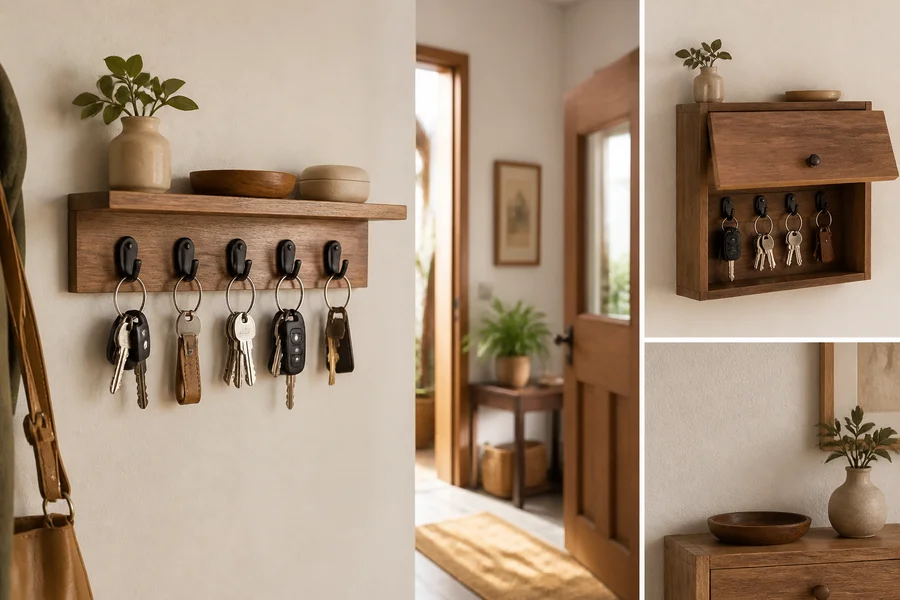
Quick Answer
The best key rack holds every regular household key set without crowding, fits your available wall space, and uses a mounting method suited to the surface. Choose open hooks for fast access, covered storage for a neater look, and a shelf or mail area only when it supports your daily entryway routine.
Definitions
Key rack
A wall-mounted organiser designed to hold household keys, usually with hooks and sometimes a shelf, cover, labels or mail storage.
Open key rack
A rack where hooks and keys remain visible, making individual key sets quick to identify and access.
Covered key rack
A key organiser with a door, panel or enclosed section that conceals the hooks or keys when closed.
Hook spacing
The distance between hooks and surrounding surfaces. Adequate spacing helps prevent key bunches from colliding or tangling.
Rental-friendly mounting
An installation approach intended to reduce drilling, such as a suitable stick-on system, subject to the wall finish, load limits and lease terms.
Best Key Rack: The Short Answer
There is no single best key rack for every home. The right choice depends on how many key sets need a home, the wall space and surface available, how visible you want keys to be, and whether the rack also needs to catch mail or small everyday items.
A compact hook-only design works well when the goal is simply to stop keys wandering. A shelf-and-hooks organiser is more useful when your entrance also needs a small drop zone for post, receipts or other lightweight essentials. Start with function, then choose a finish that suits the room.
- Choose by capacity, dimensions, mounting method, visibility, storage format, material and placement rather than appearance alone.
- Allow one hook for each regularly used key set, plus realistic spare capacity.
- Match the mounting method to the wall and any rental restrictions.
1. Start With Key Quantity and Hook Count
Count the key sets used most days before you browse. Include household members’ keys, shared gate or utility keys, and any spare set that genuinely needs to be accessed near the door. A rack that is full from day one is more likely to become cluttered.
For a small household, a compact format may be enough. A family household may benefit from more hooks, but usable capacity also depends on the size of each key bundle. Thick fobs, access cards, tags and several keys on one ring take more room than a simple single key.
- Choose hooks with enough separation for bulky rings, fobs and tags.
- Keep one or two hooks free where guests, helpers, backup keys or household changes are part of the routine.
- Assigning a hook by person or purpose can reduce last-minute searching.
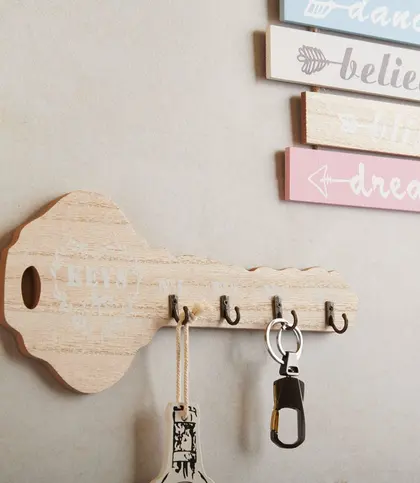
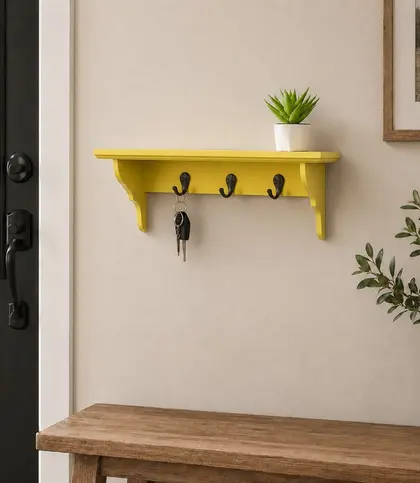
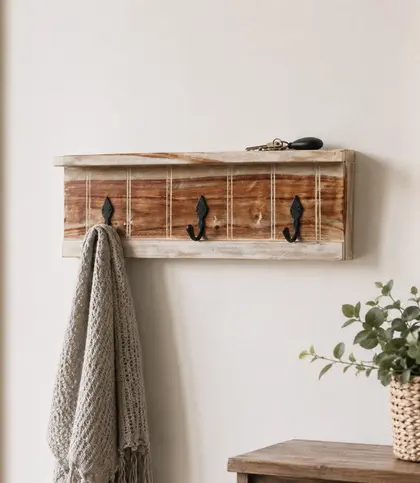
For straightforward key storage, compare hook-led formats such as the House Master Key Holder - Beige, Entry Aura Wood Hooks & Key Holders, Foyer Charm Metal Hooks & Key Holders and Key Cove Wood Hooks & Key Holders. Check each product page for dimensions, hook layout and installation details before choosing.
₹499
₹998
50%OFF
₹1,571
₹1,899
17%OFF

₹1,036
₹1,899
45%OFF
₹1,142
₹1,899
40%OFF
2. Compare Rack Size, Hook Spacing and Wall Clearance
Measure the usable section of wall before selecting a rack. Note the width and height, but also the depth the organiser will occupy once keys are hanging from it. This matters in narrow halls, beside opening doors and near a frequently used coat area.
Look closely at the relationship between the hooks, any shelf and the surrounding wall. Long keychains should not catch on the shelf below, the door behind them or neighbouring key sets. A wider organiser can make everyday use easier when several people need distinct places for keys.
- Check door swing and passage clearance around the proposed location.
- Leave room for coats, bags and umbrellas to move without knocking keys off hooks.
- Use a compact profile where the entrance wall is narrow or busy.
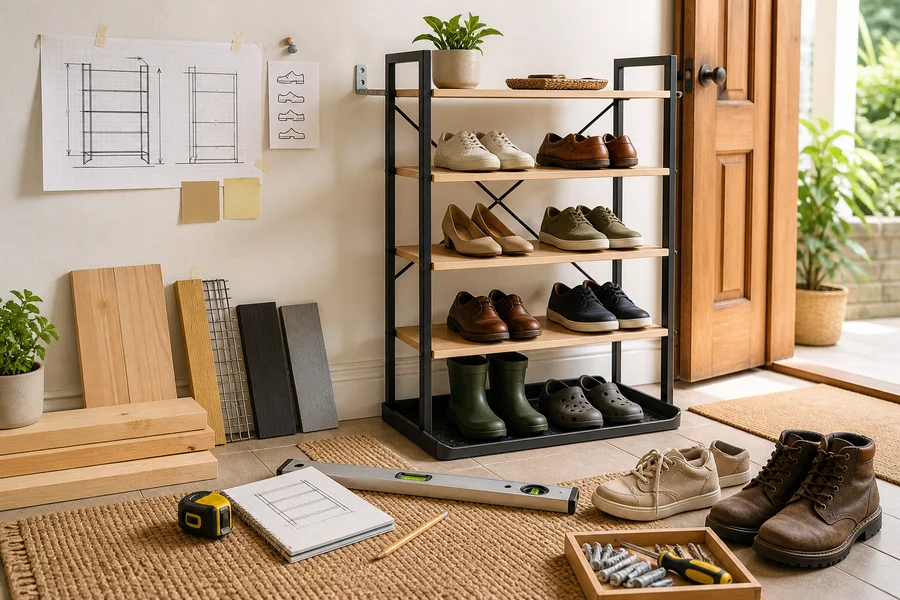
3. Match the Mounting Method to Your Wall
The most suitable fixing method depends on the wall surface and the rack’s intended load. Wood and masonry can suit screw-based installation when the fixing point and hardware are appropriate. Confirm the product’s supplied hardware and installation guidance before committing to a position.
Tile needs particular care, especially near edges and grout lines. In a rented home, a stick-on option such as the Storo Stick-on Hang Key Holder may be worth considering, but only after checking the wall finish, adhesive instructions, expected load and lease conditions. Adhesive performance can vary on painted, textured, damp, dusty or uneven surfaces.
- Avoid assuming that one screw or adhesive type suits every surface.
- Check that the selected position is dry, sound and practical for the rack’s use.
- Consider the weight of keys and any items placed on an added shelf.
4. Choose the Right Storage Format
Open hooks are the simplest choice for quick identification and access. They are especially useful when several similar key sets are used every day. Covered organisers can make an entrance look calmer by concealing keys, although opening a door or panel adds a small extra step. Covered storage is primarily a visual feature, not a substitute for broader home-security measures.
Shelf-plus-hooks designs create a useful landing spot for light entryway essentials. They need more depth and benefit from occasional clearing so the shelf does not become a catch-all. A mail slot is worth having when post is routinely handled at the entrance; otherwise, it may add bulk without improving your routine.
- Choose open hooks for speed and at-a-glance visibility.
- Choose covered storage primarily for visual tidiness.
- Use labels where they prevent mix-ups, but avoid sharing unnecessary personal information.
- Choose a shelf or mail feature only when it supports an established habit.
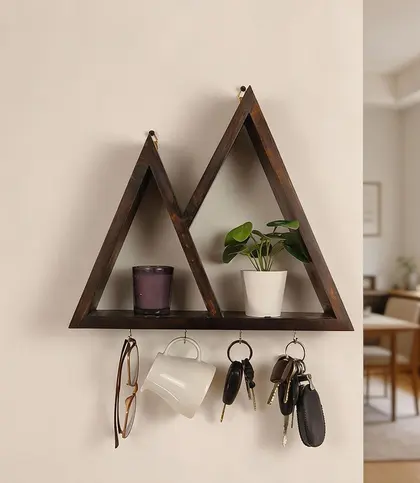
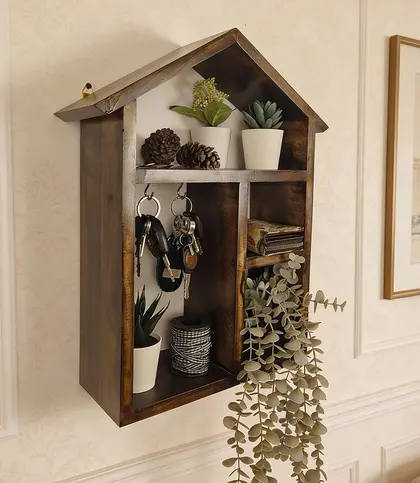
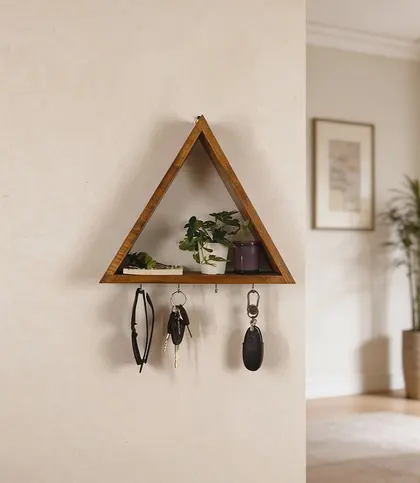
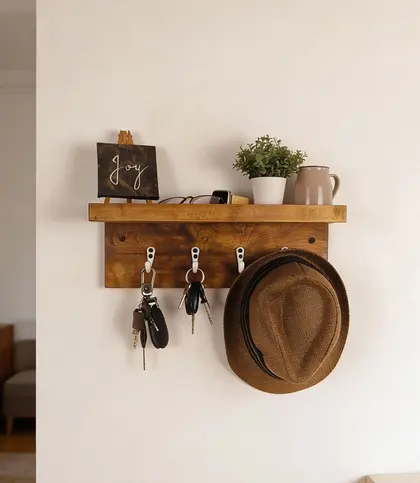
If a small drop zone is part of your routine, compare shelf organisers with key holders and check their dimensions and product-page contents before deciding.
₹1,899
₹3,490
46%OFF
₹3,599
₹4,990
28%OFF
₹1,349
₹2,490
46%OFF
₹1,899
₹2,990
36%OFF
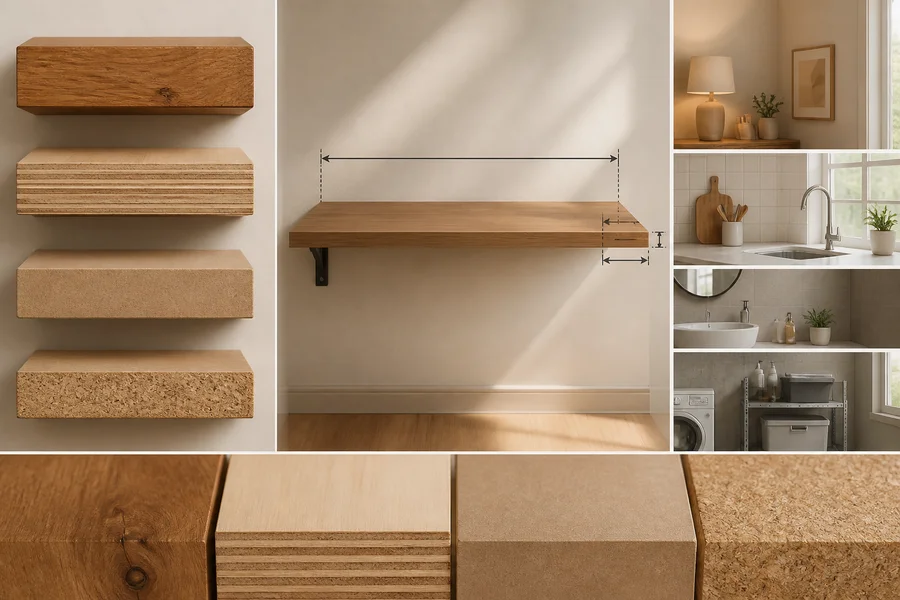
5. Evaluate Materials, Finishes and Cleaning Needs
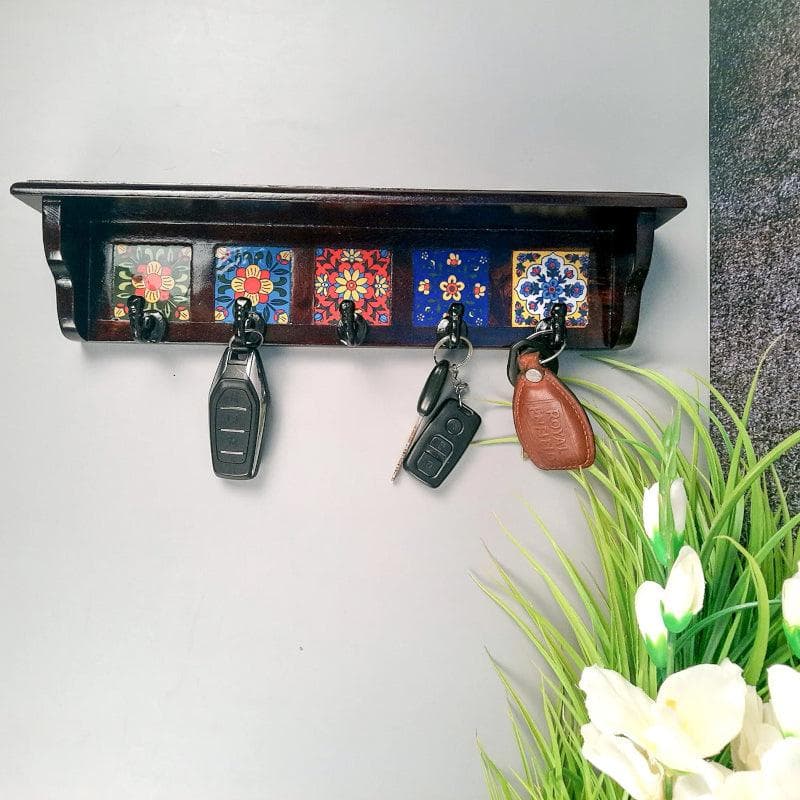
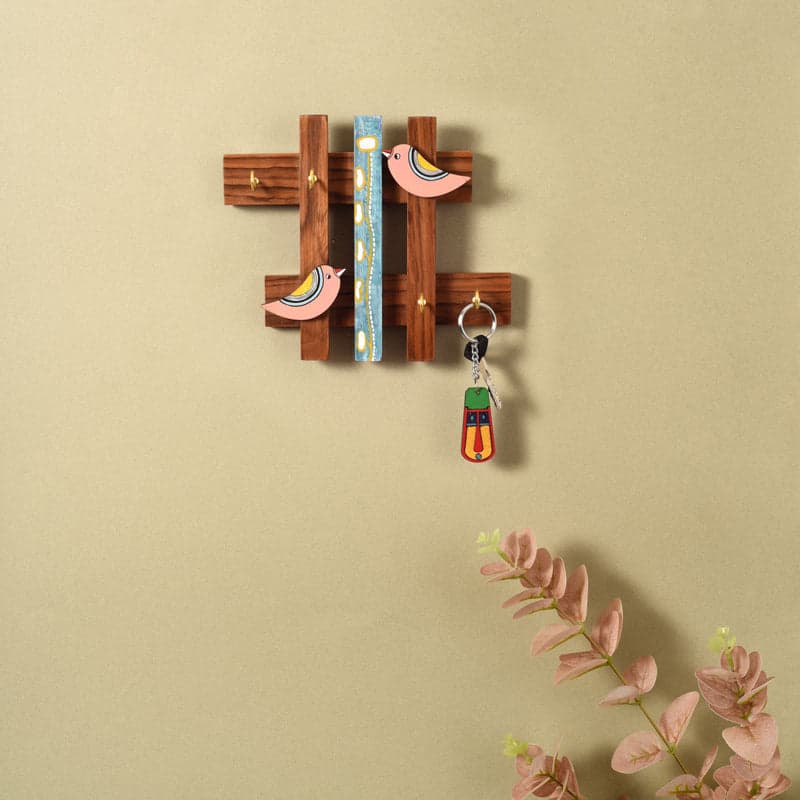
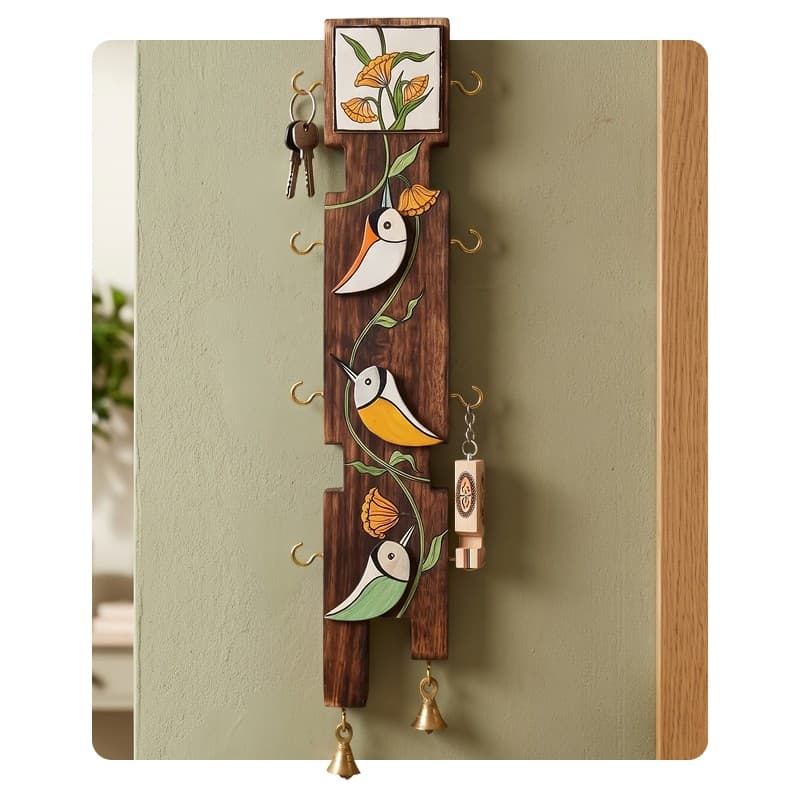
Material should work with both the look and conditions of the entryway. Wood can bring warmth to traditional, rustic and relaxed interiors, while metal can complement cleaner, more contemporary schemes. MDF can be suitable for a dry hallway, provided its edges and finish are kept away from persistent moisture.
Consider the care a finish will need in a high-touch area. Glossy and glass-like surfaces can show fingerprints readily, while some dark or matte finishes may make dust more visible. Choose a rack that contrasts enough with its wall to be easy for household members to find without making keys conspicuous from outside.
- Use wood for a warm, familiar visual effect in a dry location.
- Check metal finishes for their cleaning instructions and likely visibility of marks.
- Keep moisture exposure in mind when considering MDF or wood-based organisers.
- Choose a finish that supports easy everyday visibility indoors.
6. Use This Entryway Placement Checklist
Put the rack close enough to the entrance that returning keys becomes automatic, but not where an opening door, coat or bag blocks it. A spot that residents can see easily but is less directly visible from an exterior door or window is usually the most practical balance.
Choose a comfortable reach height for the people who use the rack most. Before installation, check for switches, sockets, door hardware and narrow walkways. Once it is in place, keep each hook purposeful and clear the shelf or mail area periodically so the organiser remains useful.
- Keep keys convenient for the household and less visible from outside.
- Do not place the rack where it interferes with doors or passageways.
- Reserve hooks by person, key type or use case when that helps your household.
- Review stray mail and unused items regularly.
Key Rack Buying Checklist
Use this checklist to compare options consistently. The most practical rack is usually the smallest format that holds all regular key sets comfortably, suits the wall and supports the way your household arrives and leaves each day.
- Capacity: Does it hold everyday keys and realistic spares without crowding?
- Dimensions: Does it fit the available width, depth and clearance around the entrance?
- Mounting: Is the fixing approach appropriate for tile, wood, masonry or a rental wall?
- Format: Do you need hooks only, covered storage, a shelf or mail storage?
- Visibility: Can people find their keys easily without exposing them unnecessarily?
- Maintenance: Does the finish suit dust, fingerprints, moisture and your cleaning routine?
- Placement: Will the location remain convenient and unobstructed?
Which Key Rack Type Fits Your Entryway?
For a compact hallway with only a few key sets, a simple wall-mounted holder is often the most efficient choice. The House Master Key Holder - Beige is a useful compact key-holder format when you want a straightforward dedicated spot for keys.
For an entryway that also needs a place for small daily items, compare wall shelf organisers such as the Illustratia Wooden Wall Shelf Organiser with Key Holders or the Marquis Wooden Wall Organiser with Key Holders. If coats and keys need to be managed together in a larger household entrance, a broader format such as the Struktura Wooden Wall Coat Hanger cum Key Holders may better match the routine.
- Choose a compact holder when keys are the only item that needs organising.
- Choose a shelf organiser when a small drop zone will be used consistently.
- Choose a broader organiser when coats and keys need to be managed together.
- Treat product examples as format references rather than universal rankings.
Make the Final Choice
Choose the smallest key rack that comfortably holds every regular key set plus sensible spare capacity. Then confirm that its dimensions, hook spacing and mounting method suit the available wall, entryway clearance and any tenancy conditions.
Open hooks suit quick everyday access, while covered options offer a more visually contained arrangement. Shelf and mail features are worthwhile only when they support a genuine habit. Finish by choosing a convenient, discreet position that stays clear of doors, coats and passageways.
Final Verdict
- Choose a key rack by capacity, wall compatibility, storage needs and discreet everyday placement—not appearance alone.
FAQs
How many hooks should a key rack have?
Allow one hook for each regularly used key set, then add one or two spare hooks if you keep backup, guest or shared household keys near the entrance. Also consider the size of each key bundle, since bulky fobs and tags need more space than the hook count alone suggests.
Where should a key rack be placed?
Place it near the entrance or everyday drop zone so returning keys becomes habitual. Keep it clear of door swings, coats, bags, switches and narrow passages, and choose a position that is convenient for residents but less directly visible from outside.
What is the best key rack for a rented home?
A suitable stick-on rack can be a practical option for a rented home when the wall finish, adhesive instructions, load limit and lease terms permit it. Check surface compatibility carefully, as adhesives are not equally suitable for every painted, textured, damp or uneven wall.
How do I mount a key rack on tile or masonry?
Confirm the rack’s installation instructions and use hardware appropriate for the surface. Tile needs care around edges and grout, while masonry generally requires suitable screw-based fixing. If you are uncertain about the wall or fixings, seek appropriate installation advice rather than forcing an unsuitable method.
Are covered key racks more secure?
Covered racks can conceal keys and create a tidier visual effect, but they are not a substitute for broader home-security measures. Their main advantage is reducing visual clutter and making keys less immediately visible within the entryway.
What size key rack is best for a small entryway?
Choose a compact, shallow rack that holds your actual number of key sets without crowding. Measure wall width, usable depth, door clearance and the hanging length of your key bundles before deciding.
Should a key rack include a shelf or mail slot?
Choose a shelf when you routinely need a small spot for lightweight entryway items, and choose a mail feature when post is genuinely sorted near the door. If neither feature supports an established habit, a hook-only rack is usually simpler to keep tidy.
Keep exploring