


Is Aluminum Bakeware Safe? A Practical Use-and-Care Guide
Quick Answer
Aluminum bakeware is not automatically safe or unsafe as a category. Intact bakeware used within its manufacturer instructions can be suitable for oven baking, but the practical decision depends on whether it is bare, anodized, coated, or lined; the food being baked; oven conditions; and the pan’s condition. Stop using items with peeling coatings, severe scratches, pitting, corrosion, warping, or unknown food-contact surfaces.
Definitions
Bare aluminum
Uncoated aluminum whose surface is directly exposed to food. It conducts heat efficiently but may be more reactive with some acidic, salty, or alkaline foods.
Anodized aluminum
Aluminum treated to create a harder, more stable surface layer. It is not the same as a nonstick coating, and its care and food-use limits still depend on the product instructions.
Coated aluminum
Aluminum covered with a separate finish, such as a nonstick or enamel-like layer. The coating, rather than the exposed aluminum alone, becomes the key condition to monitor.
Lined aluminum
Aluminum with a distinct food-contact liner or insert, such as paper, silicone, stainless steel, or another specified material. The liner’s instructions determine suitability.
Pitting
Small holes or crater-like areas in the metal surface, often associated with corrosion. Pitting can make cleaning difficult and may justify discontinuing use when it affects the food-contact surface.
Is Aluminum Bakeware Safe? The Short Answer
Intact aluminum bakeware used according to its manufacturer instructions may be suitable for oven baking. However, the word “aluminum” alone does not tell you enough to judge a particular tray, tin, or pan.
Start with the food-contact surface, then consider the recipe, oven temperature, baking time, the item’s condition, and its stated care instructions. Bare metal, anodized finishes, separate coatings, and liners need different handling.
This is practical home product-use guidance, not individualized medical advice or a substitute for manufacturer instructions and applicable local food-contact requirements.
- Check what surface touches food before using or buying a pan.
- Match the pan to the recipe, especially when ingredients are acidic, salty, or alkaline.
- Inspect the pan for damage and follow its stated oven, utensil, and cleaning limits.
Bare, Anodized, Coated, and Lined Aluminum: What Changes?
Bare aluminum has direct food contact and is valued for responsive heat conduction. It deserves closer consideration with reactive recipes and prolonged contact, particularly if food will remain in the pan after baking.
Anodized aluminum has a treated, harder surface layer. That does not make it identical to a coating or a universal answer for every recipe; its permitted uses and care still come from the product instructions.
With coated aluminum, the condition of the coating is central. Peeling, bubbling, flaking, cracking, or exposed underlying material changes the decision and is a reason to stop using the item until the manufacturer can advise.
Lined aluminum depends on the liner itself. Check the liner’s food-contact, oven-temperature, cleaning, and replacement guidance rather than assuming the aluminum body determines every use.
- Look for material and care details on the packaging, product page, or manufacturer instructions.
- Do not identify a surface from colour or appearance alone.
- Treat an unknown coating or liner as a reason to pause food use until it can be identified.
How Acidic, Salty, and Alkaline Foods Affect Suitability
Tomatoes, citrus, vinegar-heavy mixtures, strongly salted preparations, and alkaline ingredients call for extra attention, especially in bare aluminum. Acidity or alkalinity, salt concentration, moisture, heat, and contact time can all affect how a food interacts with a surface.
A short baking period is different from cooling or storing food in the same pan. Storage extends contact time, so move food to an appropriate container when the product guidance discourages extended contact with reactive foods.
This does not mean every brief contact is unsuitable, or that every anodized or coated item removes all considerations. Read the restrictions for the particular bakeware, and choose a lined or different vessel when the label cautions against the recipe you plan to make.
- Check product instructions before baking tomato, citrus, vinegar-rich, very salty, or alkaline recipes.
- Avoid leaving food in the pan longer than necessary when extended contact is discouraged.
- Choose a material suited to the recipe if the pan’s food guidance is unclear.
₹1,591
₹3,065
48%OFF
Temperature, Cooking Duration, and Storage Matter
Use aluminum bakeware only within the manufacturer’s stated oven range. Observe any restrictions covering broiling, grill elements, direct flame, rapid temperature changes, or preheating an empty pan.
High heat can affect coatings and liners, and may contribute to discoloration, warping, or reduced food release. The metal’s heat tolerance is not the only factor: the entire construction and food-contact surface matter.
Repeated use and long cooking times are reasons to follow the label closely, not reasons to rely on a universal temperature number. After baking, let the item cool as directed, then clean and dry it before storage.
- Do not assume broiler, grill, or direct-heat use is permitted.
- Avoid rapid changes from very hot to very cold unless the manufacturer expressly allows them.
- Do not store acidic, salty, or alkaline food in aluminum when the instructions advise against prolonged contact.
- Avoid stacking pieces in a way that can scrape a coated surface.
Cleaning and Storage: Preserve the Food-Contact Surface
Check whether the specific item is dishwasher safe; not all aluminum or coated aluminum bakeware is dishwasher compatible. When in doubt, use the manufacturer-approved method, often gentle washing with a soft sponge or cloth and a suitable mild detergent.
Avoid abrasive powders, steel wool, harsh scraping, and unapproved chemical cleaners. These can dull, scratch, or strip surfaces, making the pan harder to maintain and assess.
Use utensils that suit the surface. Do not use metal utensils on a coating unless the manufacturer explicitly permits them. Dry bakeware thoroughly before storage, and place a soft barrier between nested pieces when contact could cause scratching.
- Follow the product’s dishwasher guidance rather than assuming it applies to all aluminum.
- Use soft cleaning tools and gentle pressure.
- Remove stuck food with a manufacturer-approved soaking or cleaning approach instead of aggressive scraping.
- Store fully dry to reduce avoidable surface deterioration.
When to Stop Using or Replace Aluminum Bakeware
Stop using coated or lined bakeware when the food-contact surface is peeling, flaking, bubbling, cracking, or exposing an uncertain underlying layer. A damaged liner should be assessed using the liner manufacturer’s guidance.
Deep scratches, extensive gouges, corrosion, or pitting on the food-contact surface are reasons to discontinue use or seek manufacturer guidance. These differ from light cosmetic marks that do not affect the surface’s integrity.
Replace a pan that is warped enough to sit unstably, leak, bake unevenly, or interfere with oven racks or lids. If you do not know the material, coating, temperature limit, or history of damage, avoid using it for food until its intended use is confirmed.
- Keep using intact bakeware within its stated instructions.
- Modify use when recipe chemistry or minor surface wear raises a question.
- Replace or discontinue use when damage affects food contact, stability, or reliable baking performance.
Aluminum Compared With Other Baking Materials
Aluminum is often chosen for its light weight and heat response, but the surface condition, recipe chemistry, and label limits remain important. It is one useful option, not a universal winner for every baking task.
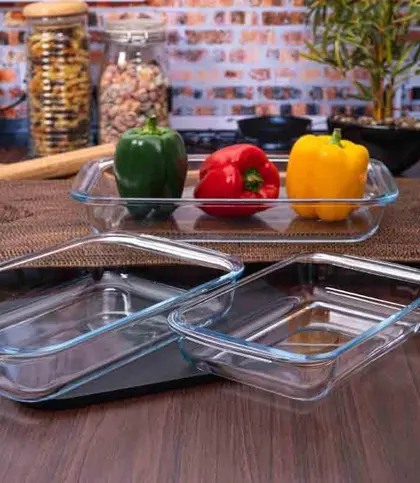
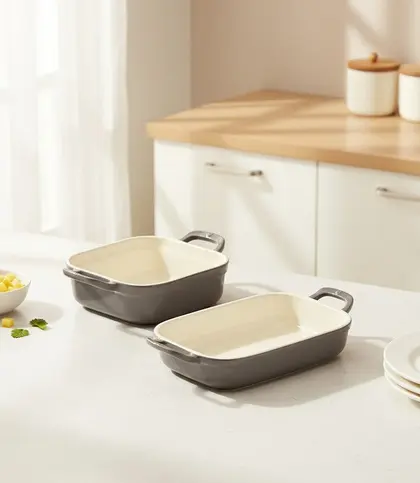
Stainless steel is generally durable and less reactive than bare aluminum, though it may heat and release food differently. Glass can offer a non-aluminum food-contact surface and clear visibility, but it needs careful attention to thermal-shock guidance. Ceramic can suit baking and serving, while its oven limits, chips, cracks, and cleaning requirements still matter.
Cast iron retains heat strongly and can suit some baking styles, but it is heavy and may need seasoning or rust-care practices depending on its finish. Choose the material that suits your recipe, handling preferences, and ability to follow the care instructions.
- Choose stainless steel for a durable option when its heat behaviour suits the recipe.
- Consider glass or ceramic when their stated oven and temperature-change limits fit your use.
- Consider cast iron for recipes that benefit from strong heat retention.
- Use the same label-first checks for every material, including alternatives to aluminum.
 FastDelivery
₹1,458
₹2,235
35%OFF
₹4,724
₹6,999
33%OFF
A Label-First Checklist Before You Buy or Bake
A short label check can prevent guesswork. Use it for a new purchase and before returning an older pan to regular use, especially when its material or care history is uncertain.
If a label does not answer the key food-contact and oven-use questions, select bakeware with clearer manufacturer guidance or choose another material that better fits your recipe and care routine.
- What is the food-contact surface: bare aluminum, anodized aluminum, a coating, or a separate liner?
- Does the item state an oven temperature range and exclude broiling, grill use, direct heat, or sudden temperature changes?
- Are acidic, salty, or alkaline foods restricted, and does the guidance address storage after baking?
- Is dishwasher use allowed, and which utensils and cleaning products are compatible?
- Is the pan flat, stable, intact, and free from peeling, deep scratches, corrosion, pitting, cracks, or leaks?
- Does its size and shape fit the intended home-baking task without overcrowding or unstable placement?
Final Verdict
- Aluminum bakeware can be a practical choice when its food-contact surface is intact, its intended foods and oven conditions fit the label, and its cleaning and storage routine preserves the surface.
- Bare aluminum calls for more caution with reactive foods and extended contact. Anodized, coated, and lined products should be judged by their own surface and manufacturer instructions.
- Discontinue or replace bakeware that is peeling, deeply scratched, corroded, pitted, warped, leaking, or poorly identified. If a different care profile suits your kitchen better, compare stainless steel, glass, ceramic, or cast iron using the same label-first approach.
FAQs
Is aluminum bakeware safe to use in the oven?
It may be suitable when it is intact and used within the manufacturer’s stated oven and food-contact instructions. Check the surface type, temperature limits, recipe, and condition rather than relying on the material name alone.
Is bare aluminum bakeware safe for acidic foods?
Bare aluminum needs extra attention with acidic foods such as tomato, citrus, and vinegar-rich mixtures. Suitability depends on the product guidance and contact conditions, including heat, moisture, and time. Avoid extended storage in the pan when instructions discourage it.
Is anodized aluminum bakeware safer than bare aluminum?
Anodized aluminum has a treated surface layer, but it is not a universal guarantee and is not the same as a separate nonstick coating. Follow the specific product’s food-use, oven, utensil, and cleaning directions.
Can scratched aluminum bakeware still be used?
Light cosmetic marks are different from deep scratches, gouges, exposed coating, pitting, or corrosion. Stop using coated or lined pieces that are peeling or damaged, and seek manufacturer guidance for deep damage on a food-contact surface.
Is aluminum bakeware dishwasher safe?
Some items may be, but dishwasher compatibility varies by construction and finish. Use the manufacturer’s care instructions rather than assuming all aluminum bakeware can go in the dishwasher.
What temperature is safe for aluminum bakeware?
Use the oven range stated by the manufacturer. There is no single temperature that applies to every aluminum pan because coatings, liners, handles, construction, and broiler restrictions can differ.
How should aluminum bakeware be cleaned and stored?
Follow the approved cleaning method, typically with a soft sponge or cloth and suitable mild detergent. Avoid abrasive tools and harsh scraping, dry the item fully, and use a soft barrier between stacked pieces if scratching is possible.
When should aluminum bakeware be replaced?
Replace or discontinue use when there is peeling, flaking, bubbling, cracking, deep damage, corrosion, pitting, instability, leaks, serious warping, or an unknown food-contact surface. Minor discoloration alone does not necessarily mean the pan must be replaced.