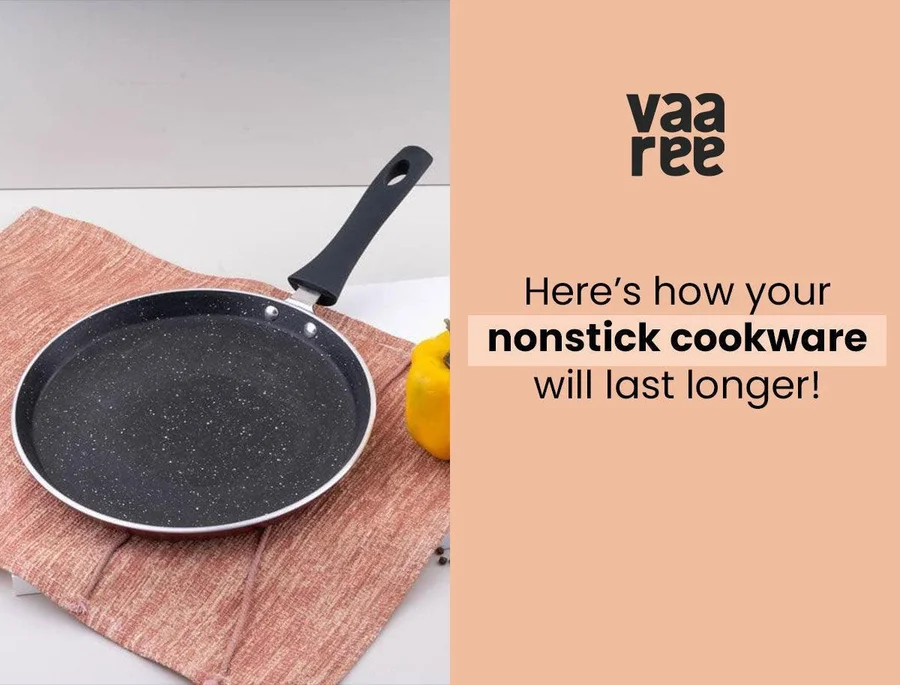
‘Cookware’ is an indispensable part of every home. Kitchens may include cast iron, copper, aluminium, non-stick cookware, clay pots and more. Non-stick pans can be convenient for everyday dishes such as dosas, omelettes and sautéed vegetables, but their care requirements vary by product. Following the manufacturer’s instructions from the start can help you use and maintain a pan appropriately.
What is non-stick cookware made of?
Non-stick cookware may use different surface treatments and materials. Check the manufacturer’s product information for the exact pan to understand its coating, recommended utensils, heat guidance and cleaning instructions.
Over time, a non-stick surface may show signs of wear. Regular, gentle cleaning and careful use can help you look after it.
You may find these useful for routine cleaning and care:
- Mild dishwashing detergent
- Baking soda for stubborn residue, if suitable for the pan
- A soft cloth or sponge
- Cooking oil, only where the manufacturer recommends it
Although some cookware may have seasoning instructions, this is not universal for non-stick pans. Follow the guidance supplied with your specific cookware.
Here are 8 easy ways to care for your non-stick cookware
1. Follow the instructions carefully
Before using a new pan, saucepan, kadhai or grill pan, read the care instructions provided by its manufacturer. These directions are the best reference for suitable heat levels, cleaning methods, dishwasher use and any preparation before first use.
2. Season your cookware only if advised
Wash new cookware as instructed and dry it before use. If the manufacturer recommends oiling or seasoning the surface, follow those directions; otherwise, there is no need to add an extra step.
3. Do not overheat
Avoid overheating non-stick cookware, particularly when it is empty. Use the heat setting and preheating method recommended for your particular pan, and add food or cooking fat as directed in its care guidance.
4. Check dishwasher guidance
Follow the manufacturer’s care instructions for the exact cookware. If dishwasher use is permitted, use the stated cycle and detergent guidance. Otherwise, wash the pan by hand with a soft sponge and mild detergent.
5. Refrain from steel wool
Avoid steel wool and other abrasive scrubbers unless the manufacturer specifically permits them, as they can damage the coating. For stuck-on food, soak the cookware in warm, soapy water if its care instructions allow it, then clean gently with a soft sponge. Check the maker’s guidance before using baking soda or any other cleaning method for stubborn residue.
6. Avoid sharp objects
Do not use knives or other sharp utensils against the cooking surface. Use the utensils recommended by the manufacturer; many non-stick pans call for gentler options such as wooden, nylon or silicone utensils.
7. Use cooking sprays with care
Check whether your pan’s manufacturer recommends or discourages cooking sprays. Where appropriate, use the amount of oil or butter that suits your recipe and the cookware’s care guidance.
8. Let it cool down
Allow a hot pan to cool before washing it. Avoid sudden temperature changes, and follow the manufacturer’s instructions for soaking. When stacking pans, use a soft cloth or pan protector between them where needed to help prevent surface contact.
With a few consistent habits, non-stick cookware can remain a useful part of everyday cooking. Clean it gently, use it within its recommended limits and refer to the product instructions whenever you are unsure.
If the coating is visibly damaged, stop using the cookware and consult the manufacturer’s care or replacement guidance.
For pans and tawas suited to different cooking routines, compare the product-page details, including dimensions, care information and contents, before choosing.
FAQs
1. How do you maintain non-stick cookware?
Clean it with mild detergent and a soft cloth or sponge, then follow the exact manufacturer guidance for heat, utensils, storage and any additional care.
2. How do you keep non-stick pans in good condition?
Avoid overheating and abrasive cleaning tools, do not use sharp utensils on the surface, and follow the instructions supplied with the pan.
3. Can you use soap on non-stick pans?
Mild soap or warm, soapy water is commonly used for cleaning, but always follow the care instructions for your particular pan and coating.
Keep exploring