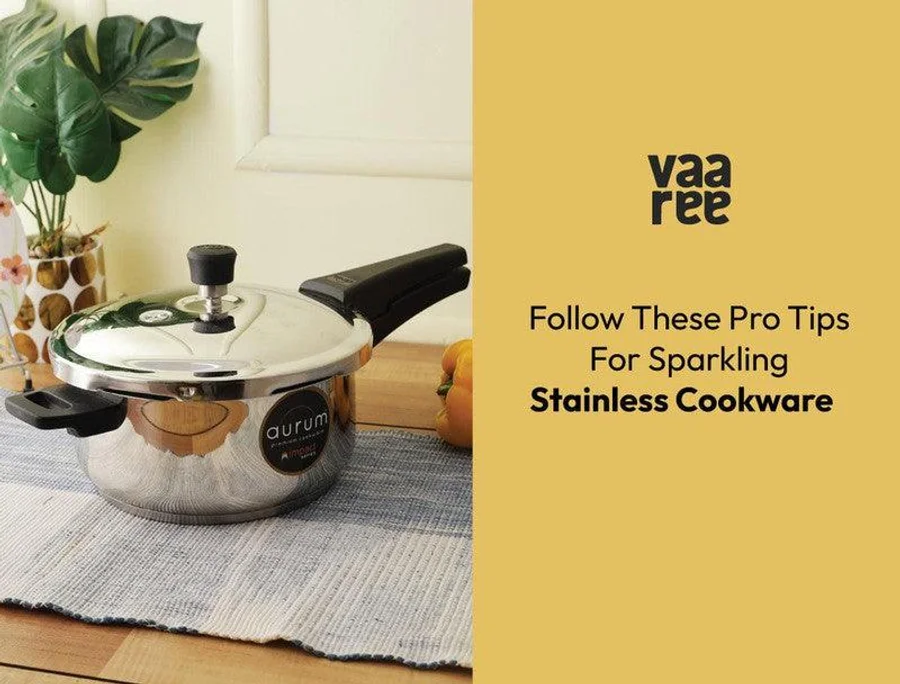
Stainless steel has a ubiquitous presence in Indian homes, from dinner plates to cookware. Stainless steel pots and pans are used extensively for a variety of kitchen tasks. With a little care and maintenance, you can help keep their surface looking clean and bright.
Why Use Stainless Steel?
Stainless steel cookware is made from iron-based alloys that commonly include chromium and may include nickel or other elements. Its corrosion resistance and service life vary with grade, construction, use and care. When choosing a pan, check its material specification, cooktop compatibility and care instructions.
General reasons people choose stainless steel cookware include:
- It can be resistant to chipping, denting, cracking and corrosion, depending on the grade and construction.
- It is used for a wide range of hot cooking tasks; check the temperature guidance for the exact pan, lid and handles.
- A clean, smooth cooking surface can be straightforward to wash after use.
- It is often chosen for recipes where you want the ingredients and seasoning to remain the focus.
- Heat retention and distribution vary by the pan’s construction, so check product details and use the heat level recommended for your cookware.
How To Season Steel Cookware
Some manufacturers provide preheating or oil-use guidance for particular stainless steel cookware, but this should not be treated as a guarantee of a non-stick surface. Follow the instructions for the exact item and cooking task.
If your cookware manufacturer recommends an oil-preparation step, use moderate heat, add oil as directed and allow the pan to cool before wiping it clean. Do not deliberately heat oil until it smokes. For everyday cooking, follow the pan’s guidance for preheating, heat level and when to add oil.
How To Clean Steel Utensils
A short guide to better cleaning:
- Let the pan cool before immersing it in water.
- Rinse away excess food with warm water.
- Use dishwashing liquid and a non-abrasive scrubber to clean the surface gently.
- Rinse thoroughly and dry promptly.
For food that has stuck to the cookware, add water and gently warm it to loosen the residue. Once the pan has cooled enough to handle safely, wash it with warm, soapy water and a non-abrasive scrubber. Baking soda may be useful for stubborn residue; check the care instructions for your cookware first.
Overheating can cause discolouration. Follow the manufacturer’s cleaning guidance for the specific finish rather than using a cleaner not recommended for the item.
Tips On Stainless Steel Cookware Maintenance
- Add salt to water after it begins to boil to help avoid marks on the bottom of the pan.
- Dry cookware soon after washing to help reduce water spots.
- Use utensils that suit the cookware and your recipe, and avoid harsh scouring where the care instructions advise against it.
- Place protectors or a soft cloth between stacked pots and pans to help prevent surface scratches.
- Preheating guidance varies by cookware construction, heat source and recipe. Follow the current item’s instructions for heat level, timing and when to add oil; preheating does not guarantee non-stick performance.
When choosing new cookware, compare the care instructions, dimensions and product-page contents with your cooking needs.
Frequently Asked Questions
1. How do I clean stainless steel kitchen cookware?
Let the cookware cool before washing. Use dishwashing liquid, warm water and a non-abrasive scrubber, then rinse and dry it promptly. For stuck-on food, loosen it with water before cleaning rather than scraping aggressively.
2. Should I soak stainless steel cookware before cleaning?
Soaking is not always necessary. If food is stuck to the bottom, add water and allow time for the residue to loosen before washing. Avoid leaving cookware soaking for extended periods unless its care instructions permit it.
3. Can I use the dishwasher to clean stainless steel cookware?
Dishwasher compatibility varies by construction, finish, handles and manufacturer guidance. Check the care instructions for the exact cookware before using a dishwasher.
4. What should I do if my stainless steel cookware develops rust spots?
Stainless steel can still stain or corrode depending on its grade, construction, exposure and care. First, follow the manufacturer’s cleaning and drying instructions. A paste of baking soda and water may help with light spots; rinse thoroughly afterwards. If the marks persist, consult the cookware manufacturer for item-specific advice.
Keep exploring