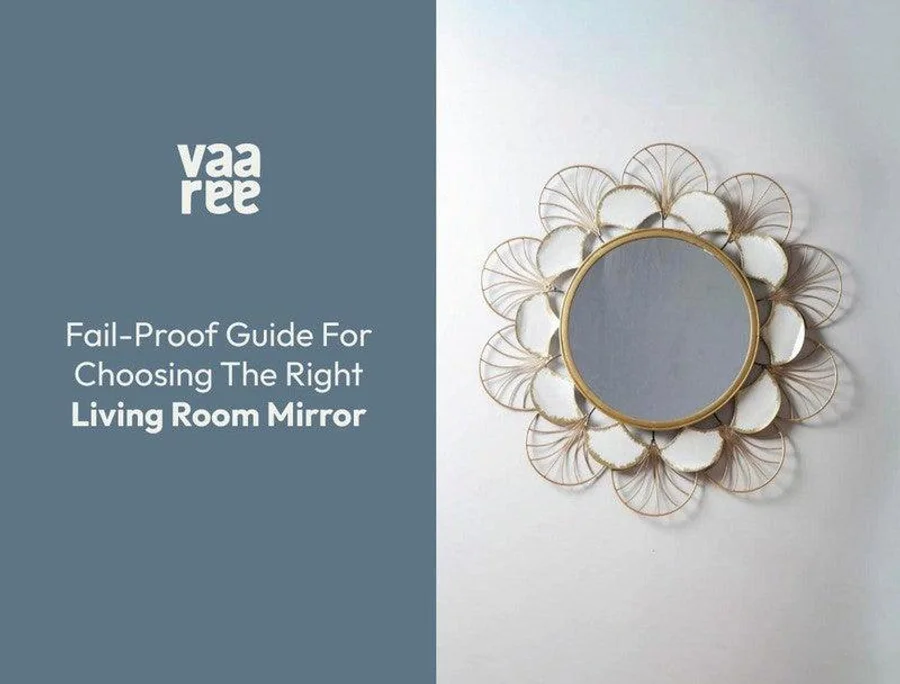
Mirror, mirror, on the wall, is no longer just for telling who’s the fairest of them all! While beautiful mirrors continue to be partners to our vanity, modern décor aesthetics have elevated their role to being crucial elements of both style and functionality. When picked out correctly, mirrors have the ability to transform a space from boring to chic.
Tips and tricks for choosing the right decorative mirror for your living room
1. Mirror Size
Proportions and balance are critical in interiors, and this applies to accessories like mirrors as well. Identify the space where you will hang the mirror, then use these guidelines:
A large empty wall with no furniture can take one or two large mirrors, or a few smaller mirrors arranged across the wall.

For walls near furniture, select mirrors that are about two-thirds to three-quarters the width of the furniture, such as a sofa or console table, to maintain balance.

If the mirror is intended as a focal piece, it can be larger than the other decorative objects around it.

Accent mirrors work well when they are approximately the same size as, or slightly larger than, the décor accessories around them.

In a darker room, a larger decorative mirror can help reflect available light and make the room feel brighter.

2. Mirror Shape
Let the décor theme of your living room and the design of its furniture guide the shape of the mirror.
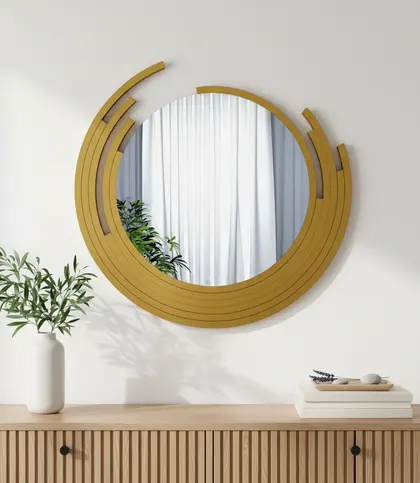
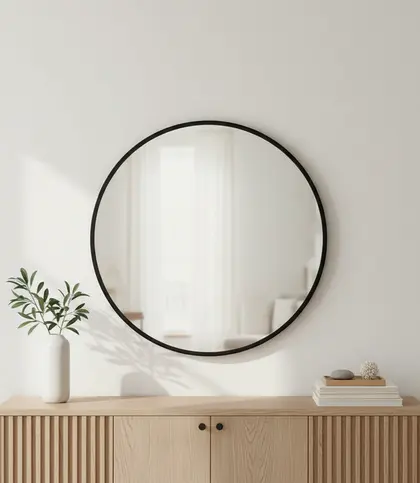
If your furniture is modern, with sleek lines and minimal adornment, choose a mirror with soft edges to balance it. Round or oval shapes can work particularly well.
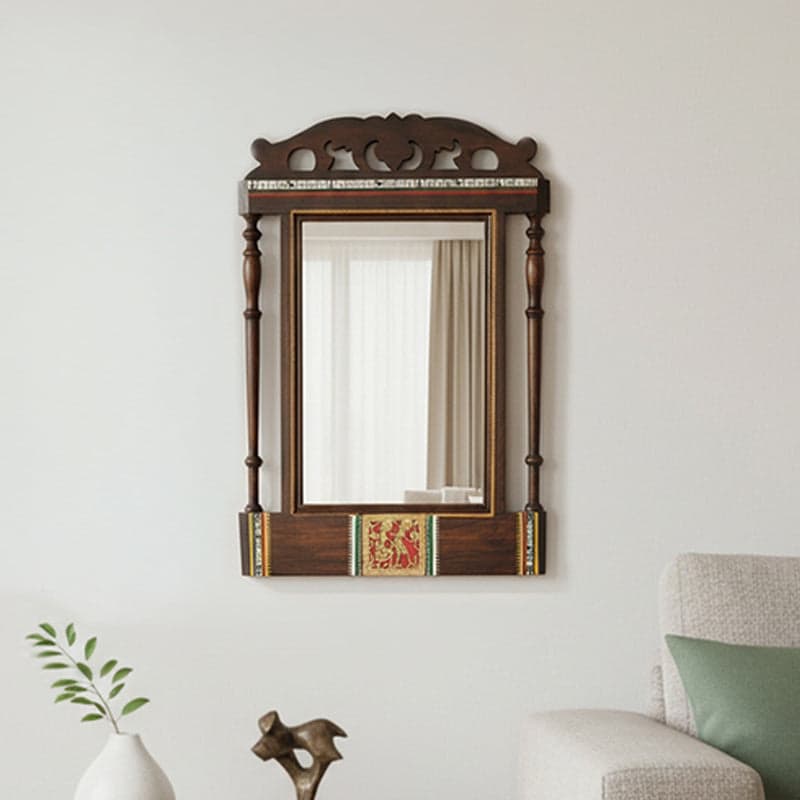
For rustic or traditional décor, a square or rectangular mirror can complement the room’s more classic lines. Consider the listed frame material and finish alongside the rest of the room before deciding.
If your living room has an eclectic or bohemian feel, a mirror with a distinct shape or a macramé-style design can become part of the room’s layered, collected look.
Consider these current options alongside your wall measurements, layout and the product-page details.

₹1,479
₹2,200
33%OFF
From ₹3,449
₹8,999
62%OFF

₹949
₹2,000
53%OFF
₹1,934
₹2,879
33%OFF
3. Mirror Placement
Although decorative mirrors can be hung in many places, certain positions can make them especially effective.
Allow the mirror to reflect a piece of art or your balcony garden to create an interesting visual effect.

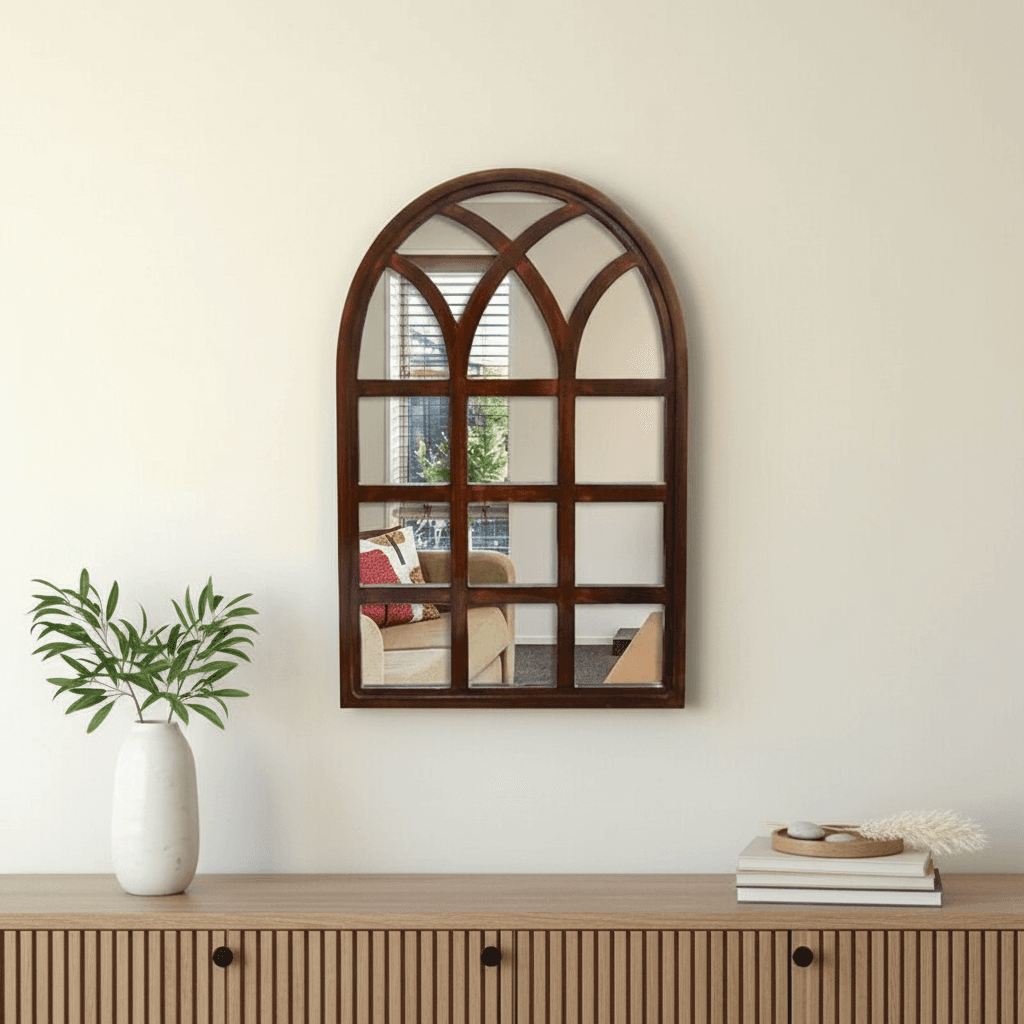
Mount a mirror on the wall behind a console table or sideboard, then style the surface with vases and a lamp.

If your living room has a window, consider placing a mirror on the opposite wall to reflect natural light into the room.

If an entryway opens into the living room, a large mirror on the wall can help create an inviting first impression.

You can place a decorative mirror on floating shelves as well. Surround it with sculptures or curios to add texture and contrast to the living room.

For small rooms, a large horizontal mirror on one wall can create an impression of greater width. In larger rooms, it can lend a more dramatic effect.

There is much you can do with mirrors. Use size, shape and placement together to make the décor feel considered, and check the product page for dimensions, care guidance and what is included before choosing.
Frequently Asked Questions
1. How do I choose the right size mirror for my living room?
Use the wall and nearby furniture as your starting points:
- On a large empty wall, choose one substantial mirror or arrange multiple smaller mirrors with breathing room around them.
- Above furniture, a mirror measuring about two-thirds to three-quarters of the furniture’s width is a useful starting point.
- If the mirror is a decorative focal point, let it read clearly against the surrounding objects rather than competing with too many similarly sized pieces.
2. What are some popular styles of decorative mirrors for living rooms?
Popular styles include:
- Circular mirrors
- Geometric mirrors
- Abstract mirrors
- Coloured-frame mirrors
- Macramé mirrors
- Clustered decorative mirrors
- Oval mirrors
3. How can I determine the best shape of mirror for my living room?
Start with the room’s lines and mood. Round and oval mirrors can soften sleek, modern furniture, while square and rectangular mirrors can suit more traditional or rustic arrangements. A distinct shape can work well in eclectic or bohemian spaces. Consider the intended wall placement before finalising the size.
4. What are some tips for selecting the right frame for a decorative mirror?
Choose a frame that complements the room without overwhelming it. Compare the listed frame material and finish with nearby furniture and accessories. For example, a carved frame may suit a vintage-inspired room, while a geometric frame can complement a modern setting.
Browse related designs
Keep exploring