
Luxe
₹5,884
₹7,499
22%OFF
2 more color

1015 Products
Luxe
₹5,884
₹7,499
22%OFF
₹1,572
₹3,050
48%OFF
₹1,399
₹2,400
42%OFF
₹699
₹1,499
53%OFF
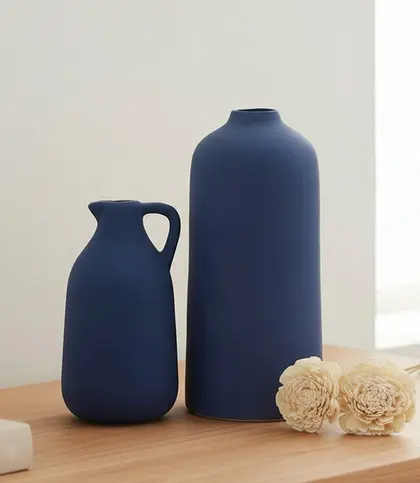
₹699
₹1,499
53%OFF

₹899
₹5,000
82%OFF
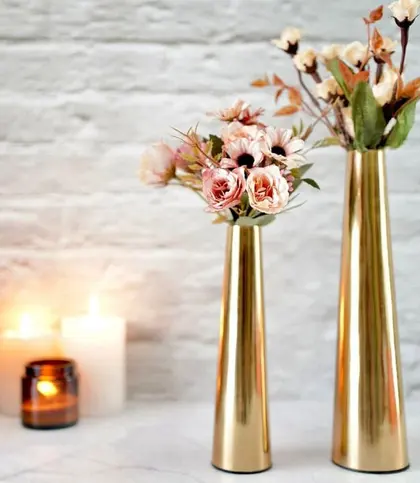 FastDelivery
₹1,207
₹3,599
66%OFF
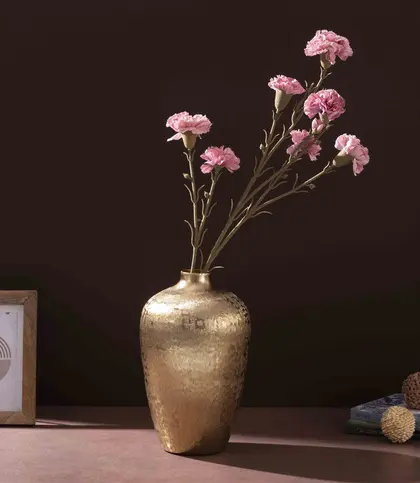
Luxe
₹2,879
₹6,198
54%OFF
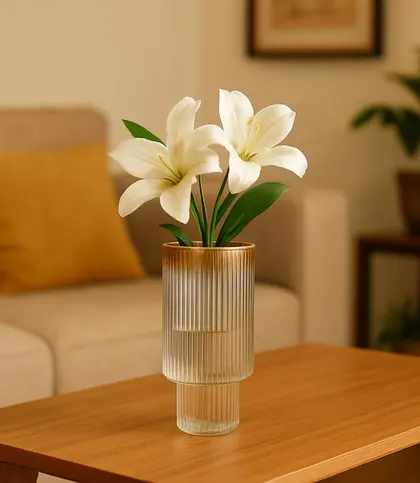 FastDelivery
₹182
₹759
76%OFF
₹719
₹1,694
58%OFF
₹2,799
₹6,998
60%OFF
Luxe
₹3,540
₹4,499
21%OFF
₹230
₹919
75%OFF
₹902
₹1,749
48%OFF
 FastDelivery
₹599
₹2,200
73%OFF
₹799
₹4,000
80%OFF
Luxe
₹3,519
₹7,598
54%OFF
Luxe
FastDelivery₹1,757
₹2,549
31%OFF
hand crafted
FastDelivery₹902
₹1,329
32%OFF
₹2,889
₹3,890
26%OFF
Flowers may bring colour into a room, but the vase gives the arrangement its shape and character. Even without stems, a well-chosen vase can make a shelf feel considered or give an entryway console a focal point. At Vaaree, explore vases with the setting in mind: where will yours sit, what will you put in it, and how prominent do you want it to look?
Start with proportion rather than colour alone. A vase for a narrow bedside table needs a different footprint from one intended for an open living-room corner. If you have a favourite bouquet or a few tall branches in mind, consider the height and opening before choosing a finish. If the vase will stand empty, let its silhouette, texture and relationship to the surrounding objects guide you.
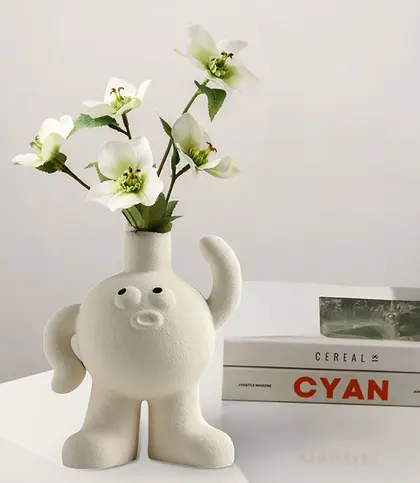
The opening determines how stems gather or spread. A narrow neck brings a few long stems closer together and can make a simple branch arrangement look deliberate. A wider mouth gives a fuller bouquet room to open out, though loose stems may need arranging to keep their shape. For mixed bunches, a gently tapered opening can help gather the stems without making the display look crowded.
For stems, use height rules as a starting point, not a strict formula. The visible arrangement should feel balanced with the vessel and the space behind it. Try holding your intended stems beside a ruler or an existing vase to picture their finished height. Remember that stems can be trimmed, while a vase’s opening and overall height cannot.
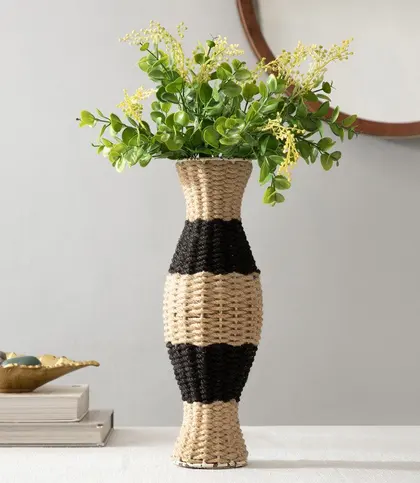
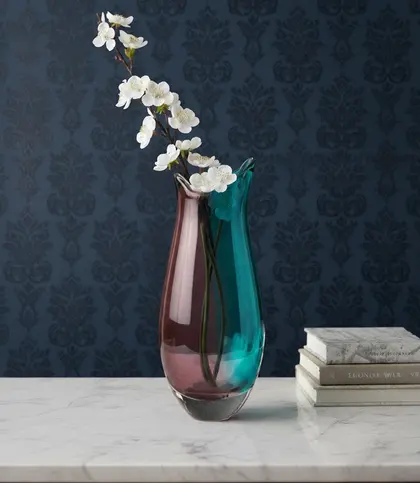
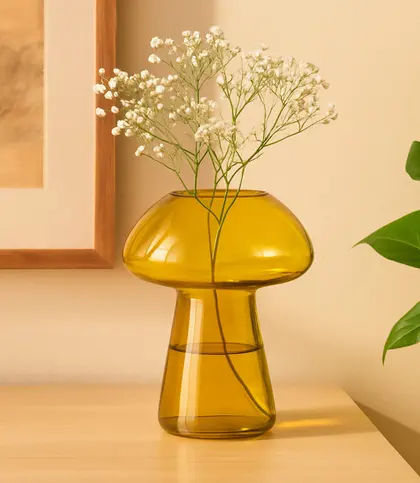
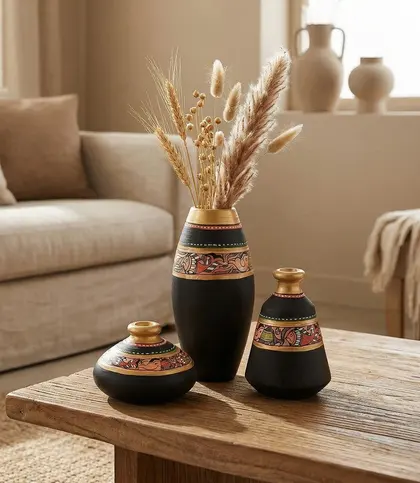
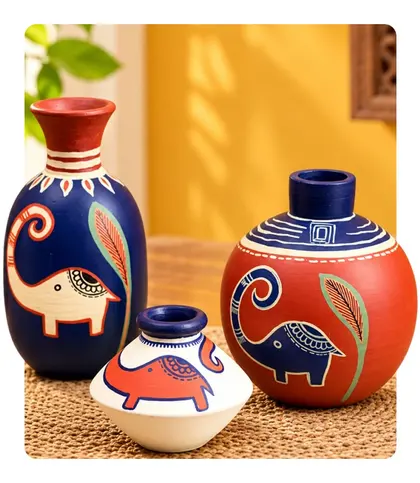
Material changes how a vase reads from across the room. Ceramic vases can bring an opaque block of colour or a tactile surface to a shelf or coffee table. Terracotta offers an earthy note that sits comfortably alongside wood, woven textures and warm neutrals. Glass vases keep the look visually light and let stems become part of the display. Metal can introduce a reflective accent, while wooden or resin pieces may be appealing when the vessel itself is the focus.
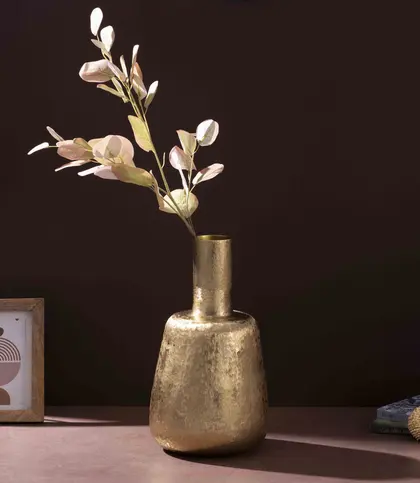
Finish matters as much as material. A matte or textured surface can add depth to a quiet palette; a glossy or metallic finish catches the eye among books and other objects. White, beige and grey are easy to layer with existing décor, while black adds definition. Gold can pick up warm details elsewhere in the room, and blue, green or pink can introduce colour without changing larger furnishings. For a pared-back setting, browse minimalistic vases; for a bolder shape or finish, look at modern vases.
Do not assume a material makes every vase suitable for fresh flowers. Glazed and unglazed interiors, joins and decorative finishes can differ from piece to piece. If you plan to add water, check the individual product details for supported use before buying.
A vase looks best when it has room to be seen without getting in the way. Before choosing, measure the surface and picture the finished arrangement, not just the empty vessel.
You can style one vase as the clear focal point or group two or three with different heights. To make a group feel connected, repeat a colour, finish or material; to add contrast, mix a smooth piece with a textured one. Leave a little space around the grouping so each outline remains visible. If your room has warm wood and collected objects, bohemian-style vases may suit that layered mood. For an older-world accent, explore vintage-style vases.
Product photographs help you imagine the look, but dimensions tell you whether it fits. Check the overall height and width against the table, shelf or corner you have chosen. If the listing gives an opening measurement, compare it with the size of the bouquet or number of stems you intend to use. Think about the base, too: a broad arrangement should look and feel settled in its vessel.
Decide whether you want fresh flowers, dried stems, artificial stems or an empty sculptural display. Those are different uses, and flowers or other styling accessories shown with a vase should not be assumed to come with it; check the individual listing for what is included. For fresh flowers, confirm that water use is supported. For dried or artificial stems, concentrate on the opening, height and the way their colour works with the vase.
Start with the arrangement’s shape. A narrow opening helps gather a few long stems; a wider opening gives a dense bouquet room to spread. Compare the vase height with the visible stem height, then consider where the finished display will sit.
No. A decorative vase is not necessarily watertight, regardless of its material or exterior finish. Check the individual product details for water use before placing fresh flowers in it.
Measure both the shelf depth and the clearance above it. Choose a footprint that leaves room around the vase, and consider a single distinctive shape or a few stems rather than a wide bouquet.
Yes. An interesting outline, colour or surface can make a vase an accent in its own right. Try placing it against a contrasting wall or beside lower objects so its silhouette stands out.
Vaaree is a destination for curated, premium, pretty home products. Explore vase shapes, materials and styles with your room and intended arrangement in mind, then check each product’s details to find the right fit.