
₹2,969
₹6,598
55%OFF

189 Products
₹2,969
₹6,598
55%OFF
₹2,519
₹5,598
55%OFF

₹809
₹1,599
49%OFF

₹899
₹1,799
50%OFF

₹989
₹1,999
51%OFF

₹1,439
₹3,199
55%OFF

₹899
₹1,999
55%OFF

₹989
₹2,199
55%OFF

₹899
₹1,999
55%OFF

₹449
₹799
44%OFF

₹620
₹999
38%OFF
₹989
₹2,199
55%OFF

₹629
₹1,199
48%OFF

₹719
₹1,399
49%OFF

₹449
₹799
44%OFF

₹539
₹999
46%OFF

₹629
₹1,199
48%OFF
₹449
₹799
44%OFF
₹539
₹999
46%OFF

₹629
₹1,199
48%OFF
NYRA brings together useful pieces for the kitchen and dining table, alongside a smaller selection of accents for the prayer room. If you are building an everyday routine, start with the task: do you need a pot for boiling and simmering, a kadhai for stirring and frying, a container for organising ingredients, or a plate that keeps a child’s meal separated? Once you know the job, capacity, material and care become much easier to compare.
The collection spans familiar cookware shapes and practical dining formats, with stainless steel appearing frequently alongside brass, copper, cast iron, aluminium and iron. Many pieces have clean, polished lines; others bring a warmer, more traditional look. Let appearance be the finishing decision rather than the first one—especially for something you will lift, wash and put away every day.
| What you need to do | Where to start | What to check before choosing |
|---|---|---|
| Boil, simmer or prepare a larger quantity | NYRA pateelas | Capacity, pot diameter, height, cooktop compatibility and whether a lid is included. |
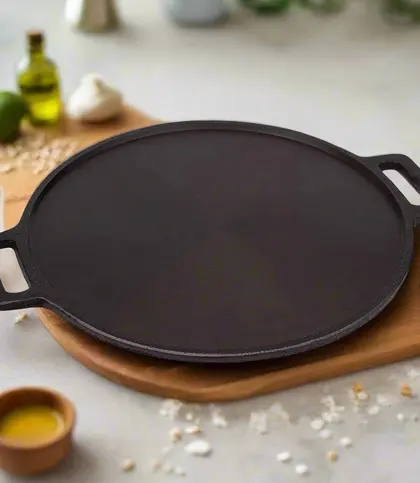
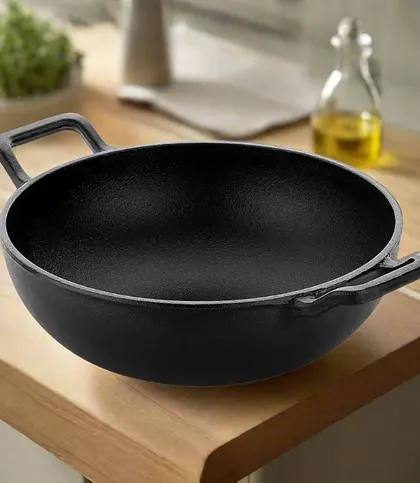
| Sauté, roast or fry while stirring easily | NYRA kadhais | Bowl depth, cooking surface, two-sided handles and the space needed to lift the vessel safely. |
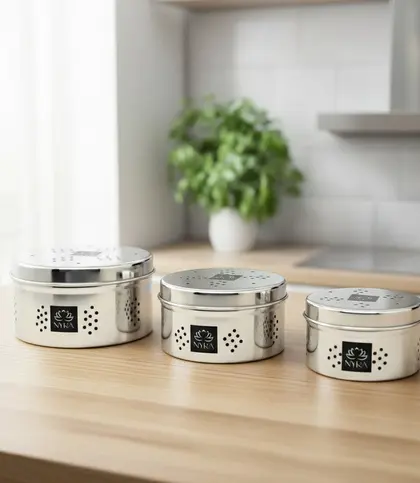
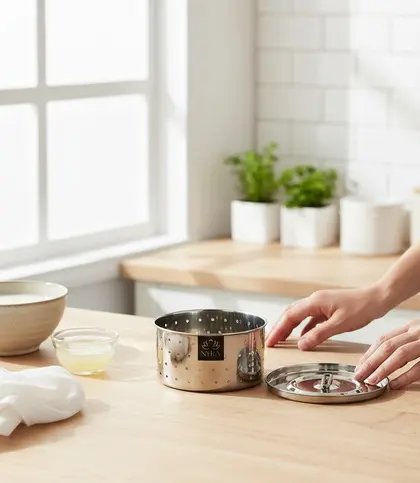
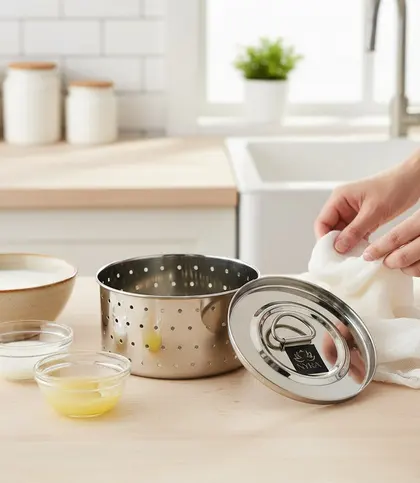
| Keep kitchen ingredients or produce organised | NYRA containers | Intended contents, capacity, lid design and whether ventilation or a more enclosed format is appropriate. |
| Serve foods in separate sections | NYRA kids dinner plates | Compartment layout, plate dimensions, rim depth and the number of pieces in the set. |
A pateela is a useful starting point for liquids and dishes that need room to bubble. A kadhai offers a broader opening for moving ingredients around; a deeper one may be more convenient when frying. If your cooking calls for a lid to hold in steam, check the product details rather than assuming one comes with either vessel. NYRA also includes handis, saucepans, tawas and cookware sets. A handi can be a helpful alternative when you want a covered vessel for dishes such as pulao or curry, while a saucepan suits smaller quantities and controlled pouring.
For cookware, think about your usual portion rather than the largest meal you might make once a year. Leave room above the food for stirring or simmering without spilling. Capacity tells you how much a vessel holds, but its diameter and height tell you how it will sit on your burner, fit in a cabinet and feel in your hands. Measure the shelf or drawer where it will live, including clearance for handles and lids. If you are replacing a favourite pot, comparing its measurements with a new one is often more useful than comparing volume alone.
For a kadhai, look at both depth and handle placement: a generous capacity is less convenient if the handles crowd the neighbouring burner. For a kids dinner plate, consider the size of the main compartment as well as the smaller sections. Compartments help keep foods distinct, but they should still give you enough room for the portions you normally serve. Check set quantities on the individual listing when shopping for more than one child or for regular family meals.
Containers are most useful when their format matches their contents. A compact, ventilated container can make sense for herbs or leafy vegetables that need airflow in the fridge. It is not the same choice as a more enclosed container for ingredients you want to keep protected on a pantry shelf. Check lid fit, ventilation, dimensions and cleaning guidance before deciding where a piece belongs. Grouping containers by what you reach for most often—daily ingredients close to the worktop, less-used supplies farther back—can make even a small kitchen feel easier to manage.
Storage is also about putting things away after use. Round vessels and mixing bowls may nest, but handles, lids and different rim shapes can change how neatly they stack. Check dimensions instead of assuming every piece in a set will occupy one pot’s worth of cabinet space.
Care labels are item-specific, even within one material. Some NYRA listings identify pieces as dishwasher safe, but do not carry that instruction over to every pot, pan or decorative object. If induction cooking is essential, confirm it on the item you choose; the induction-safe cookware collection is another useful place to compare formats.
For a coordinated cooking setup, choose a pot for boiling, a kadhai or pan for active cooking, and storage sized to the ingredients you use regularly. Browse the wider cookware collection if you want to compare NYRA shapes with other options before committing. On the dining side, stainless steel compartment plates offer an orderly way to serve a main dish and sides together without mixing them. NYRA’s smaller decorative selection includes traditional brass pieces suited to a prayer room or tabletop; consider the available surface and the object’s dimensions before choosing a display spot.
Whether you want a simple silver finish or the warmth of gold-toned metal, the best choice is the one that fits your routine: comfortable to use, appropriately sized, and easy for you to care for between meals.
Choose a pateela when boiling and simmering are your main tasks. Choose a kadhai when you want a wider opening for stirring, sautéing or frying. Compare depth, capacity and handles if you regularly cook larger portions.
No single material or collection label is a substitute for the item’s compatibility details. Check the individual listing for an induction-safe base before buying for an induction cooktop.
Look for a format intended for produce and check whether it provides ventilation. Also compare its dimensions with your fridge space. For dry pantry ingredients, consider a container designed for that different storage task.
Compare compartment sizes, overall dimensions, rim depth, material, cleaning instructions and the stated number of plates. A divided plate should suit the foods and portions you serve, not just look appealing on the table.
Vaaree is a destination for curated, premium, pretty home products. Shopping NYRA here lets you explore kitchen, dining and selected decorative pieces together, then compare individual details to find what works for your home.