
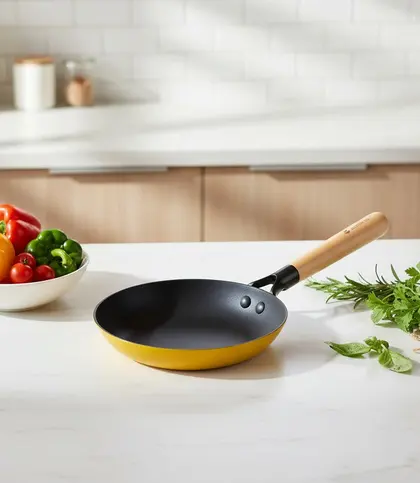
Luxe
₹2,999
₹4,399
32%OFF

27 Products
Luxe
₹2,999
₹4,399
32%OFF
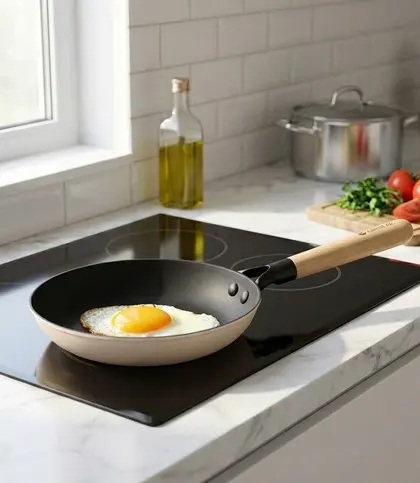
Luxe
₹2,159
₹4,399
51%OFF
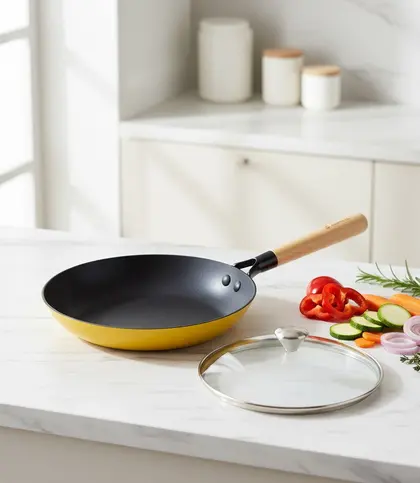
Luxe
₹5,499
₹5,999
8%OFF
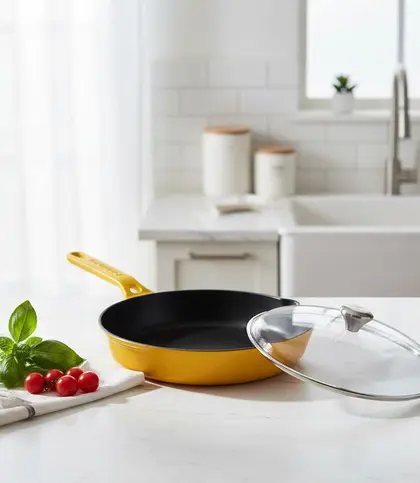
Luxe
₹6,499
₹7,499
13%OFF
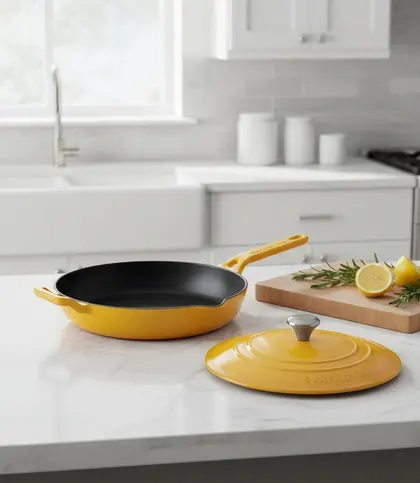
Luxe
₹6,999
₹7,499
7%OFF
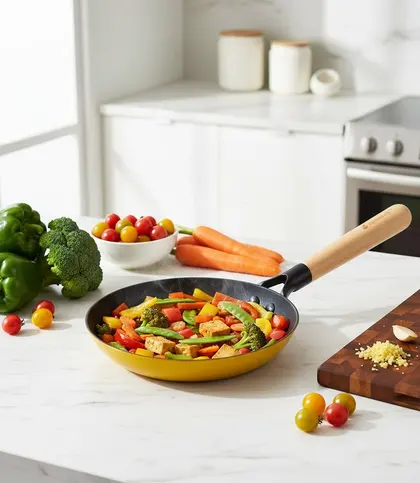
Luxe
₹3,499
₹4,999
30%OFF

Luxe
₹7,499
₹7,899
5%OFF
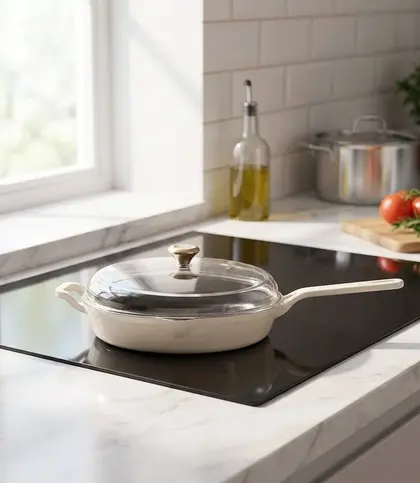
Luxe
₹4,679
₹7,499
38%OFF
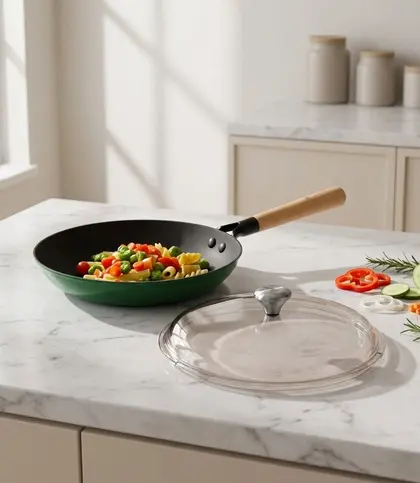
Luxe
₹5,499
₹5,999
8%OFF
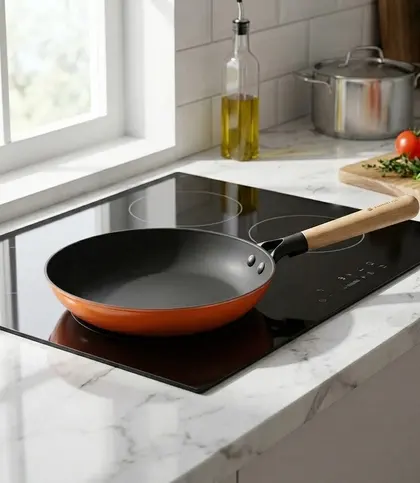
Luxe
₹3,499
₹4,999
30%OFF
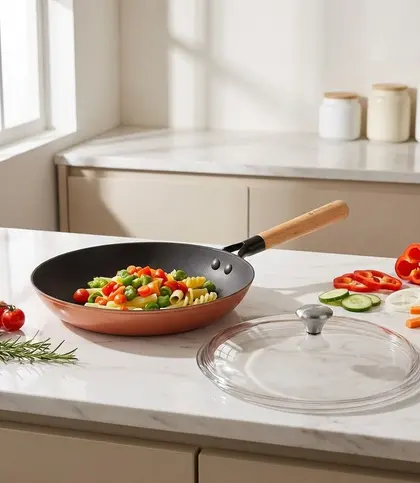
Luxe
₹5,499
₹5,999
8%OFF
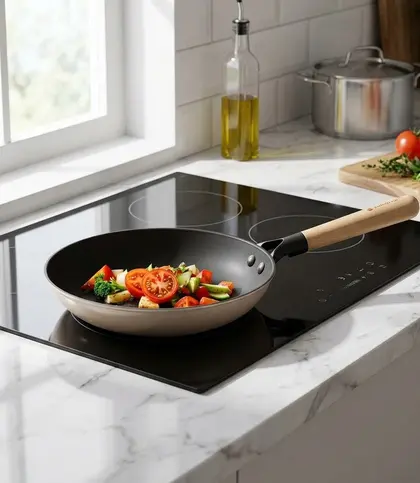
Luxe
₹2,519
₹4,999
50%OFF
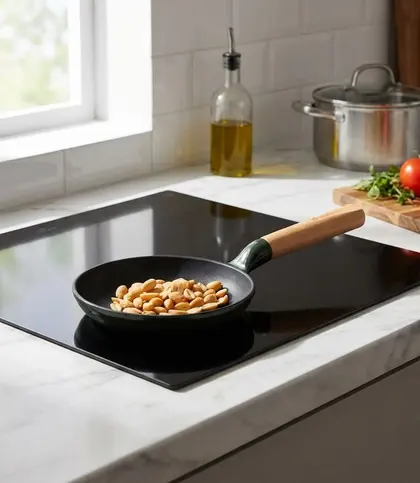
Luxe
₹2,499
₹3,399
26%OFF
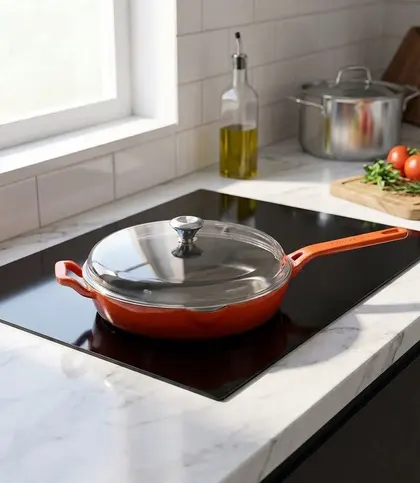
Luxe
₹6,499
₹7,499
13%OFF
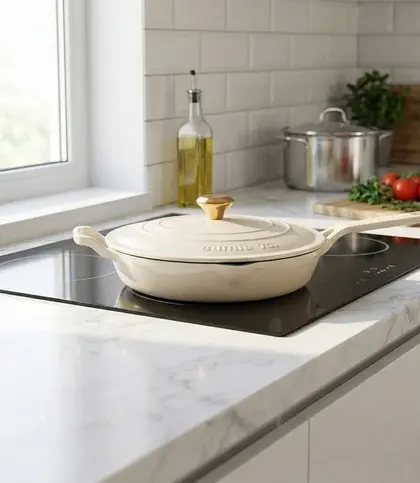
Luxe
₹5,129
₹7,499
32%OFF
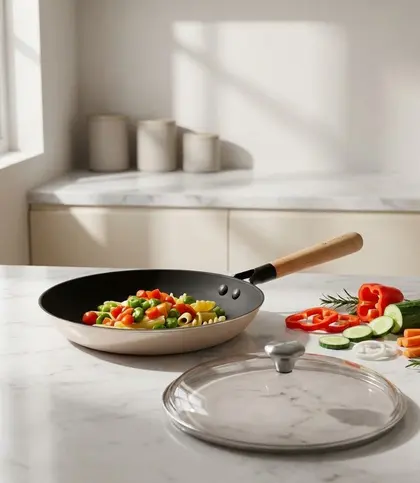
Luxe
₹3,869
₹5,999
36%OFF
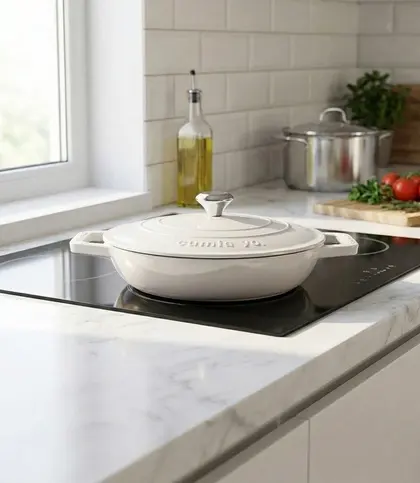
Luxe
Sold Out
₹5,399
₹7,899
32%OFF
Luxe
Sold Out
₹2,499
₹3,399
26%OFF
Luxe
Sold Out
₹7,499
₹7,899
5%OFF
Luxe
Sold Out
₹2,999
₹4,399
32%OFF
A good frying pan earns its place on the hob: it should have enough cooking room for your usual portions, feel manageable when you move it, and fit the way you clean and store your cookware. This Cumin Co. Frying Pan collection centres on enamel-coated cast iron. It is worth exploring if you enjoy the heat retention of cast iron but prefer an enamelled cooking surface to the routine of seasoning bare iron.
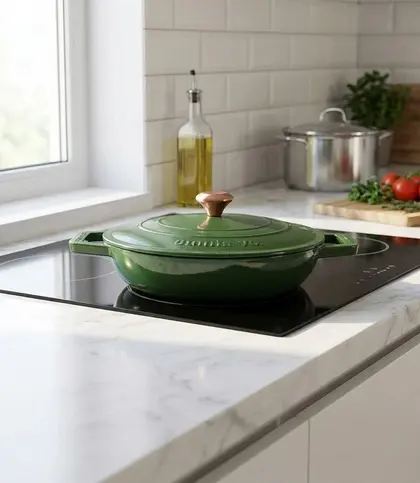
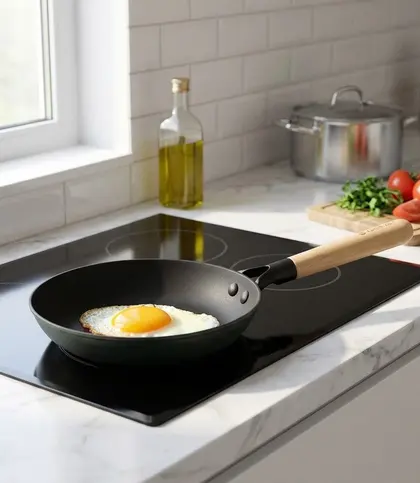
Start with the meal you make most often. A compact, open pan is handy for eggs, chillas, small portions and quick reheating. A broader pan gives ingredients more room to brown or sauté without crowding. If you often finish a sauce gently or cook with a lid, pay attention to whether the particular pan includes one. For more covered, slow-cooked dishes, a deeper braiser may be a better fit than a conventional frying pan.
Capacity is useful for narrowing your choice, but it does not tell the whole story. Two pans with similar volumes can have different cooking-surface widths, side heights and handle lengths. Compare the listed dimensions with your hob, the cupboard where the pan will live and the portion sizes you cook most often.
| Format to consider | Best starting point for | What to check |
|---|---|---|
| Compact frying pan, around 750–1000 mL | Small portions, eggs, snacks or a quick sauce | Cooking-surface width and space for the handle |
| Mid-size frying pan, around 1400–1500 mL | Everyday sautéing and meals for a smaller household | Whether the open-pan format suits your recipes |
| Broader frying pan, around 1900–2500 mL | Larger batches or dishes that need more room | Pan weight, hob fit and whether a lid is included |
| Deep, lidded braiser | Covered curries, stews and slower cooking | Depth, side-handle clearance and storage space for the lid |
Use these as shopping guides rather than strict serving-size rules: a pan filled to its stated capacity leaves little room to stir. For frying and browning, usable surface area matters as much as volume. A 4000 mL braiser, for example, serves a different purpose from a shallow frying pan even though both appear among the collection’s cookware formats.
Cast iron holds heat well, which can help a pan cook steadily once it is warm. Give it time to preheat gradually rather than turning the hob immediately to its highest setting. The enamel coating makes the surface different from bare cast iron: it does not generally call for the same seasoning routine. It is still worth treating the finish gently. Avoid heating an empty enamelled pan for an extended period, sudden temperature changes and abrasive scrubbers that could mark the surface.
Several Cumin Co. frying pans are listed as induction compatible, making them worth considering for an induction kitchen as well as a conventional hob. Check the individual listing for the cooktops you use, especially if you are buying for more than one kitchen. Do the same before using a pan in an oven: handle and lid materials can differ between designs, so stovetop compatibility is not a substitute for oven-use guidance. If you are comparing other construction options, browse cast iron cookware or the wider cookware collection.
A pan’s overall length includes its handle, not just the cooking area. Check that the handle will clear nearby burners and sit comfortably within your storage space. Cast iron can also feel substantial, particularly in a larger pan. If you regularly carry a full pan from hob to table, consider how easily you can lift and control it. Use appropriate protection when handling hot cookware, including lids and supporting grips.
Care instructions vary across this collection. Some pans are marked dishwasher safe, while others specify handwashing even when appliance-related labels appear elsewhere in their details. Follow the care instructions for the pan you choose; when in doubt, gentle handwashing with a soft sponge is a sensible way to protect an enamel finish. Allow the pan to cool before washing, dry it thoroughly, and store it without hard cookware pressing against its surface. A soft separator can help if you stack pans, while keeping lids nearby makes covered-cooking pieces easier to find.
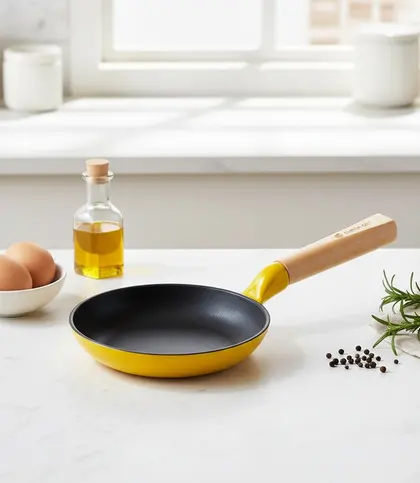
Finish and colour can be your final choice once the practical details are settled. Glossy green, rust and white designs offer a quieter look; yellow-and-black pans bring a brighter accent. Whichever you favour, choose the capacity, lid arrangement and care routine first. You can compare other shapes in frying pans, look through induction-safe cookware for a compatible-kitchen search, or explore more from Cumin Co..
Enamel-coated cast iron generally does not need the seasoning routine used for bare cast iron. Follow the instructions for your chosen pan, particularly around cleaning and any exposed edges.
Choose an open pan when your priority is frying, browning or frequent stirring. A lidded pan is more useful when you want to retain moisture or finish a dish gently. Check what is included with the specific design rather than assuming every pan comes with a lid.
No single care rule fits every design. Some are listed as dishwasher safe; others specify handwashing. Read the individual care instructions before buying and use gentle cleaning methods to help maintain the enamel.
Vaaree is a destination for curated, premium, pretty home products. Here you can consider Cumin Co. frying pans alongside related cookware, making it easier to choose a practical size and format that also feels at home in your kitchen.