Quick Answer
The right photo frame depends on what you are displaying, where it will go, the conditions in your home and the upkeep you can manage. Choose tabletop or wall-mounted frames for everyday photographs, collage frames for several memories, floating frames for a layered artwork display, shadow-box frames for dimensional keepsakes, and digital frames when rotating images matter more than a printed display.
Definitions
Tabletop photo frame
A freestanding frame supported by a stand, intended for desks, consoles, shelves, bedside tables, entryways or other level surfaces.
Wall-mounted photo frame
A frame designed to hang from a wall, either individually or as part of a multi-frame arrangement.
Collage photo frame
A coordinated display with multiple openings for photographs, often used for family memories or gallery-style arrangements.
Floating frame
A frame that leaves a visible gap between the artwork or photograph and the outer frame, creating a layered or suspended effect.
Shadow-box frame
A deeper frame designed to display dimensional objects or keepsakes rather than only flat photographs.
Digital photo frame
An electronic screen that cycles through stored digital images instead of displaying one printed photograph.
Mount
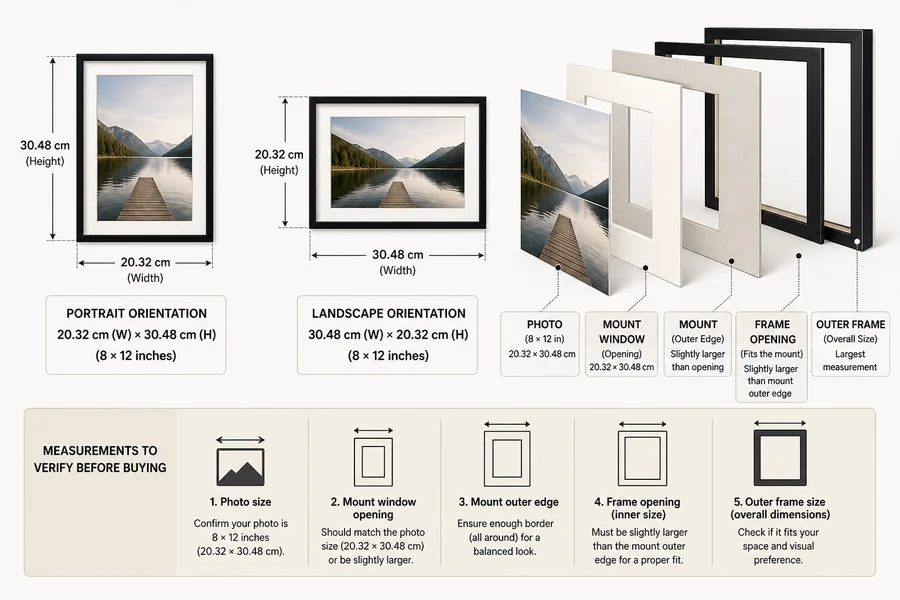
A border, usually card or a similar material, placed between the image and glazing to create spacing and visual emphasis.
Different Types of Photo Frames: Choose by Display, Placement, and Upkeep
The main types of photo frames are tabletop, wall-mounted, collage, floating, shadow-box and digital frames. Each solves a different display need, so there is no single best choice for every photograph or Indian home.
Make the decision in four steps: identify what you are displaying, choose where it will sit or hang, consider dust, humidity and household activity, then set a level of maintenance you are comfortable with. This keeps a frame from becoming either visually overwhelming or impractical to live with.
- Choose the format around the item: a photograph, artwork, certificate, flat memento or dimensional keepsake.
- Choose placement before material, because a desk, hallway wall and child-accessible shelf have different demands.
- Treat colour and finish as part of the room scheme, not as an afterthought.
- Prioritise stable construction and suitable care over decorative detail alone.
The Main Types of Photo Frames and Where They Work Best
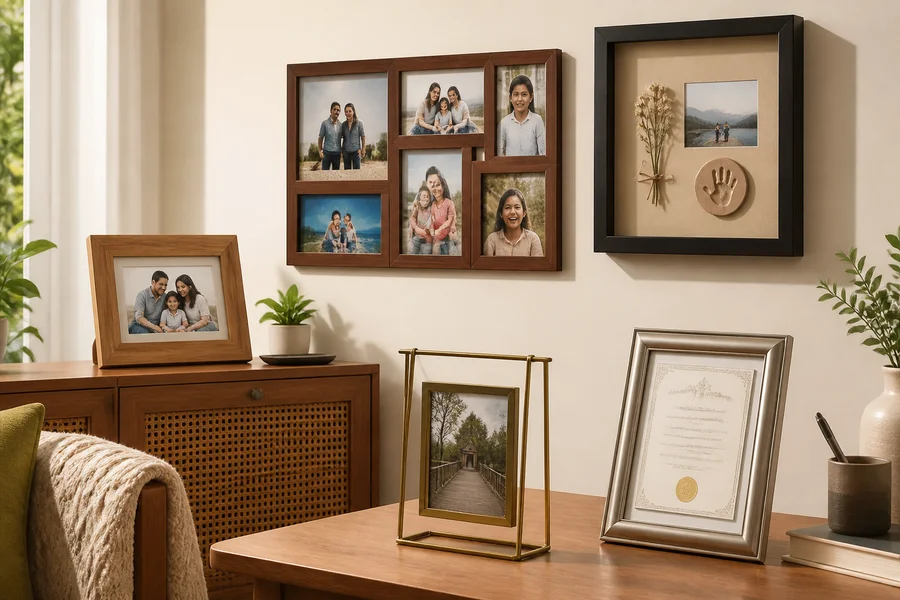
Tabletop frames are an easy choice for one favourite family photograph, a small keepsake or a frequently refreshed display. They work well on a bedside table, desk, console, entryway shelf or home-office surface, but need a stable spot away from regular knocks and dust.
Wall-mounted frames save surface space and suit living rooms, hallways, bedrooms and planned gallery walls. They need careful measuring, suitable fixing hardware and enough clearance so that doors, furniture and passing traffic do not interfere with them.
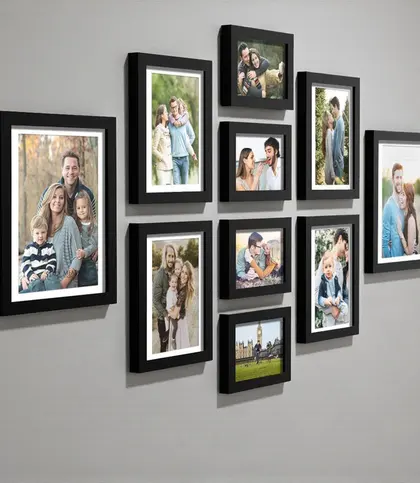
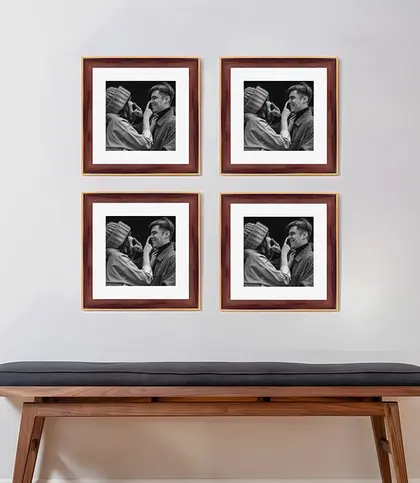
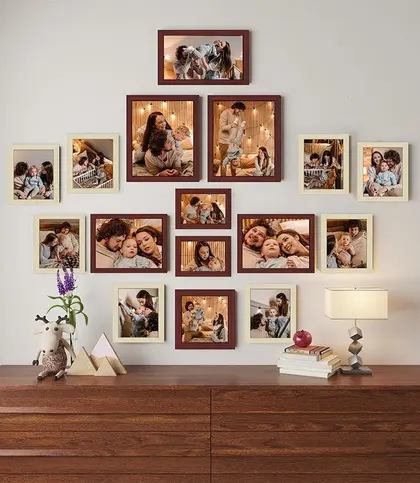
Collage frames bring related photographs together in one coordinated arrangement. They are useful for family milestones, holidays or a gallery-style wall, but the overall footprint matters as much as the number of openings.
Floating frames create a visible gap around an image, making them a considered option for artwork, selected photographs or certificates. Shadow-box frames are deeper and are intended for cards, fabric pieces and other dimensional memorabilia rather than a standard flat photo. Digital frames cycle through stored images, but require power, screen cleaning and a convenient location near an outlet.
- Tabletop: flexible single-image displays on stable surfaces.
- Wall-mounted: space-saving displays and gallery walls.
- Collage: several related photographs in one visual arrangement.
- Floating: artwork or images that benefit from visible breathing room.
- Shadow-box: three-dimensional keepsakes and memorabilia.
- Digital: rotating images for those happy to manage an electronic display.
Collage Photo Frame
 FastDelivery
₹949
₹2,000
53%OFF
 FastDelivery
₹1,504
₹6,000
75%OFF
₹1,947
₹8,400
77%OFF

₹799
₹2,500
68%OFF

₹1,947
₹8,400
77%OFF

₹1,549
₹3,330
53%OFF
₹1,234
₹3,000
59%OFF

₹1,799
₹3,998
55%OFF
Table Frames

From ₹199
₹600
80%OFF

₹279
₹999
72%OFF

₹874
₹1,600
45%OFF
 FastDelivery
₹349
₹1,599
78%OFF
 FastDelivery
₹329
₹999
67%OFF

₹854
₹920
7%OFF

₹511
₹575
11%OFF

₹854
₹920
7%OFF
Compare Photo Frame Materials: Wood, MDF, Metal, Acrylic, Glass, and Resin
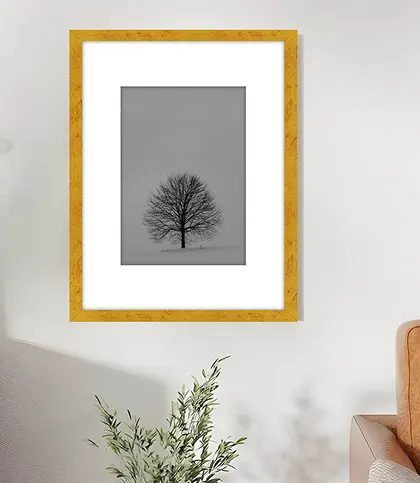
Wood brings warmth and works naturally in traditional, rustic, classic and nature-inspired interiors. Look for an even finish and keep wooden frames away from persistent dampness. MDF is often a practical material for coordinated multi-frame arrangements, though it is better wiped with a dry or lightly damp cloth rather than exposed to excess moisture.
Metal frames can add structure and contrast in modern rooms or on a desk. In humid spaces, inspect the quality of the finish and keep surfaces dry. Acrylic is comparatively light and can reduce breakage concerns where weight matters, although it may scratch or attract static dust. Glass offers a familiar clear view, but adds weight and calls for more caution in busy or child-accessible areas.
Resin frames can introduce decorative shapes, colour and texture. Before choosing one for a frequently used room, consider whether raised details and deep grooves will make dusting more time-consuming.
- Wood: warm, versatile and suited to classic or rustic rooms.
- MDF: useful for coordinated displays; protect it from ongoing moisture.
- Metal: crisp and contemporary; choose a finish that is easy to maintain.
- Acrylic: lightweight and less prone to shattering than conventional glass, but susceptible to scratching.
- Glass: clear and familiar, with added weight and breakage considerations.
- Resin: decorative, but potentially more detailed to clean.

₹1,359
₹2,325
42%OFF
Wooden Photo Frame
 FastDelivery
₹949
₹4,500
79%OFF
₹1,947
₹8,400
77%OFF
 FastDelivery
From ₹299
₹2,200
83%OFF
₹1,947
₹8,400
77%OFF

₹599
₹1,299
54%OFF
₹1,234
₹3,000
59%OFF

₹1,282
₹5,000
74%OFF

₹449
₹1,500
70%OFF
Match the Frame Type to the Photograph, Artwork, Certificate, or Keepsake
For family photographs, use a tabletop frame for a few favourites, a collage for a collection of related memories or a wall-mounted set for a larger living-room or hallway display. A coordinated set can make separate photographs feel intentional without requiring identical image subjects.
Artwork generally benefits from a frame proportioned to the piece rather than one with a dominant border. A floating frame or a wall-mounted frame with a mount can add visual separation. For certificates, choose a simple formal frame with suitable glazing, a neat margin and a size that does not leave excessive empty space.
Use a shadow-box for items with depth, such as small cards, fabric mementos or memorabilia. A tabletop frame is more suitable for a small flat memento that you may wish to reposition. Black or metal finishes can complement contemporary schemes, while wood often softens traditional or rustic interiors.
- Family photos: tabletop for a few favourites; collage or wall sets for a larger story.
- Artwork: floating or mounted wall frames with a restrained border.
- Certificates: simple, formal wall-mounted frames with a suitable margin.
- Dimensional keepsakes: shadow-box frames with adequate depth.
- Flat mementos: compact tabletop frames when flexibility is useful.
FastDelivery₹949
₹4,500
79%OFF
Choose for Indian Home Conditions: Humidity, Dust, Traffic, Children, Pets, and Rentals
In humid homes, keep frames away from direct dampness and periodically inspect the backing, image and finish. Well-finished surfaces are easier to maintain, but no material should be treated as immune to persistent moisture. Use minimal water when cleaning porous surfaces such as wood or MDF.
For dusty homes, simple profiles and accessible surfaces are easier to dry-dust. Deep ledges, ornate resin detail and intricate edges can need more frequent attention. In a high-traffic hallway, choose a securely mounted arrangement or a stable frame on a protected surface rather than a fragile display that can be brushed past.
Where children or pets are present, keep heavy or breakable glazing beyond easy reach and use suitable wall fixings. Lighter acrylic can be worth considering in some locations, but it still needs careful placement. In rented homes, confirm the property's wall policy, use permitted hardware and consider a smaller arrangement to minimise wall damage.
- Keep frames away from direct dampness, splashes and poorly ventilated corners.
- Choose smooth, simple profiles when regular dusting is a priority.
- Avoid unstable tabletop displays near narrow walkways, tails or reaching hands.
- Use secure, appropriate fixings for wall-mounted frames.
- Plan rental displays around permitted hooks and the number of holes required.
 FastDelivery
₹1,282
₹2,688
52%OFF
Get the Size, Mount, Colour, and Finish Right
Measure the photograph, the available surface or wall area, and the outer dimensions of the frame before buying. A small frame can work beautifully on a bedside table, desk or shelf; a medium frame suits a console or individual wall display; and a large or multi-photo arrangement needs a clear wall area with enough visual balance around it.
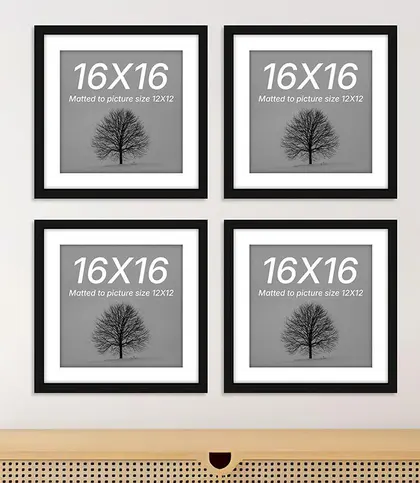
A mount gives a photograph, certificate or artwork breathing room and can prevent the image from appearing crowded by the frame. It is particularly useful when the image is detailed or when a formal presentation is wanted. In a compact display zone, however, an oversized mount can consume too much space.
Choose colour and finish to echo furniture, hardware or a deliberate contrast in the room. Keep collage arrangements visually connected through a shared finish, colour family or spacing. Matte and textured finishes can be forgiving in everyday settings, while glossy surfaces may show reflections and fingerprints more readily.
- Measure the outer frame, not only the image opening.
- Leave enough wall space around large frames and collections.
- Use a mount when separation and visual calm improve the display.
- Coordinate multi-frame arrangements through finish, colour or spacing.
- Consider room lighting before choosing glossy, matte or textured finishes.
₹1,439
₹8,000
82%OFF
FastDelivery₹1,504
₹6,000
75%OFF
Compare Durability, Cleaning, and Budget Before You Buy
A frame does not need elaborate decoration to present an image well. Focus first on the right dimensions, a firm backing, a secure closure, dependable hanging hardware or a stable stand, and a finish suited to its location. These details matter more when the frame will be handled, cleaned or viewed frequently.
Dry-dust frames regularly and follow the care needs of the material and glazing. Avoid assuming that every surface is suitable for cleaning sprays or a wet cloth. Check that the image is protected from routine dust and that the frame can be reached safely for cleaning without destabilising it.
A more refined finish can be worthwhile for a prominent display, but assess weight, backing, glazing and replacement difficulty alongside appearance. The most suitable purchase is the one that meets the display need without adding unnecessary upkeep.
- Check that tabletop frames stand steadily on the intended surface.
- Check that wall frames have a reliable hanging point and suitable hardware.
- Choose easy-clean surfaces for frequently used rooms.
- Inspect the backing and closure before placing an important photograph or certificate inside.
- Balance decorative appeal with the maintenance the location will require.

From ₹949
₹1,190
18%OFF
Photo Frame Selection Checklist
Before choosing, run through this short checklist. It helps narrow a wide range of photo frame styles to the option that best suits the item, room and household.
Final guidance: choose the simplest frame that protects and presents the item well. Add collage, floating, shadow-box or digital features only when they solve a specific display need.
- What am I displaying: a family photograph, artwork, certificate, flat keepsake or dimensional keepsake?
- Do I need one image, several images or rotating digital images?
- Will the frame be tabletop or wall-mounted, and is the surface or wall secure enough?
- What image size and outer dimensions fit the available space?
- Would a mount, visible floating gap or shadow-box depth improve the presentation?
- Which material and glazing suit the home's humidity, dust, children, pets and traffic level?
- Does the colour and finish support the room's modern, minimalist, traditional, rustic, bohemian or classic style?
- How often will it need cleaning, and can it be reached safely?
- For a rented home, does the installation follow the permitted wall hardware and damage limits?
- Do the construction, stability and safety suit the intended budget?
Final Verdict
- Choose a tabletop frame for a flexible single-image display on a stable surface, and a wall-mounted frame when saving surface space is the priority.
- Choose a collage frame for multiple related photographs, a floating frame for a layered artwork effect and a shadow-box frame only when the keepsake has real depth.
- Choose material after considering the room: wood and MDF offer warmth, metal adds structure, acrylic can reduce weight and breakage concerns, and glass needs more careful placement.
- The best photo frame is the one that presents the item clearly, suits the room conditions and does not create more upkeep, safety concerns or installation difficulty than necessary.
FAQs
What are the main types of photo frames by material and format?
The main formats are tabletop, wall-mounted, collage, floating, shadow-box and digital frames. Common materials include wood, MDF, metal, acrylic, glass and resin. Format determines how the item is displayed, while material affects style, weight, cleaning and suitability for the room.
How do tabletop and wall-mounted photo frames differ?
Tabletop frames stand on a desk, shelf, console or bedside table, so they are easy to move but more exposed to dust and accidental knocks. Wall-mounted frames free up surface space and work well for gallery walls, but need measuring, appropriate fixings and wall planning.
What is a collage photo frame best used for?
A collage frame is best for several related photographs, such as family milestones, holidays or a sequence of memories. Choose it after measuring the complete outer footprint, since a multi-photo arrangement can appear much larger on a wall than individual image openings suggest.
Which photo frame materials suit humid or dusty Indian homes?
For humid homes, choose well-finished materials and keep all frames away from direct dampness. Wood and MDF need particular care around persistent moisture. In dusty homes, smooth, simple profiles are easier to dry-dust than detailed resin surfaces or deep ledges. Metal should have a maintained finish, especially in humid locations.
What type of frame is best for certificates and artwork?
Certificates usually suit a simple, formal wall-mounted frame with suitable glazing and a neat margin. Artwork often works well in a floating frame or a frame with a mount, provided the border supports the piece rather than competing with it. Keep both away from direct sunlight and dampness where possible.
Are floating and shadow-box frames suitable for keepsakes?
A shadow-box frame is suitable for dimensional keepsakes such as cards, fabric pieces or small memorabilia because it has depth. A floating frame is better for flat artwork or photographs that benefit from a visible gap around the image. It is not usually the practical choice for bulky objects.
What frame size works best for family photographs?
The best size depends on the display location and the number of images. Small frames suit desks and shelves, medium frames suit consoles and individual wall displays, and collage or wall sets suit a clear living-room or hallway wall. Measure the available space and account for the outer frame dimensions.
How should I choose a photo frame for a rented home?
Choose lighter or smaller arrangements where possible, check the landlord or property rules on wall hardware, and plan the layout before making holes. A compact collage arrangement may create fewer fixing points than many separate frames. For tabletop displays, choose a protected, stable surface away from high traffic.
Keep exploring