


Best Wine Decanter for Red Wine: A Practical Buying Guide
Quick Answer
The best wine decanter for red wine depends on how you serve it. Choose a wide-based design for greater surface exposure and entertaining, a narrow-neck design for controlled pouring and sediment-conscious serving, or a simple carafe for everyday convenience. Then check practical capacity, balance, cleaning access, and storage dimensions.
Definitions
Wide-based decanter
A decanter with a broad bowl and relatively wide footprint that exposes more of the wine’s surface area and can provide useful stability when well designed.
Narrow-neck decanter
A decanter with a more tapered body or narrower opening that can support controlled pouring and may be practical when separating wine from sediment.
Wine carafe
A simple serving vessel for transferring and pouring wine; it may offer less specialised aeration or sediment-management design than a traditional decanter.
Aeration surface
The amount of wine exposed to air inside the vessel, influenced by the bowl width, fill level, and shape.
Lead-free crystal
A clear glass-like material made without added lead, often selected for its finish, clarity, or lighter alternative to traditional crystal.
Best Wine Decanter for Red Wine: The Short Answer
There is no single best wine decanter for every red wine or every home. The useful choice starts with your usual wine habit: whether you serve younger or older bottles, pour for two or for guests, and want a vessel that is easy to clean and store.
Wide-based decanters, narrow-neck decanters, and simple carafes each solve a slightly different problem. Compare their shape, usable capacity, grip, base stability, cleaning access, storage footprint, and budget before choosing.
- Choose a broad bowl when greater wine surface exposure is a priority.
- Choose a narrower neck when controlled pouring matters more.
- Choose a simple carafe when uncomplicated serving and easy storage are your main needs.
Which Decanter Shape Is Best for Red Wine?
A wide-based decanter has a broad bowl and a larger footprint. Its shape exposes more wine to air when filled, which can suit young, fuller-bodied reds and dinner-party serving. The trade-off is that a wide bowl can take up more table and cupboard space, and some designs can be less convenient to grip when full.
A narrow-neck decanter is often easier to guide during a slow pour. It can be a practical option for older wines when you want to watch the flow carefully while leaving sediment in the bottle. A narrower opening may be less convenient to clean, so check whether a soft decanter brush can reach the bowl and neck.
A simple carafe is a sensible everyday choice for casual meals and uncomplicated entertaining. It may be easier to fill, rinse, carry, and store than a more sculptural decanter, though it usually offers less specialised shape control for aeration or sediment-conscious pouring.
- Wide-based: suited to broad surface exposure, shared meals, and a stable table presentation.
- Narrow-neck: suited to controlled pouring and sediment-conscious serving.
- Simple carafe: suited to regular, low-fuss serving and compact storage.
What Decanter Capacity Do You Need?
Capacity should suit both the bottle you open and the amount of headroom you want after transferring wine. A standard bottle holds about 750 ml, but a decanter with a stated 750 ml maximum may feel close to full once that bottle is transferred. It can leave little room for swirling or comfortable carrying.
A 1 litre decanter gives a standard 750 ml bottle additional space and is often a practical all-round size for serving. A 1.5 litre model can be useful for larger pours or entertaining, but it needs more shelf space and may be cumbersome if you usually open one bottle at a time.
Check usable capacity rather than relying only on a maximum-volume label. The shape, fill line, and amount of space needed below the rim all affect how practical a vessel feels in use.
- Around 750 ml: compact and aligned with one standard bottle, with limited extra headroom.
- Around 1 litre: a flexible size for one standard bottle with more comfortable serving room.
- Around 1.5 litres: useful for larger gatherings, but requires a larger storage footprint.
Aeration, Pouring Control, and Stability
Shape affects how a decanter behaves on the table. A broad bowl creates more exposed wine surface at a comparable fill level, while a narrower profile may feel easier to direct when pouring. Neither shape automatically suits every red wine, so balance the design with your preferred serving style.
A stable decanter should have a wide, level base and a balance that feels secure when partly or fully filled. Lift a decanter from the point you would naturally hold it: the neck, shoulder, or base should not feel awkward or top-heavy.
Inspect the rim or spout closely. A well-finished lip and a controlled pouring angle can help limit drips, but no shape is reliably drip-free in every hand. Choose a design whose neck is comfortable to hold and whose flow you can manage without straining your wrist.
- Look for a broad, even base that sits firmly on the dining table.
- Consider the filled weight, not just the empty weight.
- Choose a neck and rim that support a steady, controlled pour.
- Treat drip resistance as a design consideration rather than a guarantee.
Glass vs Crystal vs Lead-Free Crystal
Glass is a practical material for many homes because it is widely available, clear, and straightforward for everyday serving. Its comfort and perceived sturdiness depend on the individual vessel’s thickness, shape, weight distribution, and finish.
Crystal can bring a distinctive feel or finish, but products vary considerably in weight, delicacy, and construction. Lead-free crystal is made without added lead and may appeal to buyers who want a crystal-style appearance; check the individual product specification rather than making assumptions from the label alone.
Material alone does not determine whether a decanter will be easy to lift, durable in daily use, or simple to wash. Examine the base, rim, wall thickness, and the comfort of the neck before deciding.
- Glass: a practical everyday option for clear, uncomplicated serving.
- Crystal: a material category with varying weight, finish, fragility, and care needs.
- Lead-free crystal: a crystal-style option made without added lead; verify the specification.
Cleaning, Drying, and Storage Considerations
A decanter that is difficult to wash often ends up unused. Look for an opening that allows thorough rinsing and works with a suitable soft brush or cleaning tool. Deep bowls, sharply angled shoulders, and very narrow necks can need more attention than a simple open carafe.
Drying is equally important. Consider whether water can collect in the base or shoulder, and whether the vessel can rest safely on a drying stand if needed. Follow the maker’s care instructions rather than assuming dishwasher compatibility, particularly with delicate, ornate, or specialised designs.
Before buying, measure the cupboard height and shelf depth where the decanter will live. Include any stopper, stand, or accessories in that calculation, and consider whether you can safely lift the vessel in and out when it is wet.
- Check that a soft cleaning brush can reach the bowl and neck.
- Choose a shape that can drain and dry without trapped moisture.
- Allow for water spots and secure handling during washing.
- Measure storage space before choosing a tall or wide design.
A Practical Buying Checklist by Wine Habit
Match the decanter to the way you actually serve red wine rather than to a single idea of what a decanter should look like. Frequent use usually rewards a design that is balanced, easy to rinse, and easy to put away. Occasional entertaining can make a larger or more presentation-focused shape worthwhile if you have the space.
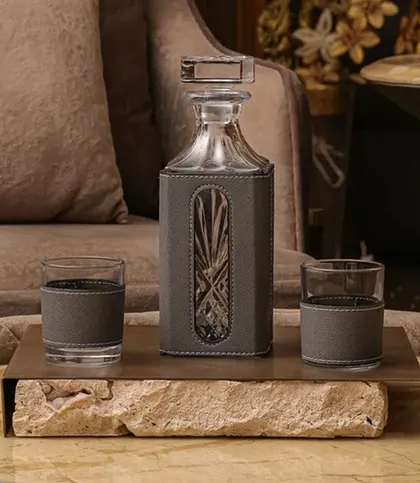
The Barrel Craft Glass Decanter - Three Piece Set is a relevant glass option for red-wine serving and entertaining. Consider it as an example of a three-piece decanter set, and verify its current dimensions, capacity, care instructions, and storage requirements on the product page before purchase.
- Mostly young reds: consider a broad bowl, stable base, and about 1 litre of capacity if space allows.
- Older reds with sediment: prioritise controlled pouring, a comfortable neck, a stable base, and clear visual monitoring during the pour.
- Occasional use or a small kitchen: choose a compact 750 ml vessel or simple carafe that is easy to clean and store.
- Dinner parties: consider 1 litre or 1.5 litre capacity, secure handling, and a footprint that fits the table.
- Frequent use: favour manageable weight, practical drying, stable construction, and controlled pouring over ornate detailing.
- A limited budget: prioritise shape, stability, capacity, and cleaning access before decorative styling.
₹10,799
₹11,999
10%OFF
Final Verdict: Choosing the Right Red-Wine Decanter
Choose a wide-based decanter when broad surface exposure and an entertaining-friendly presentation matter most. Choose a narrow-neck design when controlled pouring and sediment-conscious serving are the priority. Choose a simple carafe when easy everyday use, compact storage, and straightforward cleaning matter more than a specialised form.
Before purchasing, confirm usable capacity, base stability, pouring comfort, cleaning access, material and care requirements, and the storage space available at home.
Final Verdict
- Choose a wide-based decanter when broad surface exposure and an entertaining-friendly presentation matter most; choose a narrow-neck design when controlled pouring and sediment-conscious serving are the priority; and choose a simple carafe for easy everyday use.
- Before buying, confirm usable capacity, base stability, pouring comfort, cleaning access, material and care requirements, and the storage space available at home.
FAQs
Which decanter shape is best for red wine?
The best shape depends on use. A wide-based decanter suits broader surface exposure and entertaining, a narrow-neck design supports more controlled pouring, and a simple carafe suits casual, everyday serving. No one shape is best for every red wine.
What size decanter do I need for a standard bottle?
A standard wine bottle is about 750 ml. A 750 ml decanter can hold it, but a 1 litre model generally provides more comfortable headroom for serving. Check practical usable capacity, not only the stated maximum volume.
Is a wide-base decanter better for young red wine?
A wide base gives the wine more exposed surface area at a similar fill level, which can make it a suitable choice for young, fuller-bodied reds. It does not guarantee a particular result, and it may take up more space than a narrow design.
What is the best decanter for older red wine with sediment?
Look for a stable decanter with a comfortable narrow neck or controlled rim, so you can pour slowly and observe the wine. The decanter does not remove sediment by itself; controlled handling helps you separate the clearer wine from sediment left in the bottle.
Are glass or crystal decanters easier to clean?
Ease of cleaning depends more on the opening size, neck shape, interior curves, and care guidance than on whether the vessel is glass or crystal. A wide opening and brush-friendly shape are usually the most practical features.
How do I choose a stable, drip-free wine decanter?
Choose a decanter with a broad, level base, balanced weight, and a neck that feels secure when full. A well-shaped lip or spout can support a cleaner, more drip-resistant pour, but actual drip control also depends on pouring angle and handling.
Can a simple carafe replace a wine decanter?
Yes, for casual serving a simple carafe can be enough. It is especially useful if you value straightforward pouring, easy cleaning, and compact storage over a specialised shape for wider surface exposure or sediment-conscious service.
What should I look for when storing a wine decanter?
Measure cabinet height and shelf depth, including room for a stopper or drying accessories. Also consider the decanter’s widest point, its weight when lifting, and whether its shape can dry fully before storage.