

Rising Star
FastDeliveryFrom ₹1,449
₹2,000
30%OFF
4 more type

68 Products
Rising Star
FastDeliveryFrom ₹1,449
₹2,000
30%OFF
 FastDelivery
From ₹1,699
₹2,100
13%OFF
 FastDelivery
From ₹1,499
₹2,000
28%OFF
 FastDelivery
From ₹1,449
₹2,000
31%OFF
 FastDelivery
From ₹1,499
₹2,000
29%OFF
 FastDelivery
From ₹1,649
₹2,750
15%OFF
 FastDelivery
From ₹1,499
₹2,000
28%OFF
 FastDelivery
From ₹1,699
₹2,100
19%OFF
 FastDelivery
From ₹1,499
₹2,000
28%OFF
 FastDelivery
From ₹1,499
₹2,000
28%OFF
 FastDelivery
From ₹1,449
₹2,000
30%OFF
 FastDelivery
From ₹1,499
₹2,000
28%OFF
 FastDelivery
From ₹1,499
₹2,100
29%OFF
 FastDelivery
From ₹1,649
₹2,750
37%OFF
Rising Star
FastDeliveryFrom ₹1,699
₹2,100
19%OFF
 FastDelivery
From ₹1,499
₹2,000
25%OFF
 FastDelivery
From ₹1,699
₹2,100
19%OFF
 FastDelivery
From ₹1,499
₹2,000
25%OFF
 FastDelivery
From ₹1,449
₹1,800
21%OFF
 FastDelivery
From ₹1,499
₹2,000
28%OFF
Choosing Tranquebar Home room darkening curtains starts with a simple question: how much daylight do you want to reduce? A bedroom where morning light matters may call for a different choice from a living room where you want a softer daytime feel. Room darkening and blackout are different goals, so check each listing for lining and any stated light-blocking details rather than assuming the collection name guarantees a particular result. Once you know your light-control priority, turn to fit and colour.
| Shopping decision | What to check | Helpful next step |
|---|---|---|
| Reducing bedroom daylight | Look for a stated light-blocking detail or lining description on the individual listing. If you need a blackout effect, do not treat “room darkening” as confirmation of it. | Compare the listing details before choosing a pattern. |
| Keeping a living room comfortable in daylight | Decide whether you want the window to feel visually softer while reducing light, or whether admitting more daylight is the priority. | Browse living room curtains for another room-led comparison, or consider translucent curtains as an alternative when filtering rather than darkening is your goal. |
| Fitting an existing window | Compare the listed panel width and drop with your measured space, then verify the pack quantity and heading against your rod or track. | Explore Tranquebar window curtains if you want to compare the brand’s window-focused collection. |
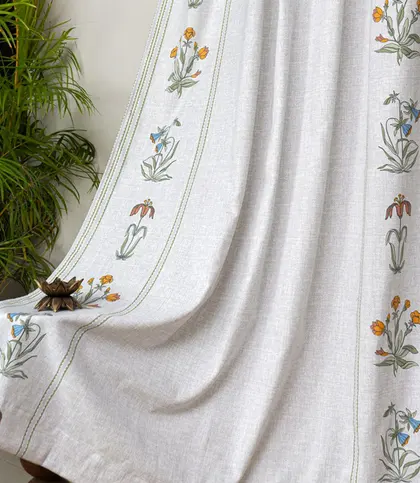
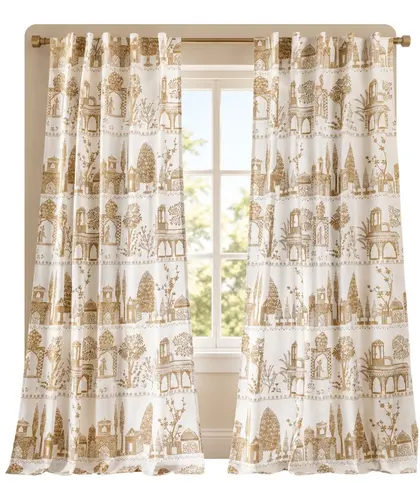
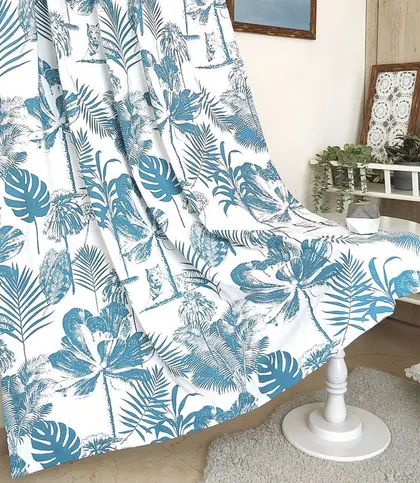
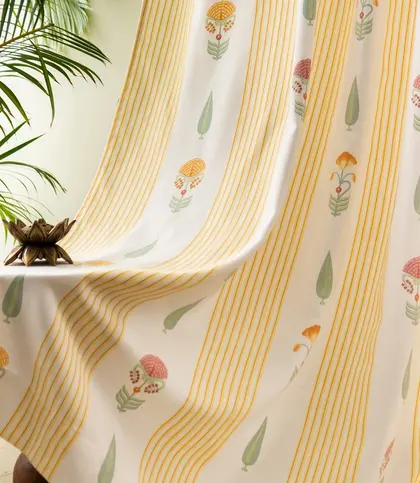
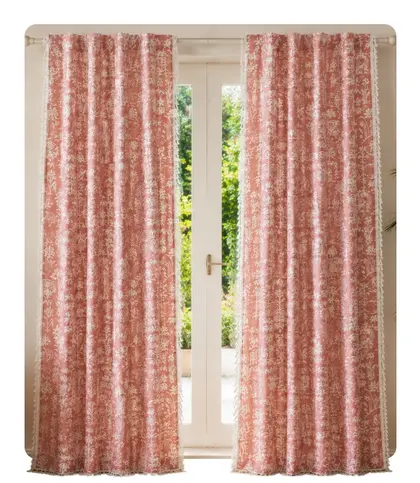
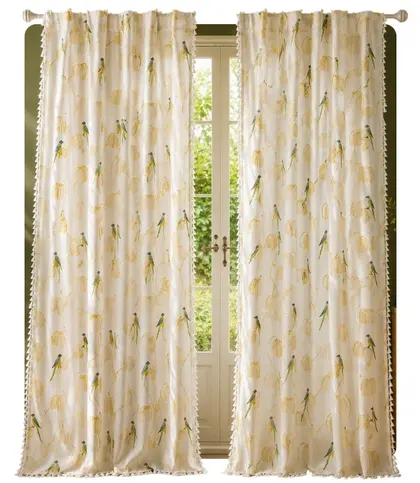
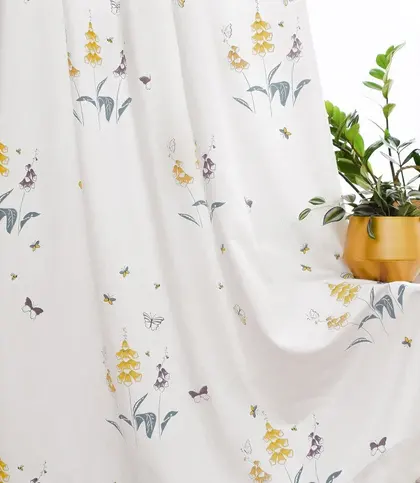
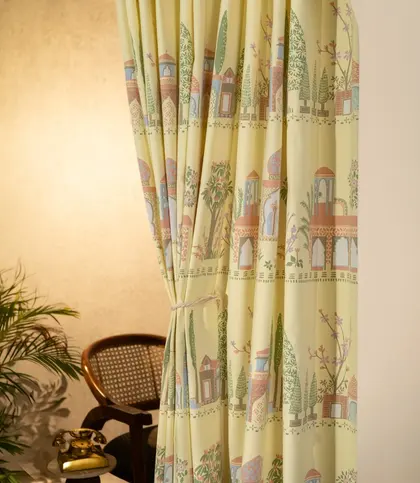
| Choosing a print | Consider the scale of the design beside your bedding, upholstery and wall colour; check the listing images for how the print reads across a full panel. | Browse floral curtains if a botanical pattern is the direction you have in mind. |
Measure the width of the opening and the area you want the curtains to cover, not just the glass. Note where your rod or track sits, then measure from the point where the curtain will hang to your preferred stopping point. A panel that finishes near the sill creates a different outline from one that extends farther down the wall. Check the dimensions shown on the specific listing; do not rely on a familiar size name to tell you where its hem will fall.
For width, think about how the panels should look both drawn and open. Compare the listed width per panel with the span you want to cover and the fullness you prefer. Check whether the pack contains one panel or more before calculating how many to order. Finally, look at the heading or attachment information and confirm it works with your existing rod or track. These checks matter more than assuming every curtain in the collection installs the same way.
The collection’s catalog labels include white, blue, yellow, pink and green, alongside other colours. Use those as starting points for visual comparison, then judge the colour on the individual listing against the room you are furnishing. A quieter curtain can give patterned bedding or a colourful sofa more space to stand out; a bolder curtain can become the feature at an otherwise restrained window. If you are coordinating two windows in one room, compare the design scale and background colour as well as the headline colour name.
Catalog style labels include Contemporary and Indian. Rather than choosing by label alone, look at the actual motif: does its rhythm suit the lines of your furniture, or would it introduce a welcome contrast? View the print across the whole panel where images allow. A small motif may read as texture from across the room, while a larger one can have a stronger presence beside a bed or seating area.
Material labels in this collection include “Cotton” and “100% Cotton”. They are catalog labels, not a substitute for the composition stated on a particular product listing. If fibre content matters to your choice, read that listing’s material details before ordering; do the same for any lining, finish or care information you need. Colour, print, dimensions and light-control details together will give you a more useful comparison than any single label.
If your main concern is early light in a bedroom, begin with the listing’s stated light-control details. If you are dressing a living-room window, decide how much daylight you want to retain before choosing the look. Then confirm the panel measurements, quantity and hanging method. That short sequence keeps the beautiful part of the decision—finding a curtain that feels at home with your furnishings—grounded in the details that make it work at your window.