
Sold Out
₹2,999
₹4,600
35%OFF
2 more color

23 Products
Sold Out
₹2,999
₹4,600
35%OFF
Sold Out
₹2,599
₹4,000
35%OFF
Sold Out
₹6,149
₹9,500
35%OFF
When footwear collects by the door, finding the right pair becomes one more task on a busy morning. Sasimo Shoe Racks give everyday shoes a dedicated place, whether you are organising a compact entryway, a bedroom corner or a dressing area. The most useful choice is not necessarily the tallest rack: it is the one that fits your floor space, holds the shoes you actually reach for and leaves enough room to use every shelf or compartment comfortably.
This collection focuses on rectangular shoe storage in plastic-and-metal designs. You will find different proportions and access styles, from slimmer vertical arrangements to wider compartment layouts. Start with the space and your footwear, then consider the finish. If you are still deciding what kind of storage suits your home, browse the wider shoe rack collection for another point of comparison.
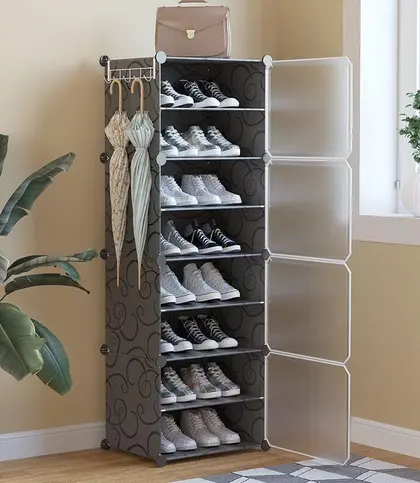
A narrow footprint can help when floor space is scarce. In a small hallway, look for a vertical format that uses height rather than spreading across the wall. Measure the available width and depth, but also check the full assembled height. Leave room above the rack and enough clearance in front to take shoes out without stepping into a doorway.
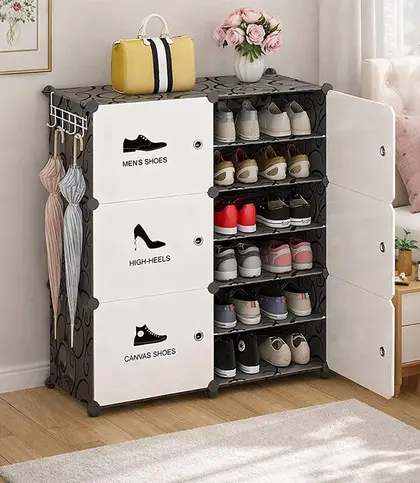
A wider layout may be easier to share. If several people use the same storage spot, a broader rack can make it simpler to give each person a section. It needs more uninterrupted wall space, so check nearby switches, skirting, furniture and door swings before choosing. In a bedroom or dressing area, think about whether you would rather see several pairs at a glance or keep the overall arrangement visually quieter.
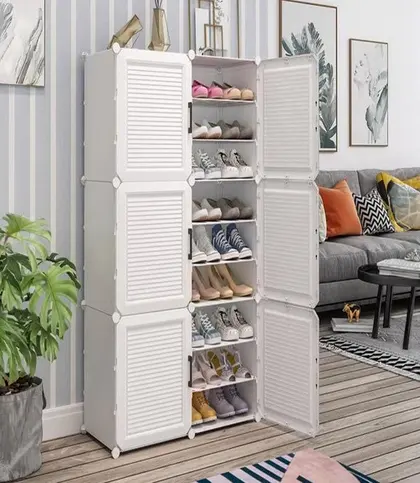
Access matters as much as dimensions. Open shelves make frequently worn footwear easy to grab and put away. Compartments with front panels can give the shoe area a tidier appearance, but their doors need room to move. Check product photographs and details for the particular shelf and door arrangement; a cabinet-like silhouette does not tell you exactly how every level opens.
| Consider | Ask yourself | Why it matters |
|---|---|---|
| Footprint | How much wall width and floor depth can I spare? | A rack should fit without narrowing the route through the room. |
| Height | Can I reach the upper levels easily? | Storage is more useful when everyday pairs remain convenient. |
| Footwear mix | Am I storing mostly flats, trainers or taller shoes? | Pair count alone cannot tell you whether your shoes will fit comfortably. |
| Front access | Do I prefer visible shelves or a more contained look? | Doors and panels change how you see, reach and put away shoes. |
| Setup | Do I have space to assemble the rack? | Planning the setup area makes it easier to place the finished unit. |
Before choosing a size, gather the pairs you intend to store. Separate daily shoes from occasion footwear and count both people and pairs. This gives you a more useful starting point than an assumed capacity: bulky trainers, heels and boots use space differently from slim sandals or flats. Check the dimensions and shelf layout of a rack that interests you, especially if you hope to store high-tops or taller footwear. Where a compartment has a front panel, consider the opening as well as the space inside it.
Keep the pairs used most often at a comfortable height. A lower level can be handy for shoes you remove immediately on coming home, while less frequently worn pairs can go higher. If the rack will be shared, assigning sections by person or shoe type makes it easier to maintain order. Leave a little breathing room rather than packing every level tightly; shoes are easier to retrieve, and the routine of putting them back feels less like a puzzle.
An entryway rack works best when it sits close to the spot where shoes usually come off, without obstructing the entrance. For a narrow passage, mark the proposed footprint on the floor before deciding. Check that the main door and any compartment doors can open freely. In a bedroom, a rack near the wardrobe may make outfit choices easier; in a dressing area, it can keep footwear together instead of spreading pairs across several cupboards.
Also consider the floor and surroundings. Choose a level, suitable position, and follow the product instructions for assembly and placement. If children regularly use the area, think about whether they can reach their assigned shoes without pulling on the rack. A practical location will do more for day-to-day tidiness than a spot chosen only because it looks good in an empty corner.
The Sasimo shoe racks represented in this collection combine plastic and metal. Rather than choosing between a wholly metal or wholly plastic rack, compare the layout, dimensions and access of each mixed-material design. Their clean-lined forms suit a functional storage area, with finishes that include white, grey and black. White can keep a compact space feeling light; grey offers a quieter middle ground; black creates a stronger outline. Pick the colour you will be happy to see each day, then let fit and usability make the final call.
For routine upkeep, wipe the rack with a clean, dry cloth, following the care directions for the design you choose. Shake loose dirt from shoes before putting them away, and let damp footwear dry appropriately first. A quick, regular reset—returning stray pairs to their sections and removing shoes that belong elsewhere—helps the rack stay useful rather than becoming another place for clutter.
Once those essentials are settled, choosing a finish becomes the enjoyable part. Explore more from Sasimo if you would like to keep browsing the brand, or consider other accent furniture when planning the surrounding space.
Choose a taller, narrower rack when wall width is limited and the upper levels will remain easy for you to use. Consider a wider arrangement when you have more wall space or want footwear spread across sections that several people can access. Measure the full footprint either way.
Compare your largest everyday shoes with the listed rack dimensions and the shelf or compartment layout shown in product details. Pay particular attention to bulky trainers, heels, high-tops and boots. Avoid relying on a general pair count as your only guide.
The Sasimo shoe racks represented here use both plastic and metal. If material construction is an important consideration, check the details of the individual design alongside its dimensions and access style.
The designs represented in this collection list DIY self-assembly. Check the specific product instructions before you begin, and allow enough clear floor space to assemble and position the rack.
Vaaree is a destination for curated, premium, pretty home products. You can compare Sasimo shoe storage by size, format and finish while choosing a piece that makes your home easier to organise and a pleasure to come back to.