

₹427
₹549
22%OFF

168 Products
₹427
₹549
22%OFF

₹664
₹868
24%OFF

₹712
₹890
20%OFF

₹522
₹680
23%OFF

₹997
₹1,125
11%OFF

₹1,234
₹1,406
12%OFF

₹712
₹825
14%OFF
₹2,464
₹3,620
32%OFF
 FastDelivery
₹2,499
₹3,999
38%OFF

₹1,187
₹1,349
12%OFF

₹1,044
₹1,218
14%OFF
₹902
₹1,026
12%OFF

₹1,187
₹1,350
12%OFF

₹749
₹799
6%OFF

₹894
₹1,045
14%OFF
₹877
₹1,026
15%OFF
₹1,092
₹1,229
11%OFF

₹851
₹995
14%OFF
₹902
₹1,026
12%OFF
₹1,424
₹1,649
14%OFF
The right lunch box makes a packed meal easier to portion, carry and enjoy. Start with what you usually pack: a few rotis and sabzi, rice with a side, a sandwich and fruit, or several small snacks. Then think about where the box travels and whether you will reheat the food. Vaaree brings together lunch and tiffin boxes in materials including borosilicate glass and stainless steel, so you can compare practical formats before choosing a design you like.
A capacity figure is a useful starting point, but it does not tell the whole story. A shallow, wide box may suit rotis or sandwiches better than a tall container with the same stated volume. Rice, pasta and other meals eaten with a spoon need enough depth, while snacks are often easier to reach in smaller sections. Check the dimensions as well as the capacity, and leave room for the lid to close without pressing into the food.
If you regularly pack a full meal, compare the combined usable capacity of the containers with your usual portions. If you pack only a snack, a larger box may take up unnecessary bag space. For school, consider whether the intended user can open and close the lid independently. For an office commute, check that the packed box fits the bag you already carry and can sit in a convenient position.
A divided lunch box is convenient when you want one item to carry and serve from. It can work especially well for mostly dry foods. Separate containers give you more flexibility: pack only the ones needed that day, or keep a side dish apart from the main meal. A double-deck format offers another way to separate foods while keeping the footprint compact. Explore steel bento boxes if a sectioned format appeals to you, and kids’ lunch boxes when ease of handling is a priority.
Do not assume that a divider will contain sauces or that every lidded section seals independently. For dal, curry, raita or dressing, read the individual product’s liquid-carrying guidance. If the food must travel in a backpack or alongside documents, pay particular attention to the lid design and the maker’s instructions rather than relying on the word ‘airtight’ alone.
Glass: A glass lunch box can be appealing when you like to see what you have packed and serve from the same container. Consider its weight, especially for a long commute or a child’s school bag. If reheating is important, check the specific box and lid instructions; glass material by itself does not establish that every part can go in a microwave or oven. You can also compare borosilicate glass lunch boxes.
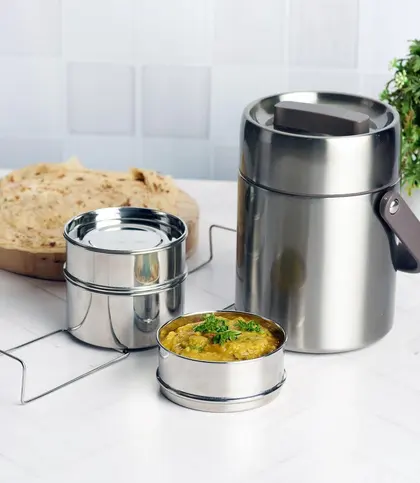
Stainless steel: A steel tiffin is worth considering when you prefer a metal container for everyday carrying. Compare the lid mechanism, container depth and whether the format is a single box, a divided box or a stack. Browse steel tiffin boxes to narrow your preferred arrangement. Ordinary steel construction does not, on its own, mean a lunch box is insulated or suitable for a microwave.
Other materials and accessories: If a listing includes plastic parts, a sleeve or a carrying bag, check the care instructions for each component separately. Choose the complete packed setup for your routine, rather than selecting solely by the material of the main container.
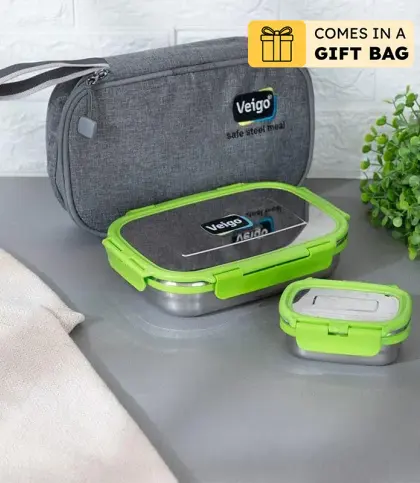
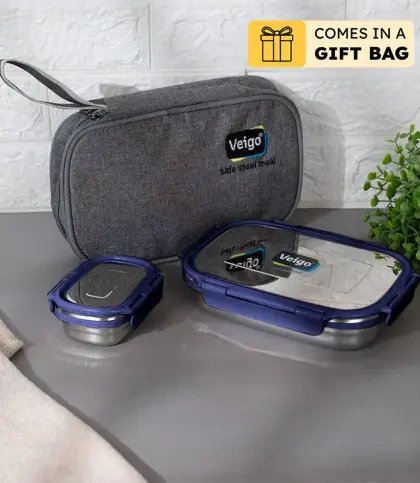
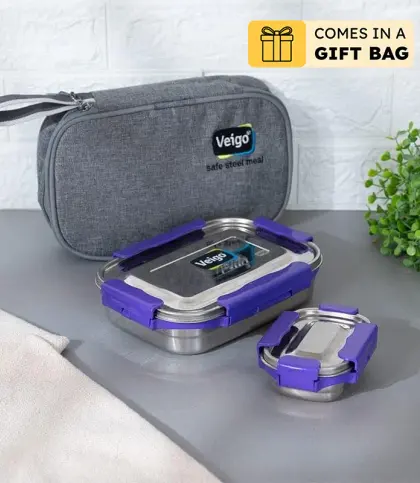
‘Set’ can describe different arrangements. One might contain several individual food containers; another might have one divided box. Before choosing, confirm the number of boxes and lids, their individual capacities and whether an outer case, bag, cutlery or other accessory is actually listed as included. Check the dimensions of the assembled set if you need it to fit a particular shelf, school bag or work tote. A photograph showing food or accessories is not a substitute for the stated contents.
A packed lunch box spends more time in transit and storage than it does on the table. Think about how it will sit in your bag, how securely you can close it, and where you will keep it until mealtime. If you want warm food later, look for product-specific insulation information; neither a steel body nor a snug lid guarantees a particular temperature for a set number of hours. Follow appropriate food-storage practices for the meal and conditions rather than treating the box as a freshness guarantee.
For heat use, read the instructions for the container and lid separately. Microwave suitability, oven suitability and heat limits vary by product and component. Never put a steel container in a microwave. If oven use is central to your routine, compare oven-safe lunch boxes and verify the directions on the item you select. Likewise, check whether the box, lid and seals are individually approved for a dishwasher; do not assume the whole set shares one cleaning method.
For everyday care, empty the box after use, wash it according to its product instructions and let all parts dry before putting them away. Pay attention to corners, lid rims and removable seals where food can collect. Keeping the pieces together when stored can make a multi-container set easier to pack on a busy morning.
Lay out a typical meal first, then compare its portions with the stated capacity and dimensions. Check each compartment or container individually. Shape matters: rotis, rice and snack portions do not occupy a box in the same way.
Choose compartments if you want an organised meal in one box, particularly for foods that are fairly dry. Choose separate containers if the number of dishes changes from day to day or you want to keep a side dish apart. For liquids, check the specific container’s carrying guidance.
No. Check the product instructions for each component before heating. Steel containers must not go in a microwave, and a container described as microwave-suitable may still have a lid that needs to be removed.
Neither feature applies to every lunch box. Read the individual listing for guidance on carrying liquids and cleaning the box, lid and seals. A tight-looking closure is not a substitute for a product-specific claim.
Vaaree is a destination for curated, premium and pretty home products. Browse lunch box materials and formats together, then choose the practical details that suit your meals and daily route.