
₹1,844
₹3,585
49%OFF
3 more color

297 Products
₹1,844
₹3,585
49%OFF
₹1,275
₹1,699
25%OFF
 FastDelivery
₹1,899
₹2,399
21%OFF
₹2,899
₹4,149
30%OFF
₹2,799
₹3,299
15%OFF

₹604
₹799
24%OFF

₹1,406
₹2,354
40%OFF
₹1,352
₹2,000
32%OFF
₹727
₹1,138
36%OFF
₹1,698
₹3,285
48%OFF
₹3,704
₹5,633
34%OFF
₹1,844
₹2,995
38%OFF
Luxe
₹2,000
₹2,600
23%OFF
₹4,632
₹6,700
31%OFF
₹2,089
₹2,100
1%OFF
₹5,739
₹9,000
36%OFF
₹371
₹499
26%OFF
₹2,336
₹3,600
35%OFF
₹1,999
₹2,699
26%OFF
₹2,572
₹3,285
22%OFF
A dinner plate has a simple job: give your main meal enough room without making serving, washing or storage awkward. Whether you are plating a weeknight dal and sabzi or setting the table for guests, start with the space the food needs. Then check the plate’s outside dimensions, material and pack quantity. At Vaaree, you can explore dinner plates for practical daily dining as well as a more considered table setting.
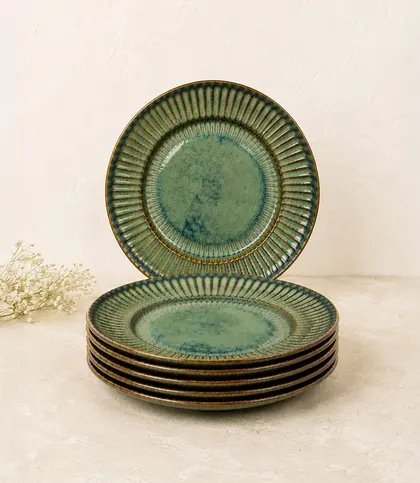
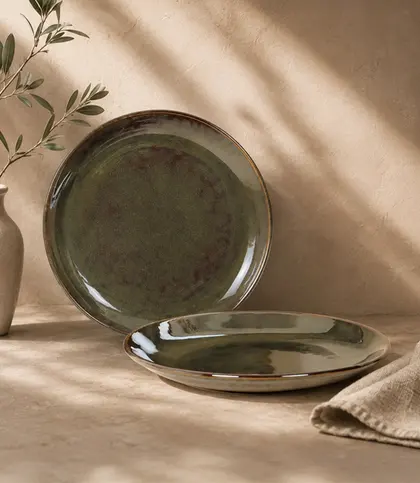
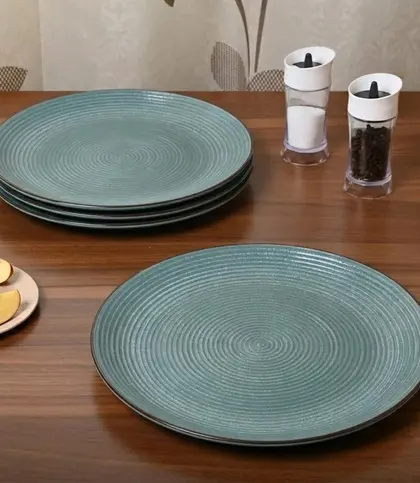
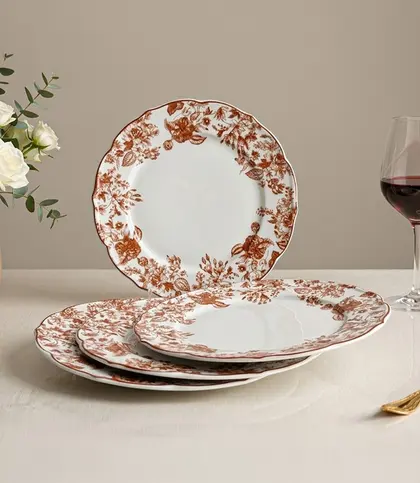
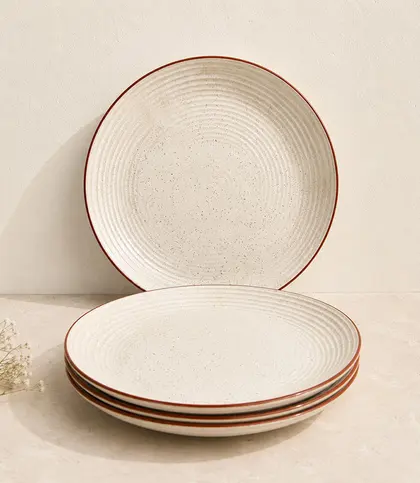
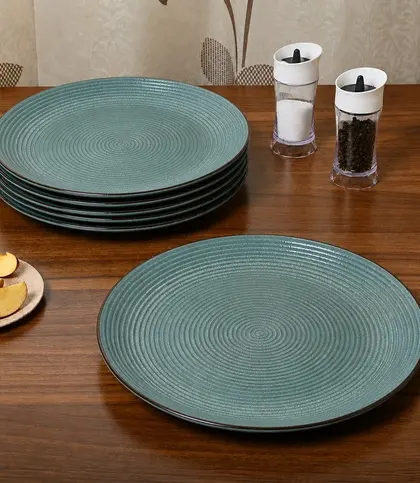
A plate’s listed diameter usually measures from one outer edge to the other. It does not always tell you how much flat space you can use for food. A broad decorative rim takes up more of that diameter than a narrow rim, while a gently raised edge can help keep sauces and small portions together. Compare the usable eating surface as well as the overall size, especially if you serve several foods on one plate.
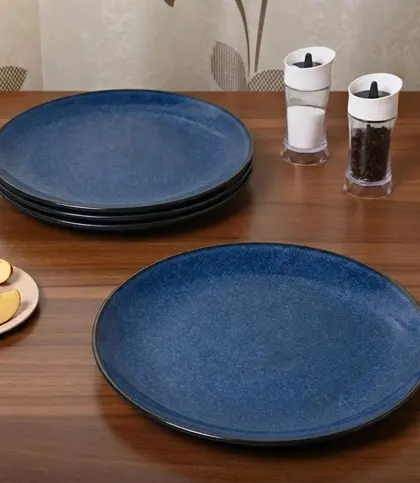
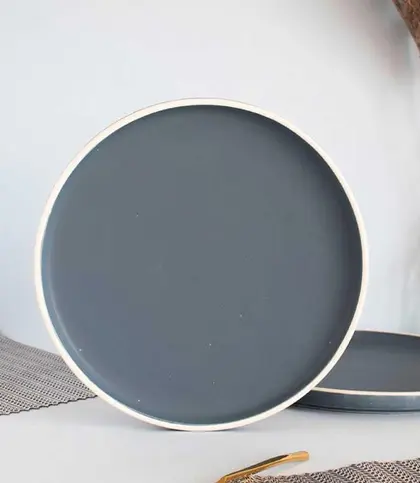
Picture a typical meal before choosing. Do you like room for roti beside sabzi, or do you serve dal and accompaniments in separate bowls? A roomy, flatter centre may suit meals plated together; a more pronounced rim may appeal if you prefer a defined serving area. If a product page does not specify the inner eating diameter, use its images to assess the rim and check the listed overall measurements rather than assuming every plate of the same diameter holds the same amount.
Measure the clear width and depth of your cupboard shelf, not just the cabinet opening. Check the height available for a stack and leave enough room to lift plates out comfortably. If you use a plate rack, consider the spacing between its slots and whether a thick or shaped rim will sit securely. For a dishwasher, compare the plate’s actual dimensions with your rack clearance and layout; fitting in a rack is a separate question from whether that particular plate is labelled dishwasher-safe.
Choose dinner plates when you need a main-meal eating surface or want to add to the plates you already own. Smaller snack plates are better suited to lighter servings, sides or snacks; they need not replace the space you want for a full meal. If you are furnishing a table from scratch, browse plates and dinner sets to compare individual plate purchases with options that include other dining pieces.
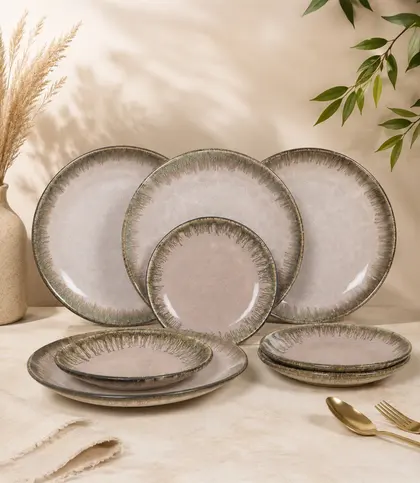
Read the pieces-included details before ordering. A pack of dinner plates is not necessarily a complete place setting: it may not include bowls, quarter plates or other pieces. Work from the number of people you usually serve, then decide whether you want extra plates for guests or for the time between washes. If you are adding to existing dinnerware, compare diameter, rim shape and colour as well as the number of plates in the pack. That makes it easier to choose pieces that will sit comfortably alongside what you already use.
Material affects a plate’s feel, weight and appearance, but care instructions can vary between products made from the same material. Ceramic is a versatile choice if you enjoy a substantial plate and a range of finishes. Stoneware often brings a more earthy look; compare its thickness and weight if you will be carrying a full stack. Porcelain can give the table a refined, lighter-looking setting. For each option, use the individual product’s details to confirm the finish, dimensions and cleaning instructions rather than relying on a material name alone.
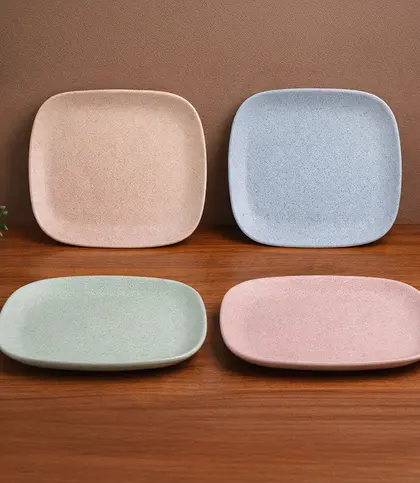
Melamine can be useful when you prefer a lighter plate for casual meals or carrying food outdoors. Melamine must not be used for microwave heating or cooking. For every material, check the specific product guidance before using a microwave or dishwasher; neither appliance compatibility nor resistance to chips and scratches should be assumed across this collection. If quick cleanup is a priority, make the stated care instructions part of your comparison before you settle on a design.
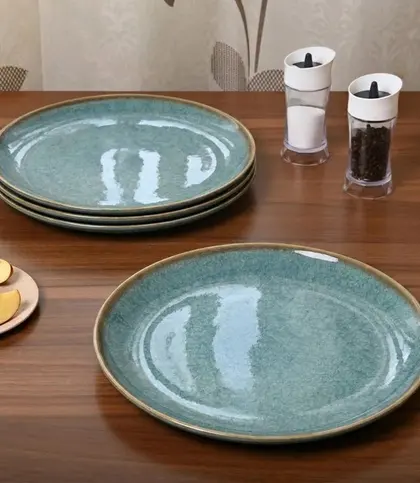
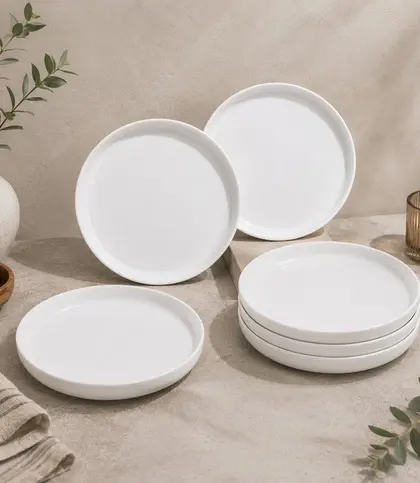
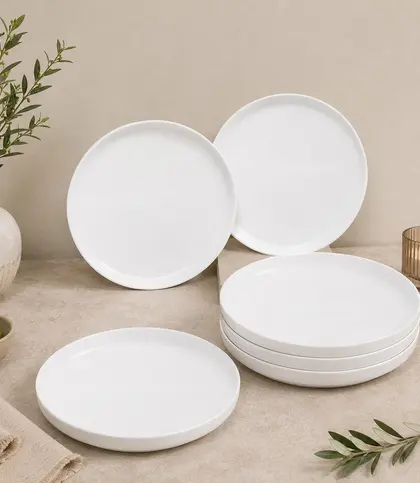
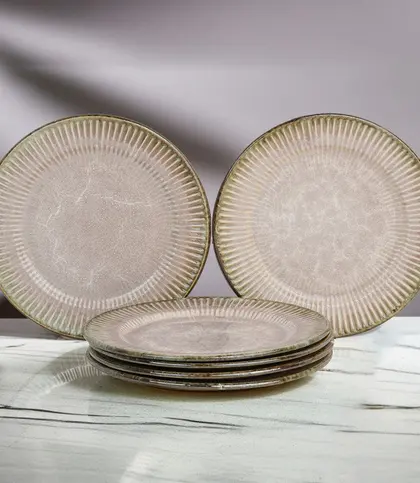
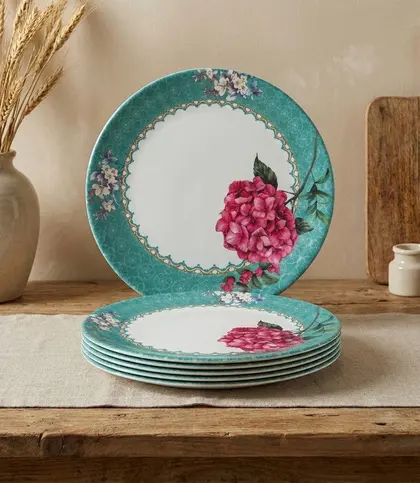
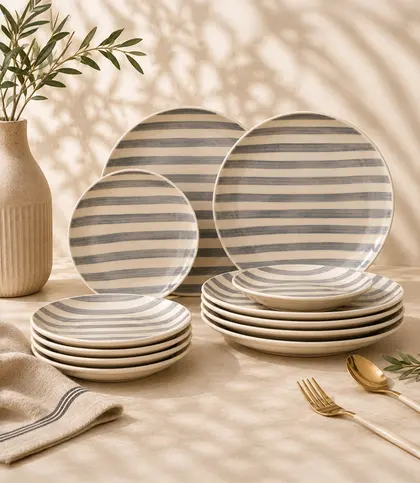
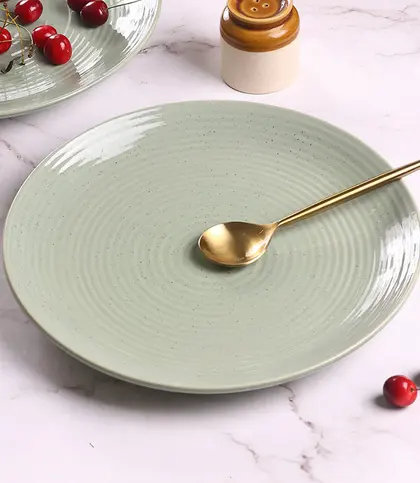
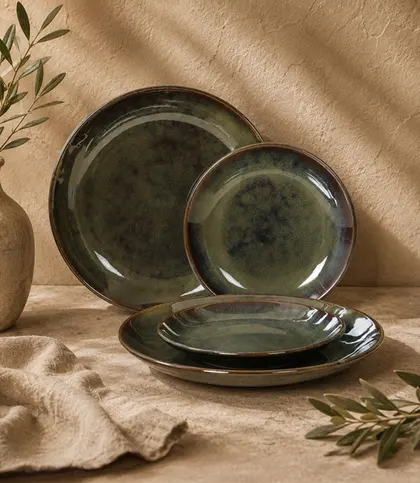
Once size, fit and care are settled, choose a look you will enjoy using often. White or other quiet neutrals can make it easy to combine plates with bowls you already have. Blue and green tones can bring colour to everyday meals, while a patterned plate can give a simple place setting more character. Contemporary and minimalist designs suit a pared-back table; an earthy finish can feel at home with a relaxed, rustic setting. You need not match every piece exactly: a shared colour or similar rim shape can help a mixed table feel intentional.
Start with the meals you serve and the flat eating area you want. Then compare the stated outside diameter with the rim in the product images. Finally, check the actual dimensions against your cupboard and, if relevant, your plate or dishwasher rack.
A dinner-plate listing may include only plates, while a dinner set may contain several kinds of dining pieces. Neither name tells you the exact contents. Check the item description and piece count to see whether bowls, smaller plates or other pieces are included.
Begin with one for each person you regularly serve. Add extras if you host often or prefer not to wash up between meals. Check the number of plates in each listing so the quantity you order matches that plan.
No collection-wide appliance rule applies. Read the care information for the particular plate before using either appliance. Melamine must not be used for microwave heating or cooking.
Vaaree is a destination for curated, premium and pretty home products. Explore dinner plates with your daily routines in mind, then compare the details that matter most to you: eating space, storage fit, material, care and quantity.