
 FastDelivery
₹1,299
₹3,499
63%OFF
4 more tier

72 Products
FastDelivery₹1,299
₹3,499
63%OFF

₹949
₹1,309
28%OFF
₹799
₹1,061
25%OFF

From ₹2,774
₹4,409
34%OFF
 FastDelivery
₹699
₹999
30%OFF

₹284
₹999
72%OFF

₹509
₹1,299
61%OFF

₹599
₹1,498
60%OFF

From ₹2,450
₹3,849
34%OFF

From ₹3,745
₹5,949
34%OFF

From ₹1,234
₹1,889
35%OFF

₹799
₹1,299
38%OFF

Deal Of The Day
FastDelivery₹199
₹999
80%OFF
₹3,467
₹5,449
36%OFF
₹1,399
₹1,930
28%OFF
₹821
₹999
18%OFF
 FastDelivery
₹304
₹999
70%OFF

₹304
₹999
70%OFF

From ₹399
₹999
40%OFF
₹1,095
₹1,300
16%OFF
A good clothes organiser makes it easier to give folded garments a place of their own. The right choice depends less on how an organiser looks in a photograph and more on what you plan to put inside it, where it will sit and how often you need to reach for it. At Vaaree, you can compare open compartment organisers with zipped garment or saree covers to find a format that suits your routine.
Start with the clothes you want to sort. Everyday T-shirts and smaller folded items benefit from sections you can see and reach into quickly. A saree or occasion outfit that you put away between wears calls for a different folding and access plan. Neither format is a substitute for checking the measurements of the specific item: the outside dimensions must fit your furniture, while the usable space inside must fit your garments.
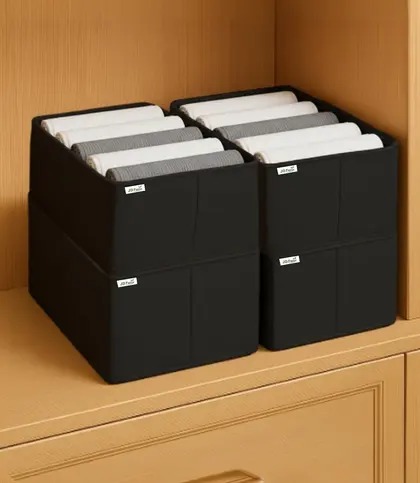
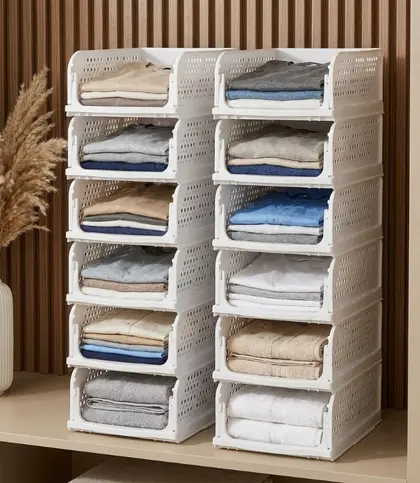
Open compartment organisers help keep groups of folded clothes separate in a drawer or on a wardrobe shelf. They are useful when you want to see several items at once and take one out without working through an entire pile. Before choosing one, fold a few of your own garments as you normally would. Compare the resulting width and height with the dimensions of each compartment, not just the organiser’s overall size. Narrow sections may suit small garments but be awkward for thicker folds.
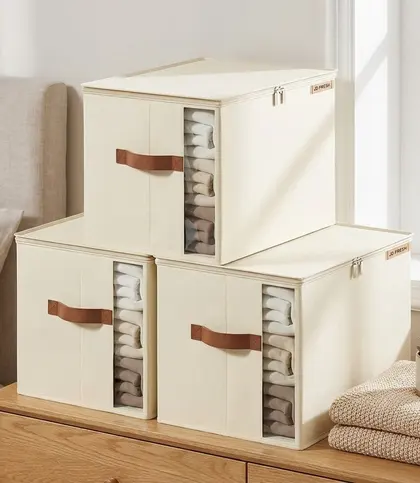
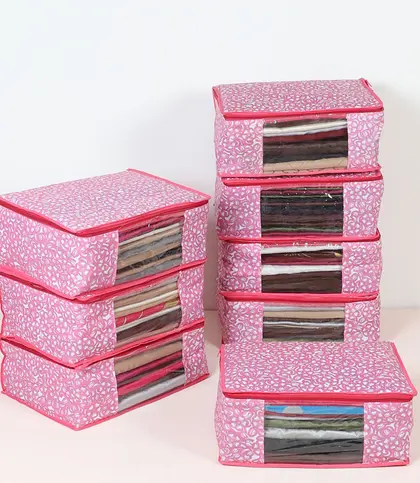
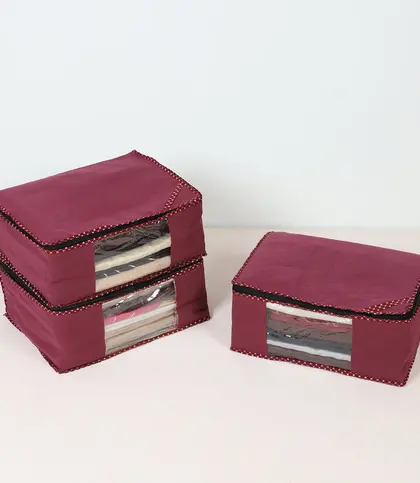
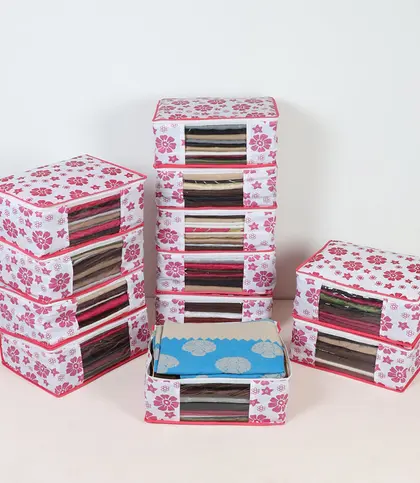
Zipped garment and saree covers provide an enclosed format for folded clothing. Think about how you will place a garment inside and whether you can remove it conveniently from its intended shelf. A cover needs room to open and close; one that technically fits the shelf may still be inconvenient if it is tightly wedged between other items. Check the individual product’s dimensions and opening before deciding how many folded garments to place in it.
If you mostly organise shirts, compare folding space and access in Vaaree’s shirt organisers. For a broader approach to shelf and wardrobe layouts, explore wardrobe organisers. Choose for the clothes and furniture you actually have, rather than treating every storage box as interchangeable.
Take measurements of the space where the organiser will live before selecting a size. A drawer needs enough clearance above the organiser to open smoothly; a shelf needs enough height for you to reach in or remove a cover. Check these points:
One practical test is to set out the garments you want to organise before you shop. Fold them, group them by how often you wear them and note which groups need separate sections. This gives you a more useful sense of compartment size and number of pieces than an estimate based on wardrobe space alone. If you are buying several organisers, measure the space they will occupy together rather than assuming they will line up neatly side by side.
Place frequently worn clothes where you can reach them without shifting other organisers. Keep similar folds together so that each section remains easy to scan: for example, separate everyday tops from smaller accessories. For clothing you access less often, choose a location where you can remove and open its cover comfortably. Avoid overfilling a compartment simply to use every bit of space; if taking out one item disturbs the rest, try a different fold or divide the group.
A tidy wardrobe can be pleasing to look at, too. You might use similar colours for organisers on visible shelves or add your own labels where they will help you identify contents. Let that be the finishing touch, though. Fit, garment access and an accurate piece count will do more for your daily routine than matching colours alone.
For upkeep, follow the care directions for the individual organiser. Empty it before cleaning, check whether its construction allows washing or only surface cleaning, and let it dry fully before putting clothes back. Care can differ between materials and designs, so avoid assuming that every fabric-looking organiser should be washed the same way.
Measure the usable width, depth and height of its intended drawer or shelf. Check for anything that reduces clearance, then compare both the organiser’s outer size and the usable dimensions of its compartments or interior with your folded clothes.
Choose open compartments when you want to see and retrieve folded items frequently. Consider a zipped cover when you prefer an enclosed format for a folded garment or saree. In either case, check the opening and allow enough space to use it comfortably.
Not necessarily. Compartment widths, the way you fold garments and how easily you need to remove them all affect usable capacity. Compare your own folded items with the product dimensions rather than relying on overall size alone.
Check the material specification and exact piece count on the individual product listing. These details can vary between organisers and sets.
Vaaree brings a curated, premium and pretty approach to home essentials. Compare the format and product details that matter to you, then choose an organiser that fits your clothes and your space.