
 FastDelivery
₹1,449
₹1,999
28%OFF
7 more color

50 Products
FastDelivery₹1,449
₹1,999
28%OFF
₹1,449
₹1,999
28%OFF

₹1,449
₹1,999
28%OFF

₹1,449
₹1,999
28%OFF
₹1,199
₹1,999
40%OFF
₹1,199
₹1,999
40%OFF

Sold Out
₹949
₹1,999
53%OFF

Sold Out
₹1,449
₹1,999
28%OFF
Sold Out
₹1,199
₹1,999
40%OFF
Sold Out
₹1,449
₹1,999
28%OFF

Sold Out
₹1,199
₹1,999
40%OFF
Sold Out
₹999
₹1,999
50%OFF
Sold Out
₹999
₹1,999
50%OFF
Sold Out
₹1,199
₹1,999
40%OFF
Sold Out
₹1,449
₹1,999
28%OFF
Sold Out
₹1,449
₹1,999
28%OFF

Sold Out
₹1,449
₹1,999
28%OFF
Sold Out
₹999
₹1,999
50%OFF

Sold Out
₹1,199
₹1,999
40%OFF
Sold Out
₹1,449
₹1,999
28%OFF
A chair cover set of 4 is a considered choice when you want four chairs to share a coordinated look. Vaaree’s collection is built around chair covers sold in sets of four, with options labelled for dining spaces and colours ranging from quiet neutrals to richer tones. Start with the shape of your chairs, then choose the appearance you want around the table. Check each listing for the details of the set you like before ordering.
Count the chairs you intend to cover and note whether they are all the same shape. A set of four makes the most sense for four matching chairs; if your seating includes a bench, an armchair or chairs with different backs, consider each piece separately rather than assuming one cover design will suit them all.
| Shopping situation | What to check | Helpful next step |
|---|---|---|
| Four matching chairs | Compare each chair’s seat and back shape with the listing images and any stated dimensions. Confirm what parts of the chair the cover is designed to cover. | Browse this set-of-four collection with your chair measurements close at hand. |
| Only two chairs need covers | Check the quantity you need before choosing a pack size. | Compare chair cover sets of 2. |
| Six chairs around the table | Decide whether one coordinated set is preferable to combining packs. | Explore chair cover sets of 6. |
| A different chair shape | Look closely at the chair pictured on the listing rather than relying on the word “chair” alone. | For other seating, browse sofa and chair covers as an alternative. |
Begin with the chair itself: is its back straight or curved, does the seat have a distinct edge, and are there arms or unusual details that could affect how a cover sits? Measure the chair where a listing asks you to, and compare those measurements with the product information. A dining-space label is a useful starting point, not a substitute for checking fit against your own furniture. If you want to widen your search by seating use, dining chair covers offer a related collection to compare.
Next, look at the listing photographs for the intended silhouette. Consider whether you want the chair’s outline to remain prominent or prefer a different visual effect. Check the stated set contents and any fit or fastening details on the individual listing; the collection label alone does not establish how every cover is fitted. If your aim is to change how a seat feels rather than how the chair looks, chair covers and chair pads is a useful alternative to browse.
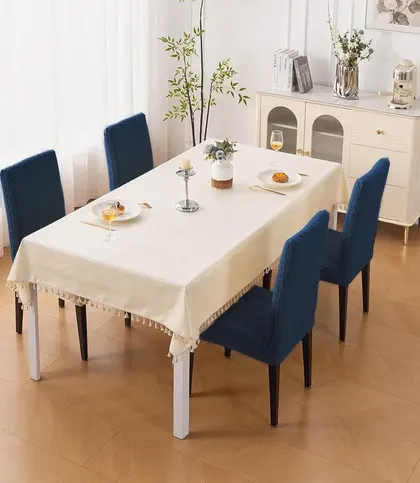
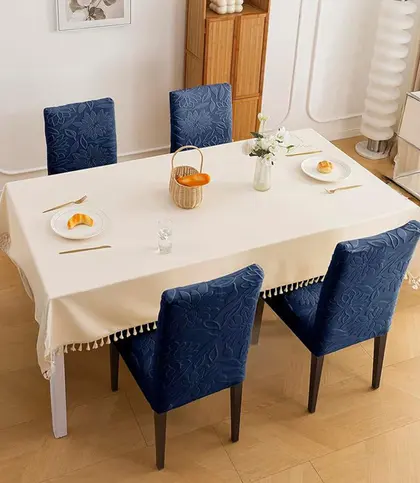
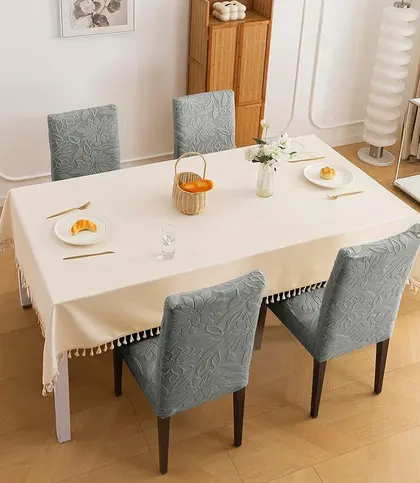
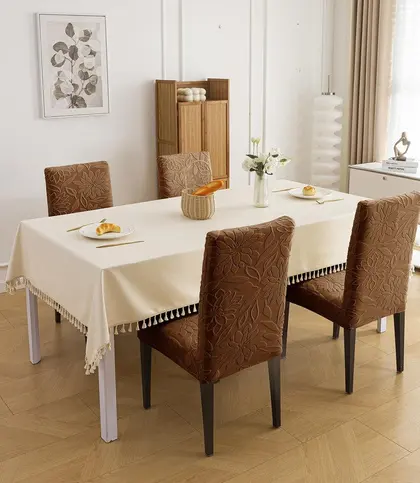
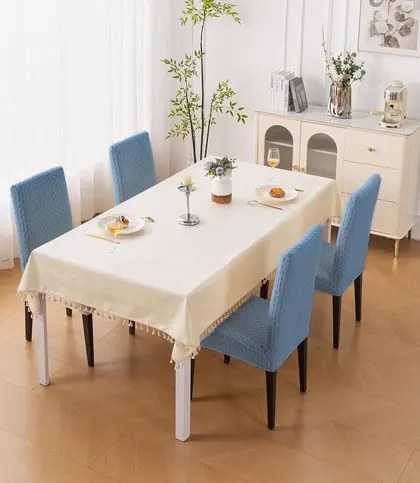
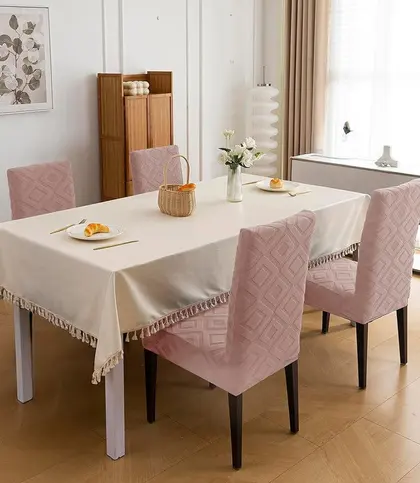
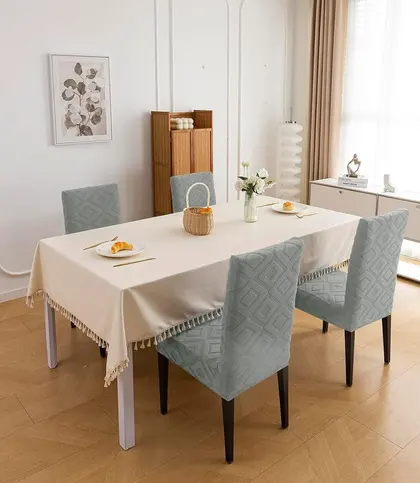
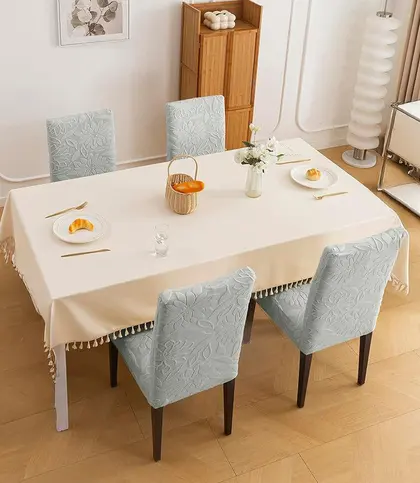
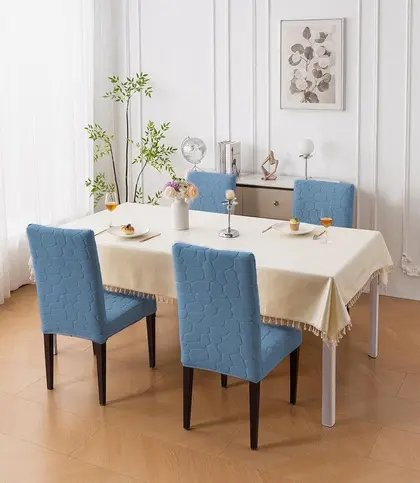
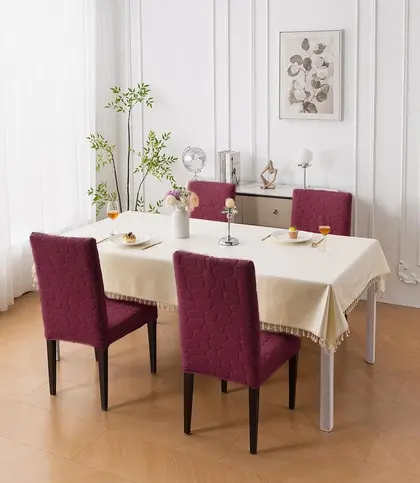
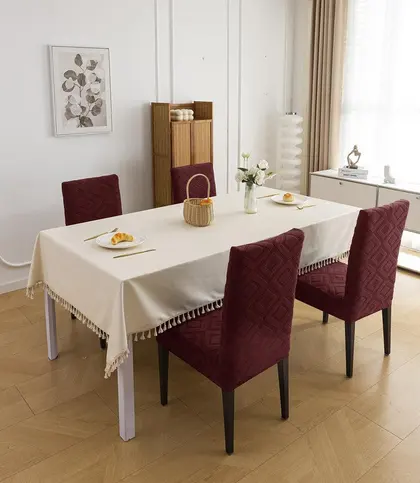
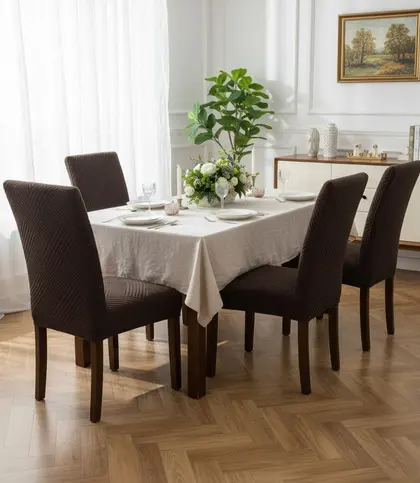
Chair covers sit beside the tabletop, flooring and often a rug, so view colour as part of the whole dining area. Beige and grey can keep the chairs visually quiet against a patterned table setting, while blue, green or maroon can give a dining corner a more noticeable accent. Brown and pink are also among the observed colour labels. Use product images to judge the particular shade rather than expecting every item under a colour label to look alike.
The collection also includes Solids, Classic, Modern and Minimalist design-style labels. These can help narrow your browsing, but the most useful test is the actual look of a cover beside your table. A solid-colour option might let patterned furnishings take the lead; a cover with a stronger visual presence might make the chairs the focal point. Check the individual photographs and description for the design you are considering instead of treating a style label as a fixed set of features.
Polyester is the material label documented for this collection. It identifies a listing detail, not a promise about fabric weight, stretch, feel, performance or care. If any of those qualities matters to you, look for the relevant information on the individual product page before choosing. The same goes for dimensions and construction: a set count tells you how many covers you are shopping for, but not whether a particular design suits your chairs.
Once you have narrowed the choice to a shape and size that work for your seating, compare the colour with the rest of the room. That order keeps the decision practical without losing the pleasure of giving a familiar dining space a different look.