
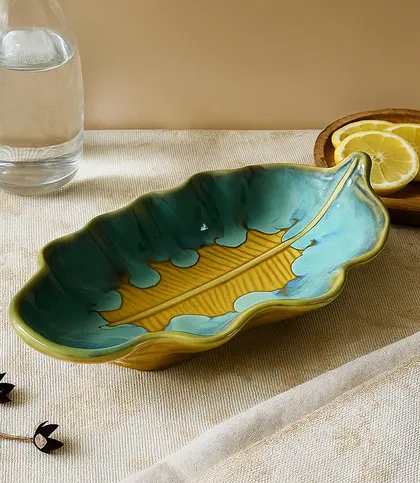
₹849
₹1,200
29%OFF

709 Products
₹849
₹1,200
29%OFF
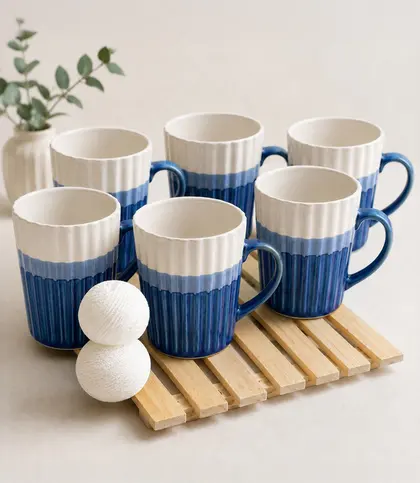
Deal Of The Day
From ₹1,024
₹1,320
21%OFF
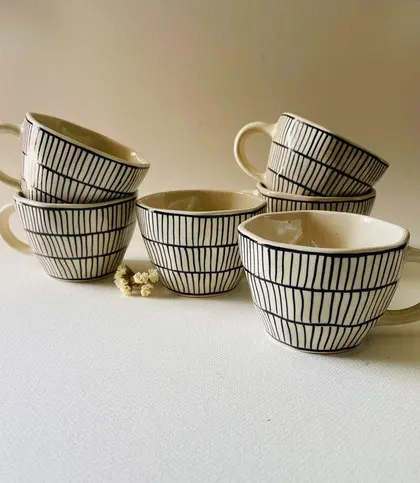
₹1,762
₹2,400
27%OFF

Luxe
₹1,639
₹2,400
32%OFF
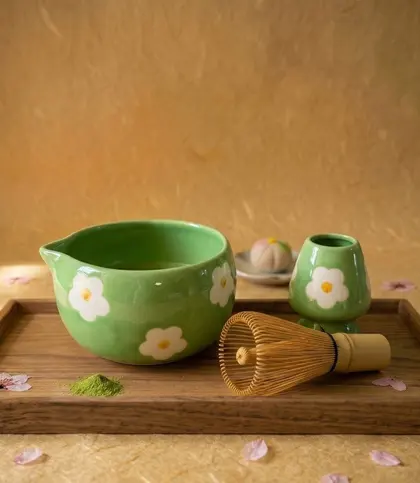
From ₹942
₹1,400
28%OFF
₹860
₹1,200
28%OFF
From ₹942
₹1,400
28%OFF
₹1,516
₹2,400
37%OFF
 FastDelivery
₹1,475
₹2,600
43%OFF

₹845
₹1,100
23%OFF
₹5,534
₹8,600
36%OFF

₹655
₹900
27%OFF
 FastDelivery
₹2,049
₹2,400
15%OFF

Luxe
FastDelivery₹1,270
₹1,800
29%OFF
 FastDelivery
₹1,106
₹1,400
21%OFF

Deal Of The Day
₹1,984
₹3,000
34%OFF
₹1,926
₹3,200
40%OFF

₹1,270
₹1,650
23%OFF
Rising Star
₹1,680
₹2,400
30%OFF

Rising Star
FastDelivery₹942
₹1,500
37%OFF
A good tableware choice starts with the meal, not just the colour. The Ceramic Kitchen collection brings together drinkware, plates, bowls, dinner sets and serving pieces for daily routines and meals with guests. Whether you are replacing a favourite tea cup or putting together a table setting, begin with the pieces you will reach for most often. Then consider how they fit in your cupboards, how many people you usually serve and how much washing-up time you want to spend.
If you are building a collection gradually, choose everyday cups and plates first. Add smaller plates for snacks and sides, bowls for foods that need depth, and a platter when you want to bring food to the table for sharing. Coordinated pieces can make serving feel effortless, while a mix of glazes and shapes can give each place setting a more personal feel.
For saucy pasta, a pasta plate with a gently raised edge can be easier to use than a flat plate. Serving bowls help bring salads or other shared dishes to the table, while platters give appetisers and treats room to spread out. A dinner set can simplify planning when you need several place settings at once, but read its piece-by-piece contents: a piece count alone does not tell you how many diners it serves.
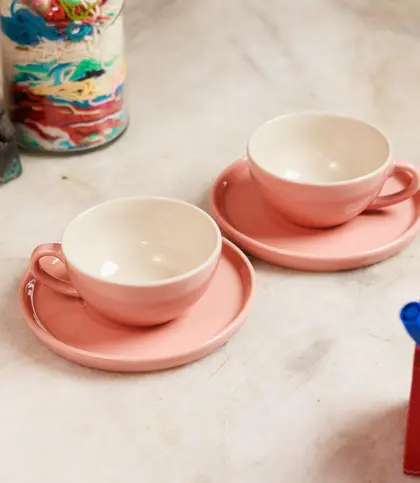
Capacity and dimensions. Cup capacities and plate diameters vary by design. Think about your normal tea or coffee serving, the foods you plate and whether a bowl needs room for mixing or just for presenting a portion. Check product dimensions if a piece must fit a narrow cabinet, a plate rack or a compact dining table. For handled drinkware, measure the usable cupboard space with the handle in mind; for stackable pieces, consider the height of the full stack.
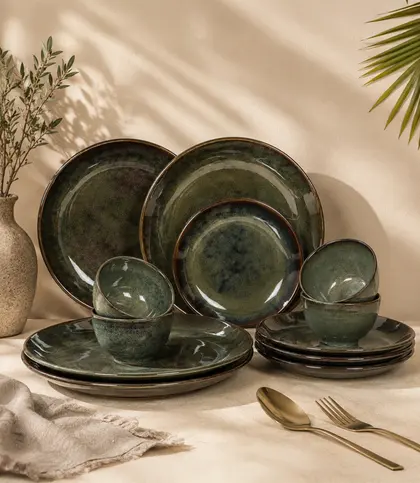
Set contents. Look past labels such as “set of four” or “12-piece set.” A cup-and-saucer pairing contains two pieces per person, while a dinner set may combine plates and bowls. Match the actual contents to your household and keep a little flexibility for guests, breakages or washing between meals. If you already own plenty of dinner plates, adding quarter plates or serving bowls may be more useful than buying another complete setting.
Shape and finish. A broad, flatter plate makes sense when you want space to arrange food; a raised rim helps with dishes that carry a little sauce. Bowl depth matters for everything from dips to generous servings. Glossy, matte, speckled and textured looks can each change the feel of a table. For an easy-to-coordinate base, try a neutral colour and bring in blue, green or another accent through cups or serving pieces. Mixing finishes works best when the pieces still share a comfortable scale.
Material and care. Ceramic is the principal material across this collection, but care instructions differ between designs. Some pieces are listed as dishwasher- and microwave-safe; others call for handwashing. Check the specific product instructions before using a microwave, dishwasher or freezer, and do not assume one ceramic piece has the same appliance suitability as another. A design you love will be more satisfying if its care requirements suit your daily routine.
Give frequently used mugs and plates the easiest-to-reach shelf, and keep serving pieces together so they are ready when guests arrive. Stack plates by size to avoid lifting a large pile for one small dish. Store saucers with their cups where possible, or keep each type in a clearly defined spot so pairs are easy to find. Leave room around handles and sculptural rims rather than forcing pieces tightly together.
For cleaning, let hot tableware cool before washing, use a soft sponge and follow the care directions for the individual piece. Dry pieces fully before putting them away, especially when stacking bowls or nesting cups. If you are choosing tableware for frequent use, practical details such as a comfortable handle, a stable base and a care routine you can maintain deserve as much attention as the glaze.
Planning beyond individual place settings? Browse premium serveware for other ways to present food, or explore mugs, cups and kulhads when drinkware is your main priority.
Choose individual pieces when you need to fill a specific gap or prefer to build your table setting over time. A dinner set is useful when you want several coordinated essentials together. In either case, check the number and type of pieces included against the number of people you usually serve.
A quarter plate gives you a smaller, relatively open surface for food such as toast or starters. A snack bowl offers depth, which is helpful for loose snacks, dips or portions you would rather contain. Let the foods you serve most often decide.
It depends on the piece. Appliance suitability varies across the collection, and some designs specify handwashing only. Read the product’s care and compatibility details before purchase and follow them during use.
Compare the stated capacity with your usual serving, including any milk or extra space you like to leave at the top. Also check the cup’s dimensions and whether you want a matching saucer; two cups with similar capacities can feel different to hold and store.
Vaaree is a destination for curated, premium and pretty home products. It is a place to compare useful tableware formats alongside the colours and finishes that make everyday dining feel more considered.