
 FastDelivery
₹1,237
₹2,999
59%OFF

1364 Products
 FastDelivery
₹1,237
₹2,999
59%OFF
Bestseller
FastDelivery₹1,154
₹2,999
62%OFF

₹849
₹1,999
58%OFF

Featured
₹6,999
₹11,699
40%OFF
Featured
₹999
₹1,699
41%OFF
Rising Star
₹6,071
₹8,499
29%OFF
Rising Star
FastDelivery₹3,835
₹6,199
38%OFF
₹1,625
₹3,250
50%OFF
₹291
₹1,500
81%OFF
Featured
₹2,099
₹3,599
42%OFF
₹4,610
₹10,000
54%OFF
 FastDelivery
₹977
₹2,599
62%OFF

Featured
FastDelivery₹1,113
₹2,599
57%OFF
Featured
FastDelivery₹1,154
₹2,999
62%OFF
Luxe
FastDelivery₹1,237
₹2,999
59%OFF
₹3,999
₹8,999
56%OFF
₹1,472
₹3,750
61%OFF
Featured
FastDelivery₹849
₹1,999
58%OFF
Rising Star
₹967
₹1,699
43%OFF
Luxe
₹4,882
₹7,499
35%OFF
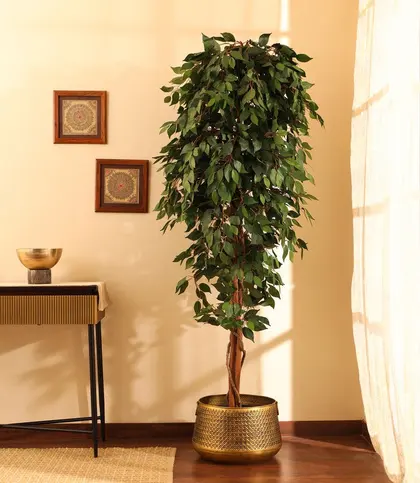
A little greenery can change the shape of a room. Artificial plants bring leafy colour to a quiet shelf, soften the edge of a work desk or give an empty living-room corner a focal point. They offer the look of foliage without watering or finding the right light for a living plant. The trick is to choose one for the space it will occupy—not just for how it looks in a close-up photograph.
At Vaaree, explore artificial plants by height, silhouette and display position. A compact succulent can sit comfortably among books, while a taller, spreading plant needs space around its leaves. Start with where you want the plant to go, then consider its overall dimensions, foliage and pot.
Measure the available height and width before choosing a faux plant. The height in a listing may include the pot, so check the product dimensions rather than estimating from a styled image. Width matters too: a plant with arching leaves can reach well beyond its base. Leave room to walk past floor plants and to open nearby doors or drawers.
If the plant will sit on furniture, picture the combined height of the furniture and foliage. A modest plant on a tall console may have more impact than a large one placed directly on the floor.
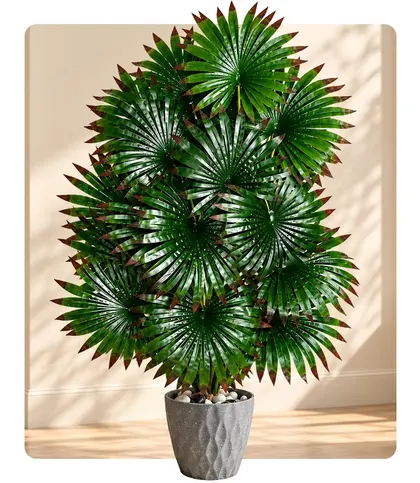
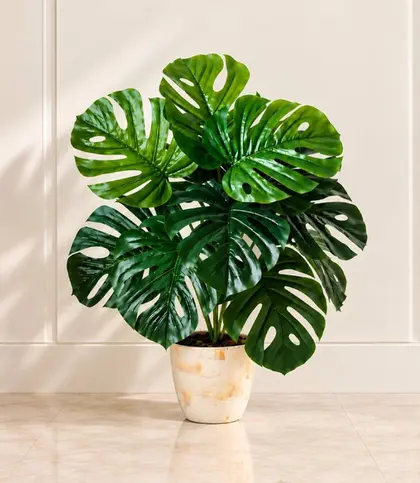
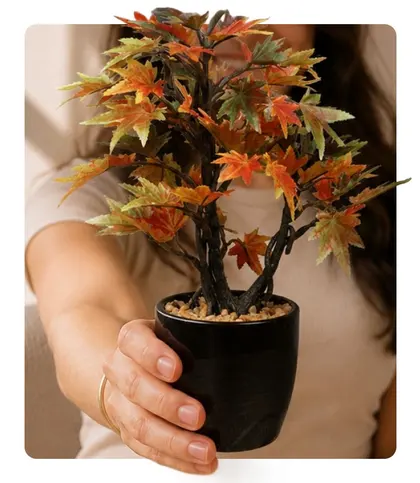
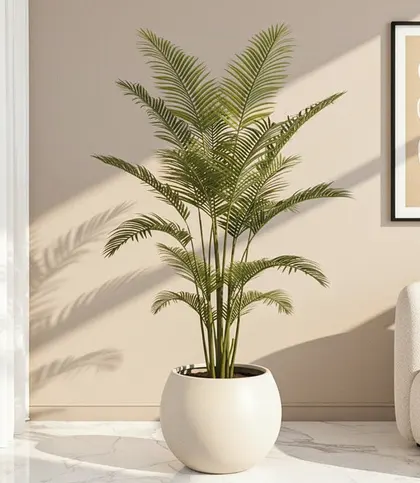
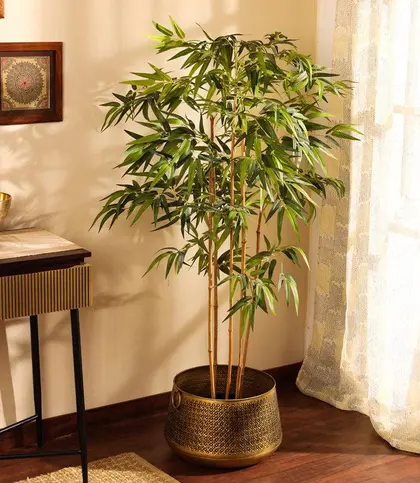
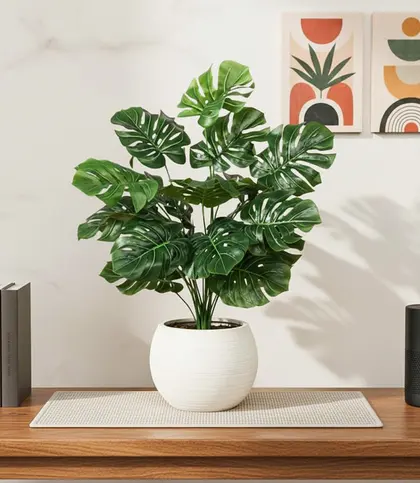
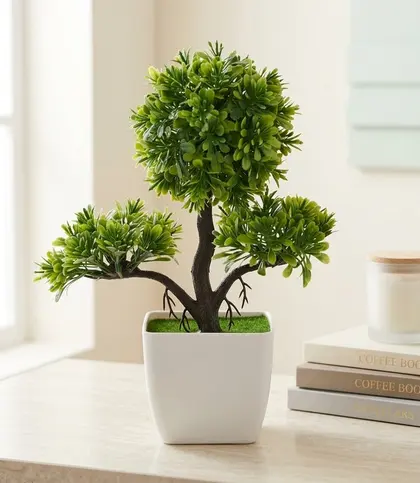
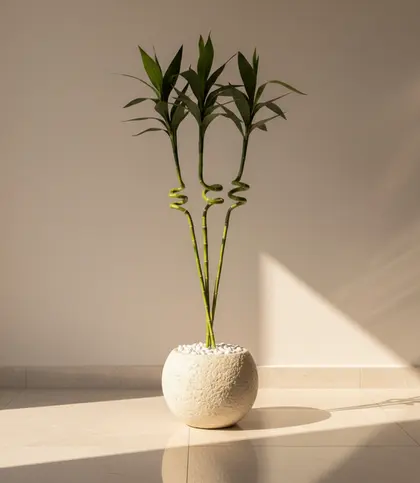
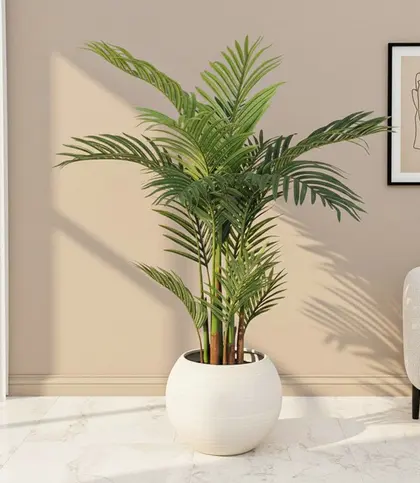
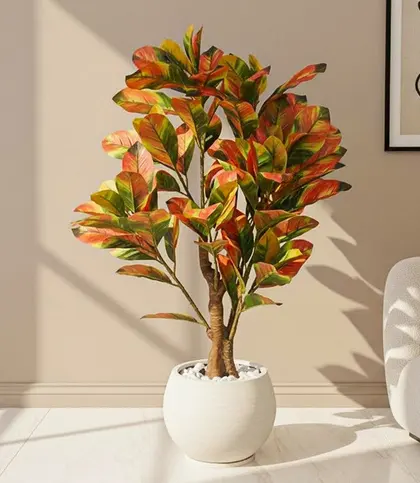
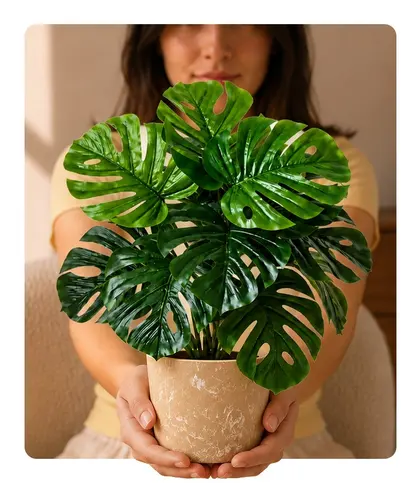
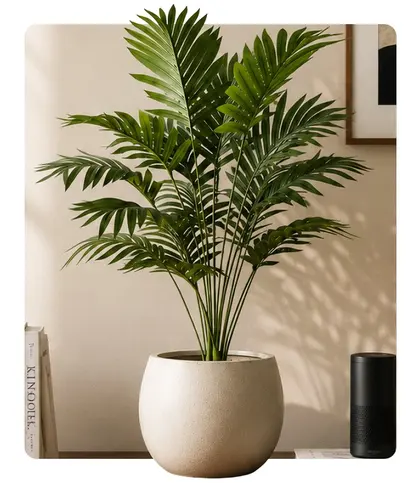
Silhouette sets the mood as much as size. The fine, outward-reaching leaves of an areca-style plant can make a spacious corner feel softer. Broad monstera-style foliage creates a bolder outline, while the upright look of artificial bamboo suits a narrower display area. For a more contained arrangement, look to succulents or bonsai-inspired shapes.
Green is an easy partner for wood, cane, neutral upholstery and colourful textiles. For a layered look, pair different leaf shapes rather than placing several near-identical plants together. You could set one taller piece beside a sofa and repeat a touch of green on a nearby shelf. If your room is already full of pattern, a simpler silhouette can offer a visual pause; if the furnishings are restrained, fuller foliage can add texture.
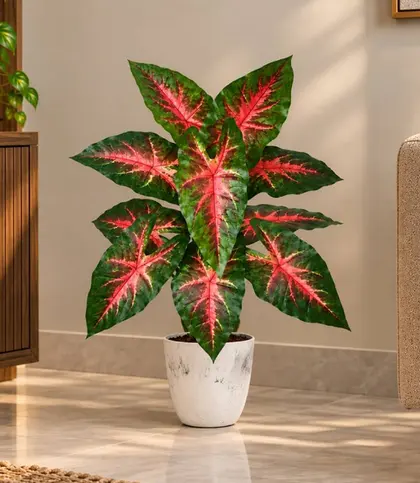
Look closely at product images when the plant will be viewed from several angles. Leaf colour, spacing and the shape of the stems all affect how it reads in a room. Materials vary across artificial plants, with listings including plastic, PVC, polyester and fabric; consult the individual product details if a particular material or finish matters to you.
Does the pictured pot come with the plant? Do not assume it does. Read the individual listing for what is included, and check whether a pictured container is a decorative outer planter, a basic base or a styling prop. If you plan to use your own planter, compare its opening and interior depth with the plant’s base dimensions. An outer planter should accommodate the base without forcing the foliage into an awkward position.
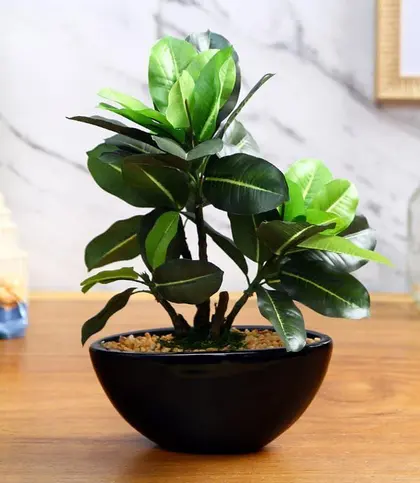
The container can help the plant belong in the room. A simple, understated finish lets striking leaves take the lead; a textured planter can add interest beneath more compact foliage. For a floor plant, consider how the planter’s colour relates to nearby furniture and flooring. On a tabletop, check that the completed arrangement leaves enough usable surface for everyday life.
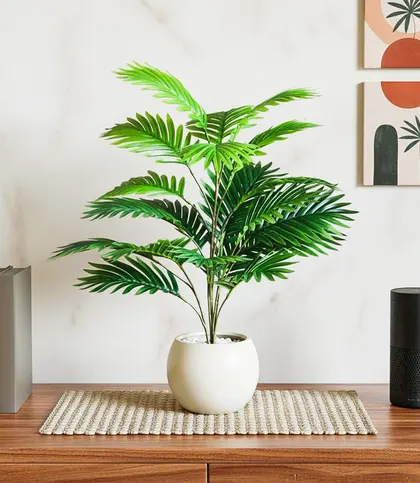
In a living room, a taller faux plant can give a sofa or reading chair a leafy backdrop without overwhelming the seating. On a sideboard, a smaller plant can balance framed art or a stack of books. In a bedroom, choose a scale that leaves the bedside table practical and keeps foliage clear of lamps. A desk plant works best when its leaves stay out of your working space.
Resist the urge to fill every gap. One well-placed plant often makes a clearer statement than several crowded together. Try setting a floor plant slightly away from the wall so its outline is visible, or giving a tabletop plant a little space from neighbouring objects. Adjust the position and viewing angle until the foliage looks at ease with the rest of the room.
Balconies and other exposed spots need an extra check. An artificial plant is not automatically UV-resistant or weather-resistant, even if it appears in an outdoor-looking photograph. Follow the specific product guidance before placing one where it may face direct sun, rain or wind.
Begin with the display position. Measure from the floor or tabletop to the point where you want the foliage to end, and allow clearance for shelves, artwork and movement around the plant. Check the product’s stated overall height and width before ordering.
Check the individual product description and included-items information. Styled photos alone may not tell you whether a decorative planter is part of the purchase. If you want to add your own, compare its inner dimensions with the plant’s base.
No. Outdoor suitability depends on the particular product. Look for explicit placement and care guidance rather than assuming a faux plant can withstand sunlight or weather.
Gentle dusting with a soft, dry cloth or brush is a sensible starting point. Check the product’s care instructions before using water or cleaning products, as materials and finishes differ.
Vaaree is a destination for curated, premium, pretty home products. Explore foliage shapes and sizes with your room in mind, then use each product’s details to choose a piece that fits the space and the way you want to style it.