
₹1,099
₹2,199
50%OFF
2 more capacity

10 Products
₹1,099
₹2,199
50%OFF
₹899
₹1,799
50%OFF
₹1,299
₹2,399
46%OFF
Deal Of The Day
₹699
₹1,199
42%OFF
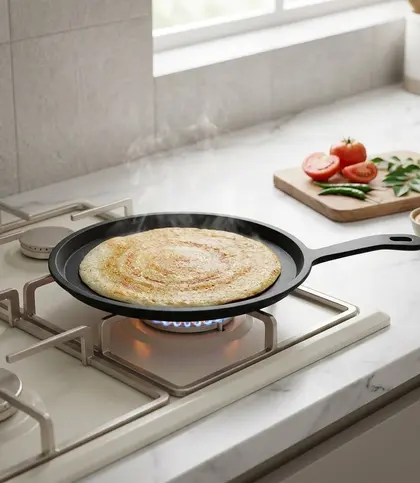
₹1,599
₹2,499
36%OFF
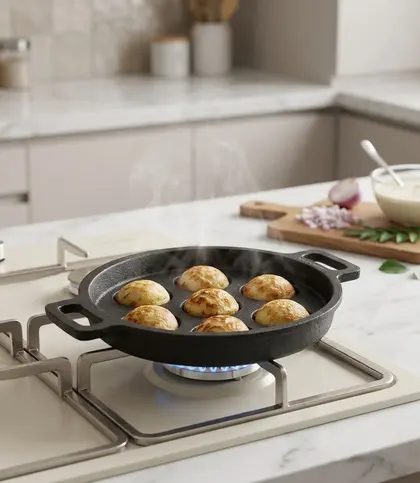
₹1,299
₹2,399
46%OFF
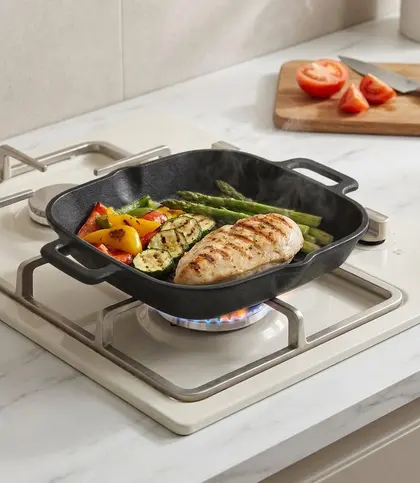
₹1,399
₹2,999
53%OFF
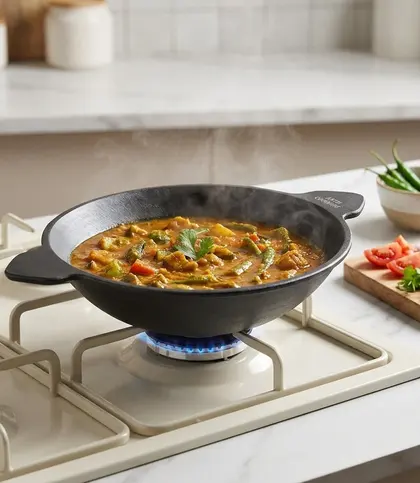
Sold Out
₹999
₹1,599
38%OFF
Sold Out
₹1,099
₹2,299
52%OFF
Deal Of The Day
Sold Out
₹1,199
₹2,599
54%OFF
Choosing a pan is easier when you begin with the food you make most often. A broad tawa gives dosa batter room to spread; a deeper kadhai holds ingredients as you stir; and a ridged grill pan serves a different purpose from a smooth frying pan. The Arth Cookware collection brings these practical formats together in cast iron, alongside a well pan for paniyarams and appams. Start with your everyday meals, then consider size, handles, cooktop compatibility and the space you have for storage.
The pieces in this collection have black, uncoated cast iron surfaces and understated shapes. That simple look is appealing, but the more useful question is whether a pan’s cooking surface and depth match your routine. If you are building a kitchen from scratch, one versatile pan may be the sensible first choice. If your meals regularly include dosas or paniyarams, a purpose-shaped pan can earn its place.
| Format | Best suited to | What to check |
|---|---|---|
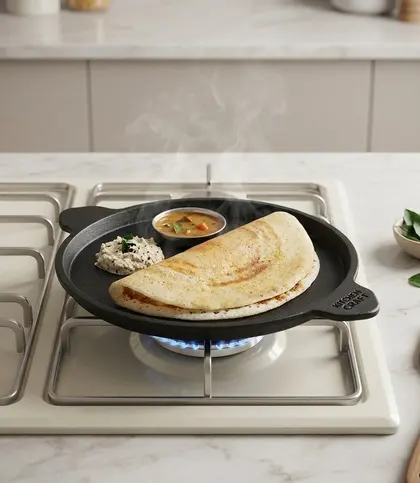
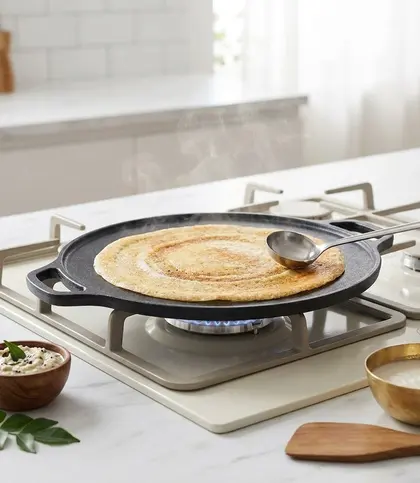
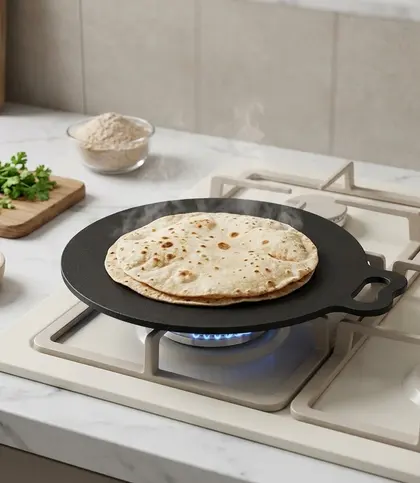
| Dosa tawa | Spreading dosas, cooking flatbreads and making pancakes | Cooking-surface diameter, rim and handle arrangement |
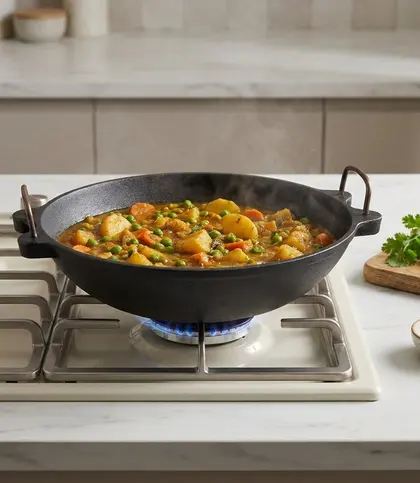
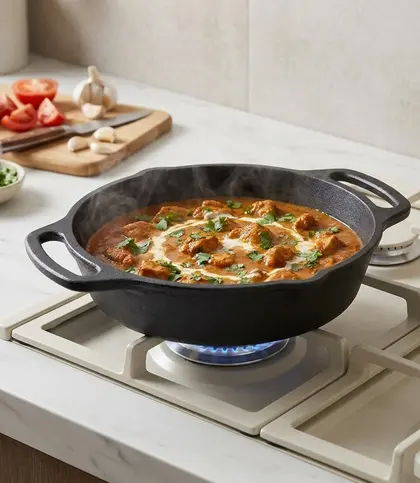
| Kadhai | Curries, sautéing and recipes that need room for stirring | Capacity, bowl depth and space for both side handles |
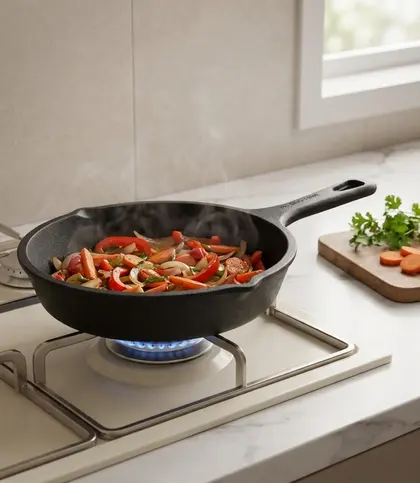
| Frying pan | Smaller portions, eggs, vegetables and everyday pan-frying | Usable surface, side height and whether the handle suits your hob |
| Grill pan | Searing foods where a ridged surface is useful | Cooking area, ridge design and cleaning between ridges |
| Paniyaram pan | Cooking individual portions in shaped wells | Number of wells, overall footprint and ease of turning food |
For crisp-edged dosas, favour the open, relatively flat surface of a dosa tawa over the deeper shape of a frying pan. A smaller diameter can be easier to accommodate on a compact burner or in a narrow cupboard; a larger surface gives you more room to spread batter. Check the listed cooking diameter as well as the pan’s full dimensions, since handles add to its storage footprint.
A kadhai makes more sense when ingredients need to be tossed, stirred or simmered without spilling over the sides. Compare capacity and depth together: two vessels with similar widths can feel quite different in use if one has a deeper bowl. Side handles also make a difference when lifting or repositioning a full pan. Allow space around both handles on the hob, and use suitable protection when handling hot cookware.
Choose a smooth frying pan when versatility matters more than a specialised surface. Its shallower sides make it convenient for turning smaller portions, while a grill pan’s ridges are intended for searing and visible grill marks. Ridges also take a little more attention to clean. If you are comparing these two formats beyond this brand collection, browse Vaaree’s pans and grill pans. A paniyaram pan is the more focused choice: its separate wells help portion the batter, so check how many you want to cook in each batch.
Many of the frying pans, grill pans and kadhais are described as pre-seasoned, while the collection’s cast iron surfaces are listed without a coating. Check each item’s description rather than assuming that every piece has the same preparation or accessories. A pre-seasoned cast iron surface still benefits from attentive cleaning and drying. If you would like to compare other shapes made from the same material, explore cast iron cookware; for a wider material choice, visit the main cookware collection.
Arth Cookware pieces in this collection are marked for hand washing. Let a hot pan cool before cleaning, wash it by hand and dry it thoroughly before storage. Pay particular attention to the wells of a paniyaram pan and the grooves of a ridged grill pan, where food can be harder to reach. Keeping cast iron dry helps limit rust; if a product supplies additional seasoning or care instructions, follow those directions. Avoid leaving washed cookware wet on the draining board or sealing it away while damp.
A little thought before buying makes that routine easier. If you want a pan for frequent, quick meals, consider both the food it cooks and how readily you can lift, wash and put it away. If a specialised pan will be used less often, make sure its footprint is worth the cupboard space.
Buy a dosa tawa if spreading batter and making flatbreads are priorities: its broad, flatter surface is suited to that task. Pick a frying pan if you expect to cook a wider mix of smaller dishes and want sides that help contain them.
No blanket compatibility claim is the safest way to shop. Many pieces are listed as induction safe, but you should confirm the compatibility stated on the particular pan before ordering.
Start with the quantity you normally cook rather than width alone. Compare the listed capacity with the bowl’s depth, then check that its overall dimensions and side handles will fit comfortably on your hob and in your cupboard.
Dry it thoroughly and keep it in a dry place. Give larger handles room, and use a separator if stacking pans. Follow any product-specific seasoning and storage guidance as well.
Vaaree brings curated, premium and pretty home products together in one place. You can compare Arth Cookware formats here and explore related cookware collections when you want another material or cooking surface.