


Chandelier Wattage: Choose the Right Brightness Safely
Quick Answer
Check the chandelier label before choosing bulbs. Confirm whether its maximum wattage applies to each socket, the whole fixture, or both; then choose brightness by lumens. Add the actual wattage of every installed bulb, including mixed bulb types, and stay within all stated limits. Ask an electrician if the label, wiring capacity, or fixture condition is unclear.
Definitions
Maximum fixture wattage
The highest electrical load a chandelier is designed to support, as stated by its label or manufacturer. It may refer to each socket or to the fixture’s combined load, so the wording must be checked.
Per-bulb wattage
The maximum wattage permitted for one socket. A chandelier with multiple sockets may also have a separate total-load limit.
Total wattage
The combined actual wattage of all installed bulbs. Add each bulb individually when wattages differ; for example, two 5 W bulbs and three 7 W bulbs draw 31 W in total.
Lumens
A measure of the amount of visible light produced by a bulb. Lumens are generally more useful than watts for comparing LED brightness.
Wattage equivalent
A marketing comparison indicating that an LED produces brightness similar to a higher-wattage incandescent bulb. It is an approximate brightness reference, not the LED’s actual power consumption.
Dimmable compatibility
Whether the bulb and chandelier can operate safely and predictably with the selected dimmer. A dimmable bulb alone does not guarantee compatibility with every dimmer.
Chandelier Wattage: Start With the Fixture Rating
The right chandelier wattage is not simply the highest wattage available. Start with the rating printed on the fixture, its product specification, or the manufacturer’s instructions. That rating sets the electrical-load limit; your preferred brightness comes after it.
LEDs can provide substantial light while using far less power than incandescent bulbs. Use lumens to compare LED brightness, but use each bulb’s actual wattage when checking the chandelier’s electrical load.
This guide covers bulb and brightness selection. It does not cover installation, rewiring, electrical repairs, or circuit changes.
- Read the fixture rating before buying replacement bulbs.
- Check whether the stated limit is per socket, for the complete chandelier, or both.
- Use actual watts for load calculations and lumens for brightness decisions.
Maximum Wattage: Per Bulb or for the Whole Chandelier?
A chandelier label may state a maximum for each socket, a combined maximum for the complete fixture, or both. These are different limits. A label that reads “60 W” does not automatically mean 60 W for every bulb or 60 W for the entire chandelier; the wording determines what it means.
Calculate total electrical load by adding the actual wattage of every installed bulb. If all bulbs match, multiply bulb count by the wattage of one bulb. If bulbs differ, add them individually: two 5 W LEDs plus three 7 W LEDs equal a 31 W total load. Each bulb must remain within any per-socket limit, and the combined load must remain within any total-fixture limit.
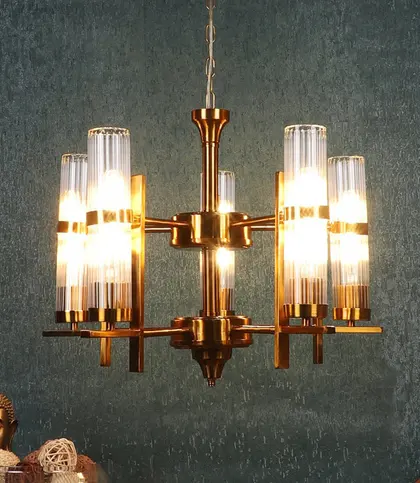
Multi-light designs such as the Candile Iron and Glass Clustered Chandelier - Gold make this distinction especially important. Check the fixture label or verified manufacturer specification rather than estimating limits from the fixture’s appearance.
- Look for wording such as “max per socket,” “each lamp,” or “maximum total wattage.”
- Add actual bulb watts, including mixed bulb wattages, to find the total load.
- If the label is ambiguous, check manufacturer documentation or ask a qualified electrician.
₹9,904
₹35,900
72%OFF
Incandescent Watts vs LED Lumens
With incandescent bulbs, wattage was often used as a rough shorthand for brightness because higher-wattage bulbs usually produced more light. With LEDs, wattage mainly indicates power consumption, while lumens indicate light output. Lumens are therefore the better starting point when selecting brightness.
An LED using roughly 8 to 10 W is often marketed as similar in brightness to a 60 W incandescent bulb, but this is only an approximate comparison. Check the package lumen rating, because output can vary between bulbs with similar equivalent-wattage claims.
For a multi-bulb chandelier, add the lumens from all bulbs to estimate overall available brightness. Separately, add the bulbs’ actual wattage to confirm the electrical load. Candela I Chandelier is identified as an LED chandelier; consult its verified product information for its specific lighting details rather than assuming a bulb-equivalent figure.
- Lumens answer: “How bright will it be?”
- Actual watts answer: “How much electrical load will these bulbs draw?”
- An incandescent-equivalent claim is not the LED’s true wattage.

₹6,323
₹20,182
69%OFF
How Much Chandelier Brightness Does the Room Need?
Use room size and purpose as a practical starting point, not as a rigid electrical rule. Small entryways and bedrooms generally suit gentler ambient light. Medium dining rooms and living rooms often benefit from moderate, layered lighting, while larger rooms or entertaining areas may need more combined lumens, additional fixtures, or both.
A chandelier can provide useful ambient light, but reading, food preparation, grooming, and other detailed tasks usually need directed supplementary lighting. Do not assume a decorative central fixture must be the room’s only source of light.
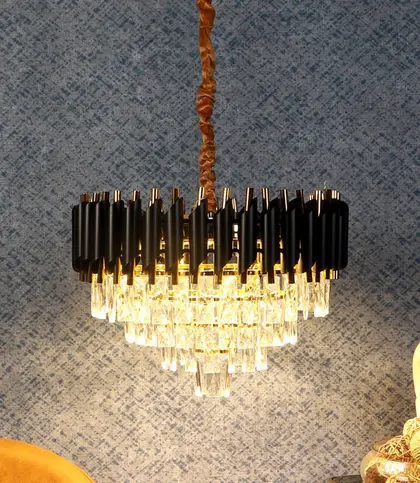
A multi-light chandelier can distribute brightness across several lower-wattage bulbs while staying within the fixture limit. Crystal elements may scatter and redirect light, but they do not replace checking verified wattage and lumen information. Auristra III Crystal Chandelier is an example of a multi-light style where bulb count and light distribution deserve attention.
- Small rooms: prioritize comfortable ambient light over maximum output.
- Medium rooms: consider the chandelier as part of a layered lighting plan.
- Large rooms: assess combined lumens and whether additional lighting is needed at occupied surfaces.
- Task areas: plan for more focused light than ambient chandelier lighting alone provides.
₹4,640
₹13,250
65%OFF
Account for Bulb Count, Shades, Ceiling Height, and Dimmers
More sockets can increase a chandelier’s potential brightness, but they also increase the combined electrical load. Choose bulb count and lumen output together, then confirm the total of all actual bulb wattages remains within every applicable fixture limit.
Shade and diffuser materials affect how light feels in a room. Opaque or fabric shades generally soften light and can reduce direct output, while clear glass usually allows more light through. Crystal can scatter light in several directions rather than simply increasing output. Higher ceilings and larger rooms can also make the same lumen output feel less effective at the surfaces where people sit, dine, or work.
Before buying bulbs, verify the required bulb base, shape, and physical clearance in the fixture specification. If you plan to dim the chandelier, confirm compatibility among the fixture, bulbs, and dimmer. Integrated LED fixtures may require particular controls. Use the verified specification for the exact fixture rather than inferring lighting or dimming details from its materials.
- More bulbs raise both available lumens and combined electrical load.
- Shades and decorative materials can change diffusion and perceived brightness.
- Higher ceilings may call for more useful light output or supplementary lighting.
- Check dimming compatibility for the complete bulb-fixture-dimmer combination.
A Safe Chandelier Wattage Selection Checklist
Use this process before replacing bulbs or choosing a chandelier. It keeps the electrical safety question separate from the brightness question, so an appealing product image or a high incandescent-equivalent claim does not override the fixture specification.
- Record the maximum wattage and whether it applies per socket, to the total fixture, or both.
- Count sockets, or find the verified output specification for an integrated LED fixture.
- Choose the required brightness by total lumens and intended room use.
- Add the actual wattage of every bulb; where wattages differ, sum each one separately.
- Keep both individual bulbs and the combined load within all stated limits.
- Consider shade material, ceiling height, room size, and other lighting already in the room.
- Confirm bulb base, bulb clearance, and dimmer compatibility from the fixture specifications.
- Do not use a generic equivalent-wattage claim or product image as a substitute for verified details.
When to Ask an Electrician
Ask a qualified electrician for guidance when the fixture label is missing, unreadable, contradictory, or unclear about the applicable voltage or wattage limit. An electrician should also assess the situation if the capacity of the existing wiring or circuit is unknown, particularly before a fixture replacement changes the electrical load.
Stop using the fixture and seek qualified help if you notice heat damage, scorch marks, buzzing, persistent flickering, loose connections, or repeated circuit tripping. These signs need professional assessment rather than a bulb-selection workaround.
- The rating cannot be identified or interpreted confidently.
- The wiring or circuit capacity is uncertain.
- The fixture shows heat damage, unusual noise, flickering, loose connections, or repeated tripping.
The Practical Verdict
Choose a chandelier bulb configuration in this order: confirm the fixture’s rating and whether it is per socket or total, select brightness by lumens and room use, then add the actual wattage of every bulb to verify the load. Mixed bulbs must be summed individually, and every applicable socket and fixture limit must be respected.
Dimming can add flexibility when the fixture, bulbs, and control are compatible. If the electrical label, wiring capacity, or fixture condition remains uncertain, consult an electrician rather than guessing.
- Treat wattage as an electrical-load limit and lumens as a brightness measure.
- Calculate the total using the actual wattage of each installed bulb.
- Check dimmer compatibility before buying.
- Escalate unclear labels, wiring concerns, or damage to an electrician.
Final Verdict
- Start with the fixture label and identify whether its maximum wattage applies to each socket, the complete chandelier, or both.
- Choose the desired brightness using lumens, then add the actual wattage of every bulb, including mixed bulb wattages, to stay within all stated limits.
- Account for bulb count, shades, ceiling height, and dimmer compatibility. Ask an electrician when the label, wiring capacity, or fixture condition is uncertain.
FAQs
What does a chandelier’s maximum wattage rating mean?
It is the highest electrical load the chandelier is designed to support. The wording matters: it may apply to each socket, the complete fixture, or both. Check the label or manufacturer specification before choosing bulbs.
Is the wattage limit per bulb or for the whole fixture?
It can be either. A per-socket limit applies to each bulb position, while a total-fixture limit applies to the combined load of all bulbs. Never assume the meaning of a number without checking the label wording.
How do I calculate total chandelier wattage with mixed bulbs?
Add the actual wattage of every installed bulb. For example, two 5 W LEDs and three 7 W LEDs draw 31 W in total. If all bulbs have the same wattage, multiply the bulb count by one bulb’s actual wattage. Compare the result with any total-fixture limit and ensure each bulb also meets any per-socket limit.
How do LED wattage and lumens compare with incandescent bulbs?
LED wattage measures electricity used, while lumens measure visible light output. An 8 to 10 W LED is often marketed as similar in brightness to a 60 W incandescent, but package lumen ratings are the more reliable comparison.
How much chandelier brightness does a room need?
Small entryways and bedrooms usually need gentler ambient light. Medium living and dining rooms often need moderate layered lighting, while larger rooms may need more combined lumens or additional fixtures. Detailed tasks generally require focused supplementary lighting.
Do shades, ceiling height, and dimmers affect chandelier brightness?
Yes. Fabric or opaque shades can soften and reduce direct light, while clear glass generally transmits more. High ceilings can make light feel less effective below. For dimming, verify that the specific fixture, bulbs, and dimmer are compatible.
When should I ask an electrician about chandelier wattage?
Ask when the fixture label is missing or unclear, wiring or circuit capacity is unknown, or the fixture shows scorching, heat damage, buzzing, flickering, loose connections, or repeated tripping. Do not guess about electrical limits.