


Best Kadhai for Cooking: A 5-Minute Buying Guide
Quick Answer
There is no single best kadhai for every kitchen. Choose cast iron for high-heat frying, sautéing and traditional curries; stainless steel for durable everyday cooking and confirmed induction use; aluminium for lightweight cooking; hard-anodised for a sturdier everyday option; and non-stick for low-oil sautéing and easy cleaning. Your cooking method, household size, cooktop, weight tolerance and maintenance preference should guide the final choice.
Definitions
Capacity
The approximate volume a kadhai can hold, usually stated in millilitres or litres. Usable cooking capacity may be lower than the stated maximum because room is needed for stirring, bubbling and splatter control.
Base thickness
The thickness and construction of the bottom surface that contacts the cooktop. It can affect heat distribution, stability, weight and induction performance.
Hard-anodised
Aluminium treated through an electrochemical process to create a harder surface than untreated aluminium. Coating, compatibility and care instructions vary by product.
Seasoning
The process of building a protective oil-based layer on cast iron or plain iron through controlled heating and oiling.
Triply
A multi-layer construction, commonly combining stainless steel and an aluminium core. Exact layers and performance depend on the product.
Best Kadhai for Cooking: The 5-Minute Answer
The best kadhai is the one that suits what you cook most often. Cast iron is a strong choice for heat retention, high-heat sautéing, frying and traditional curries, while stainless steel is a durable, versatile everyday option. Aluminium is light and easy to handle; hard-anodised cookware can offer a sturdier alternative; and non-stick works well when low-oil cooking and easy cleanup are the priority.
Before buying, decide how you cook, how many people you cook for, whether you use gas or induction, how much weight you are comfortable lifting and how much maintenance you will realistically do. A well-sized, compatible kadhai will serve you better than a supposedly universal winner.
- Choose cast iron for heat retention, traditional cooking and high-heat tasks.
- Choose stainless steel for versatile, durable everyday cooking.
- Choose aluminium or hard-anodised for lighter handling, after checking finish and cooktop compatibility.
- Choose non-stick for convenient low-oil sautéing, with moderate heat and suitable utensils.
Kadhai Materials Compared at a Glance
Material affects how a kadhai heats, feels in the hand and fits into your cleaning routine. Use this comparison to remove options that do not match your kitchen rather than treating any one material as the best for all dishes.
Cast iron holds heat well and gives a traditional cooking feel. It can suit frying, sautéing and curries, but it is heavy and needs seasoning and thorough drying. Stainless steel is durable, versatile and generally straightforward to clean, although food can stick if the pan is poorly preheated or too little oil is used.
Basic aluminium heats quickly and is easy to lift. Check whether it is coated, hard-anodised and compatible with your cooktop. Hard-anodised options are generally sturdier than basic aluminium, but their care guidance, handles, lids and induction suitability still vary by product. Non-stick is convenient for low-oil sautéing and cleanup, but use moderate heat and avoid assuming every coating is intended for repeated high-heat deep-frying.
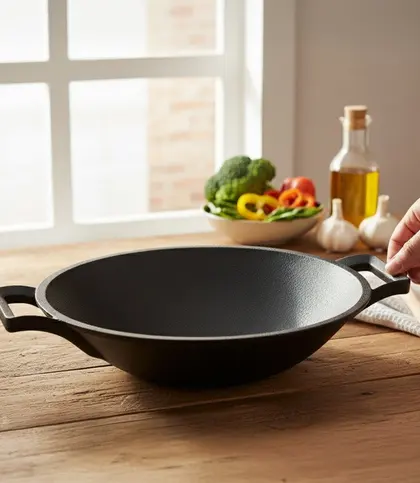
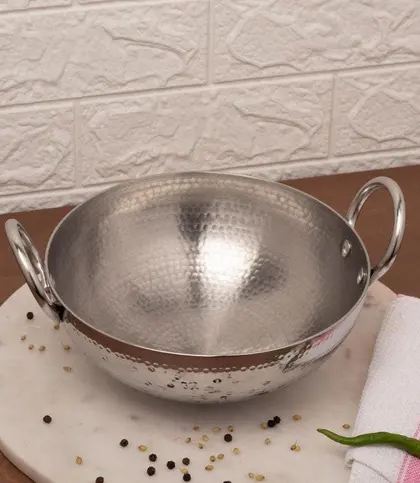
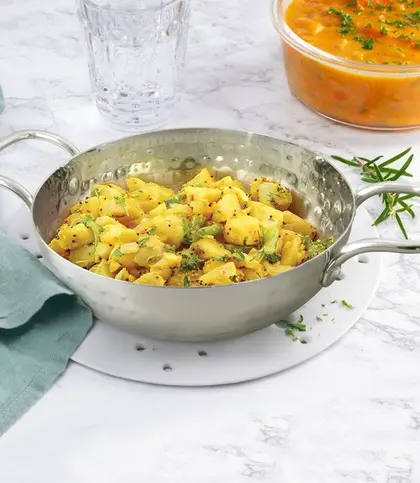
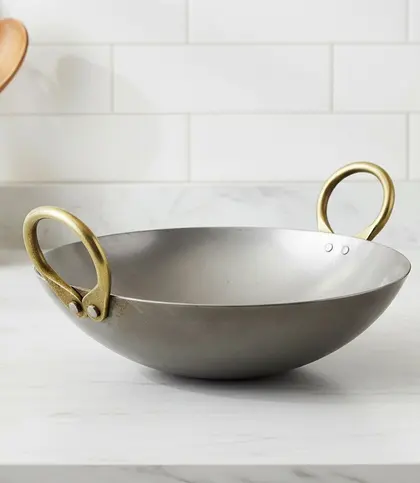
Examples to compare include a 2-litre cast-iron kadhai for traditional cooking, a 2-litre induction-safe stainless-steel kadhai for everyday use, a compact 1-litre stainless-steel kadhai for smaller portions and a 2-litre iron kadhai with two-sided handles. Compare capacity, construction and handling details against your regular cooking needs.
- Material: Cast iron; heat behaviour: strong retention; best uses: frying, sautéing and curries; weight: heavy; care: seasoning and immediate drying.
- Material: Stainless steel; heat behaviour: responsive, depending on construction; best uses: everyday cooking and curries; weight: moderate; care: generally easy with sensible heat and oil management.
- Material: Aluminium; heat behaviour: quick heating; best uses: lighter everyday cooking; weight: light; care: depends on finish.
- Material: Hard-anodised; heat behaviour: suitable for routine cooking; best uses: everyday sautéing and curries; weight: light to moderate; care: follow surface instructions.
- Material: Non-stick; heat behaviour: best used at low to moderate heat; best uses: low-oil sautéing; weight: often light; care: gentle utensils and cleaning.
₹919
₹1,260
27%OFF
 FastDelivery
₹1,749
₹2,325
25%OFF
 FastDelivery
₹756
₹995
24%OFF
₹809
₹1,738
53%OFF
Choose by Cooking Method
For deep-frying, prioritise a stable base, sufficient depth, manageable capacity and reliable heat control. Cast iron and suitable stainless-steel kadais are practical categories to compare. A non-stick kadhai may work for occasional frying if its maker permits it, but repeated high heat may not suit every coating.
For high-heat sautéing, cast iron is useful when you value heat retention. Stainless steel and hard-anodised cookware are flexible everyday choices, while non-stick is more suited to low-oil sautéing at moderate heat. For curries, look for adequate depth and consider a lid for simmering and splatter control; stainless steel, cast iron, hard-anodised and triply constructions can all work when matched to your cooktop and care preference.
For everyday meals, stainless steel is a versatile option for cooks who want durability and comparatively simple care. Lighter aluminium and hard-anodised cookware can also suit routine cooking when their finish and cooktop compatibility meet your needs.
- Deep-frying: choose depth, stability and capacity before focusing on material.
- Sautéing: cast iron suits high heat; stainless steel and hard-anodised offer versatile daily use; non-stick suits low-oil cooking.
- Curries: choose adequate depth and a lid if covered simmering is important.
- Everyday meals: stainless steel is a versatile route; lighter aluminium and hard-anodised options can be appealing too.
What Kadhai Size Do You Need?
Capacity should reflect both household size and the quantity you cook at once. A stated litre capacity is not the same as usable cooking room: leave space for stirring, bubbling oil and gravy without splashing.
Around 1 litre is useful for one or two people, small portions, tempering and limited frying batches. A 2-litre kadhai is often practical for small-to-medium households making routine curries or snacks. The ideal size still depends on portion sizes, batch cooking and how much room you need for stirring.
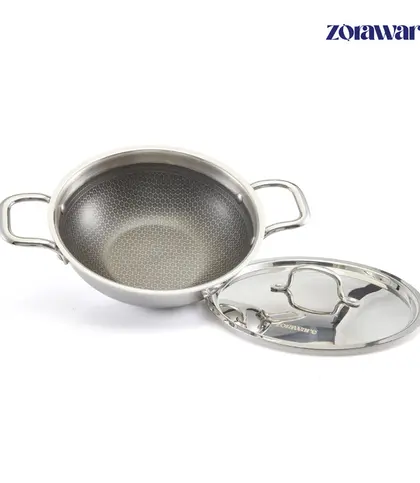
For family meals, guests and larger batches, consider around 3.5 to 4 litres. A 3.6-litre triply kadhai with a lid and two-sided handles illustrates this useful family-sized format. For festive meals or batch cooking, a 5.8-litre lidded triply kadhai offers substantially more room, although it will be heavier and need more storage space. Compare diameter, depth and usable capacity alongside the litre rating.
- Around 1 litre: small portions, tempering and one-to-two-person cooking.
- Around 2 litres: routine curries and frying for small-to-medium households.
- Around 3.5–4 litres: family meals, guests and covered curries.
- 5 litres or more: large households, festive cooking and batch preparation.
₹2,849
₹5,500
48%OFF

₹4,049
₹5,060
20%OFF
Five Checks Before You Buy
First, confirm cooktop compatibility in the product details. Induction usually needs a suitable magnetic base and stable contact with the hob; do not assume that every stainless-steel, aluminium or hard-anodised kadhai will work. A round-bottom design also needs a stable, compatible base for the cooktop you use.
Next, assess the base. A flat, stable base is especially important on a flat cooktop. Stated thickness or multi-layer construction can be useful information, but heat performance depends on the full construction and heat source, not thickness alone. Deeper walls are helpful for gravies and can reduce splatter during frying.
Finally, inspect the handling details. Check that handles are securely attached, comfortable to grip and suitable for your intended use. Two-sided handles are especially useful on larger, heavier kadais. A lid is valuable for simmering curries and controlling splatter; confirm that it is included, fits well and is practical to lift.
- Cooktop: verify gas, induction or other compatibility in the specification.
- Base: choose a flat, stable base and compare stated construction.
- Depth: deeper sides help with curries, frying and splatter control.
- Handles: prioritise a secure, comfortable grip; two-sided handles help with larger capacities.
- Lid: useful for simmering and covered curries; confirm that it is included and fits well.
Weight, Durability, and Care
The right kadhai is one you will enjoy using and maintaining. Cast iron and plain iron need seasoning before or as directed, prompt drying after washing and, when appropriate, a light layer of oil to help prevent rust. Avoid prolonged soaking.
Stainless steel is generally easier to maintain. Wash after the pan cools, use non-abrasive cleaning methods where possible and manage heat and oil to reduce sticking or discolouration.
For aluminium and hard-anodised cookware, follow instructions for the specific finish or coating and avoid scratching the surface. For non-stick, use low-to-medium heat and soft or manufacturer-approved utensils. Replace a non-stick kadhai if its coating becomes damaged or peels. Heavier materials can feel stable and retain heat well, but they may be harder to lift, wash and store.
- Cast iron and iron: season, dry thoroughly and prevent rust.
- Stainless steel: cool before washing and use heat and oil carefully to reduce sticking.
- Aluminium and hard-anodised: follow finish-specific utensil and cleaning guidance.
- Non-stick: use gentler heat and utensils; replace when the surface is damaged.
Quick Decision Checklist by Cooking Style
If light handling is your priority, compare aluminium options or compact stainless-steel choices after confirming the finish and cooktop compatibility. If you prefer a traditional cooking experience, compare iron or cast iron only if you are comfortable with the weight and seasoning routine.
For a versatile purchase, compare stainless steel, hard-anodised and cast iron according to your cooktop and maintenance preference. These materials meet different needs rather than forming a universal ranking.
For frequent family or batch cooking, larger lidded cookware can be useful provided its weight, handles and storage footprint suit your kitchen. Make the final choice by checking the same essentials every time: cooking method, capacity, cooktop compatibility, depth, base, handles, lid, weight and care requirements.
- Lightweight everyday cooking: consider aluminium or compact stainless steel after compatibility checks.
- Traditional cooking: consider iron or cast iron if seasoning and weight are acceptable.
- Versatile cooking: compare stainless steel, hard-anodised and cast iron for your cooktop and care preference.
- Batch cooking: consider larger lidded or multi-layered construction, while checking weight and storage.
Frequently Asked Questions
Use the answers below to narrow your choice by material, capacity, cooktop compatibility and care needs. Product specifications should always be checked before purchase, especially for induction compatibility, lid inclusion and coating care.
Compare kadhai sizes and materials
Explore the range using the capacity, material, handle, and hob-compatibility checks above. Verify the individual specifications before choosing.

Final Verdict
- Choose cast iron when heat retention, traditional cooking, frying and sautéing matter more to you than weight and seasoning.
- Choose stainless steel when durability, versatility and everyday convenience are priorities, particularly after confirming an induction-safe base if needed.
- Choose aluminium or hard-anodised when low weight matters, subject to finish and cooktop checks. Choose non-stick when low-oil cooking and easy cleaning matter more than high-heat versatility.
- Before buying, verify capacity, cooktop compatibility, base, depth, handles, lid, weight and care needs.
FAQs
Which kadhai material is best for everyday cooking?
Stainless steel is generally one of the most versatile choices for everyday cooking because it is durable and relatively easy to maintain. Hard-anodised and lighter aluminium options can also suit daily use, while cast iron is ideal if you are comfortable with its weight and seasoning needs.
What size kadhai is best for a family of four?
A kadhai around 3.5 to 4 litres is often a practical starting point for a family of four, especially for curries and larger portions. The best size also depends on how much you batch-cook and whether you need room for frying or stirring.
Which kadhai is suitable for induction cooktops?
Choose a kadhai specifically marked induction-compatible and check that it has a suitable, stable base. Stainless steel alone does not guarantee induction compatibility, so always verify the product specification.
Is cast iron or stainless steel better for cooking?
Cast iron is better suited to cooks who value heat retention, high-heat sautéing, frying and a traditional cooking experience. Stainless steel is usually better for shoppers who want a lighter, durable and lower-maintenance kadhai for varied everyday meals.
Is a non-stick kadhai good for deep-frying?
A non-stick kadhai can be used for occasional frying only when the manufacturer permits the required heat level. For repeated high-heat deep-frying, compare cast iron or suitable stainless-steel options instead, as some coatings may not be designed for that use.
How do you clean and maintain a cast iron kadhai?
Wash a cast-iron kadhai after it cools, dry it immediately and apply a light coating of oil when appropriate to help prevent rust. Season it before or as directed, avoid prolonged soaking and follow the maker's care guidance for cleaning products.
What should I check before buying a kadhai?
Check your cooking method, usable capacity, cooktop compatibility, base stability, depth, handle comfort, lid inclusion, weight and care needs. These details determine whether a kadhai will be genuinely practical in your kitchen.
Which kadhai is best for deep-frying and curries?
A deep, stable cast-iron or suitable stainless-steel kadhai can work well for both deep-frying and curries. Choose enough capacity to leave safe headroom, and consider a lid if you regularly simmer gravies or want to reduce splatter.