

₹2,999
₹3,590
16%OFF

214 Products
₹2,999
₹3,590
16%OFF

₹2,049
₹2,919
30%OFF

₹2,199
₹3,079
29%OFF
₹2,932
₹4,300
32%OFF
Featured
FastDelivery₹1,749
₹2,999
42%OFF

₹2,718
₹4,125
34%OFF

₹1,444
₹2,070
30%OFF
₹809
₹1,738
53%OFF
₹3,409
₹4,845
30%OFF
 FastDelivery
₹1,499
₹3,499
57%OFF
 FastDelivery
₹1,899
₹2,780
32%OFF

₹3,026
₹4,775
37%OFF
 FastDelivery
₹1,999
₹2,580
23%OFF
₹2,082
₹3,000
31%OFF
₹919
₹1,260
27%OFF

₹2,124
₹3,085
31%OFF

₹1,949
₹2,739
29%OFF

₹2,451
₹3,775
35%OFF
₹3,709
₹5,475
32%OFF
 FastDelivery
₹1,749
₹2,325
25%OFF
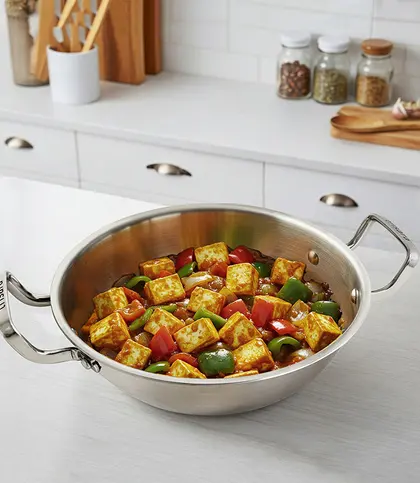
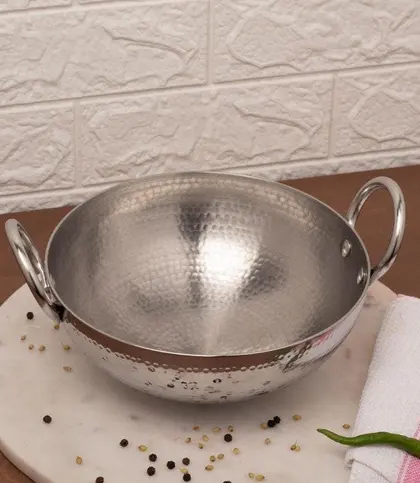
A good kadhai earns its place on the hob. It might hold an everyday sabzi, give paneer gravy room to simmer, or leave space for tossing vegetables and noodles. The right choice depends less on a single ‘best’ material or size than on what you cook, how much you make and the stove you use. Explore Vaaree’s kadhai and wok collection with those practical details in mind, then choose a finish that feels at home in your kitchen.
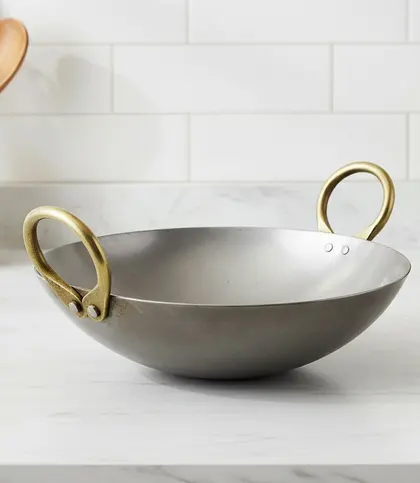
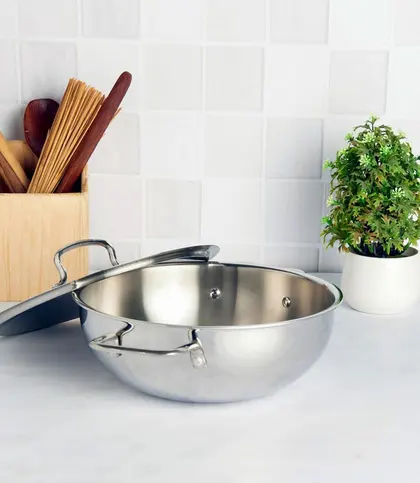
A kadhai is generally a deep vessel with two side handles, while a wok is often associated with a broad, curved cooking surface and a longer handle. Both can be useful for a range of dishes, but shapes, bases and handle arrangements vary by item. If your priority is tossing ingredients, consider the room and grip you will need. If you regularly make curries or cook with a lid, look closely at depth and lid inclusion instead. You can also browse the wider cookware collection when comparing vessels for different kitchen tasks.
Start with the quantity you actually cook on an ordinary day. A compact kadhai may suit a smaller batch of tadka, vegetables or gravy; a roomier one gives larger batches more space to stir. If you entertain occasionally, decide whether one larger vessel makes sense for daily use or whether a size you handle comfortably most days is the better choice.
Read capacity and diameter together. A stated litre capacity helps you compare how much a vessel holds, while its stated diameter helps you judge the cooking opening and the space it will occupy on your burner. Neither number tells the whole story: depth and shape affect how easily you can stir or turn ingredients. Check the selected item’s measurements rather than assuming that two kadhais with the same diameter will feel alike in use.
Material is a useful starting point, but construction, thickness, surface finish and care requirements belong to the individual item. In this collection, you can explore options described as triply, stainless steel, cast iron and aluminium, alongside other materials. Rather than assuming one material will always cook faster, clean more easily or suit every recipe, compare the product details with the way you prefer to cook and maintain your utensils.
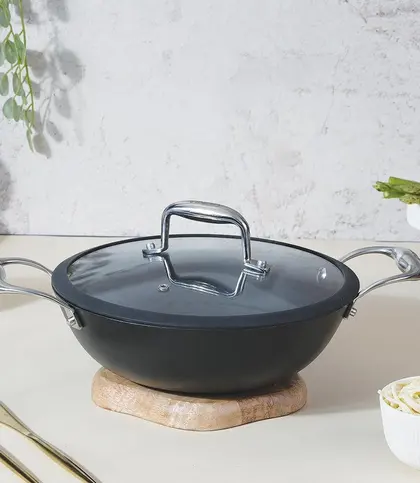
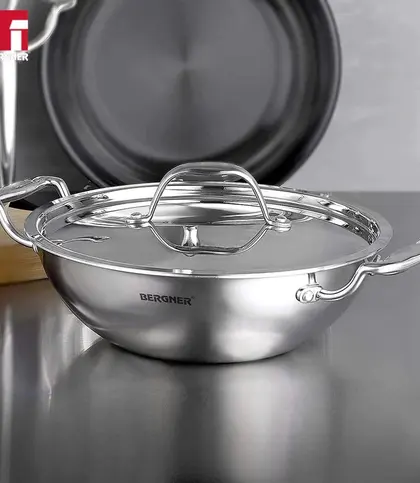
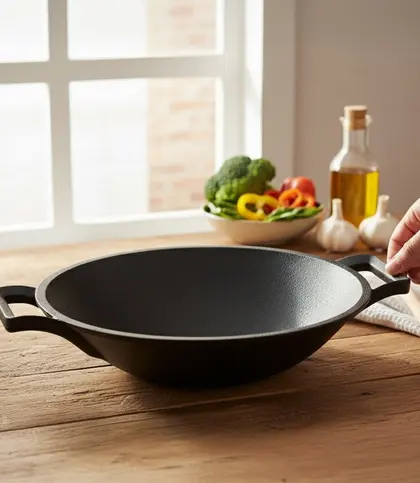
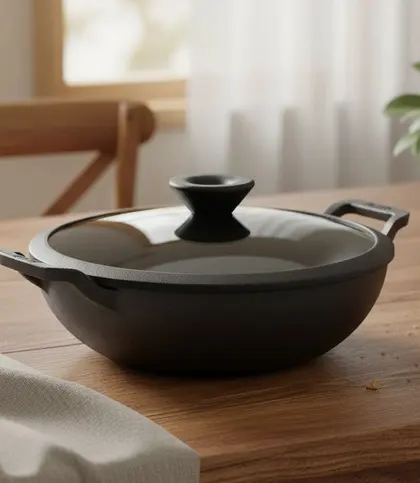
Appearance can matter too, especially in a kitchen where cookware is kept in view. A simple silver finish can sit quietly alongside steel utensils, while black cookware can make a stronger visual accent. Let the look complement your space, but make size, grip and stove compatibility the deciding factors.
Stove compatibility is item-specific. A flat-looking base alone does not establish induction compatibility, and a material name is not a substitute for the maker’s hob guidance. If you use induction, confirm that the selected item explicitly supports it and compare its stated base dimensions with your cooking zone. Browse induction-safe kadhai as a starting point, then verify the details of the piece you choose. Likewise, do not assume a stovetop kadhai can go in an oven or microwave unless its instructions say so.
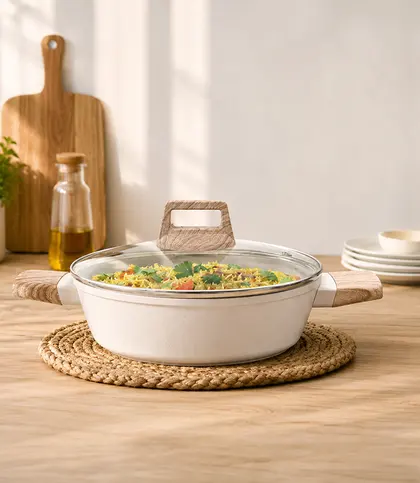
Look at the handles in the product images and specifications. Two side handles may suit lifting a fuller vessel, while a longer handle may appeal when you move ingredients around often. Check their placement, how much clearance they need beside other pots and whether the item’s guidance calls for a cloth or mitt during use. If you plan to simmer gravies or keep a dish covered, confirm whether a lid is included; a pictured lid should not replace a clear check of what comes with the selected item.
Finally, read the care directions before you buy. They should guide how you wash the surface, which utensils to use and whether seasoning is needed. Allow cookware to cool as directed before cleaning, and dry or store it according to its material and finish. A routine you are happy to follow is part of choosing a kadhai you will enjoy reaching for.
Think of your usual batch first, then compare each item’s stated capacity, diameter and depth. Leave comfortable room for stirring, and check that the vessel and its handles fit both your burner area and storage space.
No. Induction suitability depends on the selected item’s base and stated hob compatibility. Check its product information even if the base appears flat in a photograph.
A lid is useful to consider if you often simmer curries or cook covered dishes. If that matters to you, confirm that a lid is included with the specific kadhai rather than assuming it is supplied.
Check the guidance for washing, drying, utensils and heat use. For cast iron, look specifically for any seasoning instructions; for a coated surface, follow the care directions for that particular finish.
Vaaree brings a curated home-shopping perspective to practical kitchen essentials. Compare the details that matter to your cooking routine, then choose a kadhai that feels as considered in your kitchen as the rest of your home.