


Best Bird Feeders for Winter: A Practical Buying Guide
Quick Answer
The best bird feeder for winter is one that fits your outdoor space, the birds you expect to see locally, and your maintenance routine. Prioritise a covered, well-draining, stable, weather-ready design that is easy to empty, clean, and dry.
Definitions
Covered feeder
A feeder with a roof, hood, or enclosed design intended to reduce direct exposure to rain, snow, and wet conditions.
Drainage
Openings or channels that allow accumulated rain or meltwater to escape rather than pool around the food.
Capacity
The approximate amount of food a feeder can hold before it needs to be refilled.
Feeder format
The overall design category of a bird feeder, such as hanging, platform, hopper-style, tube-style, or freestanding.
Cleaning access
The ease with which the feeder can be opened, emptied, washed, dried, and inspected.
Best Bird Feeders for Winter: Start With Your Space and Routine
There is no single best bird feeder for winter in every home. A practical choice depends on where it will sit, how exposed that spot is to rain and wind, which birds you expect to observe locally, how much food it can hold without becoming difficult to manage, and whether you can comfortably inspect and clean it.
For winter use, look beyond appearance. Useful weather protection, clear drainage, secure support, durable construction, and simple cleaning access matter more than decorative detail or maximum capacity. A feeder with a roof still needs a base that sheds water and a location that does not receive constant driving rain.
This guide compares feeder formats rather than ranking products. Start by deciding whether your balcony, terrace, or garden has the room and support needed for a hanging, wall-secured, pole-mounted, platform, hopper-style, or freestanding option.
- Prioritise cover, drainage, stability, and cleaning access.
- Match feeder access and capacity to locally observed birds and your refill routine.
- Choose placement before committing to a feeder format.
Common Winter Bird-Feeder Formats Compared
Covered hopper-style feeders can be useful where a roof and a larger reserve of food are priorities. Check that the storage area and feeding base do not trap water, and make sure the feeder opens sufficiently for emptying and cleaning.
Platform or tray feeders provide an open feeding surface and make it easy to see when food needs attention. Their exposed layout means cover, drainage, and frequent inspection deserve particular care in wet winter weather.
Tube-style feeders are compact options for smaller spaces. Before choosing one, inspect the seams, feeding openings, hanging points, and how easily the parts can be taken apart for a thorough wash and dry.
Hanging feeders offer flexibility on balconies and terraces when there is a strong, secure hanging point. They should not be left to swing heavily in gusts or knock repeatedly against railings, walls, or glass.
Freestanding and pole-mounted feeders can suit gardens where the ground, base, or pole installation is stable and the location remains accessible. Larger formats may be practical here, but only if routine refilling and cleaning remain straightforward.
When choosing for target birds, compare the feeder's perch arrangement, landing space, opening size, and food-holding design with the birds you regularly observe nearby. Select a format that allows them to access food without crowding, and check local wildlife guidance for suitable food choices and any area-specific advice. Avoid assuming that one feeder type suits every bird or location.
Minimal or decorative feeders can still work outdoors, but assess their function first. A simple design is only a good winter choice if it offers practical cover, drainage, stability, and access for maintenance.
- Covered hopper-style: helpful where shelter and capacity matter.
- Platform or tray: open and visible, but requires careful moisture management.
- Tube-style: compact, with seams and disassembly worth checking.
- Hanging: flexible when the support point is strong and sheltered from excessive wind.
- Freestanding or pole-mounted: useful for gardens with stable, safe placement.
- Target-bird fit: check landing space, perch layout, openings, and food compatibility.
Which Feeder Fits a Balcony, Terrace, or Garden?
On a balcony, a small or medium hanging, wall-secured, or compact covered feeder is often the easiest format to live with. Keep walking space clear and choose a position you can safely reach without leaning over a railing or moving furniture each time it needs attention.
A terrace may allow either a hanging feeder or a freestanding design with a stable base. Consider wind exposure carefully: an open terrace can make a light suspended feeder swing, while a freestanding feeder needs enough floor space to remain secure without obstructing daily use.
In a garden, a stable freestanding or pole-mounted feeder can be practical, as can a larger covered design. Choose a location with convenient access from the house or path, rather than a distant spot that makes checks and cleaning easy to postpone.
In every setting, inspect the support point, mounting surface, and surrounding area before buying. The feeder should remain secure in wet and windy conditions, and there should be enough clearance to refill, empty, and wash it without difficulty.
- Balcony: compact hanging or wall-secured designs that are easy to reach.
- Terrace: hanging or freestanding options chosen around wind and available floor space.
- Garden: stable pole-mounted or freestanding designs with practical refilling access.
- Any space: select the location for safe maintenance, not appearance alone.
Winter Buying Criteria: Weather Resistance, Drainage, and Stability
A useful winter feeder has a roof, hood, or cover that limits direct precipitation reaching the food. Look at the roof overhang as well as the top itself: a cover that barely extends beyond the feeding area may offer limited protection in wind-driven rain.
Drainage is equally important. Check for visible holes, channels, or a base shape that allows water to escape. Avoid designs where rain can collect around the food or inside a chamber with no practical way to dry it out.
Material alone does not determine winter performance. Metal benefits from a suitable corrosion-resistant finish; wood should be made for exterior conditions and have an appropriate protective treatment; plastic should feel weather-durable; and glass should be securely fixed and suited to outdoor use. In every case, examine the construction and finish rather than assuming one material is automatically better.
Pay close attention to joins, hinges, seams, hooks, hanging loops, and mounting points. For freestanding feeders, seek a wide, weighted, or otherwise stable base. For suspended designs, use a secure hanging or mounting system that can cope with the feeder's filled weight and expected wind exposure.
Repeated wetting, changing temperatures, and slow drying can expose weak points over time. The most workable choice is a feeder that can dry between uses and whose vulnerable areas can be inspected easily.
- Choose a roof or cover with useful overhang.
- Confirm that water has a clear route out of the base or chamber.
- Inspect fittings, seams, hooks, and mounting points.
- Match base weight or mounting security to wind exposure.
- Assess material, finish, and construction together.
Choose the Right Feeder Capacity and Refill Routine
Capacity should suit your space and routine, not simply offer the largest possible reserve. A small feeder can be a sensible choice for a compact balcony, lower expected use, or a household able to check it often. It is also lighter and usually easier to remove for cleaning.
A medium-capacity feeder is often a practical all-purpose option where there is moderate space and a regular refill schedule. It can hold enough for routine use without becoming overly heavy or difficult to empty and wash.
A larger feeder may reduce refill frequency, but it needs stronger support, more storage space, and closer attention to moisture and freshness. If the contents remain in place for long periods, a large reservoir can create more maintenance rather than less.
Choose a size based on how quickly the contents are likely to be used, the feeder access required by visiting birds, and how often you can inspect it. A manageable feeder that stays dry and clean is generally more useful than an oversized model that is difficult to monitor.
- Small: suited to limited space and frequent checks.
- Medium: a balanced option for regular household routines.
- Large: appropriate only when support, use, and maintenance can keep pace.
- Do not use capacity alone as a measure of quality.
Safer Winter Feeder Placement
Place the feeder somewhere visible and reachable for regular checks, refilling, and cleaning. Some nearby shelter may be helpful, but avoid squeezing it into a corner where dampness lingers or access becomes awkward.
Avoid highly exposed positions that receive strong wind, driving rain, or falling debris. Secure a hanging feeder so it cannot swing excessively, scrape nearby surfaces, or strain its support point. A freestanding option should not wobble or tip on its chosen surface.
Window risks deserve thought before installation. Avoid placing a feeder in an isolated location that may create a fast flight path towards glass. Local wildlife guidance can help you assess the safest arrangement for your home, since building layouts and outdoor conditions vary.
Also consider household pets and places where predators could easily approach unseen. Keep the feeder away from easy ambush points where possible, while leaving a clear route away from the immediate area.
- Keep the feeder visible and easy to reach.
- Avoid persistent wind, direct driving rain, and falling debris.
- Secure suspended feeders against excessive movement.
- Use local wildlife guidance when planning around windows.
- Choose an area with fewer easy ambush opportunities and a clear escape route.
Cleaning and Seasonal Maintenance
Winter weather calls for regular checks rather than a fixed one-size-fits-all cleaning schedule. Inspect the feeder more closely after prolonged wet weather or whenever you notice food clumping, residue, blocked drainage, rust, cracks, or loose fittings.
Empty old contents before cleaning. Adding fresh food over material that has become damp or stale makes it harder to assess the feeder's condition and may leave moisture in hidden corners.
Wash the feeder in line with the material and manufacturer guidance, rinse it thoroughly, and let it dry fully before refilling. Keep drainage holes and feeding openings clear, and check that movable parts still close, hang, or mount securely.
If food remains unused for extended periods, reduce the refill amount. If the same location repeatedly leaves the feeder wet, consider moving it to a more protected but still accessible position. At the end of winter, clean and dry the feeder before storing it, or continue its routine according to local conditions and the feeder's condition.
- Check for damp contents, clumps, residue, rust, cracks, and loose fittings.
- Empty old contents before washing.
- Rinse thoroughly and dry fully before refilling.
- Keep drainage and feeding openings clear.
- Adjust refill amounts or placement when moisture persists.
Winter Bird-Feeder Selection Checklist
Use this checklist when comparing bird-feeder formats for winter. It keeps the decision focused on everyday use: whether the feeder can suit the birds you see locally, stay dry enough, remain secure, and be maintained without becoming a difficult household task.
If several options meet the practical requirements, choose the one with the simplest cleaning routine and the most secure placement in your particular outdoor space.
- Is the format suitable for your balcony, terrace, or garden?
- Does the perch or landing area, opening layout, and food design suit birds you observe locally?
- Does it provide useful cover without trapping moisture?
- Are drainage openings present and easy to keep clear?
- Are the material and finish appropriate for expected outdoor exposure?
- Will it remain stable or securely attached in wind?
- Can you open, empty, wash, and dry it easily?
- Is the capacity realistic for expected use and your refill schedule?
- Can it be placed where it is visible, accessible, and less exposed to window or predator risks?
The Practical Winter Choice
Choose the feeder format around your space and locally observed birds first. Then favour a durable design with useful cover, effective drainage, secure support, and straightforward cleaning access.
Compact hanging or wall-secured formats can work well where balcony space is limited. A stable covered design may suit a terrace, while robust freestanding or pole-mounted formats can be practical in a garden when they are securely placed and easy to maintain.
The best winter feeder is ultimately one you can position safely, keep reasonably dry, inspect regularly, and clean consistently through changing weather.
Compare bird feeders for your space
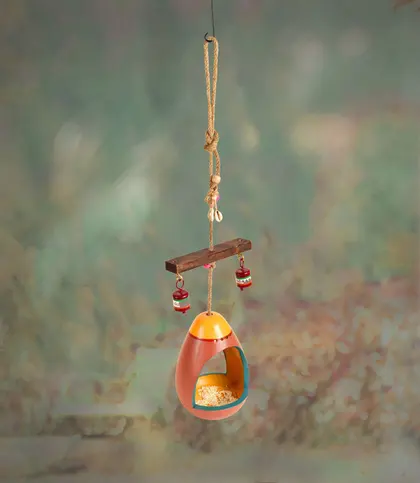
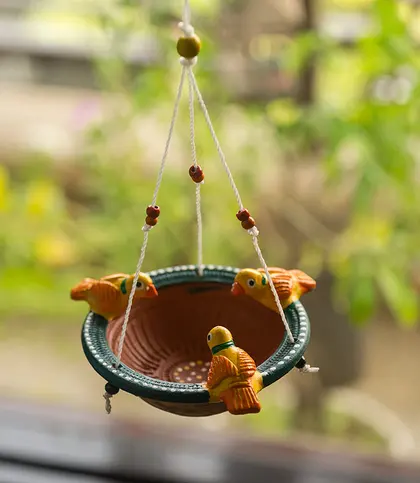
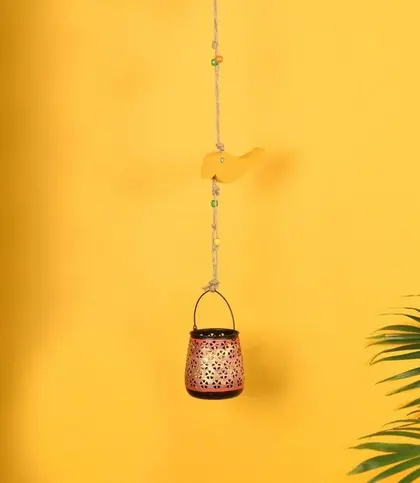
Use the format, capacity, placement, drainage, and cleaning checklist above to compare these currently available bird feeders. Their catalog titles establish the product type, but do not by themselves establish winter weather resistance or suitability for a particular bird species or feed.
Before choosing, open the product page to confirm dimensions, hanging or mounting method, drainage, material care, and the refill routine your balcony, terrace, or garden can support.
₹899
₹1,199
25%OFF
₹902
₹1,160
22%OFF
₹902
₹1,329
32%OFF

Final Verdict
- Start with the space and the birds you expect to see locally, then compare feeder access, weather protection, and maintenance needs.
- Eliminate designs that lack practical drainage, stable support, or easy access for emptying, washing, and drying.
- Choose a capacity you can monitor comfortably; a manageable feeder is more useful than a large one that stays damp or is difficult to maintain.
FAQs
Which type of bird feeder is best for winter?
There is no universal best type. Choose a stable, well-draining feeder with useful cover and easy cleaning access, then check that its perch or landing layout and food design suit birds you observe locally. The right format also depends on whether you have a balcony, terrace, or garden.
What bird feeder is best for a balcony in winter?
A compact hanging, wall-secured, or covered feeder is often practical for a balcony because it uses limited space and can be placed within easy reach. Ensure the support is secure, it does not obstruct movement, and it will not swing heavily in wind.
How do I choose a weather-resistant bird feeder?
Look for useful roof cover, visible drainage, secure joins and mounting points, and a material and finish suited to outdoor exposure. Assess the full construction rather than relying on the material name alone.
What feeder size is best for winter bird feeding?
Choose a capacity that matches expected use and your inspection routine. Small feeders suit tight spaces and frequent checks; medium feeders are often a practical balance; large feeders require stronger support and closer attention to damp or stale contents.
How often should a winter bird feeder be cleaned?
Inspect it regularly, especially after wet conditions. Clean whenever contents are damp, clumped, stale, or the feeder has residue, blocked drainage, or other visible contamination.
Where should I place a bird feeder to reduce window risks?
Avoid an isolated placement that may create a fast flight path towards glass, and use local wildlife guidance where available. Select a location that is reachable for maintenance, not heavily exposed to wind and rain, and away from easy ambush points.
How do I keep bird seed dry in winter?
Use a feeder with useful cover and clear drainage, and place it away from persistent driving rain where possible. Keep drainage holes clear, check for pooled water, and refill smaller amounts if food remains damp or unused.
Are covered bird feeders better for winter?
A cover can reduce direct exposure to precipitation, so it is often helpful. It still needs to be paired with drainage, secure placement, weather-ready construction, and regular checks for damp contents.