

Luxe
₹2,923
₹4,299
32%OFF

11 Products
Luxe
₹2,923
₹4,299
32%OFF

Luxe
₹2,519
₹3,499
28%OFF

Luxe
₹2,923
₹4,299
32%OFF

Luxe
₹1,436
₹2,599
45%OFF
Luxe
₹3,319
₹4,919
33%OFF

Luxe
From ₹1,187
₹2,199
46%OFF
Luxe
Sold Out
₹1,079
₹2,299
53%OFF
Luxe
Sold Out
₹1,239
₹2,499
50%OFF
Luxe
Sold Out
₹1,679
₹3,399
51%OFF

Luxe
Sold Out
₹1,319
₹2,699
51%OFF
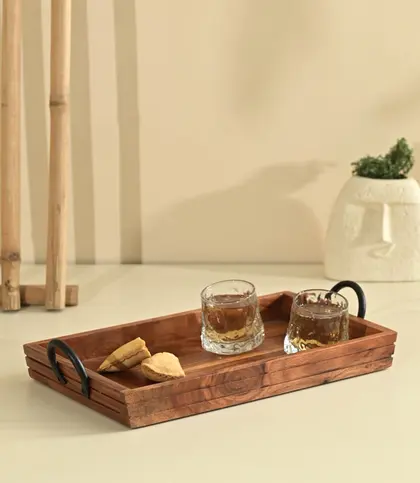
Luxe
Sold Out
₹1,319
₹2,699
51%OFF
A good serving tray makes the trip from kitchen to table easier and gives cups, bowls and snacks a place to land. Explore the Brick Brown Serving Tray collection with that everyday job in mind: think about what you carry, where you will set it down and how much room you have to store it. The collection centres on wooden trays, particularly mango wood, with round and rectangular formats suited to everything from morning chai to snacks shared around the dining table.
Start with the load, not the look. If you usually carry two cups and a small snack bowl, a compact tray may be all you need. For breakfast, several drinks or a spread of appetisers, look for a broader usable surface. Check the listed dimensions against your cups and plates, allowing space between them so they are easier to pick up. A tray’s outside measurements include its rim and handles, so they are not necessarily the same as its flat serving area.
Next, consider the journey. Handles matter more when you regularly carry a tray between rooms. Cut-out handles sit within the tray’s outline, while raised or attached handles give you a different grip and may need extra clearance in a cupboard. A raised edge can help keep small items together, but it does not replace careful carrying—especially with hot drinks. Set heavy pieces down securely and distribute their weight before lifting.
| Format | Useful for | What to check |
|---|---|---|
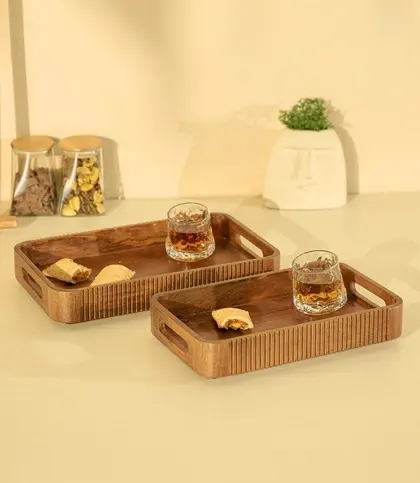
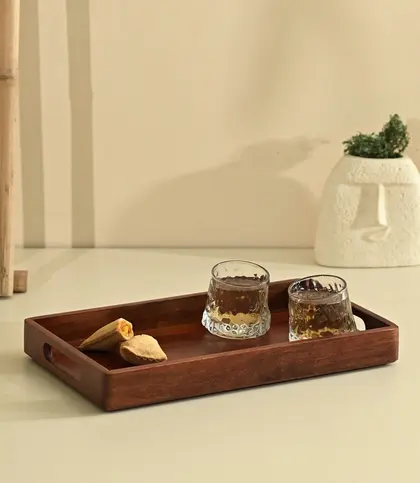
| Rectangular tray | Arranging cups, plates and bowls in rows; carrying breakfast or tea from room to room | Measure its length against your shelf and the surface where you plan to set it down. |
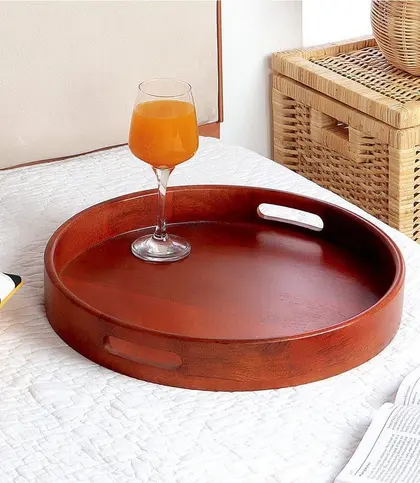
| Round tray | Grouping snacks or condiments at the centre of a table | Allow room around its full diameter, particularly on a narrow table. |
| Rotating round tray | Making shared items easier to reach without passing the tray around | Check the individual design for its rotating feature and leave enough space for it to turn. |
| Nested tray set | Using different tray sizes for different tasks while keeping them together in storage | Confirm the number of pieces and each tray’s dimensions before choosing. |
These are different ways to solve a serving problem, not features of every tray. A long rectangle can be convenient for carrying several items; a round tray can keep a shared selection within reach. If you want one tray for both serving and organising a tabletop, decide which task needs the larger surface. For more formats beyond this brand, browse serving trays and platters.
Mango wood is prominent in this Brick Brown collection, alongside trays described more generally as wood. Both bring natural warmth to a dining setting, but the material label alone will not tell you how a tray handles. Compare the shape, rim, finish and handle placement as carefully as the timber. Natural grain and brown tones give many designs a rustic character; cleaner lines and matte finishes can feel more understated. Glossy finishes and cane-style detailing offer a more decorative alternative.
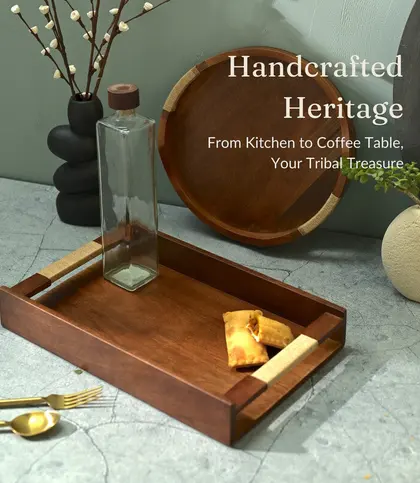
There is room for personal preference in the handles, too. Cut-outs can suit a streamlined tray, while metal or wrapped handles add a distinct feel. If handles are a deciding factor, inspect the individual tray’s details and dimensions rather than assuming two similarly shaped pieces will carry alike. You can also explore wooden trays for a wider material-led comparison or visit the wider Brick Brown collection.
Before choosing a size, measure the shelf, drawer or cabinet where the tray will live. Include any handles that extend beyond its base and consider the tray’s height if you plan to stack it with other serveware. Nested designs can keep two sizes together, but check the dimensions of both pieces. If cupboard space is limited, choose a tray you will also enjoy leaving on a dining table or sideboard between uses.
A tray can help organise items already used together: tea cups and a sugar bowl, napkins and small serving bowls, or everyday table essentials. Keep the arrangement light enough to lift comfortably if you intend to use the same tray for carrying. For a dedicated tabletop arrangement that need not move often, you may prefer to explore dining table decor alongside your serveware.
The care guidance across this collection calls for wiping with a clean, dry cloth. Clear crumbs after use and deal with spills promptly, paying attention to corners, rims and any textured detailing. Avoid leaving moisture on the surface or letting wet cups sit for long periods. Where a tray combines wood with cane-style panels, rope or metal handles, take care around those details while cleaning. Always follow the instructions for the tray you choose rather than assuming every finish needs identical treatment.
Choose a rectangle if you want to line up cups and small plates for carrying. A round tray works well when people will gather around shared snacks. Check your usual cups and bowls against the tray’s dimensions before deciding.
No. Mango wood is common here, while some trays are listed simply as wood. Read each tray’s material information if the exact timber matters to you.
No. Rotating designs, single trays and nested sets serve different needs. Check the individual description for the mechanism, included pieces and measurements.
Vaaree brings curated, premium, pretty home products together in one place, making it easy to compare practical serving formats with the details you want for your home. Start with how you will use the tray, then choose the shape and finish that make you happy to bring it to the table.