


Serving Tray And Platter Buying Guide
Short answer: Choose a serving tray for carrying tea, snacks, or breakfast, and choose a platter for presenting food on the table. A tray needs grip and raised edges. A platter needs the right size, food-safe surface, and easy cleaning.
Tray Or Platter?
Use the job to decide.
- Tea and coffee service: choose a tray with stable sides.
- Starters and mithai: choose a platter with enough flat surface.
- Breakfast in bed: choose a sturdy tray that is easy to hold.
- Festive hosting: use platters that match dinnerware.
- Everyday snacks: choose easy-clean material over delicate finish.
A beautiful platter is not always a good tray. If it has no grip or edges, carrying cups becomes risky.
Material And Care
Wood and MDF trays feel warm but should be protected from standing water. Ceramic platters look polished but need careful handling. Melamine and easy-clean finishes are practical for frequent hosting. For oily Indian snacks, avoid surfaces that stain or need fussy cleaning.
Choose By Storage
Large platters look impressive but can be awkward to store. If kitchen shelves are tight, a nesting tray set or one medium platter may be more useful than one oversized piece.
Also check weight before buying. A heavy tray becomes harder to carry once cups, snacks, or a teapot are added.
Common Mistakes
- Buying a flat platter to carry drinks.
- Choosing delicate material for everyday snacks.
- Ignoring cupboard space.
- Buying a tray too small for cups and snacks together.
Quick Checklist
- [ ] Tray has grip or raised sides.
- [ ] Platter size matches serving style.
- [ ] Material can handle oily or wet foods.
- [ ] It fits kitchen storage.
- [ ] Finish matches dinnerware or table linen.
Quick Answer
- Choose trays by the job it must do first, then by style.
- Measure the actual spot before buying; most mistakes come from poor fit.
- Pick easy-care materials for daily use and more decorative finishes for occasional or guest-facing use.
- If two options both look good, choose the one that makes the room easier to use in five minutes.
Definitions
- Serving Tray: A serving tray helps carry cups, snacks, or decor pieces; choose size and grip by how it will move through the home.
- Platter: A platter is for serving larger snacks, starters, or shared food; choose weight, material, and storage space before design.
Before You Buy
Check where trays will actually be used. Measure the available space, check cleaning or storage effort, and think through how people move around it. If it creates a new inconvenience, choose a simpler or better-fitting option.
Product Picks That Fit The Decision
These picks show how the buying logic applies to real Vaaree options. Compare them by use case, size, material, finish, and where they will sit in the home.
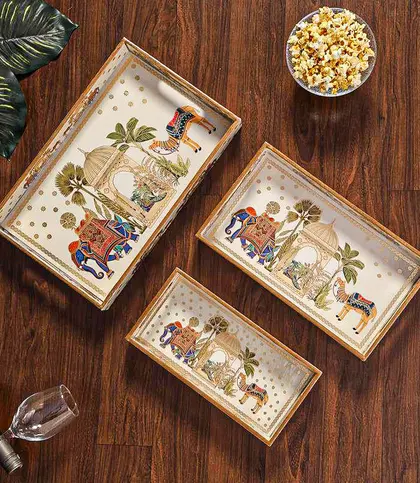
- Use Rajvaha Premium Beige MDF Serving Tray Set - Pack of 3 as a tray set for serving and styling.
- Compare Nautilla Ceramic Platter as a ceramic platter for snacks and starters.
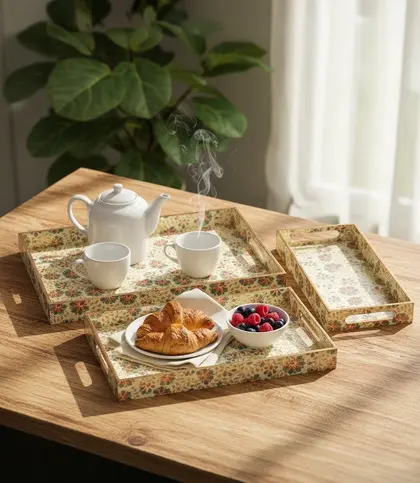
- Consider ServeNest Serving Tray - Set of Three as a multi-size tray set example.
₹2,099
₹3,999
48%OFF

₹1,153
₹1,600
28%OFF
₹1,357
₹2,999
55%OFF
Final Verdict
- Choose the simplest option for trays when daily use, cleaning, or space is the main concern.
- Choose the more decorative option when the room already works and needs warmth, texture, height, or personality.
- Combine products only when each one has a different job; the best home decisions make the room easier to live in, not just fuller.
FAQs
What is the difference between a tray and a platter?
A tray is for carrying and serving; a platter is mainly for presenting food.
Which material is easiest to maintain?
Easy-clean coated, melamine, and some ceramic surfaces are practical. Wood needs more care around water.
How many trays do I need?
One medium tray is enough for most homes. Add sizes only if you host often.
What should I check before buying trays?
Check size, material, placement, cleaning effort, and how often it will be used. The right choice should make the room easier to live in, not just better in photos.
How do I choose trays for daily use?
Start with the daily routine, then narrow by size, finish, and maintenance. The better choice is the one that fits the room without adding a new cleaning, storage, or movement problem.