


Samai Diya in English: What Should You Call It?
Quick Answer
“Samai diya” is usually best called a “standing oil lamp” in English. If brass is relevant, use “brass oil lamp” or “traditional Indian brass lamp.” Keep “samai” when the original cultural name adds useful meaning.
Definitions
Samai
A traditional Indian raised or standing oil lamp, often associated with a base, stem, and upper oil-holding section. Its exact design can vary by region and maker.
Standing oil lamp
A clear general English description for an oil lamp with a raised, stand-like form.
Traditional Indian brass lamp
A context-rich description that highlights brass construction and Indian decorative character without relying only on the regional term “samai.”
Brass oil lamp
A material-and-function description useful when an oil lamp is made of brass.
Diya
A broad term for an Indian oil lamp. It does not, by itself, specify a material or a standing form.
Samai Diya in English: The Short Answer
The most direct English translation for a samai diya is “standing oil lamp.” It communicates the raised form and purpose clearly for readers who may not know Indian decor vocabulary.
If the piece is brass, “brass oil lamp” is more specific. “Traditional Indian brass lamp” is useful when its decorative character matters. In bilingual or culturally specific writing, use “samai, a traditional standing oil lamp” so readers have both the original name and a clear explanation.
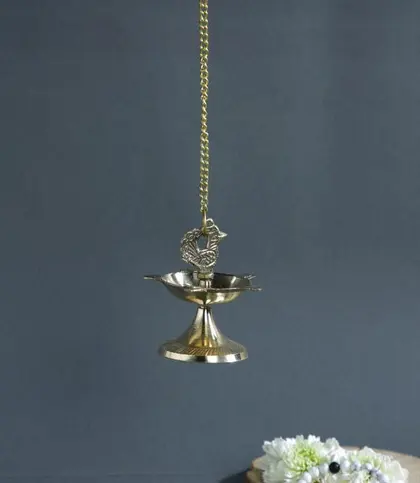
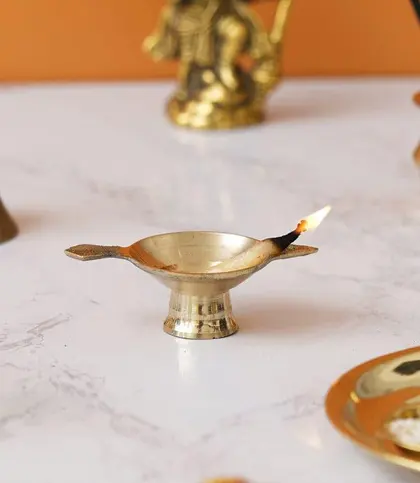
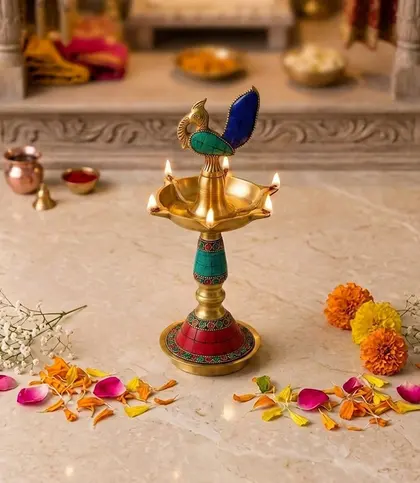
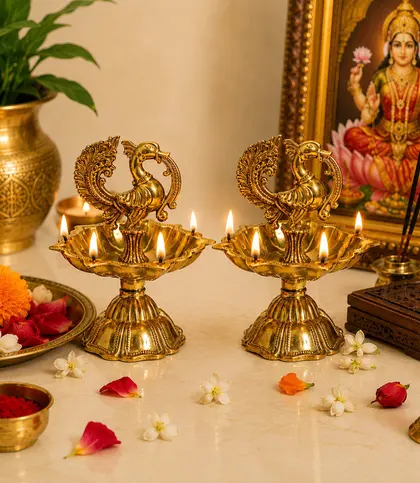
The linked decor examples in this guide illustrate broader oil-lamp, diya, or material terminology. Their listings should not be read as proof that they have the standing form of a samai.
₹349
₹1,999
83%OFF
Which Term Should You Use?
Choose the wording according to what the reader needs to understand. For a straightforward translation, “standing oil lamp” is the clearest option; add “also called a samai” where retaining the original name is helpful.
For shopping or product categorisation, use the wording supported by the listing’s material and form. A brass piece may be described as a “brass oil lamp” or “brass diya,” while “traditional Indian brass lamp” suits a more descriptive decor context. A product called a diya is not automatically a samai unless its standing form is established.
In home-decor writing, “samai” preserves regional character and works especially well for readers familiar with Indian decor terms. “Ornamental standing oil lamp” is a useful descriptive alternative when a more general English phrase is preferred.
- Translation: “standing oil lamp,” or “samai, a standing oil lamp.”
- Shopping: use material-and-form wording that matches the listing, such as “brass oil lamp” or “brass diya.”
- Home decor: use “samai” when cultural specificity is intentional, or “traditional Indian brass lamp” for a descriptive tone.
₹149
₹499
70%OFF
₹2,899
₹4,699
38%OFF
₹749
₹1,199
38%OFF
How to Recognise a Samai Form
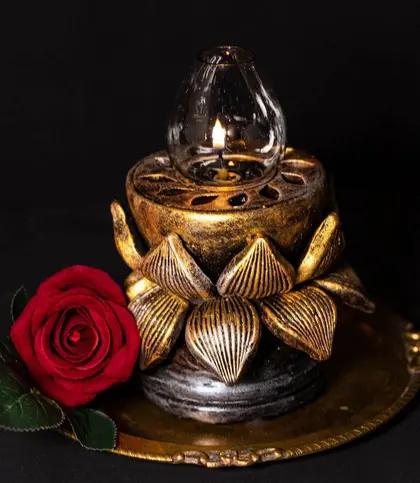
A samai is generally raised from the surface, often with a base, a central stem, and an upper section for oil and wicks. These are helpful identifying features, not a fixed rule: designs can vary by region and maker.
“Diya” is a broader category term and does not alone tell a reader the lamp’s shape or material. By contrast, a small clay diya is generally low and bowl-like rather than raised in the samai style. Naming the form and material gives the clearest result.
₹769
₹1,500
49%OFF
 FastDelivery
₹1,189
₹3,200
63%OFF
Frequently Asked Questions
These answers address the most common wording choices for translations, listings, and home-decor descriptions.
Final Verdict
- Use “standing oil lamp” as the clearest general English translation for a samai diya.
- Use “brass oil lamp” or “traditional Indian brass lamp” when brass construction and decor context matter.
- Retain “samai” when the original cultural term is meaningful; use “diya” alone only when a broader category is sufficient.
FAQs
What is a samai diya called in English?
“Standing oil lamp” is usually the clearest general English translation. If it is brass, “brass oil lamp” is a more material-specific option.
Is a samai the same as a diya or clay oil lamp?
A samai is a type of oil lamp generally associated with a raised, stand-style form. “Diya” is broader, so the words are not interchangeable in every description.
Which English term works best for translation, shopping, and home-decor contexts?
Use “standing oil lamp” for translation, material-specific terms such as “brass oil lamp” for listings, and “samai” or “traditional Indian brass lamp” for decor writing where cultural character matters.
What physical features distinguish a samai from other Indian oil lamps?
A samai is generally raised, often with a base, stem, and upper oil-holding section. Forms vary, so describe the specific piece rather than assuming every lamp follows one design.
When should the original word “samai” be retained?
Keep “samai” when cultural specificity matters, when readers know Indian decor terms, or in bilingual descriptions. Explain it once as a traditional standing oil lamp.