


Repurposing a Bread Box: 7 Practical Uses for Your Home
Quick Answer
An unused bread box can become useful household storage when it is cleanable, structurally sound, dry, and suited to its intended room. Start with a reversible tray, basket, or organizer, and choose low-moisture uses before considering bathroom or balcony placement.
Definitions
Reversible reuse
A use that can be changed or removed without drilling, painting, cutting, or permanently altering the bread box.
Ventilation
Openings or airflow around the box that may help reduce trapped dampness; ventilation does not make a box suitable for every moist environment.
Liner
A removable protective layer placed inside the box to catch dust or minor spills and make cleaning easier.
Suitability check
A review of the box’s condition, material, size, lid, ventilation, and intended location before reuse.
Repurposing a Bread Box: Start With a Suitability Check
Repurposing a bread box can be a simple way to add contained storage to a countertop, desk, entryway, shelf, or utility area. The best use depends less on its original purpose and more on whether it is cleanable, stable, suitably sized, and compatible with the room where you plan to place it.
Dry storage is usually the easiest place to begin. Kitchen accessories, desk supplies, entryway essentials, decor, and dry plant-care tools can all be sensible options. Bathrooms and balconies need closer consideration because splashes, condensation, and damp air can be hard on some materials and finishes.
- Check the box before choosing its new role rather than assuming every bread box suits every room.
- Match the contents to the internal height, footprint, lid movement, and available access space.
- Start with a removable insert or liner before making permanent changes.
Before You Repurpose It: Check Material, Size, Lid, and Condition
A quick inspection helps you avoid turning a useful storage idea into an awkward or difficult-to-clean project. Look at the box inside and out, including the base, seams, hinges, handles, and any ventilation openings.
Wood and bamboo boxes can be sensitive to repeated dampness, especially around joints or unfinished edges. Inspect metal for rust, ceramic for cracks and excessive weight, and fabric-covered boxes for lingering residue or odour. Construction and finish vary, so assess the individual piece rather than relying on broad material rules.
- Measure the usable internal length, width, and height, including clearance needed for a hinged, sliding, or roll-top lid.
- Check whether existing openings are useful for the planned contents and room; do not assume extra ventilation is necessary or appropriate.
- Choose frequent-use contents for an easy-opening hinged or lift-off lid; reserve tight openings or roll-tops for occasional-access items.
- Avoid demanding storage uses if you find moisture damage, swollen wood, rust, peeling finish, cracks, stubborn residue, odours, or inaccessible joints.
Clean and Prepare the Bread Box Before Reuse
Empty the box, brush or wipe out loose crumbs and dust, then clean it with a mild method that suits its material and finish. Avoid soaking wood, bamboo, fabric, or boxes with vulnerable joins unless the maker’s care guidance specifically permits it.
Let the box dry fully before putting anything inside. Once dry, inspect the underside, seams, lid track, handles, and hinges again; these areas can reveal lingering dust, staining, or damp damage that is easy to miss at first glance.
- Use a removable liner only after the interior is clean and dry, and make sure it does not interfere with the lid or block existing openings.
- Choose liners and inserts that can be lifted out easily for routine cleaning.
- If residue, odour, rust, staining, or damp damage remains difficult to address, choose a non-contact decorative role or discontinue the reuse project.
1. Create a Kitchen Countertop Station for Small Items
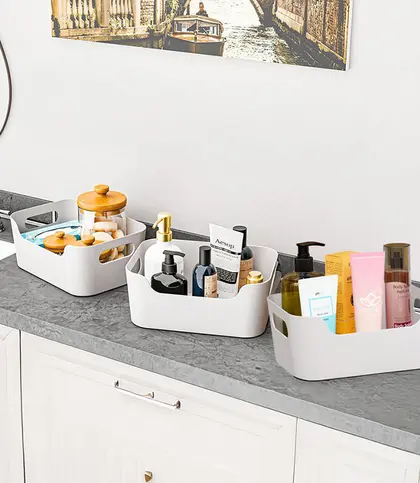
A clean, dry bread box can keep small kitchen supplies together without leaving them in open view. It may hold napkins, sachets, measuring accessories, reusable wraps, or similar compact items that do not require the box to function as food storage.
A small removable basket makes it easier to lift out the contents and wipe the base. For daily-use items, choose a box whose lid opens smoothly and does not need to be moved out of the way each time.
- Keep this use limited to dry, compact kitchen accessories.
- Group similar items so the box stays easy to access.
- Measure the interior before selecting a basket or tray.
₹149
₹599
75%OFF
2. Organize a Home-Office Desk
A medium or compact bread box can reduce visual clutter on a home-office desk. Use it for stationery, envelopes, notebooks that fit comfortably, loose cables that are not connected to power, or other small desk accessories.
An insert with separate compartments can prevent pens, clips, sticky notes, and chargers from becoming one mixed pile. Check that the lid closes without pressing against the organizer or its contents, and place the box on a dry, stable surface.
- Use removable compartments instead of fixed dividers where possible.
- Keep electrical equipment and power-tool projects out of scope for this reuse.
- Choose occasional-access storage if the lid is awkward to open from your usual desk position.

₹499
₹999
50%OFF
3. Set Up an Entryway Drop Zone
A bread box can create a contained landing spot for small items that tend to gather near the door. Depending on its size, it can hold keys, sunglasses, spare masks, small wallets, or other compact non-liquid accessories.
A lift-off or hinged lid works well when several people need quick access. If the box has a deeper interior, a removable tray or basket can stop smaller belongings from collecting at the bottom.
- Place it on a stable console, shelf, or cabinet rather than where an open lid could obstruct a walkway.
- Use it for lightweight everyday items rather than heavy objects that could make the box unstable.
- Consider visible dividers or a simple label if the household shares the drop zone.
4. Sort Bathroom Accessories—Only in a Dry, Suitable Setup
Bathroom storage is conditional rather than automatic. A bread box is better suited to dry accessories on a well-ventilated, low-splash shelf than to a position beside a sink, shower, or bath.
Check metal carefully for rust, and avoid exposing wood, bamboo, and fabric-covered boxes to persistent dampness unless their specific surface protection and condition support the placement. A removable basket or liner can simplify cleaning, but it cannot make an unsuitable box moisture-proof.
- Keep the box away from direct splashes and recurring condensation.
- Choose another room if trapped odours, dampness, or hard-to-clean joints are likely.
- Remove and dry contents promptly if the storage area becomes wet.
5. Build a Decor Display or Shelf Accent
A bread box with limited storage appeal can still work as a contained decor feature. Use it to display postcards, small craft pieces, seasonal objects, or a modest collection, provided the finish is stable and the surface can be kept clean.
An open lift-off lid can frame a display, while a closed lid can hide the collection when you want a calmer shelf. Keeping the original finish is the most reversible option; repainting is a permanent change and should only follow a check of surface compatibility.
- Avoid overloading a ceramic, cracked, or unstable box.
- Choose lightweight display items that do not strain the lid, hinges, or base.
- Use decor-only placement if the interior is no longer practical for stored items but the exterior is stable.
6. Store Plant-Care Tools on a Balcony or Utility Shelf
A sheltered balcony or utility shelf can be a useful place for dry plant-care supplies, such as labels, ties, gloves, small hand tools, and packets. The key requirement is a dry, protected location rather than an exposed outdoor setup.
Use a removable organizer to separate small accessories, and lift it out when you need to clean away soil. A liner can catch minor debris, but it does not make the bread box weatherproof. Dry tools before returning them to the box.
- Keep wood, bamboo, and untreated metal away from rain, standing water, and persistent condensation.
- Do not use the box to store wet tools.
- Choose a shelf that remains sheltered when the weather changes.
Sold Out
₹1,700
₹2,499
32%OFF
7. Make a Flexible Household Catch-All
A bread box can become adaptable storage for craft notions, remote controls, reading glasses, pet accessories, or other small household items. This option works best when you choose contents according to the box’s actual dimensions and the conditions of the room.
A removable tray, basket, or organizer lets you change the setup later without committing to a single use. It also makes the box easier to empty and clean when the household’s needs change.
- Choose dry items for kitchen, office, and entryway placements.
- Use only low-mess, moisture-tolerant setups in suitable bathroom or balcony locations.
- Add labels or visible dividers when several people need to find things quickly.
Reversible Ideas vs Permanent Modifications
The most practical projects usually begin with changes you can undo. A wipe-clean interior, removable liner, small tray, storage basket, drawer organizer, labels, and a change of contents are all flexible options that preserve the box for a future use.
Adhesive hooks or dividers are a greater commitment because results depend on the finish and adhesive. Painting, drilling, cutting dividers, and fixing new hardware are permanent changes. Consider them only if the box is sound and the intended use genuinely needs the alteration.
- Check internal measurements and lid clearance before adding any insert.
- Do not drill into unknown materials, fragile ceramic, or areas near concealed hinges or mechanisms.
- Keep modifications low-risk and non-structural; a box does not need extensive alteration to become useful.
Quick Matching Checklist: Which Use Fits Your Box?
Use the box’s condition and design to narrow down the best reuse idea. A simple match is often more useful than a creative but poorly suited transformation.
- For a compact, clean, dry box, try desk storage, an entryway drop zone, or small kitchen accessories.
- For a wider box with a stable lid, consider countertop storage, a decor display, or a household catch-all.
- For a box with existing ventilation, choose dry accessories that suit the airflow while still considering dust and room conditions.
- For a box with rust, damp damage, or persistent residue, avoid moisture-prone rooms and consider decor-only use or disposal if it cannot be cleaned or stabilised.
- For a box with a tight opening or difficult lid, select occasional-access storage rather than items needed repeatedly through the day.
Final Decision: Reuse It if the Box Is Cleanable, Stable, and Suited to the Room
Reuse a bread box when it is structurally sound, free from problematic residue or active rust, and appropriately sized for a dry or controlled location. The simplest wins are usually small kitchen accessories, desk supplies, entryway items, decor, or sheltered plant-care storage.
Begin with a reversible setup, such as a removable organizer, tray, basket, or liner. Consider paint, fixed dividers, or added ventilation only when the material and intended use support the change. If persistent dampness, trapped moisture, inaccessible joints, odours, or damage remain concerns, choose decor-only use or a different storage solution.
- Clean and inspect first.
- Match the material and lid to the room and contents.
- Choose reversible organization before permanent changes.
Final Verdict
- Start with a clean, dry, reversible setup; if the box cannot be adequately cleaned or kept suitable for its location, choose decor-only use or another storage solution.
FAQs
What can I use an old bread box for?
An old bread box can hold dry kitchen accessories, desk supplies, entryway essentials, craft items, remote controls, decor objects, or dry plant-care tools. Choose a use that suits its size, lid style, condition, and room.
How do I clean a bread box before repurposing it?
Remove loose crumbs and dust, then use a mild cleaning method appropriate for the material and finish. Avoid soaking wood, bamboo, fabric, or vulnerable joints unless their care guidance permits it, and allow the box to dry fully before reuse.
Can a bread box be used for bathroom storage?
It can be used for dry accessories in a well-ventilated, low-splash area if the material and condition are suitable. Avoid placing it beside a sink, shower, or bath, especially if it has rust, exposed wood, fabric, or difficult-to-clean joints.
What should I store in a repurposed bread box?
Store compact, dry household items that fit comfortably without blocking the lid. Good options include stationery, keys, sunglasses, reusable wraps, craft supplies, reading glasses, labels, ties, and small gardening accessories.
Which bread-box materials are easiest to reuse?
The easiest box is one with a stable, cleanable finish and no significant damage. Material alone is not enough to decide: wood, bamboo, metal, ceramic, and fabric boxes all vary by construction, finish, and current condition.
Do I need to add ventilation when repurposing a bread box?
Usually not. Existing ventilation may suit some dry contents, but it does not make a box appropriate for damp rooms or outdoor exposure. Avoid drilling unless the material, construction, and intended use clearly justify a permanent change.
Can I repurpose a bread box without drilling or painting?
Yes. A removable basket, tray, liner, drawer organizer, label, or divider can make the box useful without permanently altering it. These approaches also let you change the storage purpose later.