


Pressure Cooker Uses: What to Cook and When to Switch
Quick Answer
A pressure cooker is best for moist dishes with firm ingredients that need softening, such as dals, beans, grains, root vegetables, tougher meat cuts, stocks and stews. Choose another method when crispness, visible reduction, delicate texture, frequent stirring or gentle long cooking matters more.
Definitions
Pressure cooking
Cooking in a sealed vessel where trapped steam raises pressure and temperature, helping food cook and soften in a shorter cooking cycle than many conventional methods.
Stovetop pressure cooker
A pressure cooker heated on a hob, with heat and pressure managed manually according to the manufacturer’s instructions.
Electric pressure cooker
An electrically powered pressure cooker that typically automates heating, pressure maintenance, and selected cooking programmes.
Natural pressure release
Allowing pressure to fall gradually after cooking without immediately using the cooker’s rapid-release control, where the appliance instructions permit it.
Quick pressure release
Using the cooker’s designated release control to vent pressure according to the manufacturer’s instructions; the release method can affect safety and texture.
Pressure Cooker Uses: What to Cook and When to Choose Another Method
Pressure cooking is a useful everyday method for foods that benefit from moist heat and substantial softening. It is especially well suited to dals, dried beans, grains, tougher cuts, stews, curries, broths, stocks and compatible one-pot meals.
It is not the best answer for every ingredient. A pressure cooker prioritises tenderness and contained cooking over open-pot evaporation, crisp surfaces and constant visual adjustment. Match the method to the result you want: pressure cooking for softening, boiling for open control, steaming for delicate intact foods and slow cooking for gradual preparation.
- Choose pressure cooking for firm ingredients and moist, one-pot dishes.
- Choose another method when texture, browning or reduction is the main goal.
What a Pressure Cooker Is Best Used For
Firm, dense and dried ingredients are natural candidates for pressure cooking because they generally need time in a moist environment to soften. This makes the cooker useful for everyday staples as well as meal components that can be prepared in larger quantities.
It also works well when liquid, aromatics and main ingredients are meant to cook together in a closed vessel. Think of a dal, bean dish, curry base, stew or stock rather than a dish that depends on a dry surface or rapid evaporation.
Pressure cooking can make batch preparation and repeatable meals more manageable, but the ingredient mix still matters. Foods with very different cooking needs may be better cooked in stages. Browning and final thickening may also need to happen before or after the pressure cycle in a suitable vessel, following the appliance guidance.
- Best fit: ingredients that need softening in liquid.
- Good format: soups, curries, stews, stocks and compatible one-pot meals.
- Separate steps when you need a browned surface or a reduced finish.
Everyday Foods and Dishes Suited to Pressure Cooking
Legumes are among the most familiar pressure-cooker uses. Dals, lentils, chickpeas, kidney beans and similar ingredients are commonly prepared under pressure; soaking, fill levels and liquid quantities should always follow the ingredient guidance and the cooker manual.
Rice and other grains may also suit pressure cooking when the appliance instructions and chosen liquid ratio support the texture you want. Root vegetables and other firm vegetables can work well, though their final texture depends on their size, the cooking cycle and the release method.
Tougher meat cuts, poultry pieces, stews, curries, broths and stocks can benefit from a sealed, moist environment. For one-pot meals, combine ingredients only when their cooking requirements are compatible. Fragile vegetables, herbs, dairy-rich elements or other delicate additions are often better added later where the recipe method and manual allow.
- Dals and lentils: useful for soft, spoonable everyday dishes.
- Beans and chickpeas: suitable when prepared with appropriate soaking, liquid and headspace.
- Rice and grains: useful when the cooker guidance supports the desired finish.
- Root vegetables: practical for tender curries, soups and stews.
- Meat, poultry, stocks and broths: suited to moist dishes where tenderness is wanted.
- One-pot meals: convenient when all ingredients can tolerate a similar cooking cycle.
When Boiling, Steaming, or Slow Cooking May Work Better
Boiling is often preferable when you want to watch the food closely, stir often, adjust the liquid as you go or discard the cooking water. An open pot gives immediate visibility and is easier to manage for ingredients that need frequent checking.
Steaming is a better match for delicate foods that should remain intact and should not sit submerged in liquid. It is useful when shape and a lighter, less softened result matter more than the tender texture associated with pressure cooking.
Slow cooking is worth considering when gradual, extended cooking is central to the dish and you prefer an unhurried workflow without pressure-release steps. For browning, crisp edges, char or thick surface evaporation, use an appropriate sautéing, roasting, grilling or finishing method instead. Pressure cooking can make ingredients tender, but it does not create a crisp or deeply reduced finish on its own.
- Boil for open-pot visibility, stirring and flexible liquid control.
- Steam for delicate foods that should hold their shape.
- Slow cook for gradual, low-temperature cooking.
- Sauté, roast or grill when browning and crispness are the priority.
Foods and Techniques to Avoid or Handle Carefully
Never treat a pressure cooker as a vessel to fill to the rim. Leave the manufacturer-recommended headspace, and take extra care with ingredients that expand, foam or froth. Starchy grains, pasta, legumes and similar foods need particular attention because they can affect the steam path or valves if used beyond the appliance guidance.
Delicate seafood, fragile vegetables, dairy-heavy dishes and preparations that need frequent stirring may be better cooked by another method, or added after pressure cooking when the cooker manual and recipe method permit it. Results vary with ingredient size, starting temperature, quantity, altitude, cooker design and the chosen release method.
Do not block, modify or force the valve, lid, gasket or safety mechanisms. Do not deep-fry, pressure-fry or use the cooker without the liquid and equipment specified for its intended design. Never force open a pressurised cooker; wait for the pressure indicator and manufacturer-specified release process.
- Respect maximum-fill and headspace markings.
- Use special caution with foamy, starchy or expanding foods.
- Keep valves, vents and sealing parts clean and unobstructed.
- Do not force the lid open or alter safety components.
- Avoid techniques outside the cooker’s intended use.
Stovetop Versus Electric Pressure-Cooker Uses
A stovetop pressure cooker suits cooks who prefer direct heat control and a familiar hob-based routine. You can move it between burners where appropriate, but you also need to monitor heat and pressure in line with the manufacturer’s instructions.
An electric pressure cooker suits people who value a more self-contained routine, automated pressure management and programmes or keep-warm functions where those are available. Exact settings and functions differ by model, so a programme name should not replace reading the manual.
Neither style is universally better. Stovetop models can feel more responsive when changing heat or browning in a suitable cooker, while electric models may simplify repeatable pressure cycles. Choose according to your daily cooking pattern, hob space, need for portability and preference for direct control or automation.
- Choose stovetop for hands-on heat control and a hob-based workflow.
- Choose electric for model-dependent programmes and a more automated routine.
- Follow fill limits and pressure-release guidance with either style.
Capacity, Material, Safety, and Maintenance Considerations
Start with the amount you cook regularly, not the largest nominal volume available. A smaller cooker can suit compact households and modest portions, a medium size can suit routine meals, and a larger size can help with family portions or batch cooking. In every case, usable space is less than the stated capacity because safe headspace must be left inside.
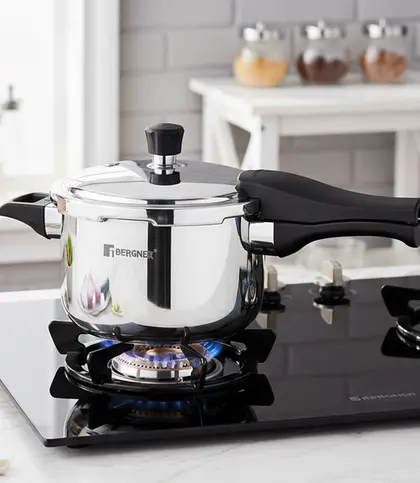
For routine meals, consider the Bergner Stainless Steel Pressure Cooker With Outer Lid - 3000 mL or the Vinod Claryon Pressure Cooker Stainless Steel - 3500 mL. Choose by the quantity you normally prepare, never by assuming the full nominal capacity can be used.
Stainless steel is a practical material to consider for everyday kitchen use. Aluminium can be lighter, so compare the material alongside compatibility with your intended hob, lid-locking design, handles, pressure indicator, gasket availability and safety-release features rather than relying on size alone.
Care supports reliable use. Clean and dry the pot, lid, gasket, valve and accessories as directed; inspect seals and vents for residue or wear; and use only compatible manufacturer-approved replacement components. Read the manual before first use, use sufficient liquid where required and keep the steam path clear.
- Capacity: choose for regular portions and batch needs, while retaining required headspace.
- Material: check what suits your kitchen routine and hob compatibility.
- Construction: inspect locking, handles, indicator and release arrangements.
- Parts: check that compatible gaskets and replacement components are accessible.
- Maintenance: clean seals and vents as directed, and inspect them before use.
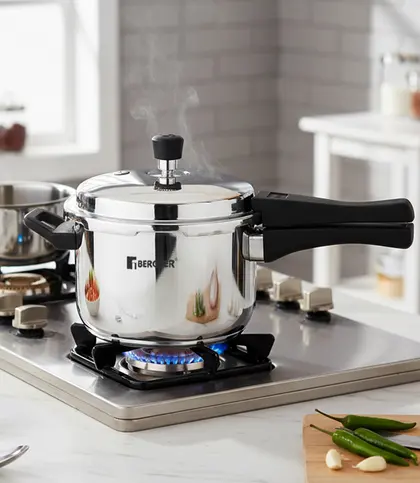
Sold Out
₹1,199
₹2,335
49%OFF
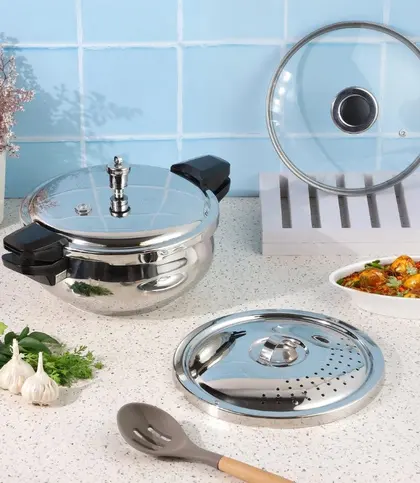
₹2,889
₹4,230
32%OFF
A Simple Pressure-Cooker Decision Checklist
Choose pressure cooking when the ingredient is firm, the dish is moist and a softened, tender result is the goal. It is particularly practical for dals, beans, grains, stews, curries, stocks and other contained dishes with compatible ingredients.
Choose another method when you need crispness, open-pot reduction, fragile texture, frequent visual adjustment or gradual long cooking. The best method is the one that supports the result you actually want, not simply the fastest-looking option.
For larger portions or batch cooking, compare the Bergner Stainless Steel Pressure Cooker With Outer Lid - 5000 mL, the Vinod Velric Pressure Cooker Stainless Steel - 5500 mL and the Bergner Trimax Triply Pressure Cooker With Outer Lid - 6500 mL. Select a small, medium or large example according to normal portions and batch needs, while allowing for the manufacturer-required headspace.
For the cooker itself, choose stovetop if direct heat control fits your routine and electric if you prefer a more automated, programme-based approach. Before buying, verify the material, lid and valve design, cleaning needs and compatible replacement parts.
- Firm ingredient plus cooking liquid: pressure cooking is a strong candidate.
- Crispness, reduction or delicacy: consider another method.
- Direct heat control: consider stovetop.
- Automated routine: consider electric.
- Regular portions and safe headspace: use these to choose capacity.
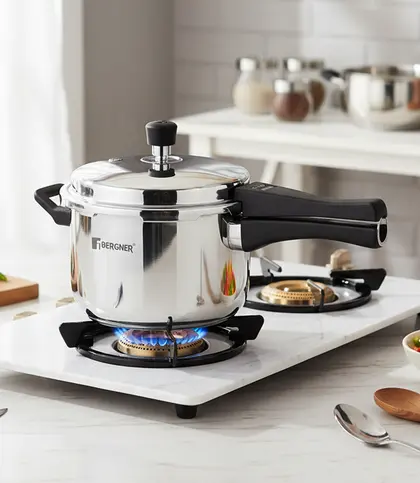
Sold Out
₹1,899
₹2,895
34%OFF
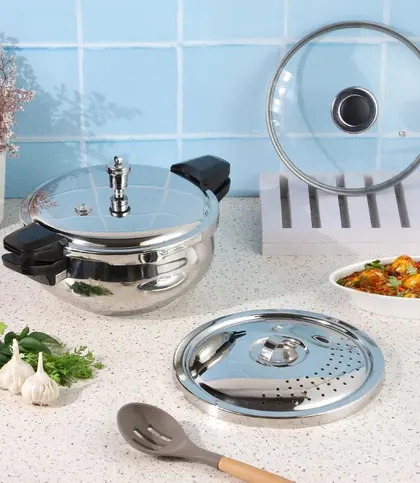
₹3,272
₹4,780
32%OFF
₹4,159
₹5,545
25%OFF
Frequently Asked Questions About Pressure Cooker Uses
These answers focus on choosing a suitable cooking method and using a pressure cooker within its intended design.
Final Verdict
- Choose a pressure cooker for moist dishes containing firm ingredients that need softening, especially dals, legumes, grains, root vegetables, stews, tougher cuts, stocks and compatible one-pot meals.
- Choose boiling, steaming, slow cooking or another finishing method when visibility, delicate texture, gradual cooking, evaporation, browning or crispness is more important.
- Select stovetop or electric according to your preference for direct heat control or automated cooking, then choose capacity based on regular portions while allowing for manufacturer-required headspace.
- Prioritise safe locking and release features, compatible parts, clear maintenance guidance and correct use over nominal size alone.
FAQs
What foods and dishes can be prepared in a pressure cooker?
Common uses include dals, lentils, beans, chickpeas, some grains, root vegetables, curries, stews, tougher meat cuts, poultry pieces, broths and stocks. It is most suitable where a moist, softened result is wanted.
Which ingredients benefit most from pressure cooking?
Firm, dense or dried ingredients that need substantial softening are often the best fit. Legumes, grains, root vegetables and ingredients used in soups, stews and stocks are typical examples.
When is a pressure cooker preferable to boiling, steaming, or slow cooking?
Choose pressure cooking for contained, moist dishes where tenderness is the goal. Choose boiling for open-pot monitoring, steaming for delicate foods that should stay intact, and slow cooking for gradual extended cooking.
Which foods or techniques are unsuitable for pressure cooking?
Avoid using a pressure cooker for deep-frying, pressure-frying or any use outside its manual. Handle foamy or expanding foods carefully, and consider another method for fragile vegetables, delicate seafood, dairy-heavy dishes and foods needing frequent stirring.
How do stovetop and electric pressure-cooker uses differ?
Stovetop models offer direct hob-based heat control and require closer monitoring. Electric models typically automate heating and pressure maintenance, with functions that vary by model. Both require proper filling, inspection and safe pressure release.
What capacity and material factors matter for common household uses?
Choose capacity around your normal portion size and batch needs, remembering that a cooker cannot be filled to its nominal volume. Stainless steel is a practical everyday option; also check hob compatibility, lid design, handles, seals and replacement-part availability.
What basic safety and maintenance practices support reliable use?
Read the model manual, use the required liquid, do not overfill, keep the valve and steam path clear, inspect the gasket and vents, and release pressure only by the specified method. Never force open a pressurised lid.