

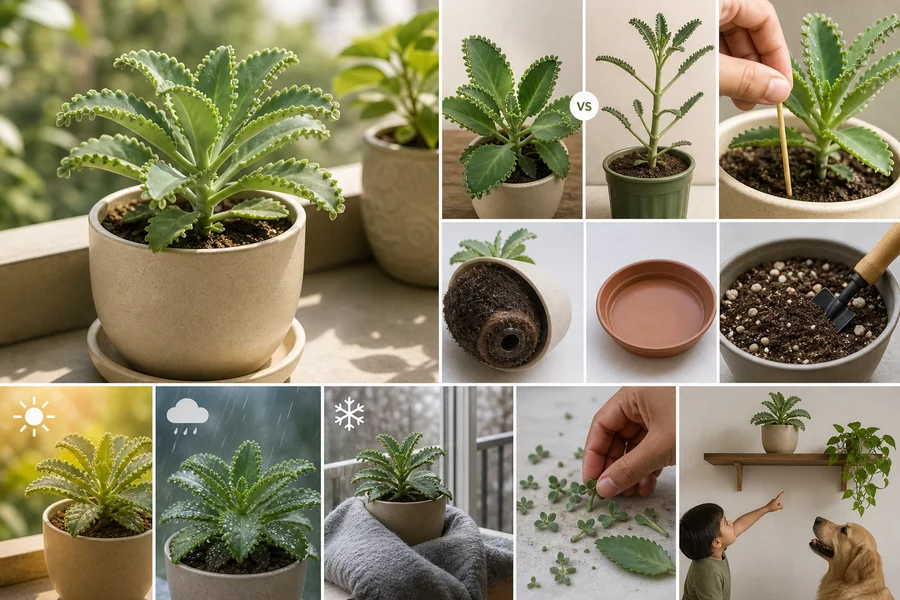
Quick Answer
Mother of Thousands plant care in India comes down to bright filtered light, a fast-draining mix and a pot with an open drainage hole. Water deeply only after the mix has dried substantially, then let all excess drain away. Adjust watering for heat, monsoon humidity, cooler winter weather and soil moisture rather than following a fixed calendar; protect it from cold rain or cold snaps, and keep fallen plantlets away from nearby pots, children and pets.
Definitions
Mother of Thousands
A plant commonly associated with Kalanchoe daigremontiana, known for producing small plantlets along the leaf margins. Identification can vary in local plant markets, so compare care advice with the plant’s actual form.
Bright indirect light
Strong ambient daylight near a bright window or balcony position without prolonged, harsh midday or afternoon rays directly striking the leaves.
Root rot
Root damage linked to persistently wet, poorly aerated growing conditions. Possible signs include a sour-smelling mix, soft or dark roots, yellowing and ongoing wilting while the soil remains wet.
Plantlets
Small offsets that form along leaf edges and may fall onto nearby soil. They can root readily, allowing the plant to spread beyond its intended pot.
Mother of Thousands plant care: the quick Indian-home decision
Place this drought-tolerant plant in bright filtered light, with gentle morning sun only if it has adjusted to it gradually. Avoid suddenly moving it into hot afternoon sun, especially near reflective walls or on exposed balconies.
Use an airy, fast-draining growing mix in a pot with a clear drainage hole. When the mix has dried substantially below the surface, water thoroughly until it drains, then empty the tray. Prolonged wetness, low light and humid conditions are a far greater risk than occasional delayed watering.
There is no single watering interval for every Indian home. A breezy balcony, a dim room, a small terracotta pot, dense soil, monsoon rain, winter temperatures and ventilation all change how quickly the mix dries.
- If light is weak, improve it gradually rather than watering more.
- If the mix is dry, water deeply and allow full drainage.
- If the mix is wet, wait and investigate drainage, light and root health.
Pots

₹2,294
₹3,350
32%OFF

₹769
₹1,799
57%OFF

₹1,189
₹1,725
31%OFF

₹2,099
₹2,989
30%OFF

₹538
₹700
23%OFF

₹2,209
₹3,190
31%OFF

₹2,932
₹4,250
31%OFF

₹1,444
₹2,080
31%OFF
Choose the right light and position indoors or on an Indian balcony
A bright window sill with filtered daylight is usually the simplest indoor position. A living room can work when the pot stays close to a bright window, while a bedroom with limited daylight may lead to thin, stretched growth. On a balcony, choose filtered light or a spot protected from intense afternoon exposure.
In hot regions, use a sheer curtain indoors or place the pot where a wall, shade screen or larger plant softens the strongest sun. Gentle morning light can be suitable for an acclimatised plant, but abrupt exposure often causes bleached or crispy patches.
Turn the pot occasionally so new growth develops more evenly. Avoid repeatedly shifting it between very different light or temperature conditions. Keep it away from persistently damp corners, strong air-conditioner or heater drafts, and repeated monsoon rain splash.
During a cold snap, move an exposed balcony plant to a bright, sheltered position. Protect it from frost and cold rain, while avoiding a cold, persistently wet root zone. Return it to its usual light gradually once conditions are milder.
- Best starting point: bright, stable filtered light.
- Use morning sun cautiously and introduce it gradually.
- Shelter balcony plants from harsh afternoon sun, continuous rain and cold snaps.
Watering by season: summer, monsoon and winter
In summer, heat and airflow may dry the mix faster, so inspect it more often. Do not water only because several days have passed: feel below the surface and water only when the upper portion of the mix has dried substantially. Watering earlier in the day can be practical, provided the pot drains freely.
During the monsoon, rain, humidity and lower evaporation can keep soil wet much longer. Shelter a balcony pot from repeated rainfall, improve airflow where possible and empty the drainage tray promptly. Let soil moisture, not the calendar, decide the next watering.
In winter, slower growth and lower evaporation usually mean a longer gap between waterings. Continue checking the root zone before watering, particularly in rooms with lower light or during unusually cool weather. Keep the plant bright and sheltered, and avoid watering a mix that remains cold and wet. Routine misting does not solve dry soil or replace correct root-zone watering.
- Summer: check more often, but water only after substantial drying.
- Monsoon: extend the interval when the mix stays moist and keep rain out of the pot.
- Winter: water less often according to soil moisture, while continuing regular moisture checks.
Pot, drainage and soil: build in a margin against root rot
Choose a pot only modestly larger than the root ball and make sure it has at least one unobstructed drainage hole. An oversized pot can hold more wet mix around a small root system, particularly in a humid home.
Use a gritty, airy succulent-style mix with a drainage-supporting mineral component. Dense garden soil often compacts and remains wet too long indoors or during the rains. Good drainage and aeration support healthier roots, but they do not replace moisture checks.
A tray is useful for catching drainage water, not for storing it beneath the pot. Empty it after watering. Terracotta may help some mixes dry faster because it is porous, while plastic and glazed pots may retain moisture for longer; pot size, humidity and ventilation still matter.
- Keep the drainage hole clear of saucers, compacted soil and decorative liners.
- Use an airy mix rather than heavy soil that stays wet.
- Match your watering checks to the container material and local weather.
Terracotta Pots
 FastDelivery
₹899
₹1,219
26%OFF
 FastDelivery
₹749
₹1,009
26%OFF

₹412
₹915
55%OFF
 FastDelivery
₹449
₹999
55%OFF
 FastDelivery
₹374
₹825
55%OFF
 FastDelivery
₹1,316
₹1,969
33%OFF
 FastDelivery
₹1,804
₹2,629
31%OFF

₹374
₹825
55%OFF
Symptom guide: stretching, drooping, yellowing and leaf damage
Stretching, with wide gaps between leaves or leaning stems, usually points to insufficient light. Move the plant gradually towards brighter filtered light and do not compensate by increasing watering. Existing stretched growth will not become compact again, but improved conditions can support better new growth.
Drooping needs a moisture check before any action. If the mix is dry, water thoroughly and check whether water is running straight through a shrunken, water-repellent mix. If the mix is wet, pause watering and consider low light, poor drainage or root stress. Inspect roots and repot into fresh airy mix if soft, dark or damaged roots are evident.
Yellow leaves can result from frequent watering, drainage issues, inadequate light or normal ageing of older leaves. Scorched, bleached or crisp patches suggest harsh sun, reflected heat or sudden exposure. Chewed or spotted leaves call for an inspection for pests, rain damage or physical injury.
- Dry mix plus drooping: water fully, then reassess the mix’s ability to absorb moisture.
- Wet mix plus drooping: delay watering and investigate drainage and roots.
- Damaged leaf tissue will not recover; correct the cause and remove severely damaged leaves with a clean tool.
Plantlet control, pruning and repotting decisions
Plantlets are part of this plant’s growth habit, but they can quickly establish in neighbouring pots, floor cracks and balcony corners. If you do not want more plants, collect fallen plantlets early and dispose of them responsibly. Keep only the offsets you genuinely plan to grow.
To propagate selected plantlets, place healthy ones on a suitable lightly prepared growing medium and avoid keeping it constantly wet. They need a stable setup, not soggy soil. Keep propagation pots separate from plants where uncontrolled spread would be inconvenient.
Prune dead, badly damaged or overcrowded growth with a clean tool. Repot when roots circle densely, the plant becomes unstable, the mix has broken down, drainage has declined or it dries unusually fast despite reasonable watering. Do not repot simply because a year has passed. After repotting, resume watering cautiously while the roots and new mix settle.
- Remove unwanted plantlets from nearby soil before they root.
- Prune for damage, crowding or hygiene rather than removing healthy leaves without reason.
- Repot in response to root, soil or stability signals, not a fixed annual schedule.
Child- and pet-safety precautions
Keep the plant, detached leaves and fallen plantlets on a high, stable surface or in a restricted balcony area where children and pets cannot chew or handle them. A small fallen plantlet should not be treated as harmless simply because it is easy to miss.
Choose a position where the pot cannot be knocked over, and store pruning tools out of reach. If a child or pet may have ingested any part of the plant, do not attempt improvised treatment. Contact an appropriate medical or veterinary professional, or a local poison-information service, promptly.
- Collect dropped plantlets during routine checks.
- Use a stable, inaccessible placement rather than a low shelf or floor pot.
- Seek qualified advice after suspected ingestion.
A five-minute weekly care checklist
A brief weekly inspection gives you better results than an inflexible watering schedule. It lets you respond to heat, rain, humidity, lower winter light, cold snaps and changes in the plant’s position before they become larger problems.
- Check that the plant has bright, stable light without signs of scorching.
- Feel the mix below the surface before deciding whether to water.
- Confirm the drainage hole and tray are clear, with no standing water below.
- Inspect leaves, stems and soil for pests, soft areas, damage and fallen plantlets.
- Consider recent heat, rain, humidity and cooler weather before changing the care routine.
Frequently asked questions
Use these answers as decision rules, then adjust them to the light, soil, pot material and weather in your own home.
Final Verdict
- Give Mother of Thousands bright filtered light, a free-draining root zone and thorough watering only after substantial drying.
- If light is weak, increase it gradually. If the mix is dry, water and drain; if it is wet, hold water and assess drainage, light and roots.
- During humid or rainy weather, expect slower drying and shelter balcony plants from repeated rain. In winter, reduce or delay watering according to soil moisture, while continuing regular moisture checks rather than following a fixed calendar.
- Protect exposed plants from cold snaps, frost and cold rain while retaining bright light and avoiding a cold, persistently wet root zone.
- Contain plantlets early, and relocate the plant if children or pets can reach it. The right pot and soil support good care, but regular moisture checks make the final decision.
FAQs
What light conditions suit a mother of thousands plant indoors or on an Indian balcony?
Give it bright indirect light near a window or in a sheltered balcony position. Gentle morning sun can suit an acclimatised plant, but protect it from intense afternoon sun and introduce stronger light gradually.
How often should I water a mother of thousands plant in summer?
Check more often in summer, but do not use a fixed interval. Water deeply only when the mix has dried substantially below the surface, then let the pot drain fully and empty the tray.
How should watering change during the Indian monsoon?
Water less often if humidity and rain keep the mix moist for longer. Protect balcony pots from repeated rain, improve ventilation and never leave the pot standing in collected water.
Which pot and soil help prevent root rot?
Use a modestly sized pot with an unobstructed drainage hole and an airy, gritty succulent-style mix. This reduces the chance of persistently wet roots, but you still need to check moisture before watering.
Why is my mother of thousands plant stretching or drooping?
Stretching commonly indicates insufficient light. Drooping can indicate either dry soil or wet-soil root stress, so check below the surface before watering. A wet mix with continued drooping calls for a drainage and root inspection.
How do I control fallen mother of thousands plantlets?
Collect plantlets from nearby pots, balcony corners and floor cracks before they root. Dispose of unwanted ones responsibly, or propagate only selected healthy plantlets in a separate pot with lightly moist, not constantly wet, medium.
When should I repot or prune a mother of thousands plant?
Repot when roots are crowded, the plant is unstable, the mix has broken down, drainage has worsened or it dries unusually fast. Prune dead, badly damaged or overcrowded growth with a clean tool.
Is mother of thousands safe around children and pets?
Keep it and its fallen plantlets out of reach because ingestion may be harmful. If ingestion is suspected, contact a medical or veterinary professional or poison-information service promptly rather than trying home treatment.
Keep exploring