


Magnets on Side of Fridge: Do They Stick Safely?
Quick Answer
Magnets can be used on the side of a fridge only if that specific spot attracts a clean magnet securely and the finish remains unmarked. Test gently first, then limit use to notes, photos, and other lightweight items. Do not modify the appliance or assume a magnetic hook can carry heavier storage.
Definitions
Magnetic attraction
The force that allows a magnet to hold against a compatible ferromagnetic surface, such as some steel panels.
Side panel
The exterior left or right wall of a refrigerator cabinet, which may use a different material, coating, or construction from the door.
Lightweight use
Holding notes, photographs, reminders, or similarly small items without creating a meaningful load on the appliance surface.
Magnetic hook
A hook with a magnetic base intended for attachment to a compatible metal surface; its stated capacity may not apply equally to every refrigerator finish or orientation.
Can You Put Magnets on the Side of a Fridge?
You can put magnets on the side of a refrigerator when the particular panel attracts them securely, the finish is unaffected, and you are using them for very light items. A side panel is not automatically magnetic just because the fridge door is, so treat each location as a separate surface to check.
Use a magnet for a shopping list, reminder, photograph, or children’s drawing rather than as a mounting point for substantial storage. Do not drill into, peel back, or otherwise alter the refrigerator to create a magnetic surface.
- Test the exact place where you plan to use the magnet.
- Use only a clean magnet and a clean, dry panel.
- Keep the load limited to paper and similarly light items.
- Avoid forcing a magnet onto a panel that does not attract it.
Why the Fridge Side May Differ From the Door
Refrigerator exteriors can combine different materials and layers, including coated metal, steel, plastic, insulation, and decorative finishes. As a result, the door and side panel may not respond to a magnet in the same way.
Even where compatible metal is present, a non-magnetic outer layer, paint, protective film, decorative coating, surface texture, or a gap between the magnet and magnetic material can reduce the apparent hold. Attraction may also change from one area of the same side panel to another, so a successful test on the door or near an edge does not confirm that every spot is suitable.
- A magnetic door does not guarantee a magnetic side panel.
- A side panel may attract a magnet even when the door does not.
- Material composition, coatings, films, texture, and contact distance can affect how firmly a magnet holds.
- Test the intended location instead of relying on another spot.
How to Test the Side Without Scratching It
Start in a small, inconspicuous area. Wipe the panel and magnet with a soft, dry cloth so trapped dust or grit cannot rub against the finish. Hold a small magnet flat against the surface, then release it gently. Do not slide, twist, snap, or scrape the magnet across the panel.
If it stays in place, add only a single sheet of paper and check whether it remains secure. Repeat the test at the intended location if the first spot feels weak. Stop if the magnet slips, marks the finish, or the panel flexes.
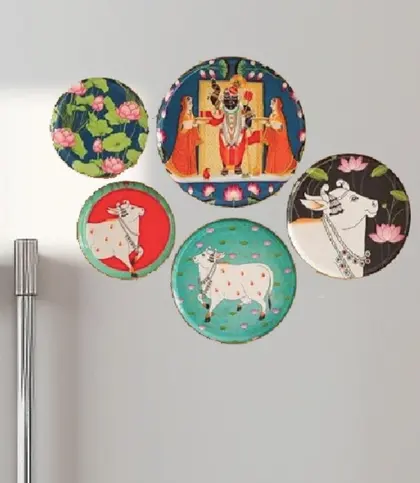
A compact option such as the metal Vrindavana Charm Fridge Magnet - Set Of Five can be used for this gentle light-paper test. The result on the specific panel, rather than the magnet alone, determines whether it is suitable.
- Clean and dry both the magnet and panel first.
- Place the magnet straight onto the surface; never drag it.
- Check its hold with a lightweight paper note only.
- Stop if it slips, marks the finish, or the panel flexes.
₹799
₹1,499
47%OFF
What Is Safe to Hang on a Magnetic Fridge Side?
A securely magnetic side panel can be useful for lightweight notes, reminders, photographs, takeaway menus, or children’s artwork. The safest starting point is a compact decorative fridge magnet rather than a hook carrying bags, utensils, jars, or containers.
Holding strength depends on more than the magnet itself. Contact area, surface coating, orientation, the item’s weight, and how far that weight sits away from the panel all affect performance. A decorative magnet that holds a photo is not evidence that it can safely support an organizer.
For light notes, the Vrindavana Charm Fridge Magnet - Set Of Five is the kind of compact fridge magnet to reserve for paper items rather than load-bearing storage. Keep any magnet and attached paper clear of vents, door movement, seals, controls, and areas that feel warm during normal operation.
- Suitable: notes, photographs, lists, and light paper artwork.
- Unsuitable without specific manufacturer guidance: bags, containers, tools, and loaded organizers.
- Use the smallest practical load for the strength you observe.
- Remove items that slip or pull the magnet away from the surface.
₹799
₹1,499
47%OFF
Quick Decision Checklist
Use this simple check before leaving anything on the side of your refrigerator. The answer should be based on the actual spot, its condition, and the weight you want to add—not on the appearance of the appliance alone.
A magnet that stays flat and secure may be used for a note or similarly light item. Weak attraction, slipping, a delicate finish, or any visible marking is a reason to use a different location or a non-magnetic alternative.
The iron Pushpakala Charm Fridge Magnet - Set Of Five is suited to the same light-note role after a panel passes this check. Do not use a successful decorative-magnet test as a reason to add a magnetic hook or heavier organizer.
- Magnet stays flat and secure: use it for notes or similarly light items only.
- Magnet attracts weakly or slips: reduce the load, test another spot, or choose an alternative.
- No attraction: regard the panel as non-magnetic; do not use a larger magnet to force the issue.
- Textured, delicate, newly coated, or visibly marked finish: avoid repeated testing.
- Considering a magnetic hook: check its stated capacity, but do not assume that rating applies to your refrigerator side.
 FastDelivery
₹799
₹1,499
47%OFF
What to Use If the Fridge Side Is Non-Magnetic
A non-magnetic side panel simply is not a suitable place for magnets. Rather than trying to change the panel, move reminders to a compact countertop note holder or another existing kitchen surface where they can be seen easily.
You can also use a paper-based reminder system in a spot that does not obstruct the refrigerator, its doors, or its ventilation. If there is another suitable metal surface already intended for this purpose, lightweight notes may be placed there instead.
- Use a freestanding note holder on a nearby counter.
- Keep paper reminders on an existing, unobstructed kitchen surface.
- Use another approved metal surface for light notes if available.
- Avoid drilling, adhesive hardware, and appliance modifications.
When to Stop Testing
Stop immediately if a magnet scratches, chips, stains, or catches on a protective film or finish. Also stop if the side panel dents, flexes, vibrates, or feels unusually warm at the intended spot. These are signs that the location is not a good candidate for added items.
Weak, intermittent attraction is a reason to choose another solution, not to add a stronger magnet or more weight. For anything heavier than paper notes, consult your refrigerator documentation as well as the capacity information supplied with the magnet or hook. When in doubt, leave the refrigerator side unmodified and use a separate organizing method.
- Stop if the finish changes or marks appear.
- Stop if the panel moves, vibrates, or feels unusually warm.
- Do not add extra load to a weak or inconsistent hold.
- For heavier uses, check appliance and magnetic-product guidance first.
Final Verdict
- Magnets may stick safely to the side of a fridge, but only if the exact location holds a clean magnet securely without marking or stressing the finish.
- A successful test supports lightweight use such as notes, photos, and reminders—not heavy hooks, containers, or organizers.
- If attraction is weak or absent, or the panel appears delicate, warm, damaged, or flexible, do not continue testing. Choose a freestanding or other non-modifying alternative instead.
FAQs
Do magnets stick to all refrigerator side panels?
No. Refrigerator side panels vary by model and may use different materials or finishes from the door. Test the specific side-panel location gently rather than assuming it is magnetic.
Why does a magnet stick to the side but not the fridge door?
The side and door can have different construction, materials, coatings, protective films, or decorative finishes. Those differences can change whether a magnet attracts and how strongly it holds.
How can I test a fridge side without scratching it?
Clean and dry both surfaces, then place a small clean magnet flat against an inconspicuous area. Do not drag or twist it. Check whether it holds a single sheet of paper, and stop if you see any marking or slipping.
What magnets are safe for lightweight fridge notes?
Use small, clean fridge magnets that sit flat against a panel that has passed a gentle test. They are best reserved for paper notes, photos, reminders, and similar lightweight items.
How much weight can a fridge magnet hold?
There is no universal weight limit. Holding strength depends on the magnet, the refrigerator finish, contact area, orientation, and the shape and depth of the item. Do not use a decorative magnet’s hold as proof that it can support a loaded organizer.
What can I use if my fridge side is non-magnetic?
Use a compact countertop note holder, a paper reminder system on an existing unobstructed kitchen surface, or another suitable metal surface already approved for light items. Avoid modifying the refrigerator panel.