


Homemade Potpourri Rose Petals: Drying, Scenting & Storage
Quick Answer
For homemade potpourri rose petals, use clean, verified untreated petals and dry them until fully crisp before mixing with other completely dry botanicals, a suitable fixative, and a small amount of fragrance. Air-drying is the gentler default for petal shape, while low-temperature oven-drying is faster but needs close attention. Cure the blend in a lidded jar before displaying it in a dry decorative bowl, and keep it away from moisture, food, flames, children, and pets.
Definitions
Potpourri
A dry decorative mixture of petals, leaves, spices, botanicals, fragrance, and sometimes a fixative, intended to add visual interest and a light scent to a room.
Fixative
A dry material that helps hold fragrance in a potpourri blend, such as orris root powder or another suitable commercial potpourri fixative.
Curing
The resting period after scenting and mixing that allows fragrance to distribute through the dried materials before display.
Unsprayed petals
Rose petals from flowers that have not been treated with pesticides, floral preservatives, or unknown chemicals; florist flowers should not be assumed suitable.
Homemade Potpourri Rose Petals: The Quick Decision
The essential order is simple: select, dry, scent, cure, display, and store. The quality of the finished potpourri depends more on thoroughly dry materials and a restrained hand with fragrance than on an elaborate recipe.
Choose air-drying if you have several days and want the gentlest approach for delicate petals. Choose oven-drying when speed matters and you can monitor a low oven closely. Finished potpourri is for decorative home use only, not for food, skin, or personal fragrance.
- Air-drying: slower, low-equipment, and generally kinder to petal shape and colour.
- Oven-drying: quicker, but more likely to brown, scorch, or dry petals unevenly if left unchecked.
- Do not mix, jar, or scent petals that are still soft, flexible, or cool-damp at the centre.
Choose Rose Petals and Supporting Botanicals
Start with fresh, clean petals from unsprayed garden roses or flowers from a source that can confirm they are untreated. Remove any petals that are bruised, wet, damaged, or discoloured. Avoid flowers with mould, a chemical smell, or possible floral-preservative residue; florist flowers should not automatically be treated as suitable.
Rose works well with dried lavender, calendula, rose hips, citrus peel, cinnamon, star anise, cloves, bay leaves, and cedar-style botanicals. Use more petals for a soft romantic look, more leaves and spices for a rustic arrangement, or a limited palette for a minimal display. Every supporting ingredient must be fully dry before it joins the petals.
A ready-made natural botanical blend can also be a useful visual reference when deciding how much variation in colour, texture, and scale you want in a homemade mix.
- Natural and romantic: rose petals, lavender, calendula, and rose hips.
- Rustic: rose petals, dried leaves, citrus peel, cinnamon, and star anise.
- Minimal: rose petals with one quiet supporting botanical or leaf.
- Discard rather than use any ingredient with visible mould or a musty odour.

₹749
₹899
17%OFF
Air-Drying vs Oven-Drying Rose Petals
For air-drying, spread petals in a single layer on a clean mesh rack, paper-lined tray, or other breathable surface. Keep them in a cool, dry, shaded, well-ventilated place, turning them occasionally so they dry evenly. This approach takes longer, but it generally helps preserve delicate shape and colour.
For oven-drying, arrange petals in one layer on a tray and use the lowest practical oven setting. If appropriate for your oven, leave the door slightly ajar to help moisture escape. Check frequently and remove petals as soon as they feel dry and crisp; thin petals can change quickly. Oven-drying is useful when time is limited, but browning, scorching, and uneven drying are greater risks.
Drying time varies with humidity, petal thickness, and the drying environment. In either method, do not seal or combine petals while they remain flexible, soft, or damp in the middle. Discard a batch that develops mould or a musty smell rather than attempting to rescue it.
- Choose air-drying for a gentler process and when appearance is the priority.
- Choose low-temperature oven-drying for speed only when you can monitor the petals closely.
- Test dryness by letting a petal cool, then checking that it feels crisp rather than leathery.
- Keep drying petals away from steam, direct sun, and damp rooms.
How to Mix Rose Petals, Fragrance, Spices, and Fixative
Use this as a flexible starting formula by volume: about 4 parts dried rose petals, 2 parts supporting botanicals or dried leaves, 1 part whole spices or decorative accents, and roughly 1/4 to 1/2 part fixative. Adjust the fixative according to its product instructions, since different materials can perform differently.
Add fragrance sparingly. Begin with a few drops per cup of dry mixture, toss thoroughly, and increase only gradually if needed. Where practical, add the fragrance to the fixative first, then work it through the other dry ingredients. This helps avoid wet spots and over-saturating fragile petals.
Use a suitable potpourri fragrance or essential oil only on the dry decorative mixture, never on skin. Follow the supplier’s label guidance, and use gloves or tools if the fragrance label recommends protection. A measured, lightly scented blend often becomes more balanced during curing.
- Soft romantic blend: emphasise rose petals and keep spices sparse.
- Rustic blend: use more dried leaves, peel, cinnamon, and whole spice accents.
- Minimal blend: limit contrasting colours and use one or two supporting materials.
- If the mixture looks or feels oily, add no more fragrance and allow it to rest before reassessing.
Cure, Display, Refresh, and Store the Finished Potpourri
Transfer the scented mixture to a clean, dry, lidded glass jar and let it cure for roughly one to two weeks. Gently shake or turn the jar every day or two to distribute the fragrance. Open it briefly only if the mixture seems uneven, then reseal it to retain scent and prevent moisture entering.
For display, use a small or medium quantity in a shallow decorative bowl or tray so air can move around the blend and the petals remain visible. Place it in a stable spot in a living room, bedroom, entryway, or dry bathroom, away from direct sun, radiators, air vents, and damp areas.
When the scent fades, refresh a hidden portion of the blend or the fixative with a small amount of fragrance, mix well, and allow it to rest again before returning it to display. Store any unused mixture in an airtight glass jar in a cool, dry, dark cupboard, labelled with its ingredients and date.
- A shallow vessel suits active display; a lidded jar suits curing and storage.
- Use a liner or tray beneath porous vessels if oils or fragrance may mark furniture.
- Keep the displayed amount modest and replenish it from stored potpourri as needed.

₹722
₹2,150
66%OFF
Safety Checklist for Rose-Petal Potpourri
Treat rose-petal potpourri as a decorative object, not as a food, cosmetic, personal fragrance, or diffuser substitute. Small petals, spices, and decorative pieces can be scattered, swallowed, or become choking hazards, so keep the blend out of reach of children and pets.
Check the safety information for every fragrance and botanical, particularly if cats, dogs, birds, or other animals share the room. Do not assume that an essential oil is suitable around pets. Keep dry botanicals well away from candles, incense, hobs, heaters, and other flames or high-heat sources because they can ignite.
Do not place potpourri directly on food-contact surfaces, in serving vessels, or where it could contaminate food and drinks. Discard the entire blend if it becomes damp, mouldy, or musty.
- Keep away from children and pets.
- Keep away from flames, heat sources, and cooking areas.
- Do not apply the mixture or concentrated fragrance to skin.
- Protect furniture with a liner where needed.
- Discard damp or mouldy materials promptly.
A Simple Homemade Rose Potpourri Checklist
The most reliable approach is not an exact universal formula. It is a sequence of careful decisions: begin with verified untreated petals, dry every ingredient completely, scent lightly, use an appropriate fixative, and give the blend time to cure. Air-drying is the default choice when petal appearance matters; low-temperature oven-drying is the practical alternative when you can watch it closely.
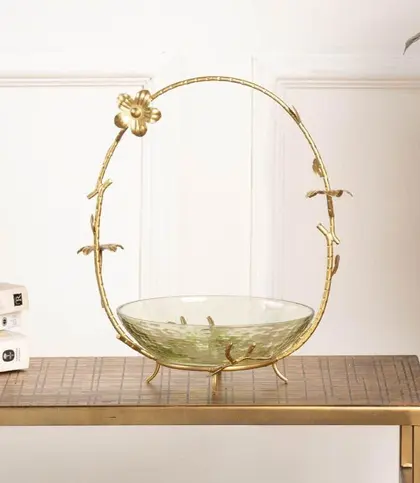
Match the vessel to the task. Keep curing and reserve quantities in a dry lidded jar, then arrange only enough for current use in a stable, shallow decorative bowl or tray. A bowl designed for decorative display can help keep the arrangement contained and visible without making claims about airtightness or heat resistance.
- Select unsprayed petals and fully dry botanicals.
- Choose air-drying for gentleness or carefully monitored low-temperature oven-drying for speed.
- Dry everything until crisp, then blend by volume.
- Start with petals, botanicals, spices, fixative, and fragrance in restrained proportions.
- Cure in a sealed jar for one to two weeks, mixing periodically.
- Display in a shallow decorative bowl or tray, and refresh lightly only when needed.
- Store sealed, dry, and away from children, pets, food, flames, and direct heat.
₹993
₹1,271
22%OFF
Prefer ready-made potpourri?
If you would rather buy a prepared blend than dry petals yourself, compare the potpourri range below. Check the listed fragrance and materials before choosing.

Final Verdict
- Choose air-drying as the default method when you want the gentlest process and generally better-looking petals. Choose low-temperature oven-drying only when time is limited and close monitoring is realistic.
- A successful rose-petal potpourri blend relies on fully dry ingredients, modest fragrance, a suitable fixative, and adequate curing rather than a rigid recipe.
- Use a shallow decorative bowl or tray for display, and a dry lidded glass jar for curing or storing the unused blend. Keep it purely decorative and positioned safely away from moisture, heat, food, children, and pets.
FAQs
Which rose petals are suitable for homemade potpourri?
Use clean petals from unsprayed garden roses or a source that can confirm the flowers are untreated. Avoid petals from flowers with pesticides, floral preservatives, unknown chemicals, mould, or a chemical odour. Florist roses should not be assumed suitable.
How should rose petals be dried without browning or mould?
Spread petals in a single layer and ensure good airflow. Air-dry in a cool, dry, shaded place for the gentlest method, or use the lowest practical oven setting and monitor closely for a faster method. Do not store petals until they are crisp and dry through the centre.
Which spices and botanicals pair well with rose petals?
Lavender, calendula, rose hips, dried citrus peel, cinnamon, star anise, cloves, bay leaves, and cedar-style botanicals can pair well with rose. Choose a small, coordinated group of materials rather than adding every option at once, and ensure each one is completely dry.
What proportions should I use for petals, fragrance, and fixative?
A practical starting point is 4 parts rose petals, 2 parts dried supporting botanicals or leaves, 1 part spices or decorative accents, and 1/4 to 1/2 part fixative by volume. Add fragrance a few drops at a time per cup of dry mixture, following the fragrance and fixative labels.
How long should homemade potpourri cure?
Let it rest in a clean, dry, lidded jar for roughly one to two weeks. Gently shake or turn the jar every day or two so the scent can distribute. The exact time can vary with the materials and fragrance used.
How can I refresh the scent of rose potpourri?
Add a small amount of suitable fragrance to the fixative or a hidden portion of the dry blend, then mix it through and let the potpourri rest in its lidded jar again. Avoid soaking petals or adding fragrance directly to a displayed arrangement.
How should homemade potpourri be stored?
Store unused potpourri in an airtight glass jar in a cool, dry, dark cupboard. Label the jar with the ingredients and date, and do not return damp material to the container.
Is rose-petal potpourri safe around children and pets?
Keep it out of reach. Petals, spices, and decorative pieces can be swallowed or scattered, and fragrances or essential oils may not be suitable around animals. Keep potpourri away from food areas, skin contact, flames, and heat sources.