


Homemade Bird Feeder: 3 Safe DIY Designs for Outdoor Spaces
Quick Answer
The best homemade bird feeder is the simplest design that keeps seed dry, gives birds clear access, stays stable in its location, and can be cleaned or replaced easily. Use a shallow recycled-container tray for the easiest balcony option, a covered wooden feeder for exposed terraces or gardens, or a terracotta saucer feeder for a compact, sturdy setup when drainage and regular cleaning are manageable.
Definitions
Homemade bird feeder
A simple feeding container made from household or basic craft materials that holds suitable bird seed and allows birds to reach it safely.
Drainage
Small openings or a sloped surface that let rain or condensation escape instead of leaving seed in standing water.
Bird access
The clear, unobstructed route birds use to land, perch, and reach food without sharp edges or entanglement hazards.
Spill control
Design and placement choices that reduce scattered seed, damp food, mess, and attraction of unwanted pests.
Homemade Bird Feeder: Which DIY Design Should You Choose?
A practical homemade bird feeder does not need elaborate decoration. It needs a shallow, reachable feeding area, a way for moisture to escape, a stable position, and a surface you can clean properly.
For the quickest setup, make a recycled-container seed tray. Choose a simple covered wooden feeder if it will face more rain or wind. A terracotta saucer works well when you need a compact, weighty feeder on a stable ledge, terrace, or garden surface.
Before collecting materials, consider where it will sit, how exposed it is to weather, whether birds can approach it easily, and how readily you can empty, wash, dry, and inspect it.
- Choose a recycled tray for the easiest low-cost setup in a sheltered spot.
- Choose covered wood for greater weather protection and long-term stability.
- Choose terracotta for a compact surface feeder that is naturally weighty.
- Prioritise drainage, stability, safe edges, bird access, and easy cleaning.
Compare the 3 Homemade Bird Feeder Designs
The right format depends less on appearance than on location and maintenance. A feeder that works neatly on a covered balcony may deteriorate quickly on an open terrace in rain and wind.
All three designs need regular checks. Drainage reduces pooled water but cannot, by itself, prevent damp seed, mould, or contamination.
- Easiest to make: recycled-container seed tray.
- Best for a sheltered balcony: recycled-container tray or terracotta saucer secured on a stable surface.
- Best for exposed weather: covered wooden feeder with drainage and a firm anchor.
- Most stable surface option: terracotta saucer on a level, non-slip base.
- Easiest to replace: recycled-container tray.
- Lowest cleaning effort: a shallow feeder with open access and no deep corners; this is often a simple tray or saucer.
- Recycled-container tray: compact and budget-friendly, but it needs smooth edges, drainage, and replacement when it softens, warps, or cracks.
- Covered wooden feeder: more involved to assemble, but its roof helps shield seed from direct rain when positioned securely.
- Terracotta saucer: simple and weighty, but it can hold water or become hard to clean if drainage and routine washing are neglected.
Choose Safe Materials for a Homemade Bird Feeder
Start with clean materials in sound condition. Suitable choices can include untreated, sound wood; wood with a coating or treatment explicitly verified as safe for bird-feeder use; a clean food-safe recycled container; and an unglazed terracotta saucer or shallow pot.
Avoid using any item that may leave harmful residues or break into hazards. Do not let pressure-treated, chemically preserved, or uncertain reclaimed timber contact seed. If you are uncertain about an old container, coating, paint, sealant, or timber treatment, choose a different material rather than placing food on it.
- Use clean, food-safe recycled containers that have not held chemicals.
- Choose untreated, sound wood, or wood whose coating or treatment is explicitly verified as safe for bird-feeder use.
- Use an unglazed, shallow terracotta saucer that is free from chips and cracks.
- Avoid pressure-treated, chemically preserved, visibly mouldy, rotten, or uncertain reclaimed timber near seed.
- Avoid containers with peeling coatings, rusting metal, brittle plastic, heavily treated wood, and anything with chemical residue.
- Use smooth fasteners and sturdy hanging material that will not fray into loose loops.
- Keep paint and sealant away from the feeding surface unless their safety for this use is clearly established.
- Prefer components that can be washed thoroughly or replaced easily.
Design 1: Recycled-Container Seed Tray
A recycled-container tray is the easiest homemade bird feeder for a sheltered balcony or covered terrace. Use a clean, shallow food container or a sturdy carton that will hold its shape while dry. A broad, low-sided tray lets birds reach seed without forcing them through a narrow opening.
Make this design only as durable as its material allows. It is best treated as a replaceable feeder, especially during humid or rainy periods.
- Gather a clean shallow food container or sturdy carton, blunt-edged scissors or a craft knife used carefully, a punch or drill, and a secure cord or mounting support.
- Cut a low, wide opening or trim the sides to create a shallow tray. Smooth or cover every cut edge so there are no sharp points.
- Make several small drainage holes in the base, keeping them small enough to limit seed loss.
- Create a stable base or secure hanging point, then press lightly on the tray to check that it does not tip or shift.
- Use it in a sheltered position rather than in persistent rain.
- Replace it at the first sign of warping, sogginess, cracks, mould, stains that cannot be cleaned, or persistent odour.
Design 2: Simple Covered Wooden Feeder
A covered wooden feeder is the most weather-ready DIY choice for a terrace or garden. Its roof can reduce direct rain on the seed, while an open-sided tray still gives birds a clear landing and feeding route.
Use a simple construction with a shallow floor, low rails, and an overhanging roof. Avoid intricate corners and deep compartments, which can trap damp seed and make cleaning more difficult.
- Gather untreated, sound wood, or wood whose coating or treatment is explicitly verified as safe for bird-feeder use, along with screws or robust fasteners, a shallow floor panel, low side rails, and a small roof panel.
- Do not use pressure-treated, chemically preserved, or uncertain reclaimed timber where it could contact seed.
- Build a shallow tray with low sides, then attach a roof that extends beyond the tray while leaving the sides open.
- Leave small drainage gaps or holes in the floor so water can escape.
- Sand all reachable edges and inspect for splinters, protruding screws, nails, and loose parts.
- Anchor the feeder to a stable post, railing support, or another secure structure.
- Do not rely on a weak branch or an unstable hanging point to hold a heavy wooden feeder.
- Check after wind or rain that the roof, support, and tray remain firm and dry enough to use.
Design 3: Terracotta Saucer Feeder
A shallow terracotta saucer makes a compact, stable feeder for a protected ledge, terrace, or garden surface. Its weight can help prevent tipping, provided the supporting surface is level and the saucer cannot slide or fall.
Keep the seed layer shallow and make drainage a priority. Terracotta can chip or crack, so inspect it closely before every refill and replace it if it can no longer be cleaned safely.
- Gather a clean shallow terracotta saucer, a stable stand or protected ledge, and optional non-slip support.
- Choose a shallow saucer so birds can land on the rim and reach the food without stepping into a deep pile of seed.
- Use an existing drainage opening where possible. If drilling is necessary, use suitable tools and eye protection.
- Discard the saucer if drilling creates cracks, chips, or sharp damage.
- Place it on a flat, stable surface and confirm that it cannot slide, topple, or fall from height.
- Check for chips, cracks, algae, standing water, and residue that cannot be removed with cleaning.
Place the Feeder Safely on a Balcony, Terrace, or in a Garden
A well-made feeder can still become unsafe if it is placed in a windy, unstable, or difficult-to-clean location. Choose a spot that gives birds an open route to approach while allowing you to remove spilled seed and inspect the feeder without strain.
Windows need particular care. Where possible, position a feeder either very close to the glass, so birds cannot build dangerous flight speed, or well away from it. Reduce collision risk further with exterior window markers, screens, or netting that make the glass more visible. Observe the area and adjust the setup if collisions or near-misses occur.
- Balcony: use a compact tray or saucer, keep it clear of doors and busy railings, and secure it against wind and tipping.
- Terrace: use a covered wooden feeder or stable saucer on a level surface, set back from exposed edges.
- Garden: place the feeder on a stable post or in a sheltered spot with nearby cover, but not beside dense hiding places where predators can approach unseen.
- Keep feeders either very close to a window or well away from it; avoid intermediate positions that can create a direct flight path into glass.
- Use exterior window markers, screens, or netting near nearby glass to make the surface more visible to birds.
- Choose a place where spilled seed can be swept up or removed easily.
- Avoid positioning a feeder over seating, entrances, or spots where damp waste will collect.
- Keep it out of reach of pets and remove any loose cord, wire, or hanging loop that could entangle wildlife.
Clean and Maintain the Homemade Bird Feeder
Hygiene is part of the design, not an afterthought. Do not simply add fresh seed on top of old seed. Remove anything wet, stale, soiled, or mouldy promptly, particularly after rain or periods of high humidity.
Cleaning should suit the material. Wash durable terracotta thoroughly, rinse it well, and let it dry before refilling. Clean sound wooden parts without prolonged soaking, then allow them to dry fully; replace wood that remains damp, rough, rotten, or difficult to sanitise. Recycled cardboard or softened plastic containers are usually safer to replace than to keep washing. Inspect regularly and clean whenever food or surfaces look damp, contaminated, or difficult to keep sanitary.
- Empty the feeder and brush away loose debris before cleaning.
- For terracotta, wash with hot water and a suitable mild cleaning method, rinse thoroughly, and dry completely before refilling.
- For sound wood, remove debris and clean gently without soaking it for long; allow it to dry fully before adding seed.
- Replace recycled cartons, softened containers, or cracked plastic rather than trying to sanitise material that has become absorbent, warped, or difficult to clean.
- Inspect for standing water, droppings, mould, sharp edges, loose fasteners, frayed hanging material, cracks, and unstable supports.
- Clean more often after rain, in humid weather, or during heavy bird activity.
- Replace wooden parts when rot, splinters, or structural weakness develops.
- Replace terracotta when it is chipped, cracked, or cannot be cleaned without leaving damaged surfaces.
Final Safety Checklist Before Adding Seed
Run through this short check before filling the feeder. If any answer is no, adjust the design or choose a simpler format that you can maintain confidently.
- Is the feeding surface shallow, stable, and easy for birds to reach?
- Can rainwater drain without washing all the seed away?
- Are all edges, fasteners, cords, and openings free from sharp points and entanglement hazards?
- Will the feeder remain secure in wind and stay away from pets, predators, and higher-risk glass locations?
- If it is near a window, is it positioned very close to the glass or well away, with exterior markers, screening, or netting where appropriate?
- Can you empty, clean, dry, inspect, and replace it without difficulty?
- Is the feeder positioned where spills and damp waste can be removed promptly?
Prefer a ready-made bird feeder?
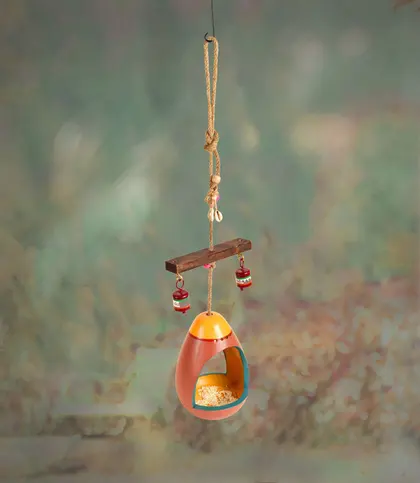
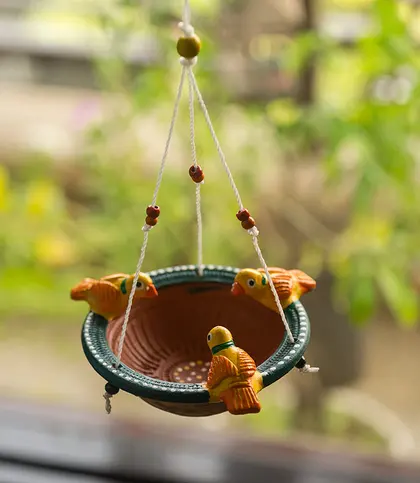
If you decide against a DIY feeder, compare these ready-made options. Check drainage, cleaning access, secure mounting, and suitability for your outdoor conditions before filling one.
₹899
₹1,199
25%OFF
₹902
₹1,160
22%OFF

Final Verdict
- For the easiest homemade bird feeder, choose a shallow recycled-container tray and use it in a sheltered balcony location where it can be replaced as soon as it wears out.
- Choose a covered wooden feeder when weather exposure and secure anchoring matter most, especially on an open terrace or in a garden.
- Choose a terracotta saucer when you want a compact, weighty surface feeder and can manage drainage, breakage risk, and frequent cleaning.
- Whichever design you choose, the safest option is the one that stays dry, stable, accessible, cleanable, and easy to replace.
FAQs
Which household materials are suitable for a homemade bird feeder?
A clean food-safe recycled container, untreated sound wood, wood whose coating or treatment is explicitly verified as safe for bird-feeder use, and an unglazed terracotta saucer can all work. Avoid items that held chemicals, pressure-treated or chemically preserved wood, uncertain reclaimed timber, peeling coatings, visible mould, rust, brittle plastic, or anything likely to create sharp edges.
What is the easiest homemade bird feeder to make?
A shallow recycled-container seed tray is usually the easiest option. Cut it low and wide for access, smooth the edges, add small drainage holes, and secure it so it cannot tip. Replace it when it becomes soft, cracked, or difficult to clean.
Which homemade bird feeder is best for a balcony?
A compact recycled-container tray is a practical choice for a sheltered balcony. A shallow terracotta saucer can also work on a broad, level, secure ledge. Keep either option away from busy doorways, loose railings, pets, and areas where wind may knock it over.
How do I add drainage to a homemade bird feeder?
Add several small holes in the lowest part of the tray or use an existing drainage opening in a saucer. The holes should release rainwater while being small enough to limit seed loss. Empty wet seed promptly because drainage does not eliminate all moisture or mould risk.
Where should I place a homemade bird feeder?
Place it where birds have a clear approach, the feeder is stable, and fallen seed can be cleaned up. Keep it out of pets' reach, away from unstable edges, and clear of dense hiding places where predators may approach unnoticed. To reduce window collisions, place it either very close to the glass or well away from it, and use exterior markers, screens, or netting to make nearby windows more visible.
How often should a homemade bird feeder be cleaned?
Inspect it regularly and clean it whenever seed is wet, stale, soiled, mouldy, or mixed with droppings. Rain, humidity, bird activity, seed type, and the feeder material affect how often cleaning is needed. Wash durable terracotta thoroughly and dry it before refilling, clean sound wood gently without prolonged soaking, and replace absorbent or damaged recycled containers that cannot be cleaned safely.
How do I keep a homemade bird feeder stable?
Use a level surface for a saucer, a broad base for a tray, or a firmly anchored support for a wooden feeder. Test the feeder with gentle pressure before filling it, and recheck it after wind, rain, or any change in the mounting point.
When should a homemade bird feeder be replaced?
Replace a recycled feeder when it warps, softens, cracks, smells, or cannot be sanitised. Replace wood when it rots, splinters, remains damp, or becomes structurally weak. Replace terracotta when it chips or cracks, especially if damaged edges are sharp or difficult to clean.