


Crushing Garlic in Mortar and Pestle: A Texture Guide
Quick Answer
To crush garlic in a mortar and pestle, peel and lightly chop the cloves, then use short, controlled pounds to break them apart. For a mash or paste, switch to pressing and circular grinding. Keep the mortar partly filled, and use a small pinch of salt only if the garlic is slipping.
Definitions
Lightly crushed garlic
Garlic broken into uneven pieces with some visible structure remaining.
Coarse garlic mash
Garlic pounded into a rough, cohesive mixture, often with small pieces still visible.
Garlic paste
A mostly smooth, spreadable garlic mixture made by combining pounding with circular grinding.
Pounding
Short, controlled downward pestle movements used to break garlic apart.
Grinding
Pressing and rotating the pestle against the mortar surface to refine garlic into a smoother texture.
Crushing Garlic in a Mortar and Pestle: Start With the Texture You Want
Decide whether the dish needs distinct crushed pieces, a coarse mash, or smooth garlic paste before you begin. The basic sequence is peel, lightly chop larger cloves, pound to break them down, then grind only if a finer texture is needed.
Controlled movement and a mortar that is not overcrowded matter more than force. Stopping at the right stage keeps garlic from becoming wetter or smoother than the recipe requires.
- Lightly crushed garlic: use a few short strikes and leave irregular pieces intact.
- Coarse mash: pound briefly, then press until the garlic forms a rough, cohesive mixture.
- Garlic paste: pound first, then press and rotate the pestle to smooth it.
Prepare the Garlic Before Crushing
Peel each clove fully and remove loose papery skin before it enters the mortar. Skin can catch beneath the pestle, make the garlic slide, and leave unwanted fragments in the finished mixture.
For large cloves, make one or two rough cuts first. This gives the pestle a flatter surface to work against and helps the garlic break down without bouncing around the bowl.
A small pinch of salt is optional when cloves are sliding. If the garlic is very wet on the surface, pat it dry first to reduce slipping and splashing.
Use Pounding for Breakup, Then Grinding for Smoothness
Start with the pestle upright and use compact downward strokes. The goal is to split and flatten the garlic, not to strike with maximum force.
For lightly crushed garlic, stop after a few short pounds while the pieces are still distinct. For a coarse mash, alternate gentle pounding with pressing until the pieces begin to hold together.
For paste, pound until no large pieces remain. Scrape garlic from the sides, angle the pestle slightly, and press while rotating it in tight circles across the base and lower walls. Repeat the scrape-and-grind motion until the paste is as smooth as needed.
- Use short vertical strokes for initial breakup.
- Press rather than strike once the garlic is mostly broken down.
- Angle the pestle slightly while grinding for broader contact.
- Scrape the sides so all of the garlic is worked evenly.
Keep Garlic From Jumping, Splashing, or Overfilling the Mortar
As a practical starting point, fill the mortar no more than about one-third full. Leaving room allows the garlic to move beneath the pestle instead of being pushed over the rim; make larger quantities in batches.
Set the mortar on a dry, level surface and keep the pestle movements low and compact. High lifts and forceful blows can send garlic outward, especially when the cloves are moist.
If garlic climbs the sides, pause and scrape it back to the centre. Resume with slower pressing rather than hitting harder.
Adjust the Technique to the Mortar Material
Material affects friction, weight, and cleanup, but it does not determine garlic texture on its own. Bowl shape, surface texture, pestle fit, batch size, and technique also influence the result.
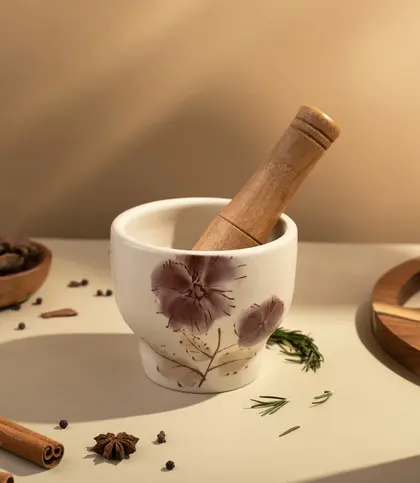
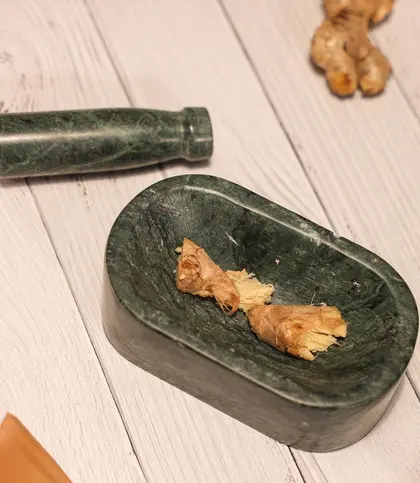
Stone and marble suit controlled pounding followed by firm circular pressure. Use deliberate force rather than hard blows near the rim. Ceramic or porcelain surfaces may feel smoother, so moderate pressure and more frequent scraping can help keep the garlic gathered under the pestle.
With wood, favour gentler pressing and grinding over repeated impacts. Wipe away residue promptly and do not leave wooden tools soaking. Across all materials, make sure the pestle is comfortable to control and the mortar sits steadily before working.
- Stone and marble: controlled pounding and firm grinding pressure.
- Ceramic or porcelain: moderate pressure, short strokes, and regular scraping.
- Wood: gentler pressure and prompt, restrained cleaning.
- The supplied catalogue examples represent marble, porcelain, and wood materials; use material as handling context rather than as a claim of universal performance.
₹475
₹725
34%OFF

₹2,266
₹2,450
8%OFF

₹699
₹1,378
49%OFF
₹1,000
₹1,250
20%OFF
A Quick Texture and Technique Checklist
When a batch is uneven or messy, identify whether it needs more breakup, more grinding, less force, or more room in the bowl before continuing.
- Garlic is still in large pieces: add a few short pounds before grinding.
- Garlic is too coarse: use circular pressure and scrape the sides between passes.
- Garlic is wet or has splashed: reduce force, lower the pestle lift, and use a smaller batch.
- Garlic is escaping: reduce the fill level and keep strokes compact.
- Paste is uneven: move garlic from the edges to the centre, then grind again.
- The tool feels unstable: stop and move it to a dry, level surface.
Clean the Mortar and Remove Garlic Odor Safely
Remove garlic residue promptly with a spatula, paper towel, or soft brush. Wash with warm water and mild dish soap when suitable for the material, rinse thoroughly, and dry fully before storing.
For lingering odour on an appropriate non-porous surface, a brief paste of baking soda and water may help. Rinse and dry afterward, and check the maker's care guidance for glazed, decorative, or specialty finishes.
Wood needs gentler care: wipe away residue, wash lightly only if needed, dry immediately, and allow air to circulate. Avoid soaking, abrasive scrubbing, and strong chemicals unless specifically permitted.
Match the Bowl Capacity to the Garlic Batch
For one or two cloves, a smaller working area can help keep the garlic under the pestle. When making paste from several cloves, extra room in the bowl makes it easier to scrape the sides and contain the mixture.
This is a technique consideration rather than a universal rule: use the mortar already suited to the amount you are preparing, and divide the garlic into batches whenever the bowl begins to feel crowded.
- Keep enough empty space for the garlic to move under the pestle.
- Use batches when garlic gathers at the rim or starts escaping.
- Prioritise a stable bowl and a pestle you can control comfortably.
The Best Sequence for Controlled Garlic Texture
Peel and lightly chop the cloves, then pound briefly to break them down. Stop early for visible crushed pieces, add pressing for a coarse mash, or use circular grinding for a smoother paste.
Keep the mortar partially filled, adjust pressure to the material, and use salt only when extra grip is helpful. The best result is simply the texture your dish needs—not the finest paste possible.
Final Verdict
- Choose the garlic texture first, then use short pounding for breakup and pressing or circular grinding only for further refinement.
- Keep the mortar partly filled, use measured pressure suited to the material, and scrape garlic back to the centre when it rides up the sides.
- Clean promptly with care appropriate to the mortar material, particularly when working with wood.
FAQs
Should garlic be peeled before crushing in a mortar and pestle?
Yes. Peel the cloves and remove loose skin first so papery fragments do not mix into the garlic or interfere with the pestle.
Should garlic be chopped or salted before crushing?
Lightly chop larger cloves so they stay in place and break down evenly. Salt is optional; use only a small pinch when the garlic is slipping.
How do you make garlic paste in a mortar and pestle?
Pound peeled garlic until no large pieces remain. Scrape the sides, then press the pestle at a slight angle and rotate it in tight circles across the base and lower walls until smooth.
Why does garlic jump out of the mortar when pounding?
The bowl may be overfilled, the pestle may be lifted too high, or the strokes may be too forceful. Use smaller batches and short, low movements.
Does mortar material affect crushed garlic texture?
It can affect friction, handling, and cleanup, but it is only one factor. Quantity, bowl shape, surface texture, pestle fit, and technique also matter.
How full should a mortar be when crushing garlic?
About one-third full is a useful starting point. It leaves room for the garlic to move beneath the pestle and helps prevent spillover.
How do you clean garlic odor from a mortar and pestle?
Remove residue promptly, wash with warm water and mild dish soap when appropriate, then rinse and dry fully. For suitable non-porous surfaces, a brief baking soda and water paste may help; avoid soaking wood.