


Comfiest Lounge Chair: How to Choose for Your Body and Use
Quick Answer
The comfiest lounge chair is not a universal model. It is the chair that fits your body, supports your usual posture, suits how long you sit, feels right through the cushion and upholstery, and works within your room’s clearances.
Definitions
Seat depth
The usable distance from the front edge of the seat to the backrest. It should support the thighs without forcing you to slump or leaving a gap behind your lower back.
Seat width
The usable side-to-side seating area. It should leave enough room for your intended posture without making you brace against the arms.
Back angle
The upright or reclined position of the backrest, which affects whether a chair feels more suitable for reading, conversation or relaxed lounging.
Lumbar support
Support at the lower-back area that can make sitting more comfortable when its position matches your body.
Compression
How much a cushion or upholstered surface sinks under body weight and how readily it recovers after use.
What Makes a Lounge Chair Comfortable?
A comfortable lounge chair should suit the person using it, not just look inviting in a photograph. The most useful way to assess one is through three connected factors: your body, your intended use and the room where it will live.
A chair that feels pleasant for a few relaxed minutes may not be the right choice for an evening of reading. Likewise, a deep, sink-in seat can be enjoyable for lounging yet make it harder to maintain a supported posture or stand up easily. Rather than looking for one universally comfiest lounge chair, look for a fit that works for your usual sitting position and duration.
- Start with the activity you expect to do most often.
- Check how your body meets the seat, back and arms.
- Test cushioning beyond the first soft impression.
- Confirm that the chair can be used comfortably in the available space.
Start With How You Will Use the Lounge Chair
Your main activity determines what comfort should feel like. Reading often calls for a posture that keeps the torso reasonably upright, with arms that can support a book or device. Relaxing after a long day may favour a more open back angle and a surface that lets you settle in. Short lounging can accommodate more specialised shapes than a chair intended for extended sitting.
Think about the chair in its actual setting, whether that is a living room, a reading corner or a bedroom. The goal is not to match a prescribed posture, but to choose a chair that supports the ways you naturally sit and move.
- Reading or conversation: consider a more upright back, reliable lower-back contact and useful arm support.
- Relaxed lounging: consider a gentler recline, room to shift position and optional head support.
- Short sitting: tactile softness may matter most, provided the chair still feels stable.
- Extended sitting: pay closer attention to pressure points, cushion recovery, breathability and ease of changing position.
Match the Seat Dimensions to Your Body
Seat depth and width influence comfort more than an overall photograph can show. A seat that is too deep may prevent you from sitting fully back without your legs extending awkwardly; one that is too shallow may leave too little thigh support. Width affects whether you can relax naturally, cross or shift your legs if that is your habit, and use the arms without feeling confined.
When testing a chair, sit all the way back. Notice whether the backrest meets your lower back and whether the front edge supports your thighs without pressing into the area behind your knees. These checks are more informative than assuming that a larger chair will be more comfortable.
Compact chairs can suit smaller areas and people who prefer a contained sit. Standard proportions often offer a balanced everyday option, while oversized forms can provide more room to change position. None of these categories suits every body or room. Review the listed product dimensions and, where available, the usable seating area rather than estimating scale from images.
- Sit fully back and check for comfortable lower-back contact.
- Ensure the seat edge supports your thighs without pressure behind the knees.
- Choose enough width for your habitual posture and arm movement.
- Compare the chair’s full proportions with both your body and your available floor area.
Assess Back Angle, Lumbar Support, Armrests, and Head Support
Back angle shapes the character of a lounge chair. A relatively upright chair may feel easier for reading, talking or using a device, while a more relaxed angle can feel better for unwinding. Personal preference remains important: the right angle is one you can maintain comfortably without sliding forward or holding tension in your shoulders.
Check the lower-back area while sitting fully back. It should meet your lumbar area without creating a hard, misplaced pressure point. Support is useful when it feels stable but still allows small posture changes, rather than forcing you into one fixed position.
Armrests should allow your shoulders to drop naturally while giving your elbows a place to rest when needed. Their height, width and padding all affect this. Head or neck support can be welcome during longer, relaxed sitting, especially in a reclined position, but it is not essential for every person or every use.
- For reading, test whether the back keeps you comfortably upright without strain.
- For lounging, check that a relaxed back angle does not make you slide forward.
- Rest your arms on the armrests and notice whether your shoulders stay relaxed.
- Use head support only if it meets your head or neck naturally in your preferred posture.
Choose Cushioning and Upholstery for Sitting Duration
Cushion comfort is a trade-off, not a firmness contest. Firmer cushioning can make it easier to adjust posture and get up from the chair. Softer cushioning can feel enveloping and relaxed. What matters is whether the seat continues to support you after a few minutes, without bottoming out, shifting noticeably or concentrating pressure in one area.
Pay attention to how the cushion behaves beneath you. A surface that feels plush at first can become less pleasant if you sink too far, while a very firm surface may be better for some uses but less appealing for others. Check whether the cushion returns evenly after you move and whether the upholstery causes you to slide forward.
Contact materials also shape the experience. Fabric can offer varied textures and may feel more breathable depending on its weave and construction. Leather has a distinct, smooth feel and needs care appropriate to its finish. Wood and metal arms or frames can feel stable and visually light, though their exposed contact surfaces may be less forgiving than padding. Review material, construction and care information rather than using price as a shortcut for comfort or durability.
- For longer sitting, test for pressure, excessive sinking and uneven compression.
- For short lounging, prioritise the feel you enjoy while retaining stable support.
- Consider whether the contact surface feels comfortable in your home’s usual temperature.
- Choose an upholstery care routine you can realistically maintain.
Test Compression, Posture, and Ease of Standing
A quick sit is rarely enough. If possible, spend several minutes in the chair in the position you expect to use at home. Read a few pages, hold a device or simply settle back. This reveals more about contact points and posture than an immediate first impression.
Check whether your lower back is in contact with the chair, your thighs are supported and your shoulders can relax. Shift position, reach as you normally would for a book or side table, and stand up. You should not need to push excessively on the armrests or struggle against a very low, deeply compressed seat.
When shopping online, use product specifications as a starting point. Compare dimensions, materials, care instructions, return terms and customer feedback. Reviews can flag recurring experiences, but comfort remains subjective, so they cannot guarantee that a chair will suit your body.
- Sit for several minutes rather than judging from a brief trial.
- Shift your position and see whether the chair remains stable and supportive.
- Notice slow rebound, uneven sinking or a tendency to slide forward.
- Stand up once or twice to assess the effort required.
- For online purchases, compare specifications and policies carefully before deciding.
Check Room Measurements and Clearances Before Buying
Even an excellent body fit can become impractical if the chair overwhelms its intended spot. Measure the available footprint in the living room, bedroom or reading corner before deciding between compact, standard and oversized proportions. Include the full depth of the chair, not only the front-facing width.
Plan space around the chair for sitting down, standing up and moving through the room. A reclined back, wide arms or a chair with movement may need additional space behind or beside it. Also measure doorways, lifts, stairways and passages so delivery and placement are feasible.
A simple taped outline on the floor can make the proposed footprint easier to understand. Use the listed dimensions to mark the chair’s outer boundaries, then walk around them and consider nearby furniture. This practical check helps prevent a comfortable chair from becoming an obstacle.
- Measure the chair’s expected footprint, including its full depth.
- Allow room to approach, sit, stand and pass by comfortably.
- Check any extra rear or side clearance required by the chair’s shape or movement.
- Measure delivery access through doorways, lifts, stairs and passages.
- Use tape or paper markers to visualise the footprint before purchase.
Lounge Chair Comfort Comparison Checklist
Use the same checks for every chair you compare. This keeps the decision focused on sustained, practical comfort rather than appearance or an initially soft seat.
- Primary use: reading, relaxing, short lounging or extended sitting.
- Body fit: usable seat depth, width and overall proportions.
- Posture: back angle, lower-back contact and freedom to shift.
- Support: armrest position and head or neck support where relevant.
- Cushion behaviour: firmness, compression, recovery and ease of standing.
- Contact materials: upholstery feel, breathability, care needs and expected wear.
- Room fit: footprint, delivery access and movement clearances.
- Final result: comfort in your intended posture, not merely an attractive look or soft first impression.
The Best Lounge Chair Is the Best Fit for Your Use
The comfiest lounge chair for you is the one that aligns with your body, preferred posture and daily routine. Check the usable seat dimensions, back angle, lower-back contact, armrests and any head support you want. Then assess whether the cushioning and contact materials remain pleasant for the time you expect to spend in it.
Finally, make sure the chair supports natural movement, does not make standing unnecessarily difficult and fits the room with enough surrounding clearance. Strong comfort language is not proof of a good fit. Choose the option that passes your own sustained-sitting test and works practically in your home.
- Prioritise fit and intended use over broad comfort claims.
- Test support and compression after several minutes, not seconds.
- Select upholstery based on feel, care requirements and your typical sitting duration.
- Confirm room and delivery measurements before committing.
Compare lounge chair options
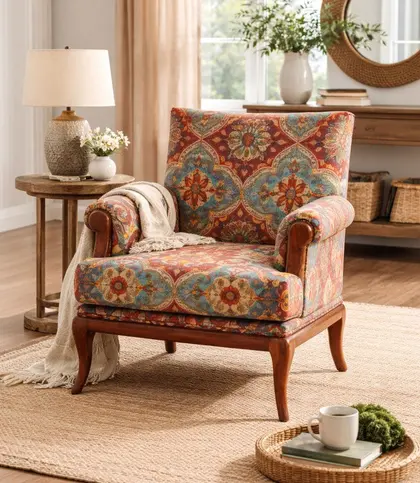
Compare these wood-and-upholstery options using the fit checks above. Confirm seat dimensions, cushion construction, and trial or return terms; appearance alone cannot establish comfort.

₹41,220
₹65,000
37%OFF
₹32,527
₹65,000
50%OFF

Final Verdict
- There is no single universally comfiest lounge chair. Comfort depends on how its dimensions, support, cushioning and upholstery work with your body and intended use.
- Choose the chair that remains comfortable after several minutes, allows easy posture changes and standing, and fits your room with usable clearance.
- If two chairs seem similar, favour the one that supports your normal activity without pressure, excessive sinking or forced positioning.
FAQs
What makes a lounge chair comfortable?
Comfort comes from a combination of body fit, seat depth and width, back angle, lower-back contact, armrest position, cushion behaviour and upholstery feel. The best balance depends on whether you mainly read, relax or sit for longer periods.
How do I choose the right lounge chair dimensions?
Check the usable seat depth and width, then sit fully back if you can. Your thighs should be supported without pressure behind the knees, and the backrest should meet your lower back without making you slump. Compare listed dimensions with your available room space as well.
Is firm or soft cushioning better for a lounge chair?
Neither is better for everyone. Firmer cushions can make posture changes and standing easier, while softer cushions may feel more enveloping. Test whether the cushion remains supportive, avoids pressure points and does not sink excessively after several minutes.
Which lounge chair upholstery is best for long sitting?
The best upholstery is the one that feels comfortable against your skin, suits your usual room temperature and has care needs you can manage. Fabric, leather and exposed wood or metal contact surfaces all feel different, so review the material details and test them where possible.
How should I test a lounge chair before buying?
Sit in it for several minutes in your usual posture. Check lower-back contact, thigh support, shoulder relaxation, arm placement and head support if relevant. Shift position, reach for a book or device, and stand up to see whether the cushion and chair shape remain comfortable.
What room measurements should I check before buying a lounge chair?
Measure the chair’s full planned footprint, including depth, and leave clearance to approach, sit, stand and walk around it. Also measure doorways, lifts, stairways and passages for delivery, plus any extra space needed behind or beside the chair.