


Best Stainless Steel Pressure Cooker: A Practical Buying Guide
Quick Answer
The best stainless steel pressure cooker is the one that fits your usual meal quantity, cooktop, handling preference, and maintenance needs. Choose capacity first, then verify the stated steel and base construction, induction compatibility if needed, lid and pressure-release features, handle comfort, replacement-part access, and warranty terms.
Definitions
Usable capacity
The practical quantity a pressure cooker can hold while leaving the headspace required by its manufacturer. It is not the same as filling the vessel to the rim.
Stainless steel grade
The specification identifying the stainless steel alloy used in the cooker or cooking surface. A stated grade helps compare construction, but grade alone does not describe the whole cooker.
Encapsulated or bonded base
A layered base that combines stainless steel with a heat-conductive metal layer to support more even heat distribution and may support induction use.
Inner-lid pressure cooker
A design in which the lid fits inside the cooker rim and locks from within the vessel.
Outer-lid pressure cooker
A design in which the lid sits over the cooker rim and locks externally.
How to Choose the Best Stainless Steel Pressure Cooker
There is no single best stainless steel pressure cooker for every kitchen. The right choice depends on how much you cook at once, the cooktop you use, the construction you are comfortable with, and how easily you can handle, clean, and maintain the cooker.
Use product listings as comparison points rather than universal winners. Start with usable capacity, then assess the base, stated materials, lid and safety design, handle comfort, spare-part availability, and warranty details. The checklist at the end can help you make a final comparison before checkout.
- Match the cooker to usual portions, not occasional maximum quantities.
- Confirm cooktop compatibility from the manufacturer’s specifications.
- Choose a design you can safely lift, inspect, clean, and maintain.
Match Capacity to Household Size and Cooking Habits
Capacity is the most useful starting point because it affects portion size, storage, stovetop footprint, and the weight you will manage when the cooker is full. Always leave the headspace specified by the manufacturer, so treat listed volume as nominal capacity rather than fill-to-the-rim capacity.
For one or two people, limited-quantity daily cooking, or smaller kitchens, a compact listed capacity can be a sensible reference. For everyday household cooking, listed capacities such as 2500 mL, 3000 mL, and 3500 mL offer a middle ground between quantity and footprint. Larger listed capacities, such as 5000 mL and 5500 mL, may suit bigger households, guests, or batch cooking when you have space to store and lift them.
Before selecting a larger cooker, consider whether its base will sit comfortably on your usual burner or induction zone and whether you will be comfortable moving it when filled. A cooker that is oversized for daily use can be less convenient even if it is useful for occasional larger meals.
- Compact capacity: practical for small portions and limited storage.
- Medium capacity: often a balanced option for routine household meals.
- Large capacity: useful when batch cooking or serving more people regularly.
- Check the manufacturer’s stated fill limits for different foods and preparations.
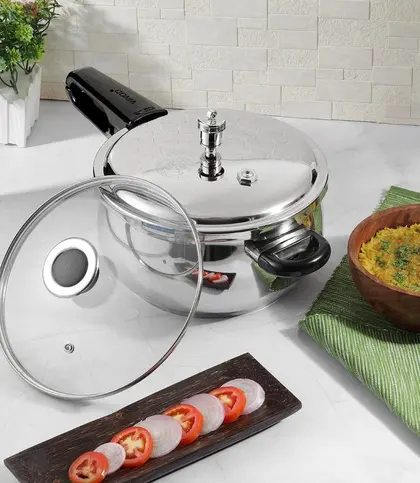
₹1,997
₹2,910
31%OFF
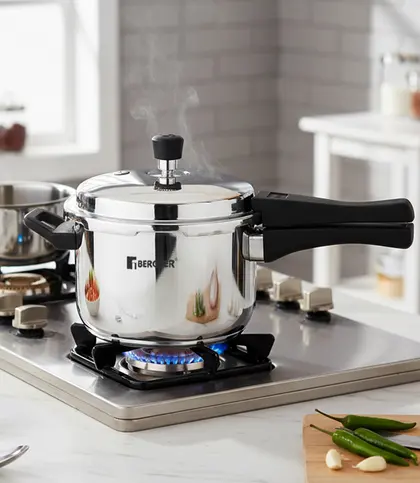
Sold Out
₹1,199
₹2,335
49%OFF
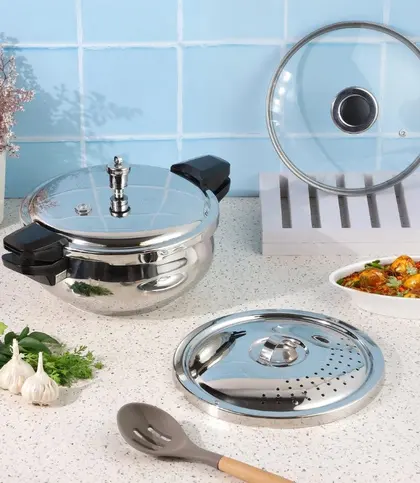
₹2,889
₹4,230
32%OFF
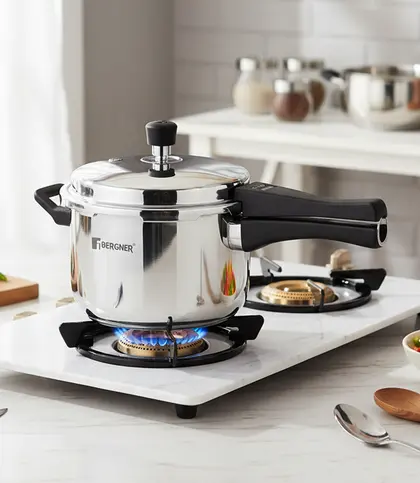
Sold Out
₹1,899
₹2,895
34%OFF
₹3,272
₹4,780
32%OFF
Check Stainless Steel Grade and Base Construction
Look for a clearly stated stainless steel specification rather than assuming every visible part uses the same material. Product descriptions may refer separately to the vessel, lid, base, handles, and fittings, so review what the specification actually covers.
Base construction matters because it influences stability on the cooktop and how heat travels through the bottom of the vessel. A layered, bonded, or encapsulated base can help distribute heat more evenly than a thin single-layer base. It is still wise to look for a flat, stable base and secure overall construction rather than relying on a material label alone.
Check the manufacturer’s care instructions alongside the construction details. They can clarify suitable cooktops, cleaning expectations, and any usage limits relevant to the model.
- Seek clearly described materials for the vessel and base.
- Prefer a flat base that sits stably on your cooktop.
- Treat steel grade as one comparison point, not a guarantee of cooking results.
Confirm Induction Compatibility and Even Heating
If you use induction, look for explicit induction compatibility in the product specification or manufacturer instructions. A stainless steel body by itself does not confirm that a pressure cooker will work on an induction cooktop; the base material and its construction are important.
Also compare the base diameter with your usual induction zone. A flat base that makes good contact with the cooking surface is generally more practical than one that is warped or poorly matched to the zone size. Induction-ready construction may also be suitable for other cooktops, but compatibility should still be checked for your own kitchen.
- Verify induction compatibility explicitly; do not assume it from the body material.
- Check that the base is flat and appropriate for your cooking zone.
- Review the manufacturer’s cooktop and care guidance before purchase.
Compare Safety Mechanisms, Lid Types, and Handles
Safety features deserve careful attention. Check for a secure locking system, a pressure indicator or regulator, a designated pressure-release pathway, and a safety valve or backup release system. The gasket should be designed for inspection and replacement according to the manufacturer’s instructions.
Inner-lid and outer-lid models are different formats rather than automatic safety rankings. Compare them for how the lid fits, the clearance needed to open it, access for cleaning, and which handling style feels more comfortable in your kitchen.
Examine the handles as closely as the lid. Look for firmly attached, heat-resistant handles with a comfortable grip and enough clearance from the hot cooker body. Consider the cooker’s empty weight as well as how it is likely to feel when filled.
- Review locking, pressure indication, release, and backup safety provisions.
- Choose a lid style based on fit, cleaning access, and handling preference.
- Make sure the handles feel stable and manageable for your usual cooking quantity.
- Follow the manufacturer’s operating, inspection, and replacement instructions.
Evaluate Cleaning, Replacement Parts, Warranty, and Budget
A pressure cooker is easier to live with when its lid, gasket, valve, and other removable components can be inspected and cleaned as directed. Before buying, check the available instructions so you understand how accessible these parts are.
Replacement support can affect long-term practicality. Find out whether compatible gaskets, valves, handles, and other wear parts are available through the brand or seller. Check warranty duration, coverage, exclusions, and service channels for the exact model rather than assuming these details from its appearance or brand.
Set a budget after you have confirmed capacity, compatibility, and essential safety features. A higher or lower asking price does not by itself establish construction quality, service support, or suitability for your kitchen.
- Confirm that key parts can be accessed for routine inspection.
- Check replacement-part availability before committing to a model.
- Read warranty coverage and exclusions for the exact cooker.
- Compare total ownership considerations, not only the initial purchase amount.
Stainless Steel vs Aluminium and Hard-Anodized Pressure Cookers
Stainless steel is a practical option for readers who prefer a durable-feeling body, a neutral-looking finish, and broad cooktop compatibility when the base supports it. The exact construction and cooktop specification remain more important than the material name alone.
Aluminium models may appeal if lower weight or a lower initial outlay is a priority. Assess their thickness, base design, lid fit, and replacement support with the same care you would apply to a stainless steel model.
Hard-anodized cookers use treated aluminium construction and may suit readers who prefer that finish and weight profile. Verify cooktop compatibility and follow the model-specific care guidance. No material is automatically the best choice for every household.
- Choose stainless steel for the construction and compatibility that suit your needs.
- Compare aluminium and hard-anodized options on design, handling, and support.
- Avoid treating any material as universally safer, healthier, or longer-lasting.
Final Buying Checklist
Choose in this order: capacity, intended cooktop, clearly documented stainless steel and base construction, safety and lid design, manageable handles and weight, cleaning and replacement-part support, warranty terms, and then budget. This keeps essential fit and safety considerations ahead of cosmetic preferences.
A compact cooker can suit limited portions and storage, a medium size can be a balanced everyday choice, and a larger vessel can make sense for frequent bigger meals. Use the listed stainless steel examples as capacity references only, then verify the exact specifications of any model you are considering.
- Capacity fits usual portions, household size, and batch-cooking needs.
- Stainless steel specification and base construction are clearly described.
- The cooker is explicitly compatible with your intended cooktop, including induction where needed.
- The locking method, pressure-release system, gasket, and indicators meet your comfort level.
- Handles are stable, heat-resistant, and manageable when the cooker is filled.
- Cleaning access and replacement parts are practical.
- Warranty, service support, and budget are acceptable.
Compare pressure cookers
Filter your choice by the listed body material, capacity, lid system, safety features, and hob compatibility. Confirm that the specific model is stainless steel if that is your requirement.

Final Verdict
- The best stainless steel pressure cooker is not necessarily the largest or most expensive one; it is the model that fits your regular cooking quantity and kitchen setup.
- Prioritise a verified cooktop-compatible base, clearly described construction, dependable pressure-management features, and a lid and handle design you can use comfortably.
- Before buying, confirm cleaning access, replacement-part availability, and warranty terms for the exact model.
FAQs
What capacity pressure cooker is best for a family of four?
A medium or large listed capacity may suit a family of four, depending on portion sizes, how often you batch cook, and the manufacturer’s required headspace. Compare your usual meal quantity with the model’s stated usable capacity instead of choosing by household size alone.
How do inner-lid and outer-lid pressure cookers differ?
An inner-lid design fits and locks within the cooker rim, while an outer-lid design sits over the rim and locks externally. Compare opening clearance, cleaning access, fit, and handling preference rather than assuming one format is universally better.
Which pressure cooker base is best for induction cooktops?
Choose a cooker whose manufacturer explicitly states induction compatibility. Look for a flat, stable base that is suitable for your induction zone; a stainless steel body alone does not establish induction compatibility.
What safety features should I check before buying a pressure cooker?
Check for a secure locking mechanism, pressure indicator or regulator, defined pressure-release pathway, safety valve or backup release, and an inspectable, replaceable gasket. Read and follow the manufacturer’s operating guidance.
Is a stainless steel pressure cooker better than an aluminium one?
Neither is automatically better for every home. Stainless steel may suit buyers who value its finish and potentially broad cooktop compatibility with the right base, while aluminium may suit those prioritising lower weight. Compare construction, cooktop fit, handling, and support for the specific model.
How do I choose a pressure cooker that is easy to clean?
Review whether the lid, gasket, valve, and removable components can be accessed for inspection and cleaning according to the instructions. Also check whether replacement parts are available if routine wear occurs.
What should I check about pressure cooker handles and replacement parts?
Look for firmly attached, heat-resistant handles with a secure grip and adequate clearance from the hot body. Confirm the availability of model-compatible gaskets, valves, and handles before purchase.
Does a pressure cooker warranty matter when choosing a model?
Yes. Review the exact warranty duration, what it covers, exclusions, and how service is accessed. Warranty terms and spare-part support can be important when comparing otherwise similar cookers.