


Best Non Toxic Cookware: A Practical Material Guide
Quick Answer
The best non-toxic cookware is not one universally risk-free material. Choose cookware with clearly disclosed materials and coatings that fits your cooktop, usual cooking temperatures, utensils, care routine, and budget. Stainless steel and cast iron are durable, generally uncoated options, while ceramic-coated and conventional non-stick pans can suit easy-release cooking when their stated limits and care instructions are followed.
Definitions
Non-toxic cookware
A consumer label rather than a guarantee of zero exposure or universal safety. Assess it through disclosed materials, coatings, intended use, heat limits, condition, and care instructions.
Stainless steel cookware
Cookware made primarily from stainless steel, often with an aluminium or copper core or base to improve heat distribution. It is usually uncoated and durable.
Cast iron cookware
Heavy iron cookware that may be bare or enamelled. Bare cast iron needs seasoning and drying, while enamelled versions have a glass-like cooking surface with its own care limits.
Ceramic-coated cookware
Cookware with a ceramic-derived or ceramic-style easy-release coating over a metal body. Its composition, durability, and heat limits vary by manufacturer.
Conventional non-stick cookware
Metal cookware with a synthetic easy-release coating, described by the manufacturer through its coating technology and use limits. It should be used within stated temperatures and replaced when the coating deteriorates.
Material disclosure
Manufacturer information about the cookware body, base, core, handles, lid, and any surface treatment or coating.
What Is the Best Non-Toxic Cookware? Start With the Evidence
No single cookware material can be declared universally safest or risk-free for every kitchen. A more useful choice starts with what the pan is made of, whether it has a coating, how it will be used, and whether the manufacturer provides clear instructions.
The practical assessment includes cooking temperature, cooktop compatibility, utensil habits, cleaning methods, coating condition, durability, and the quality of the product documentation. A pan labelled “non-toxic” without these details gives less useful information than one with specific, accessible material and care disclosures.
Stainless steel and cast iron can appeal to shoppers seeking durable, generally uncoated cooking surfaces. Ceramic-coated and conventional non-stick pans can be convenient for delicate foods and easy release, but their stated heat limits, condition, and care requirements matter.
- Prioritise specific material and coating information over broad marketing language.
- Match the cookware to the foods and cooking techniques you use most.
- Treat condition and care as part of the purchase decision, not an afterthought.
What “Non-Toxic Cookware” Can and Cannot Establish
“Non-toxic” is a broad consumer term, not a complete material specification. It does not replace information about the cookware body, cooking surface, coating, temperature limits, or instructions for normal use.
Cookware suitability changes with how it is used and maintained. A pan intended for lower-to-moderate heat and gentle utensils should not be judged by the same expectations as a heavy, uncoated pan made for searing. Wear, overheating, abrasive cleaning, and poor storage can also affect performance.
This guide is a practical buying framework, not medical or toxicology advice. The aim is to help you compare documented products and choose a material that fits your own kitchen.
- Be cautious with claims such as “chemical-free,” “healthy,” “natural,” or “toxin-free” when they are not accompanied by material details.
- Look for the exact body material and a description of every cooking-surface treatment.
- Read use and care guidance before deciding whether a pan suits your routine.
Stainless Steel, Cast Iron, Ceramic-Coated, or Conventional Non-Stick?
Stainless steel is generally uncoated, durable, and versatile for sautéing, simmering, browning, and many everyday meals. It may need a little technique, adequate preheating, or cooking fat to reduce sticking. Check the steel grade where stated, layered base or core construction, handle design, and induction compatibility.
Cast iron retains heat well and is useful for high-heat cooking. Bare cast iron needs seasoning and careful drying, while enamelled cast iron has different care instructions. It is usually heavier and slower to heat than thinner pans, so a stable base and cooktop suitability are especially important.
Ceramic-coated cookware is often chosen for convenient release and easy cleaning. Coating longevity varies by product and can decline with excessive heat, abrasive cleaning, metal utensils, or rough stacking. Confirm what the manufacturer means by “ceramic,” along with the stated heat limit and care guidance.
Conventional non-stick cookware can be practical for eggs, fish, pancakes, and other delicate foods, particularly when using less cooking fat. It commonly calls for lower-to-moderate heat and gentler utensils. Review the coating disclosure, maximum temperature, oven guidance, and replacement instructions for the specific pan.
- Durability: stainless steel and sound cast iron commonly suit intensive, long-term use; coated surfaces require more protective handling.
- Food release: ceramic-coated and conventional non-stick surfaces may be more convenient for delicate foods; stainless steel and cast iron reward technique and appropriate fat.
- Heat tolerance: rely on the manufacturer’s stated limit, especially for coated cookware, lids, and handles.
- Acidic foods: check product guidance, particularly for bare cast iron and any surface that is worn or damaged.
- Induction: do not assume compatibility from appearance; confirm a magnetic, flat base and the manufacturer’s approval.
- Budget: compare construction, warranty information, useful pieces, and expected care needs rather than relying on a universal material ranking.
How to Check Material, Coating, and Manufacturer Disclosures
Start with the full construction description. Look for the body material, base or core, interior and exterior surfaces, handle and lid materials, and whether any parts are detachable. This is more informative than a front-of-box claim alone.
Terms such as “stone,” “granite,” “natural,” and “mineral” may describe an appearance or marketing concept rather than fully explain a cooking surface. If a pan is coated, look for a direct explanation of the coating type and the manufacturer’s use limits.
Good documentation should state stovetop and oven suitability, maximum temperatures, and any changed limits when a lid is fitted. It should also explain compatible cooktops, preheating, oil use, suitable utensils, dishwasher use, stacking, cleaning, and thermal-shock precautions.
- Prefer manufacturer product pages, care manuals, warranty terms, and model-specific information over unsupported marketplace claims.
- Confirm compatibility with induction, gas, electric, and glass cooktops rather than inferring it from the pan’s look.
- Check whether oven, grill, or broiler use is permitted and whether handles or lids have lower limits.
- Treat third-party testing or certification claims as useful only when the certifier, scope, and relevant material or coating are clearly identified.
- Keep model details and care instructions so you can refer to them as the cookware ages.
Match Cookware to Cooktops, Temperatures, Utensils, and Care
For induction, confirm that the cookware has a magnetic, flat base and is approved by its manufacturer for induction use. Cast iron can work on induction, but moving a heavy pan roughly may scratch a glass cooktop. Lift rather than drag it, and make sure the base is stable.
For gas and electric hobs, look for a base that sits flat and distributes heat in a way that suits your cooking. On gas, keep handles clear of direct flame and use a pan size that does not invite excessive heat around the handle or exterior coating.
Choose cookware built for your usual temperature range. For high-heat searing, use a pan specifically designed for that purpose and do not exceed a coated pan’s stated limit. For delicate foods, an easy-release surface may be more convenient, but avoid overheating an empty pan and use the recommended utensils.
Care tolerance is a real deciding factor. Stainless steel may require more attention to heat and sticking; bare cast iron needs seasoning and drying; coated cookware generally benefits from gentler utensils, cleaning, and storage. Buy only the formats and sizes you will actually use.
- Choose high-heat cookware for searing only when its stated limits support that task.
- Check guidance before using bare cast iron for acidic or long-simmered dishes.
- Use cookware-safe utensils as specified by the manufacturer.
- Consider weight, storage space, and whether a single pan, a small set, or a larger set fits your household.
- Avoid buying extra pieces solely for a material label if they do not suit your usual meals.
When Should Scratched, Chipped, Warped, or Deteriorating Cookware Be Replaced?
Inspect cookware regularly for changes that affect performance, cleaning, or stable handling. The right response depends on the material and the severity of the damage; a cosmetic mark is not the same as a compromised cooking surface or loose handle.
Replace coated cookware when its surface is peeling, flaking, blistered, severely scratched, or no longer functioning as intended, particularly if the manufacturer advises replacement. Do not scrape, sand, or otherwise modify a coating to extend its use unless the manufacturer specifically provides that instruction.
Replace chipped enamel or ceramic-coated cookware when damage exposes the underlying body, expands, creates sharp edges, or makes the pan difficult to clean. Replace any pan that is cracked, badly warped, loose-handled, unstable on the cooktop, or no longer sits evenly on an induction or glass surface.
For stainless steel, light discolouration and ordinary cosmetic marks are different from deep pitting, cracks, structural distortion, or loose components. Surface rust on sound bare cast iron can often be addressed through appropriate care, but cracked, severely distorted, or structurally unsafe cast iron should be replaced.
- Follow the manufacturer’s condition and replacement guidance where available.
- Check handles, rivets, lids, and knobs as well as the cooking surface.
- Do not use a warped pan that rocks or makes poor contact with the cooktop.
- Distinguish normal seasoning changes on bare cast iron from cracking or structural damage.
A Practical Best Non-Toxic Cookware Checklist
The strongest choice is usually the cookware that answers your own kitchen questions clearly. Use this checklist to narrow the options before you buy, rather than searching for a single universal “safest” label.
- What foods and techniques will I use most: sautéing, searing, simmering, acidic dishes, or delicate foods?
- Do I need high-heat performance, easy release, heat retention, or low-maintenance cleaning?
- Is it compatible with my cooktop and oven setup?
- What are the exact body, base, interior, exterior, handle, and lid materials?
- If it is coated, what is the coating type, heat limit, utensil guidance, and replacement advice?
- Can I access complete care instructions, warranty terms, and manufacturer contact information?
- Will the weight, size, storage requirements, and price suit my kitchen?
- Is the product likely to remain suitable under my routine, and will I inspect it over time?
- Choose the material that best fits these answers rather than relying on a universal safety claim.
Compare cookware by disclosed material and coating
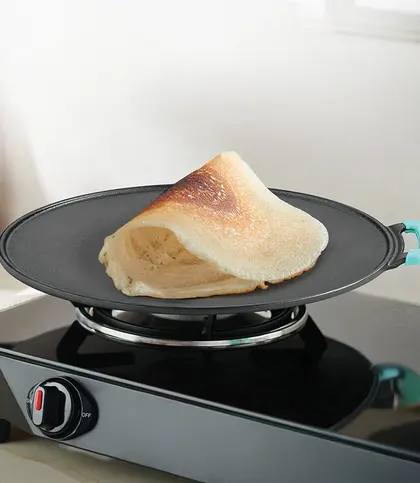
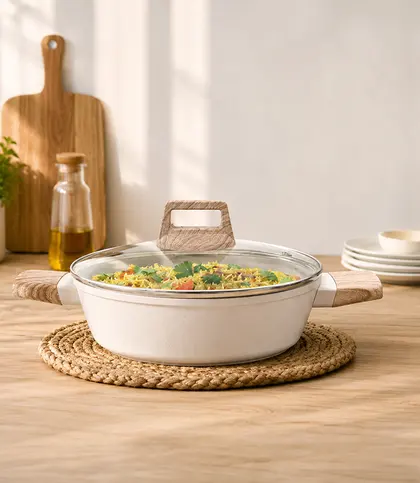
No product card can prove that cookware is universally ‘non-toxic.’ These examples are included only because their catalog details disclose materially different constructions: uncoated cast iron, an uncoated triply frying pan, and a ceramic-coated aluminium kadhai.
Read the current manufacturer disclosures and care instructions before buying. Confirm coating composition, cooktop and oven compatibility, heat limits, utensil guidance, weight, handles, lids, warranty, and replacement signs; stop using any pan that is badly warped, chipped, cracked, or otherwise deteriorated.
₹1,369
₹1,870
27%OFF

₹1,529
₹1,990
23%OFF
 FastDelivery
₹1,749
₹2,999
42%OFF
Final Verdict
- There is no universally risk-free answer to the best non-toxic cookware question. The most practical choice is a well-documented pan that matches your cooking style, cooktop, temperature needs, maintenance tolerance, and utensil habits.
- Choose stainless steel or sound cast iron if you value durable, generally uncoated cooking surfaces and are comfortable with their cooking or maintenance requirements. Choose ceramic-coated or conventional non-stick cookware if easy release is the priority, provided the coating details, heat limits, and care instructions are clear and followed.
- Whichever material you choose, check its condition regularly. Clear documentation, correct use, and timely replacement of deteriorating cookware are more useful decision tools than vague “safest” claims.
FAQs
What does non-toxic cookware mean?
It is a broad consumer label, not a complete guarantee about a pan. Assess cookware through its disclosed body and coating materials, intended use, heat limits, condition, and care instructions rather than the label alone.
Which cookware material is safest for everyday cooking?
No one material is universally safest for every household. Stainless steel, cast iron, ceramic-coated, and conventional non-stick cookware each involve different trade-offs in heat use, food release, maintenance, and documentation. Choose the option that suits your routine and is clearly specified by its manufacturer.
Is stainless steel better than non-stick cookware?
Neither is automatically better. Stainless steel is generally uncoated and durable, but it can require more technique to prevent sticking. Non-stick cookware can be easier for delicate foods and low-fat cooking, but it needs adherence to its stated heat, utensil, and care guidance.
Is ceramic-coated cookware safe to use?
Ceramic-coated cookware should be assessed by the specific product’s material disclosure, stated temperature limits, and care instructions. A ceramic label alone does not explain the full coating composition or guarantee durability, so avoid overheating and abrasive treatment if the manufacturer advises against them.
What cookware is best for induction cooktops?
Choose cookware with a flat, magnetic base that the manufacturer specifically identifies as induction-compatible. Stainless steel and cast iron may work when built with an appropriate base, while not every stainless steel or coated pan will be induction-ready.
How do I check cookware material and coating disclosures?
Read the manufacturer’s full specification and care manual. Look for the body, base or core, interior and exterior coatings, handle and lid materials, cooktop compatibility, oven limit, utensil guidance, cleaning instructions, and warranty or replacement information.
When should I replace scratched or chipped cookware?
Replace coated cookware when it is peeling, flaking, blistered, severely scratched, or no longer works as intended, especially when the manufacturer recommends it. Replace chipped enamel or ceramic-coated cookware if the underlying body is exposed, damage spreads, sharp edges form, or cleaning and stability are affected.
How should I choose cookware without relying on vague safety claims?
Start with your usual foods, cooking temperatures, cooktop, and care habits. Then compare complete material and coating disclosures, heat limits, compatible utensils, cleaning guidance, construction, and current condition. Select the pan that fits those practical requirements.