


Best Non Stick Induction Cookware: A Practical Buying Guide
Quick Answer
The best non-stick induction cookware is the smallest, most useful mix of pieces that is explicitly confirmed for induction use. Start by verifying compatibility, then choose sizes and shapes for your regular meals, assess the flatness and stability of the base, and review care instructions, handles, lids and warranty terms before comparing sets with individual pieces.
Definitions
Induction-compatible cookware
Cookware with a base designed to interact with an induction hob, usually identified by an explicit induction-safe specification, induction symbol or manufacturer guidance.
Induction base
The layer or plate at the bottom of cookware that enables induction operation and helps transfer heat from the hob into the vessel.
Non-stick coating
A surface coating intended to reduce food sticking and simplify cooking and cleaning; its care, heat limits and utensil guidance vary by product.
Cookware set
A bundled group of cookware pieces sold together, sometimes including lids or accessories; its value depends on whether the included pieces match the buyer’s needs.
Best Non-Stick Induction Cookware: A Practical Buying Guide
There is no single best non-stick induction cookware set for every kitchen. The right choice depends on whether it genuinely works on your induction hob, the meals you cook, the portions you make, the construction you can manage daily and the after-sales support you consider worthwhile.
Use this as a buying framework rather than a brand ranking. Follow a simple order: confirm induction compatibility first, select the pieces and sizes you will use, inspect construction and practical features, then compare warranty terms and overall value.
Material alone is not enough. Aluminium cookware, for example, may need a separate induction-ready base to work on an induction hob. Never assume that a pan is suitable simply because it is non-stick, aluminium or metallic in appearance.
- Confirm induction use from the product specification.
- Buy for regular cooking tasks, not the largest item count.
- Check base, handles, lids and care requirements before comparing value.
- Read warranty conditions alongside the initial purchase decision.
What Makes Non-Stick Cookware Induction-Compatible?
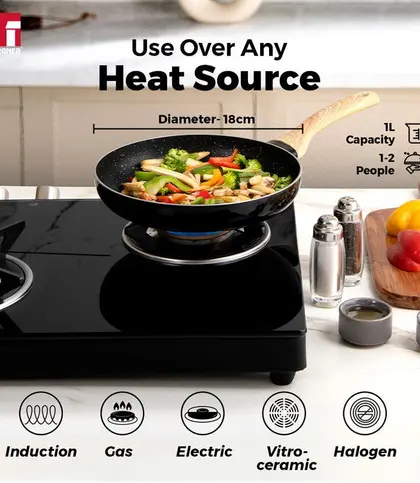
Look for an explicit induction-safe statement, induction symbol or manufacturer specification on the product page, packaging or cookware base. This is more reliable than trying to identify compatibility from colour, weight or material wording alone.
Non-stick describes the cooking surface, not the heating method. Likewise, an aluminium body does not by itself establish induction compatibility. If the listing does not clearly confirm induction use, treat it as unconfirmed and check with the manufacturer or seller before buying.
For dependable use, the cookware needs a suitable base that sits in stable contact with the hob. The base diameter and shape should also suit your induction zone; a very small or uneven base may not perform consistently on every hob.
- Seek a clear induction-safe claim or symbol.
- Check the manufacturer specification rather than relying on appearance.
- Match the pan base to the hob’s cooking zone where possible.
- Avoid treating vague wording as proof of compatibility.
₹949
₹1,145
17%OFF
How to Verify the Induction Base and Assess Construction
Start with the underside. A flat, stable base is important for contact with an induction hob. Avoid cookware that appears visibly warped, rocks on a level surface or has a base that seems disproportionately small for the vessel.
Next, consider weight and balance. A pan should feel stable while stirring, yet practical for lifting, washing and storing. The ideal feel varies by household: someone who cooks larger batches may welcome more heft, while a compact daily pan should still be easy to handle.
When details are provided, review the base construction, wall thickness and heat-distribution design. These factors can influence responsiveness and how heat travels through the vessel, but results also depend on your hob, heat setting, food quantity and cooking method.
Inspect the finish around the rim, handle joints or rivets, and lid fit. Clear product information and careful finishing are useful signs to compare, especially when two options have similar sizes and functions.
- Check that the base is flat and stable.
- Choose a weight you can comfortably lift and clean.
- Review stated construction details where available.
- Examine handle attachment, rim finish and lid fit.
Choose Pieces and Sizes for Everyday Cooking Tasks
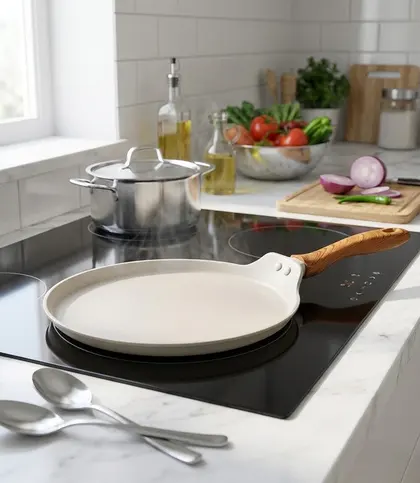
A compact household can often begin with three useful pieces: a frying pan, a small or medium saucepan, and one kadai or wok for sautéing and gravies. Add a tawa if flatbreads, cheela or dosa-style dishes are frequent meals rather than occasional cooking.
A frying pan is useful for eggs, quick sautéing and smaller portions. A saucepan handles boiling, reheating and small gravies. A kadai or wok offers more room for vegetables, stir-fries and curries. A tawa gives a broad, low surface for flatbreads and similar preparations.
Do not rely on labels such as small, medium and large. Compare the stated diameter, capacity, base size and whether a lid is included. Larger cookware can help with family portions, but it also needs enough hob space, cupboard room and washing capacity.
Using the smallest practical piece for a task can keep storage manageable and prevent a collection of overlapping shapes. Build outward only when a repeated cooking need is not covered by what you already own.
- Choose a frying pan for quick, smaller cooking tasks.
- Choose a saucepan for boiling, reheating and small quantities.
- Choose a kadai or wok for gravies, sautéing and larger-volume dishes.
- Add a tawa when flatbreads or dosa-style recipes are regular meals.
- Compare diameter, capacity and base size before buying.
₹1,549
₹2,149
28%OFF
Cookware Sets vs Individual Pieces: Which Is Better Value?
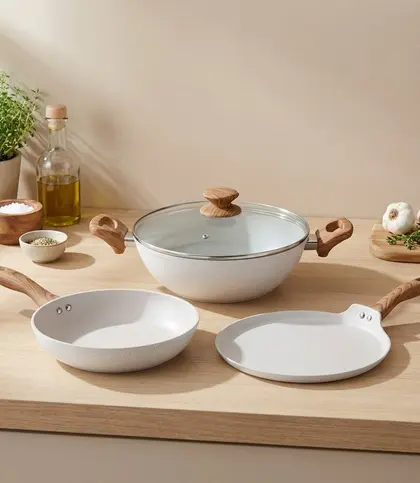
A cookware set can be practical for a new kitchen or a household that needs several coordinated pieces at once. It can simplify shopping, but its value depends on whether the included shapes, capacities and lids match what you will genuinely use.
Individual purchases often make more sense when you already own functional cookware or have specific habits. For example, a household that cooks mostly flatbreads and one-pot meals may not need several frying pans simply because they appear in a bundle.
Compare the actual piece mix, stated sizes, lid count and induction specification for every item in a set. Count only the pieces you expect to use regularly, then consider storage needs, duplicate lids and accessories that may remain unused.
Choose a set when it gives you useful breadth with compatible pieces. Choose individual cookware when precision, fewer duplicates and a tailored collection matter more.
- A set may suit a new or sparsely equipped kitchen.
- Individual pieces reduce the risk of duplicates and unused shapes.
- Verify induction compatibility for every piece, not only the set name.
- Factor in lids, capacities and storage before deciding.
₹4,249
₹6,059
30%OFF
Check Coating Care, Handles, Lids and Oven Use
Read the care instructions for the specific cookware before purchasing. Check the recommended utensils, heat settings, cleaning approach and any restrictions on abrasive pads, cleaners, dishwasher use, preheating or stacking. Non-stick products can have different requirements, even when they look similar.
Follow the stated heat guidance, which may include low-to-medium heat recommendations and temperature limits. These instructions are part of practical ownership: a piece that needs care routines your household is unlikely to follow may not be the most suitable choice.
Handles should feel secure and comfortable in your hand, with a shape that works at the hob, sink and storage shelf. Check whether the handle attachment is clearly described and whether the overall vessel remains manageable when full.
A well-fitting lid can be useful for simmering and reducing splatter. Where specified, consider viewing features or steam-release details, but do not assume these are present. If oven use matters, confirm the stated limit separately for the cookware body, handle and lid; oven-safe wording may apply only under particular component and temperature conditions.
- Check utensil, heat and cleaning instructions.
- Confirm dishwasher, stacking and abrasive-cleaner guidance.
- Choose comfortable, secure handles.
- Assess lid fit and stated features.
- Verify oven limits separately for pan, handle and lid.
Durability, Warranty and Replacement Details to Check
A warranty can help clarify what the seller or manufacturer stands behind, but the details matter more than the headline duration. Read whether it covers manufacturing defects, handle attachments, lids, base issues or coating-related concerns, and note any different terms for each component.
Check the claim process, proof-of-purchase requirements and exclusions. Normal wear, scratches, discoloration, incorrect heating, unsuitable utensils and cleaning methods are commonly treated differently from manufacturing faults, so read the applicable terms before relying on coverage.
Coating longevity cannot be reduced to a fixed number of years. It depends on cooking frequency, heat, utensils, washing habits, storage and the product’s own care guidance. Choose an option with realistic maintenance needs for your kitchen.
If replaceable lids, handles or other components are important to you, confirm their availability from the relevant seller or manufacturer. Keep the invoice, product page and care instructions for future warranty or replacement queries.
- Read exactly what the warranty covers and excludes.
- Check invoice, registration and claim requirements.
- Treat coating life as care- and usage-dependent.
- Confirm replacement-part availability only when it is stated.
A Practical Checklist for Choosing Within Budget
Compare options in a consistent order so an attractive bundle or extra accessory does not distract from the essentials. Verified induction compatibility and a useful, stable construction should take priority over piece count.
A lower-cost option can be practical if it meets your real cooking needs and has clear specifications. Conversely, extra pieces do not add value when they are unsuitable for your hob, awkward to store or unlikely to be used.
- Compatibility: Is induction use explicitly confirmed?
- Piece mix: Does it cover the meals and portions you actually prepare?
- Size: Are the diameter, capacity and base suitable for your hob and storage?
- Construction: Is the base flat and stable, with clear construction information?
- Care: Are utensil, heat, cleaning and stacking requirements realistic?
- Features: Are handles comfortable, lids useful and oven-use limits clear?
- Value: Would a set add useful pieces, or would individual purchases reduce waste?
- After-sales: Are warranty exclusions, proof requirements and replacement details clear?
- Budget rule: Prioritise verified compatibility and useful construction before extras.
Final Takeaway: Buy for Compatibility and Use, Not Piece Count
Choose the smallest useful collection that covers your household’s regular meals. For some kitchens, that will mean a few individual pieces; for others, a thoughtfully matched set is the more convenient route.
Make an explicit induction specification your first filter. Then compare base stability, size, weight, care needs, handles, lids and warranty conditions. Specifications can differ significantly between products, so check the details for every piece you intend to use.
Reject cookware with unclear induction information, unsuitable sizes, impractical maintenance requirements or vague after-sales terms, even when a bundle appears generous. A focused, compatible collection is generally more useful than a larger one with unused pieces.
- Verify induction compatibility before all other comparisons.
- Match shapes and capacities to routine meals.
- Choose a set only when its entire mix is useful.
- Review care and warranty terms before purchase.
Compare induction cookware
Browse the induction range, then check the individual product's coating, base diameter, and hob compatibility. This range includes different materials; not every item is non-stick.

Final Verdict
- The best non-stick induction cookware is a verified induction-compatible collection sized for your everyday meals, not necessarily the largest set.
- Choose individual pieces when you need only a few task-specific items or already own useful cookware.
- Choose a set when its full piece mix, sizes, lids and induction specifications align with how your household cooks.
- Skip options with unclear induction claims, unsuitable dimensions, unrealistic care demands or poorly explained warranty terms.
FAQs
How can I tell if non-stick cookware works on induction?
Look for an explicit induction-safe statement, induction symbol or manufacturer specification. Do not assume that non-stick, aluminium or metal cookware will work on induction without confirmation.
What cookware pieces should a small household buy first?
A compact frying pan, a small or medium saucepan and a versatile kadai or wok cover many everyday tasks. Add a tawa when flatbreads or dosa-style cooking is a regular part of your routine.
Is a cookware set better value than individual pieces?
A set can be useful when you need several coordinated pieces and will use most of them. Individual pieces are often better when you already own some cookware or need specific shapes and capacities.
Does base construction affect induction cooking performance?
Yes. A flat, stable base helps maintain contact with the hob, while construction details can affect responsiveness and heat distribution. Actual results also vary with the hob, food quantity and cooking method.
What coating and utensil care should I check before buying?
Review the product’s stated guidance for utensils, heat settings, cleaning, dishwasher use, abrasive cleaners, preheating and stacking. Care requirements can differ between products.
Can non-stick induction cookware be used in the oven?
Only when the manufacturer states that it can. Check the temperature limit for the cookware body, handle and lid separately, as oven suitability may not apply to every component.
What handle and lid features matter in induction cookware?
Look for handles that feel secure, comfortable and manageable when the vessel is full. For lids, check fit and any stated viewing or steam-release features that are useful for your cooking style.
What warranty details should I check for cookware?
Check coverage, duration, exclusions, proof-of-purchase or registration requirements, and the claim process. If replacement lids or handles matter to you, confirm their availability before buying.