


Best Non Stick Frying Pan: How to Choose the Right One
Quick Answer
The best non-stick frying pan is not one universal model. Choose the smallest size that comfortably suits your usual portions, confirm compatibility with your cooktop, then compare construction, weight, coating-care guidance, handle comfort, depth, lid needs and warranty terms.
Definitions
Non-stick frying pan
A shallow cooking pan with a surface designed to reduce food sticking when used according to the maker’s care and temperature guidance.
Induction-compatible
A pan explicitly designed for induction cooktops, usually identified by the product listing or manufacturer rather than inferred from the pan’s appearance alone.
Cast aluminium
Aluminium formed through a casting process; listings may associate it with a more substantial pan body, but construction should still be judged from verified specifications such as base and wall thickness.
Ceramic-coated
A pan with a ceramic-based non-stick coating. Buyers should still follow the stated utensil, heat and cleaning instructions because coating care varies by product.
Best Non-Stick Frying Pan: Start With Your Cooking Routine
The best non-stick frying pan for your home depends on what and how much you cook, the cooktop you use, how comfortable the pan feels in hand and how much care you are willing to give it. A compact pan can be the sensible choice for eggs and breakfast portions, while a deeper or higher-capacity option may better suit larger everyday meals.
Make the decision in a useful order: start with size, confirm cooktop compatibility, then compare construction, coating guidance and practical details such as the handle, rim, depth and lid. Finally, read the warranty and care information. The product examples below illustrate different requirements rather than representing a universal ranking.
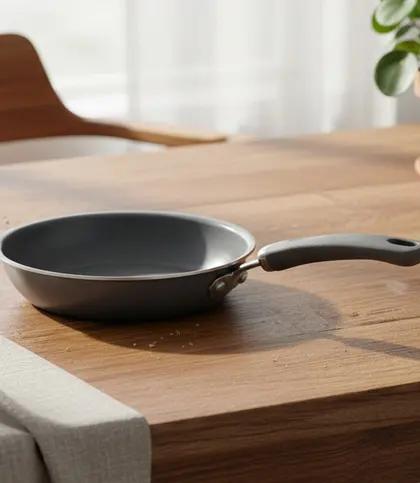
For example, the Meyer Ceramic Coated Frying Pan is an 8-inch, 1160 mL aluminium option for cooks seeking a compact ceramic-coated pan for smaller portions.
- Choose for your regular meals rather than an occasional large recipe.
- Check the product specifications before assuming a feature, care method or compatibility.
- Treat comfort in daily use and clear care instructions as part of the purchase decision.
₹1,415
₹2,025
30%OFF
1. Match Pan Size to Household Size and Dishes
Pan diameter and capacity both matter. A small frying pan is often practical for one or two servings, eggs, pancakes, sautéed vegetables and breakfast dishes. Check the stated measurements, because a pan that appears compact in a photograph may not provide the cooking surface you expect.
A medium pan is often a flexible everyday choice for a couple or a small family when you need room for more than a small breakfast portion. Larger pans give ingredients more space for shallow frying or bigger meals, but can be heavier to lift and need more cupboard space.
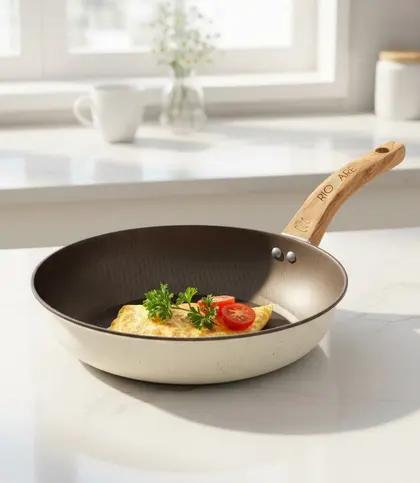
The Rioware StoneFlip Non-Stick Cast Aluminium Frying Pan has an 1800 mL capacity, making it a useful example of a higher-capacity choice for buyers whose meals need more room than a compact pan provides.
- Small: consider this for one or two servings, eggs, pancakes and quick sautés.
- Medium: consider this for regular meals where a little more cooking surface is helpful.
- Larger capacity: consider this for bigger portions and ingredients that benefit from room to spread.
- Measure your storage space as well as your burner area before choosing a large pan.
₹902
₹1,800
50%OFF
2. Check Gas and Induction Compatibility
Confirm cooktop compatibility before comparing other features. On a gas stove, check that the base will sit securely and that the pan and handle feel balanced enough to move comfortably. The pan should suit the size of the burner you use most often.
If you cook on induction, look for explicit induction-safe or induction-compatible wording in the listing or manufacturer information. Aluminium construction alone does not establish that a pan will work on an induction cooktop.
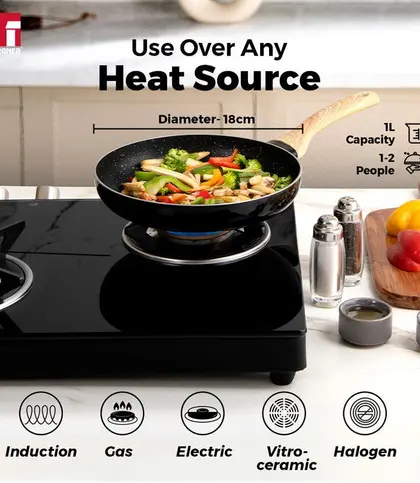
The Bergner Induction Safe Frying Pan With Lid is specifically identified as induction-safe. Its 7-inch, 1000 mL format also illustrates a compact option for buyers who need confirmed induction compatibility and sometimes cook with a lid.
- Gas users should check base stability and manageable balance.
- Induction users should rely on an explicit compatibility statement.
- Do not infer induction suitability from the pan’s material, colour or appearance.
₹949
₹1,145
17%OFF
3. Compare Base Material, Thickness, and Weight
Construction affects how a frying pan feels during everyday use. Aluminium is commonly chosen for relatively easy handling, while cast aluminium may feel more substantial. Neither description alone tells you everything about performance, so compare the verified specifications available for the individual pan.
Look for stated information on base and wall thickness, overall weight and the flatness of the base. A thicker or reinforced base may be relevant to stability and heat distribution, but it should not be taken as a promise of faster heating, perfectly even cooking or longer life without supporting product evidence.
Weight is a personal-use factor, not a quality score. Consider whether you can comfortably lift the pan when full, tilt it for pouring, move it while cooking, wash it and store it.
- Check the listed material rather than relying on photographs.
- Consider weight alongside the capacity you actually need.
- Look at handle balance as well as the pan’s total weight.
- Choose a size and build that fit your strength, storage and cooking habits.
4. Review Coating, Utensil, Temperature, and Cleaning Needs
Non-stick coatings need product-specific care. Before buying, identify the stated coating type and read the manufacturer’s instructions for utensils, heat settings, preheating and cleaning. These details can differ between pans, including pans that look similar.
Do not assume that every non-stick pan permits the same tools or cleaning methods. Wooden or silicone utensils may be suitable where permitted, but the pan’s own instructions should decide the matter. Avoid metal utensils, abrasive scrubbers and harsh cleaning methods unless the manufacturer clearly allows them.
Some makers may advise gentle hand washing, but their supplied care instructions take priority. Buying a pan whose care routine you can realistically follow is more useful than selecting one based on broad claims about coating life.
- Read the care guide before the first use.
- Check permitted utensils and any heat or preheating guidance.
- Use non-abrasive cleaning methods unless the manufacturer says otherwise.
- Do not rely on fixed lifespan claims for a non-stick surface.
5. Assess Handle, Rim, Depth, and Lid Design
A frying pan should feel secure from hob to sink. Check that the handle is firmly attached, comfortable to grip and balanced relative to the size of the pan. Also consider whether its length works in your kitchen and cupboard space.
Rim shape and side depth influence how you use the pan. A gently sloped rim can be helpful when pouring or sliding food out, while greater depth can offer more room for ingredients and may help contain splatter. These are practical trade-offs rather than guaranteed performance benefits.
A lid can be valuable for covered cooking, retaining moisture and limiting splatter. It also takes up storage room and may not be essential if you primarily make omelettes, pancakes or quick sautés. A single-handle pan can be especially convenient for compact cooking tasks, provided it remains comfortable and balanced in use.
- Hold or assess the handle with the pan’s likely full weight in mind.
- Choose depth according to the volume of food you cook.
- Consider a lid if you regularly cover food while it cooks.
- Check whether the lid and handle will fit your storage space.
6. Check Warranty, Replacement, and Durability Information
Value is more than the purchase price. Compare whether the pan’s size, cooktop suitability, construction and care requirements fit your needs, then read the available warranty information before buying.
Look for the warranty period, what it covers, exclusions, proof-of-purchase requirements and the process for making a claim. Coating wear, scratches, handles, lids and accidental damage may be treated differently, so do not assume all parts have identical coverage.
Where relevant, check whether replacement or spare-part information is available, particularly for a lid or handle. Clear care guidance and accessible support can be as useful as a feature list when choosing between similar pans.
- Read warranty exclusions, not only the headline period.
- Keep purchase records if the warranty requires them.
- Check how to contact the seller or manufacturer for a claim.
- Assess overall fit for your kitchen instead of using price as a proxy for quality.
7. Final Non-Stick Frying Pan Buyer Checklist
Use this checklist before making your final choice. It helps eliminate pans that do not fit your cooktop, regular meal size or preferred maintenance routine.
- My usual portions and dishes match the pan’s diameter and capacity.
- The pan is explicitly compatible with my gas or induction cooktop.
- The material, base construction, thickness and weight suit my handling and storage needs.
- I understand the permitted utensils, heat limits, preheating guidance and cleaning method.
- The handle, rim, depth and lid fit the way I cook.
- The warranty, exclusions, care instructions and replacement information are clear.
- I am choosing the pan for my own kitchen rather than assuming it is best for every home.
Which Type Should You Choose?
Choose a compact ceramic-coated option if small portions, breakfast dishes and a smaller footprint are your priorities. An 8-inch ceramic-coated pan is one example of this route.
Choose a higher-capacity cast-aluminium option if you regularly cook larger portions or want more room for shallow frying and do not mind a pan that may take up more space.
Choose a small pan with explicitly stated induction-safe construction and a lid if induction compatibility and occasional covered cooking are central to your routine. In every case, verify the current product specifications and care instructions before buying.
- For breakfast and compact storage: prioritise a smaller pan.
- For more capacity: prioritise a larger cooking area or stated volume.
- For induction: prioritise an explicit induction-compatible statement.
- For covered cooking: decide whether a lid is worth the extra storage space.
Compare frying pans
Use the range to compare diameter, material, coating, and hob compatibility. Check individual specifications: the collection includes both coated and uncoated pans.

Final Verdict
- Select the smallest non-stick frying pan that comfortably handles your usual portions and dishes.
- Confirm cooktop compatibility first, especially for induction, then choose material and weight according to the handling experience you prefer.
- Prioritise clear coating-care instructions and a handle, rim, depth and lid arrangement that suits your everyday cooking.
- Use warranty and replacement information to judge value, and treat individual products as examples for defined needs rather than universal winners.
FAQs
Which non-stick frying pan size is best for two people?
A medium pan is often useful for two people because it gives more room than a compact breakfast pan. However, choose by the portions and dishes you cook most often, and check the listed diameter and capacity before buying.
Are non-stick frying pans compatible with induction cooktops?
Some are, but not all. Look for an explicit induction-safe or induction-compatible statement in the product listing or manufacturer information. Do not assume an aluminium pan is induction-compatible.
Does pan weight affect cooking and handling?
Yes. Weight affects lifting, tilting, flipping, cleaning and storage. A heavier pan is not automatically better; the right weight is one you can comfortably handle when it is full.
What utensils can I use with a non-stick frying pan?
Follow the product’s care instructions. Many non-stick pans have guidance on permitted utensils, but these rules vary. Avoid metal utensils unless the manufacturer specifically permits them.
Should a non-stick frying pan have a lid?
A lid can be useful for covered cooking, retaining moisture and helping limit splatter. It is less essential for quick dishes such as omelettes or pancakes, and it requires extra storage space.
How should I clean a non-stick frying pan?
Follow the manufacturer’s cleaning instructions. In general, avoid abrasive scrubbers and harsh cleaning methods unless they are explicitly approved. Allow the pan to cool appropriately before washing and use gentle tools where advised.
What handle features should I check before buying?
Check that the handle is securely attached, comfortable to grip and balanced with the pan. Consider its length, how it feels when the pan is full and whether it fits your hob and storage space.
What warranty information matters for a non-stick frying pan?
Check the warranty period, coverage, exclusions, proof-of-purchase requirements and claims process. Pay particular attention to whether coating wear, scratches, lids, handles or accidental damage are excluded.