


Best Large Lunch Bag: How to Choose the Right Size
Quick Answer
The best large lunch bag is the smallest one that comfortably fits your usual meal containers, snacks, drink, utensils, and ice pack. Compare internal dimensions rather than exterior measurements, then check insulation, leak-resistant lining, carrying comfort, cleaning access, and where the bag will be stored.
Definitions
Usable capacity
The real space available for meals and accessories after accounting for insulation, seams, pockets, dividers, and the bag’s shape.
Internal dimensions
The measurable height, width, and depth inside the main compartment; these determine whether containers fit, especially when carried upright.
Insulation
The material layer designed to slow heat transfer between the bag’s contents and the surrounding environment.
Leak-resistant construction
Features such as a water-resistant lining, sealed or reinforced seams, and a secure closure that can help contain minor spills; it does not automatically mean leakproof.
Container compatibility
How well the bag accommodates your specific meal containers, snack boxes, bottles, and ice packs without forcing or excessive empty space.
Best Large Lunch Bag: Start With the Load You Actually Carry
A large lunch bag is a practical choice when a small tote cannot hold your complete daily meal routine comfortably. The best option is not automatically the biggest exterior bag or the one with the highest advertised capacity. What matters is the usable interior once insulation, seams, pockets, and the bag’s shape have taken up room.
Start by laying out what you normally pack: main meal containers, snacks, fruit, a drink, cutlery, napkins, and an ice pack if you use one. This gives you a more reliable sizing guide than shopping by labels such as large or extra-large alone.
More capacity brings trade-offs. A larger bag can become heavier when packed, take up more room in a refrigerator or locker, and be less convenient on a crowded commute. Choosing for your real load helps you avoid both cramped packing and unnecessary bulk.
- Plan around your complete packed meal, not one empty container.
- Treat exterior dimensions and stated capacity as a starting point, not proof of fit.
- Allow room for an ice pack and drink if they usually travel inside the main compartment.
1. Match Bag Capacity to Meals, Snacks, Drinks, and Utensils
A compact-large lunch bag can suit one substantial meal, a snack or two, and small daily essentials. A standard large format is often more suitable for a fuller work or school day, especially when you carry separate snack containers, fruit, and a drink. Extra-large formats are best reserved for regular meal prep, multiple meals, or shared family outings.
Avoid choosing the biggest bag simply for flexibility. Empty space can let containers shift, while an oversized bag may be awkward to carry and store. Instead, choose a format that leaves a little packing tolerance around your normal load without making every trip bulky.
Consider where your drink and ice pack will sit. If there is no external bottle pocket, both may occupy meaningful space in the insulated compartment. A structured bag makes the layout more predictable, while a soft-sided bag can be more forgiving around irregularly shaped items.
- Compact-large: one filling meal with a few extras.
- Large: a complete work or school meal with snacks and daily accessories.
- Extra-large: multiple meals, meal-prep portions, or shared food when that capacity is needed regularly.
- Choose structure for orderly stacking and soft sides for flexible packing.
2. Check Internal Dimensions and Upright Container Compatibility
Volume alone does not tell you whether your food will fit. Measure the tallest, widest, and deepest containers you use with their lids attached, then compare those measurements with the bag’s internal height, width, and depth. This is especially important if you carry a stacked meal or a tall container that should remain upright.
Also check the opening, not only the main compartment. A bag may technically have sufficient space but still be frustrating if a wide container cannot pass through the zippered opening easily. A flat base and enough vertical clearance are helpful when you want containers to stand securely.
Usable room is often reduced by insulation thickness, rounded corners, internal seams, dividers, and the path of a zipper. Whenever possible, assess the fit against your actual containers rather than relying on exterior measurements.
- Measure containers with lids on before shopping.
- Check height for upright containers and stacked meals.
- Look for a wide opening that allows easy loading and removal.
- Factor in internal seams, rounded corners, dividers, and insulation.
3. Compare Insulation, Lining, Leak Resistance, and Closures
Insulated fabric or padded walls can slow heat transfer during a commute, but performance depends on the starting temperature of the food, ambient conditions, packing method, and any ice packs used. Think of insulation as a useful part of your food-carrying routine rather than a fixed promise of temperature retention.
For everyday use, an easy-clean, water-resistant lining is especially valuable. It makes condensation, crumbs, and minor spills easier to manage. Inspect the base, seams, and closure area as well, since these details affect how well the bag can help contain a small leak.
Closure style changes both access and security. Zippers usually offer a contained, familiar closure; roll-top designs can adapt to varying loads; hook-and-loop closures are quick to use; and framed openings can make a bag easier to pack. Choose the format that suits how often you open the bag and how securely you need contents held in place.
- Choose insulated walls based on commute conditions and your packing routine.
- Prioritise a wipe-clean, water-resistant interior lining.
- Look for reinforced seams and a sturdy base to help with minor spills.
- Select a closure that balances access, security, and the shape of your load.
4. Assess Compartments, Bottle Pockets, Handles, and Shoulder Straps
Useful organisation prevents smaller items from getting crushed or lost at the bottom of a large compartment. Internal sections can help separate snacks, cutlery, napkins, or delicate fruit, but they should not reduce the main packing area so much that your regular containers no longer fit.
An external bottle pocket can keep a drink easy to reach and free up insulated interior space. It is most useful when you carry a bottle often and want to avoid it rolling against food containers. If you do not routinely use one, a bottle pocket may simply add bulk.
For carrying, reinforced handles are useful for short distances. A padded, adjustable shoulder strap is more comfortable when the bag is heavy or you walk, use public transport, or need your hands free. Check that strap attachment points appear secure and that the filled bag will remain balanced rather than tilting forward.
- Use compartments when they protect or separate items you carry often.
- Choose an external bottle pocket if a drink otherwise takes up main-compartment room.
- Look for reinforced handles for short carries.
- Consider a padded, adjustable shoulder strap for longer commutes or heavier loads.
- Skip extra pockets that do not serve your routine.
5. Evaluate Cleaning, Portability, Fridge Storage, and Packed Weight
A bag is easier to use every day when you can wipe the lining clean and reach into its corners without difficulty. A wide opening helps with both cleaning and packing. Consider the exterior too: water-resistant fabric is useful in changeable weather, while lighter colours and textured finishes may show marks differently over time.
Check the empty weight before choosing a heavily structured bag. Containers, drinks, and ice packs can quickly add weight, so a bag that feels substantial before packing may become uncomfortable to carry. Balance protective structure with the amount you realistically want to carry.
Finally, measure the places where the bag will live. Compare its dimensions with the available space in your refrigerator, office fridge, locker, cupboard, or under-desk area. Soft-sided bags may be easier to store when empty, while structured bags can better protect contents and retain their shape when full.
- Choose a lining that can be wiped and dried after use.
- Check whether the opening gives access to the corners.
- Consider empty weight alongside the weight of your usual packed load.
- Measure refrigerator, locker, cupboard, or office storage space.
- Balance soft-sided flexibility against structured support.
6. Practical Large Lunch Bag Selection Checklist
Use this checklist before making a final choice. It keeps the decision focused on fit and daily practicality rather than on exterior size alone.
- Capacity: Does the main compartment hold your planned meal, snacks, drink, utensils, and ice pack?
- Fit: Do your actual containers fit upright and pass through the opening without forcing?
- Construction: Are the insulation, easy-clean lining, and closure suitable for your commute?
- Leak control: Do the lining, seams, base, and closure appear designed to help contain minor spills?
- Organisation: Are compartments and bottle pockets genuinely useful for your packing routine?
- Comfort: Can the handles or shoulder strap support the packed weight comfortably?
- Storage: Will the bag fit in the intended refrigerator, cupboard, locker, or office space?
- Maintenance: Can the interior be wiped clean and dried properly after use?
Final Verdict: Choose the Smallest Large Bag That Fits Your Full Routine
Choose by elimination. First confirm that your complete daily load and actual containers fit the internal dimensions. Next, look for suitable insulation, an easy-clean lining, and construction that can help manage minor spills. Then compare comfort, organisation, and storage compatibility.
A compact-large option is sensible for a lighter daily meal. Move up to a standard large bag for a fuller work or school meal with snacks and a drink. Choose extra-large only when you regularly carry multiple meals, tall containers, several drinks, or meal-prep portions.
The right large lunch bag balances usable capacity with an easy fit for your containers, a manageable packed weight, comfortable carrying, straightforward cleaning, and a footprint that works in your daily storage space.
- Size up for multiple meals, tall containers, or regular meal-prep portions.
- Size down when portability, lighter carrying, and fridge storage matter more than maximum room.
- Prioritise internal fit over exterior dimensions or broad size labels.
Compare lunch-bag dimensions before choosing
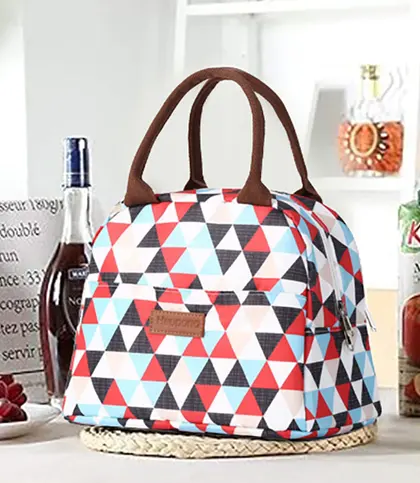
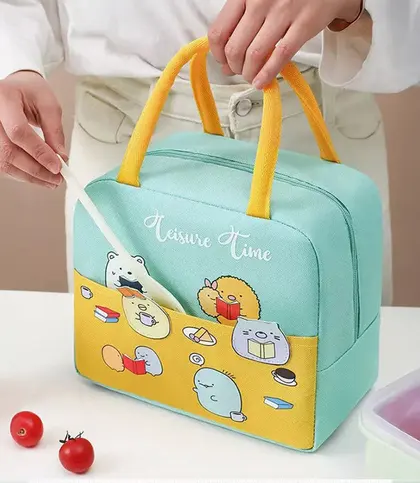
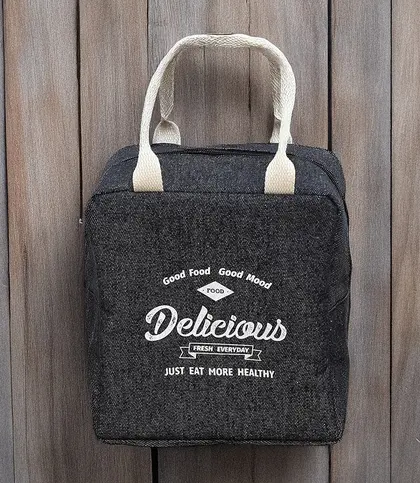
These current lunch bags have catalog dimensions of 28 × 22 × 17 cm, 23 × 29 × 12 cm, and 22 × 23 × 16 cm respectively. Treat those as external component measurements, not verified usable volume, and compare them with your containers, bottle, utensils, and fridge shelf.
The listings identify nylon, Oxford-fabric, and denim constructions. Confirm internal dimensions, insulation, lining, leak resistance, closures, bottle storage, packed weight, and cleaning instructions before deciding whether any one is large enough for your routine.
₹399
₹999
60%OFF
₹284
₹999
72%OFF
 FastDelivery
₹299
₹999
70%OFF

Final Verdict
- Choose the smallest large lunch bag that fits your entire usual load without forcing containers.
- Confirm internal dimensions and opening width before prioritising extra pockets or exterior size.
- Select extra capacity only when it is part of your regular routine, not an occasional possibility.
- A practical bag should be easy to carry, clean, and store as well as roomy enough to pack.
FAQs
How much can a large lunch bag hold?
It varies by the bag’s internal shape, insulation thickness, pockets, and dividers. Many large bags can accommodate a full meal, snacks, a drink, utensils, and an ice pack, but the reliable test is whether your actual packed items fit inside comfortably.
What size lunch bag fits meal containers?
Measure your tallest, widest, and deepest meal containers with their lids on, then compare those measurements with the bag’s internal dimensions. Check that the opening is also wide enough to load and remove the containers easily.
How do I choose a large insulated lunch bag?
Start with your full meal load and container dimensions. Then compare the usable interior, insulation, wipe-clean lining, closure, leak-resistant construction, carrying options, and the space available for storage at home or work.
Do large lunch bags prevent leaks?
A bag with a water-resistant lining, reinforced seams, a secure closure, and a sturdy base may help contain minor spills. However, leak-resistant construction is not the same as a guarantee that every liquid leak will be contained.
Are multiple compartments useful in a lunch bag?
They are useful when they separate snacks, utensils, fruit, or a drink from larger meal containers. They are less useful if they take too much room from the main compartment or add bulk without helping your usual packing routine.
What lunch bag is easiest to clean?
Look for a smooth, water-resistant interior lining that can be wiped clean, along with a wide opening that lets you reach the corners. A design that can be dried thoroughly after cleaning is also more convenient for daily use.
Should a large lunch bag have a shoulder strap?
A shoulder strap is helpful if you walk far, commute on public transport, or carry a heavier packed load. Choose an adjustable, padded strap with secure attachment points; for short carries, reinforced handles may be enough.
Will a large lunch bag fit in a refrigerator?
Do not assume it will. Measure the bag when packed, then compare it with the usable shelf, drawer, or door space in the refrigerator where you plan to keep it. Structured bags generally need more fixed clearance than soft-sided designs.