


Best Hard Anodized Cookware: A Practical Buying Guide
Quick Answer
The best hard-anodized cookware is the piece that matches your cooktop, cooking routine, household size, and willingness to follow care instructions. Check whether it is uncoated or has a separate non-stick layer, confirm induction and oven compatibility, and choose useful sizes rather than buying a large set by default.
Definitions
Hard anodizing
An electrochemical treatment that strengthens and thickens the oxide layer on an aluminium surface. It changes the surface properties of aluminium but does not by itself mean the cookware has a separate non-stick coating.
Uncoated hard-anodized surface
A cooking surface formed by the treated aluminium itself, usually requiring more attention to preheating, oil use, and cleaning than a separate non-stick coating.
Hard-anodized non-stick cookware
Cookware with a hard-anodized aluminium body plus an additional non-stick layer. The coating’s utensil, heat, oven, and dishwasher limits must be checked separately.
Induction-compatible base
A magnetic layer or construction designed to work with an induction cooktop. Hard-anodized aluminium alone is generally not enough to establish induction compatibility.
Base construction
The design and thickness of the cookware’s underside, including any bonded or magnetic plate, which affects heat distribution, stability, and cooktop compatibility.
Best Hard Anodized Cookware: Start With Fit, Not a Universal Winner
There is no single best hard-anodized cookware choice for every kitchen. A tawa for daily rotis, a kadhai for curries, and a saucepan for milk or gravies ask for different shapes, capacities, handles, and heat control. Your cooktop, household size, storage space, and preferred cooking style matter just as much as the material label.
Hard-anodized cookware has an aluminium body with a treated surface. Many cooks consider it for its comparatively manageable weight and everyday usefulness, but performance depends on the pan’s thickness, base design, cooking surface, and care. Do not assume that every hard-anodized pan is non-stick, works on induction, tolerates an oven, or can go in a dishwasher.
- Start by identifying your cooktop and the dishes you make most often.
- Decide whether you want an uncoated treated surface or a separate non-stick coating.
- Choose individual pieces or a set only after checking useful sizes, weight, and storage.
What Hard-Anodized Cookware Is and How It Is Made
Hard anodizing is a controlled electrochemical treatment applied to aluminium. It is not a completely separate cookware material: the pan is still aluminium-based, with an altered surface layer. Product names can be incomplete, so read the full specification for the body material, surface treatment, base construction, and care instructions.
An uncoated hard-anodized pan uses the treated aluminium as its cooking surface. Another product may have a hard-anodized body and an additional non-stick layer on top. These are different formats, and they can have different rules for utensils, heat, cleaning, and storage.
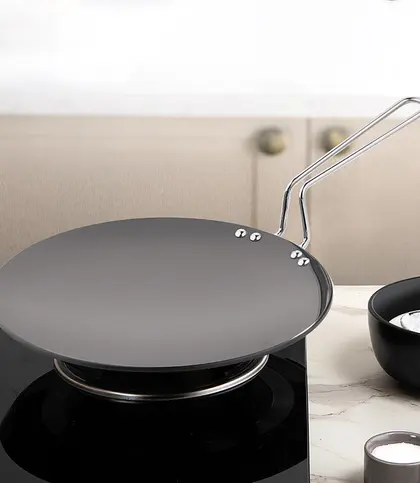
Assess the cooking surface and underside separately. The inner surface determines much of the release and utensil guidance, while the base affects stability and whether the pan is designed for a particular cooktop. A compact tawa such as Bergner Dura Shield Hard Anodised Roti Tawa - 22 cm can be a useful format to inspect for clear material and care information before purchase.
- Look beyond the words “hard anodized” in the product title.
- Find out whether a separate coating is named in the listing.
- Check the base description instead of assuming aluminium will suit every hob.
₹499
₹1,129
56%OFF
Hard-Anodized vs Other Cookware Materials
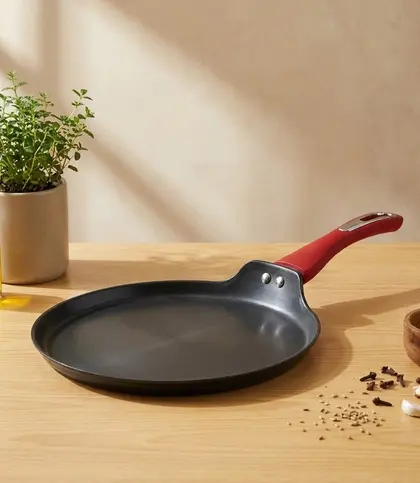
Hard-anodized cookware is best compared by the task you want it to perform, not by a blanket claim that one material is superior. Regular aluminium can be a simpler option, while hard anodizing adds a treated surface; actual feel, heat response, and durability expectations still vary with construction. A forged dosa tawa such as Salford Forged Hard Anodised Dosa Tawa (Black) - 26 CM illustrates why it is worth checking the stated construction as well as the broad material category.
Stainless steel is often chosen by cooks who enjoy browning and are comfortable managing preheating, oil, and temperature. Cast iron retains heat well but is much heavier and has distinct seasoning and maintenance needs. Ceramic-coated and conventional non-stick cookware can offer a different easy-release experience, but their coating instructions deserve close attention.
An uncoated hard-anodized surface should not be treated as equivalent to a conventional non-stick surface. If easy release with minimal oil is your main priority, compare explicitly coated options and their heat and utensil limits rather than relying on a pan’s dark appearance.
- Regular aluminium: often a straightforward, lighter-weight option; evaluate thickness and finish.
- Stainless steel: suited to cooks who prioritise browning and temperature control.
- Cast iron: high heat retention, with considerably more weight and different upkeep.
- Ceramic-coated and conventional non-stick: coating-specific release and care requirements.
- Hard-anodized: a treated aluminium format whose results depend on the individual pan’s construction and surface.
₹1,449
₹2,049
29%OFF
Check Coating, Cooktop, Oven, Utensils, and Heat Limits
Compatibility checks prevent the most frustrating cookware mismatch. For aluminium-based cookware, induction suitability must be stated for the particular product, usually through a magnetic base or other induction-ready construction. Hard anodizing alone does not establish induction compatibility.
Check the maximum oven temperature for the complete product, not just the pan body. A lid, handle, knob, or added coating may have a lower limit. Likewise, do not infer dishwasher suitability from the fact that the pan is metal; follow the brand’s stated washing guidance.
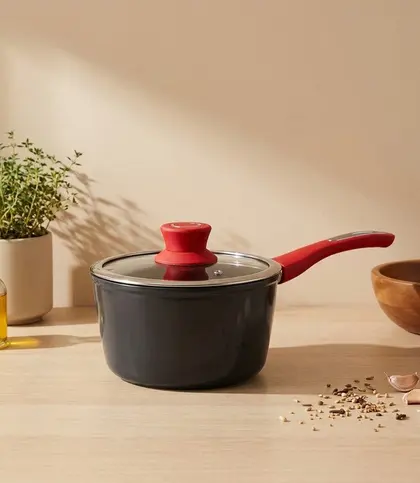
Surface type changes daily care. A hard-anodized saucepan with a separately named non-stick surface and glass lid, such as Salford Forged Non Stick Saucepan with Glass Lid (Black) - 1700 mL, should be treated according to its specific coating, lid, and handle instructions. Use only the permitted utensil materials and avoid treating high heat as a default setting. Steady, controlled heating can help limit scorching, sticking, warping, and unnecessary coating wear.
- Confirm induction compatibility from the product listing or manufacturer instructions.
- Check oven limits for the body, handles, lid, knob, and any coating.
- Follow the most restrictive utensil and cleaning guidance among all components.
- Use heat suited to the food and pan rather than automatically choosing the highest setting.
₹1,749
₹2,439
28%OFF
Choose the Right Sizes and Pieces for Your Kitchen
For one or two people, a small frying pan or tawa, one saucepan, and a versatile kadhai or sauté pan may cover most daily tasks without crowding a compact kitchen. Buying fewer, frequently used pieces is usually more practical than storing a large set with duplicate diameters.
A typical family kitchen may benefit from a medium tawa, frying pan, saucepan, kadhai, and a larger pot selected around the meals made most often. Diameter matters for surface cooking such as rotis or dosas, while litres are more useful for saucepans and pots. Also compare the pan’s cooking area with the burner size.
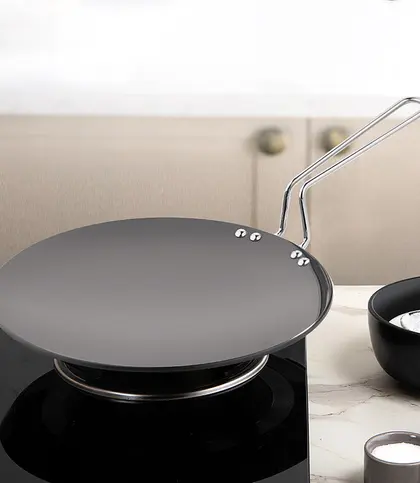
For larger households or batch preparation, assess broad tawas, larger kadhais, stock pots, and pressure cookers by filled weight and storage footprint as well as capacity. A 28 cm handled tawa such as Bergner Dura Shield Hard Anodised Roti Tawa - 28 cm can help illustrate a middle-sized format, but the right diameter is the one that suits your burner and usual batch size.
- Small households: prioritise a compact tawa or frying pan, saucepan, and one deep versatile pan.
- Family cooking: select medium everyday pieces before adding specialist formats.
- Batch cooking: check filled weight, burner coverage, cupboard space, and lid storage.
- Sets offer value only when every included size has a clear purpose in your routine.
Sold Out
₹699
₹1,460
52%OFF
Construction Details That Affect Everyday Use
A pan that looks suitable on a product page may still be awkward in daily use if it is poorly balanced or difficult to lift when full. Consider total weight, handle length, handle attachment, and the clearance between the handle and the flame. If more than one person cooks at home, choose a grip that feels secure and comfortable for the regular user.
Inspect the underside for a flat, stable base and clear information about thickness or any magnetic plate. A flat base supports stable contact with the cooktop, while the right construction may influence how evenly a particular pan heats. These are product-specific details, not guarantees made by the material alone.
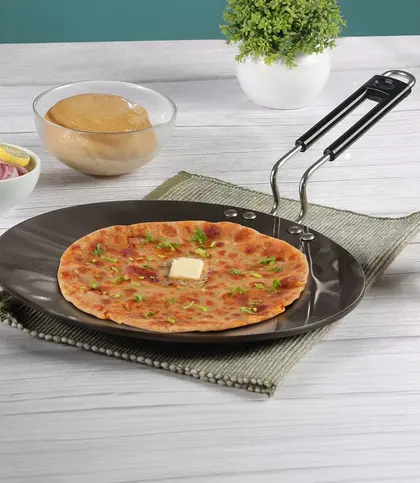
For tawas, compare usable surface diameter, rim profile, handle shape, and how the pan fits your burner. A wider format such as Vinod Anvaya Hard Anodized Roti Tawa - 40 CM may suit larger batches, but it should still feel manageable to lift, wash, and store. For saucepans and kadhais, check capacity, pouring control, lid fit, and the space they occupy in a cabinet.
- Lift the pan mentally as if it were filled, not empty.
- Look for a securely attached handle with practical flame clearance.
- Check that the base is flat and stable for your cooktop.
- Treat a well-fitting lid as useful only if it supports the dishes you actually cook.
- Match tawa width to both your burner and the number of portions you prepare.
₹722
₹1,010
29%OFF
Cleaning, Care, Warranty, and Value Checks
Follow the care instructions supplied for the specific cookware. Depending on the model, this may mean using suitable detergent, avoiding abrasive scouring, letting the pan cool before washing, and drying it thoroughly. Do not assume that prolonged soaking, dishwasher cycles, metal utensils, or very high heat are suitable for every hard-anodized product.
Store cookware carefully. If a pan has a separate coating, avoid unprotected stacking that can mark the surface. Protect handles, rims, and lids from knocks as well, since everyday wear is not limited to the cooking surface.
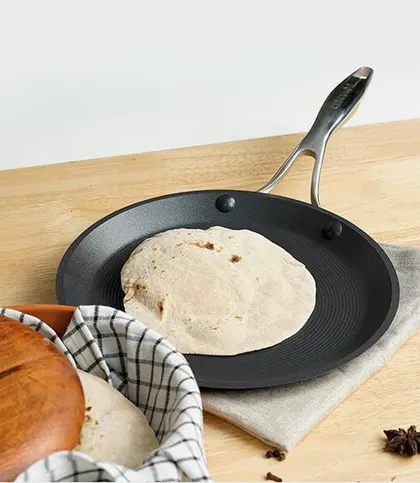
Judge value by usable construction and ownership needs rather than by the number of pieces in a box. Compare capacity, pieces you will genuinely use, lids, stated care requirements, warranty terms, and the process for raising a problem. A specialist format such as Circulon Hard Anodized Dosa Tawa - 24 cm is worth considering only when its size and intended use fit your regular cooking.
- Read warranty coverage and exclusions before buying.
- Keep proof of purchase and the care leaflet where possible.
- Avoid abrasive tools unless the manufacturer expressly permits them.
- Compare useful capacity, construction, lids, and warranty rather than set count alone.
₹2,484
₹3,675
32%OFF
Who Should Choose Hard-Anodized Cookware—and Who Should Consider Another Material?
Hard-anodized cookware can be a good fit for cooks who want aluminium-based cookware for daily meals, prefer a treated surface, and are comfortable following product-specific care guidance. It can also suit households that would rather build a useful collection of individual pieces than commit to a large set.
Consider stainless steel when browning, high-heat versatility, and its distinct maintenance profile are your priorities. Consider conventional non-stick when easy release and low-oil cooking are most important and you accept coating-specific limitations. Cast iron may be a better match when heat retention and heavy-duty searing matter more than weight, while ceramic-coated cookware suits buyers who specifically prefer that coating format and will follow its care limits.
The material label is only a starting point. Choose hard-anodized cookware when the exact surface, base, dimensions, handling, and care requirements align with your kitchen; choose another material when they do not.
- Choose hard-anodized for an aluminium-based everyday pan when the specification suits your routine.
- Choose stainless steel for a different browning and high-heat cooking experience.
- Choose conventional non-stick when easy release is the leading priority.
- Choose cast iron when heat retention matters more than easy handling.
- Choose ceramic-coated cookware only after reviewing its specific care directions.
Final Hard-Anodized Cookware Buying Checklist
Before checking out, use this short list to make sure the cookware will work beyond its first few meals. A verified match between the product details and your household routine matters more than a broad material claim.
- Cooktop compatibility is confirmed, including induction where relevant.
- The cooking surface is clearly identified as uncoated hard anodized or separately non-stick.
- Oven, dishwasher, utensil, and heat limits are checked for the complete product.
- Diameter and capacity match your household size and usual dishes.
- Weight, balance, handles, lids, base stability, and storage have been considered.
- A set contains useful pieces rather than duplicate or rarely used sizes.
- Care instructions, warranty terms, and overall value fit your expectations.
Final Verdict
- Choose hard-anodized cookware when you want aluminium-based cookware for everyday meals and can confirm that the exact surface, base, size, and care requirements suit your kitchen.
- Do not buy solely because a product is labelled hard anodized. Verify whether it has a separate coating, whether it works on your cooktop, and what its lid, handle, heat, utensil, and cleaning limits are.
- Choose another material if your strongest priority is effortless release, assured induction compatibility, high heat retention, very low maintenance, or a different weight and cooking profile.
FAQs
What is hard-anodized cookware, and how is it made?
Hard-anodized cookware starts with aluminium. The aluminium undergoes an electrochemical treatment that alters and thickens its surface oxide layer. It is a surface treatment, not a separate pan material.
Is hard-anodized cookware coated or uncoated?
It can be either. Some cookware uses the treated hard-anodized surface directly, while other products add a separate non-stick coating over a hard-anodized aluminium body. Always check the product description for the exact surface.
Is hard-anodized cookware compatible with induction cooktops?
Not automatically. Aluminium cookware generally needs a magnetic induction-compatible base or another stated induction-ready construction. Confirm compatibility in the individual product specifications.
Can hard-anodized cookware go in the oven or dishwasher?
That depends on the specific pan. Check the stated limits for the body, handle, lid, knob, and any coating. Metal construction alone does not mean a product is oven-safe or dishwasher-safe.
What sizes of hard-anodized cookware suit a family kitchen?
Most family kitchens benefit from a medium tawa, frying pan, saucepan, and kadhai, with a larger pot added for regular batch cooking. Choose diameter for surface cooking and litres for sauces, gravies, and boiling tasks.
How should hard-anodized cookware be cleaned and maintained?
Follow the manufacturer’s instructions. In general, use suitable detergent, avoid abrasive scouring unless permitted, allow the pan to cool if directed, dry it thoroughly, and protect any separate coating from scratches during storage.
Is hard-anodized cookware better than stainless steel or non-stick?
Neither is universally better. Hard-anodized cookware may suit everyday aluminium-based cooking, stainless steel may appeal for browning and high-heat use, and conventional non-stick may be preferred for easy release. The better option depends on your cooking habits and care tolerance.
Who should avoid buying hard-anodized cookware?
It may not be the right first choice for someone who needs confirmed induction compatibility without checking specifications, wants a particular easy-release coated surface, prefers cast iron’s heat retention, or does not want to follow product-specific care instructions.