


Best Dosa Tawa Non Stick: How to Choose One
Quick Answer
The best non-stick dosa tawa is the one that fits your burner, preferred dosa size, and daily handling habits. Start with explicit cooktop compatibility and diameter, then compare coating guidance, base construction, weight, rim shape, handle comfort, and maintenance requirements.
Definitions
Non-stick dosa tawa
A flat dosa-making pan with a non-stick cooking surface designed to help batter spread and release with less sticking when used according to the manufacturer’s instructions.
Diameter
The width of the tawa’s cooking surface or stated pan size, typically used to estimate the dosa size it can accommodate.
Induction-compatible base
A base specifically designed and labelled by the manufacturer for use with induction cooktops; not every aluminium tawa is induction compatible.
Base construction
The material and structure beneath the cooking surface that influence cooktop contact, heat distribution, stability, and resistance to warping.
Rim height
The height of the tawa’s edge. A low rim generally leaves more room for spreading batter, while a raised edge can help contain ingredients but may affect manoeuvrability.
Best Dosa Tawa Non Stick: Start With the Use Case
There is no single best non-stick dosa tawa for every kitchen. The right choice depends on the dosa size you make, your burner or cooktop, how comfortably you can handle the pan, and whether you can follow its stated care guidance.
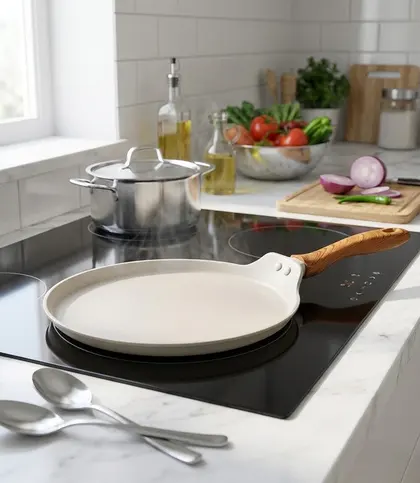
For everyday use, focus on a flat usable surface for spreading, predictable release when used correctly, stable contact with the cooktop, and a handle that feels secure. The Salford Non Stick Dosa Tawa - 28 cm is a useful aluminium reference point for shoppers considering a medium-to-large format, but its current listing should still be checked against your cooktop and household needs.
₹1,549
₹2,149
28%OFF
What Makes a Non-Stick Dosa Tawa Suitable for Everyday Use?
A practical dosa tawa should give you enough clear, flat area to spread batter without the rim getting in the way. Its surface should be easy to clean within the manufacturer’s instructions, and its handle should make lifting, rotating, and storing the pan manageable.
Instead of choosing solely by labels such as budget or premium, compare the specifications that affect your routine. Check the stated diameter, cooktop compatibility, coating instructions, weight, handle design, and available storage space before deciding.
- Choose a diameter that suits the dosas you usually make.
- Look for clear coating, utensil, heat, and cleaning guidance.
- Make sure the pan is comfortable to lift, wash, and store.
- Prioritise explicit product specifications over broad marketing labels.
Choose the Right Diameter for Your Household and Burner
Smaller tawas can suit compact kitchens, smaller burners, and individual portions because they are generally easier to manoeuvre. Medium sizes offer a useful balance for many homes, while larger tawas give more spreading room for bigger dosas but need adequate burner coverage and storage space.
Compare the listed pan diameter with the effective heated area of your burner. A larger tawa is not automatically the better choice if the burner is too small to support consistent cooking across its usable surface. A 28 cm tawa is a helpful medium-to-large reference, but confirm the listed dimensions before purchase.
- Compact household or limited storage: consider a smaller, easier-to-handle diameter.
- Regular family use: look for a diameter that balances usable space with manoeuvrability.
- Large dosas: ensure the burner, counter space, and storage can accommodate the tawa.
Induction or Gas: Check Cooktop Compatibility Before Buying
Gas compatibility and induction compatibility are separate specifications. If you use both cooktops, confirm that the product is explicitly listed for both rather than assuming that suitability for one means suitability for the other.
An aluminium body alone does not establish induction compatibility. Review the manufacturer’s listing for an induction-compatible base, cooktop guidance, and any use restrictions before adding a tawa to your shortlist.
- For induction, look for explicit induction-compatible labelling.
- For gas, check that the base sits stably over your usual burner.
- If your kitchen has both, verify both forms of compatibility.
Compare Coating, Base Construction, Weight, Rim, and Handle
The coating description should be clear, along with the manufacturer’s guidance for utensils, heat, and cleaning. Avoid treating a generic non-stick label as proof of a particular lifespan or performance level; product instructions matter.
Base construction affects how the tawa contacts the cooktop and how stable it feels in use. Review the product description for clear construction and compatibility information rather than inferring performance from the material name alone.
Weight is a personal trade-off. A lighter tawa may be easier to lift and wash, while a heavier one may feel steadier during spreading. A low or gently raised rim can leave more room for the spreading motion, and a secure, well-positioned handle can make everyday use more comfortable.
- Coating: choose a product with clear care and utensil guidance.
- Base: assess stable cooktop contact and stated compatibility.
- Weight: match it to your comfort when lifting and cleaning.
- Rim: inspect images and dimensions for unobstructed spreading space.
- Handle: check grip, attachment, heat clearance, and storage practicality.
A Quick Non-Stick Dosa Tawa Buying Checklist
Use this checklist to narrow your options efficiently. It keeps the decision tied to the features that affect daily dosa making rather than an unsupported product ranking.
- The diameter suits your preferred dosa size and burner.
- Gas, induction, or dual-cooktop compatibility is explicitly listed.
- Coating details and care instructions are available.
- The base appears stable and suitable for the intended cooktop.
- The weight is manageable for spreading, lifting, and cleaning.
- The rim does not obstruct your spreading motion.
- The handle feels secure and is positioned sensibly.
- Warranty or replacement information is clear and suitable for your purchase decision.
Maintenance Practices That Help Preserve the Tawa
Follow the manufacturer’s directions for utensils, heat settings, and cleaning. Non-stick coatings do not all have identical limits, so the instructions supplied for the specific tawa should guide your routine.
Where the care guidance advises it, avoid abrasive cleaning, unnecessary impact, stacking abrasion, and prolonged overheating. Inspect the surface and handle periodically so that damage is noticed before it interferes with use.
- Use only the utensils recommended for that product.
- Clean with the method specified by the manufacturer.
- Store the tawa to reduce avoidable surface abrasion.
- Check the cooking surface, base, and handle from time to time.
When Is It Time to Replace a Non-Stick Dosa Tawa?
Replace a tawa if the cooking surface is peeling, flaking, deeply scratched, or visibly damaged. Significant warping that prevents stable contact with the burner, repeated sticking despite correct use and care, or a loose, cracked, or unstable handle are also practical reasons to stop using it.
Minor cosmetic marks alone do not always require replacement. Assess whether the surface remains intact, the pan stays stable, and the handle remains secure and comfortable to use.
- Visible peeling, flaking, or deep scratches on the cooking surface.
- Warping that causes unstable burner contact or unreliable results.
- Repeated sticking despite appropriate preheating and stated care.
- A loose, cracked, or structurally damaged handle.
Compare tawa options
Check each tawa's listed surface, diameter, care instructions, and hob compatibility. The range includes different materials, so do not assume every item uses the same non-stick coating.
Final Verdict: How to Choose the Best Non-Stick Dosa Tawa
Choose the tawa that first matches your cooktop and preferred dosa size, then select the option you can comfortably handle, care for, and store every day.
Final Verdict
- Filter first by explicit cooktop compatibility and a diameter that suits your burner and household.
- Among the suitable options, choose the tawa with handling and care requirements that fit your daily routine.
FAQs
What size dosa tawa suits my household and burner size?
Choose a size that suits both the dosas you prefer and the effective heated area of your burner. Smaller tawas are easier to handle in compact kitchens, while larger options need sufficient burner coverage and storage space. Check the listed diameter rather than relying only on product images.
Is a non-stick dosa tawa compatible with induction and gas?
Compatibility must be confirmed separately. A tawa may be suitable for gas but not induction, so look for explicit manufacturer labelling for each cooktop you plan to use. Do not assume an aluminium tawa works on induction unless the listing says so.
Which base material helps a dosa tawa heat evenly?
Material alone does not guarantee a particular result. Look for clear information about base construction, stable cooktop contact, and compatibility with your burner or induction surface. A well-matched pan and cooktop are more useful indicators than a material name by itself.
What coating should I look for in a non-stick dosa tawa?
Look for a clearly stated non-stick coating along with specific guidance for heat, utensils, and cleaning. Avoid relying on broad claims about coating lifespan or performance when the product instructions do not provide that information.
How do weight and handle design affect dosa making?
A lighter tawa can be easier to lift, rotate, wash, and store, while a heavier one may feel more stable. Choose the balance that is comfortable for you. Check that the handle has a secure attachment, comfortable grip, sensible heat clearance, and practical storage profile.
Can I use metal utensils on a non-stick dosa tawa?
Use metal utensils only if the manufacturer’s instructions explicitly permit them. Otherwise, follow the supplied utensil guidance to help preserve the cooking surface.
How should I maintain a non-stick dosa tawa?
Follow the product’s instructions for heating, utensils, cleaning, and storage. If advised, avoid abrasive cleaning, harsh contact with other cookware, and prolonged overheating. Inspect the surface and handle periodically for visible wear or damage.
When should I replace a damaged non-stick dosa tawa?
Replace it if the surface is peeling, flaking, deeply scratched, or otherwise visibly damaged; if the base is significantly warped; if food repeatedly sticks despite correct use; or if the handle is loose, cracked, or unstable. Minor cosmetic marks alone are not always a reason to replace it.