


Best Diya for Pooja: How to Choose by Use and Material
Quick Answer
There is no single best diya for every pooja. For many regular home-pooja routines, a stable small-to-medium brass diya is a practical reusable choice. Clay or terracotta diyas can suit occasional pooja or an earthen-material preference. Before choosing, consider prayer duration, oil capacity, wick arrangement, base stability, cleaning needs and safe placement.
Definitions
Diya
A small oil lamp designed to hold oil or ghee and a wick for producing a flame.
Oil capacity
The amount of oil a diya can hold. A larger reservoir may support a longer prayer session, but actual burn time also depends on wick size, oil type, airflow and flame level.
Wick capacity
The number and arrangement of wick positions a diya is designed to accommodate.
Base stability
How securely a diya sits on its surface without rocking, tipping or allowing the flame to move dangerously close to nearby objects.
Occasional pooja
Pooja performed less frequently than a regular daily routine, where a clay, terracotta or decorative diya may be suitable depending on handling and storage needs.
Best Diya for Pooja: The Right Choice Depends on Use
A brass diya is often a practical option for regular home pooja because it is reusable and generally handles routine use well, but it is not automatically the best choice for every household. A clay or terracotta diya may be more suitable for occasional pooja or for those who prefer an earthen material.
Choose by how long the diya needs to stay lit, the amount of oil it can safely hold, the number of wick positions you need, how steadily it sits and how much cleaning you are comfortable doing. Placement matters just as much as material: the diya should fit safely in its intended pooja area.
- For regular use, prioritise a reusable material and easy cleaning.
- For occasional use, consider whether careful storage and gentler handling suit your routine.
- Check the actual product details for dimensions, reservoir design and care guidance before buying.
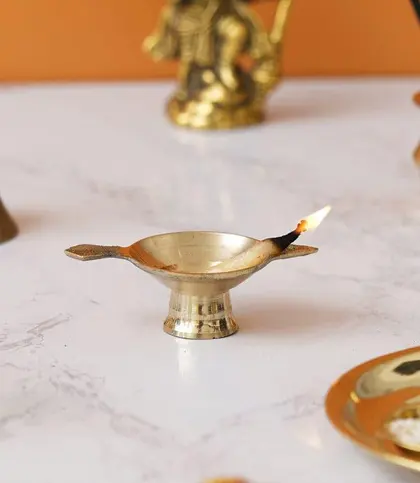
₹149
₹499
70%OFF
Quick Picks by Pooja Use
Start with your routine rather than appearance. A compact, stable diya can be a better everyday choice than a larger decorative design if your pooja shelf has limited space or your prayer is brief.
- Daily pooja: Choose a small or medium brass diya with a stable base and a reservoir appropriate for your usual prayer duration.
- Occasional pooja: A clay or terracotta diya can be a fitting earthen option when limited reuse and careful storage are acceptable.
- Short prayer: A compact diya with modest oil capacity is often easier to position and handle safely.
- Longer prayer: Look for a larger, stable oil lamp with practical wick access and adequate surrounding clearance.
- Traditional decorative setup: Consider a brass design or paired set only after checking its stability and the ease of reaching the wick and reservoir.
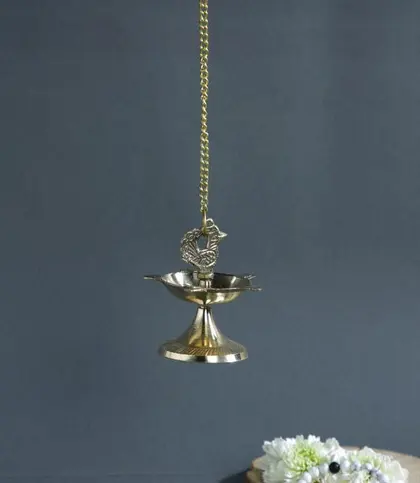
₹349
₹1,999
83%OFF
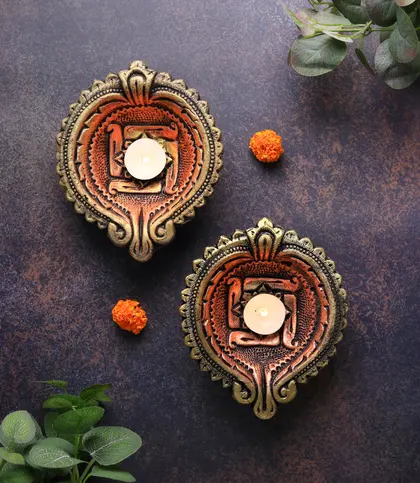
₹494
₹900
45%OFF
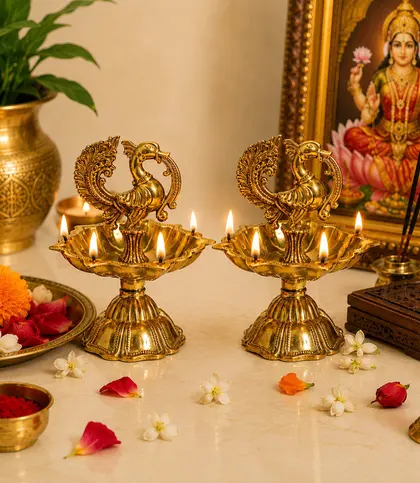
₹749
₹1,199
38%OFF
Brass, Clay, and Other Diya Materials Compared
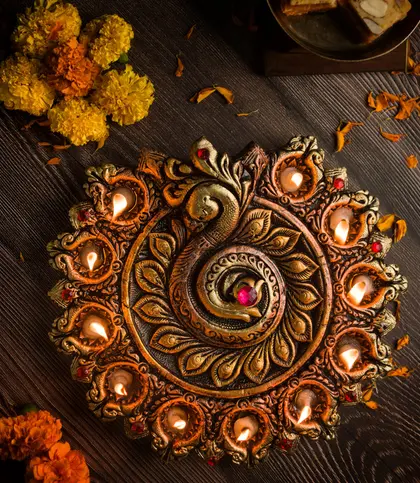
Brass is generally reusable, durable for regular handling and straightforward to incorporate into a daily routine. It does, however, need cleaning to remove oil residue and manage discolouration over time. Clay and terracotta offer an earthen alternative that can work particularly well for occasional use, though individual pieces may be porous or more fragile and should be stored with care.
Ceramic diyas can come in varied shapes and finishes, but a ceramic vessel should be used as an oil lamp only when it is designed and described for that purpose. Check that it has a level base and is suitable for heat. Stone can feel substantial and stable, yet it may be heavy to move and more difficult to clean when it has intricate details.
- Material is only one factor; the reservoir shape, wick opening and base design are equally important.
- Choose brass when reusability and routine maintenance appeal to you.
- Choose clay or terracotta when an earthen option and more careful handling fit your needs.
- Inspect detailed designs closely, as oil can collect in hard-to-reach areas.
₹903
₹1,700
47%OFF
Choose Diya Size and Oil Capacity by Prayer Duration
Small diyas are useful for short prayers, compact pooja shelves and spaces where flame clearance is limited. A medium diya is often a versatile option for regular home use, provided its actual reservoir suits your routine. Larger lamps may be appropriate for longer sessions or a dedicated pooja area with ample clear space.
Do not estimate burn duration from a diya’s outside size alone. Oil capacity, wick thickness, oil type, airflow and flame height all affect how long it burns. Follow the maker’s guidance where it is available, avoid overfilling and leave enough room to lift the diya without spilling oil.
- Small: best suited to short prayers and limited shelf space.
- Medium: a practical general-purpose size for many routines.
- Large: consider only with a stable base and adequate clearance around the flame.
- Prioritise stated specifications over visual assumptions about capacity.
Check Wick Capacity, Base Stability, and Flame Safety
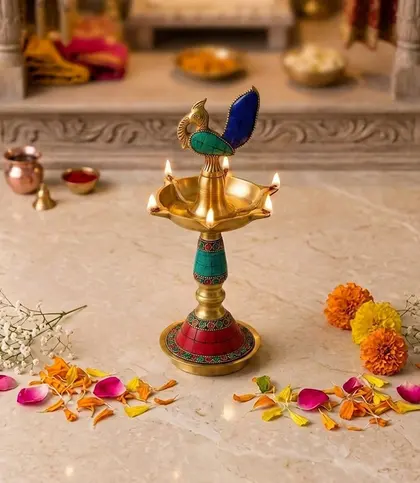
A one-wick arrangement is often the simplest way to manage a short, controlled flame. Multi-wick designs can suit households that want more than one wick position, but more wicks do not automatically make a diya better. The reservoir, wick spacing and clear area around the diya must safely support the arrangement.
Before using any diya, place it on a firm, level, heat-resistant and non-flammable surface. A broad base that does not rock is essential. Keep the flame away from curtains, paper, loose fabric, wooden edges, children, pets and draughts, and never leave a lit diya unattended.
- Test the diya for rocking before filling it with oil.
- Use a tray or designated non-flammable surface where appropriate.
- Make sure the wick is secure and oil has not spilled around the reservoir.
- Allow the diya to cool fully before moving or cleaning it.
₹2,899
₹4,699
38%OFF
Daily or Occasional Pooja: Which Material Fits Better?
For daily pooja, brass is a strong practical candidate when you want a reusable diya and are comfortable with routine cleaning. Its suitability still depends on the individual diya’s base, reservoir and finish. For occasional pooja, clay or terracotta can work well when you prefer an earthen diya and can protect it from moisture, knocks and residue during storage.
If your routine is short or your shelf is compact, a smaller stable design is often more useful than an ornate, oversized lamp. For longer sessions, focus first on reservoir size, safe wick access and placement rather than decorative detailing.
- Daily routine: favour reusability, stable handling and manageable cleaning.
- Occasional routine: favour an earthen option only if it can be dried and stored safely.
- Longer use: select for capacity and stability before appearance.
Cleaning, Maintenance, and Storage by Material
Let every diya cool before cleaning. For brass, remove remaining oil and wick material, wipe away residue and use a suitable brass-cleaning method when needed. Dry it thoroughly before putting it away. Regular, gentle cleaning is usually easier than allowing oil residue to build up.
For clay and terracotta, remove residue gently and avoid soaking unless product guidance permits it. Inspect before reuse for cracks, weakened areas or oil seepage. Ceramic and stone pieces should be cleaned according to their finish and checked for chips, cracks or trapped oil in detailed areas.
- Store diyas completely dry and protected from moisture.
- Keep them away from heavy objects and places where they may be knocked over.
- Do not reuse a diya that is cracked, unstable or visibly damaged around the reservoir.
- Replace used wick material rather than leaving oily residue in storage.
Diya Placement Checklist for Home Pooja
A suitable diya still needs a suitable location. Decide where it will be lit, extinguished, refilled and cleaned before bringing it into your regular pooja routine.
- Use a level, heat-resistant, non-flammable surface in a designated area.
- Keep the flame clear of fabrics, paper, hanging decorations, wood edges and moving air.
- Place the diya where it cannot be knocked by people, pets or doors.
- Ensure it can be reached safely without stretching over the flame.
- Before lighting, confirm that the base is steady, the wick is secure and no oil has spilled.
A Simple Diya-Buying Checklist
Use this checklist to compare options efficiently. A diya that suits your home is one that matches your routine and can be placed, used and maintained safely.
- Material: Brass suits reusable daily handling; clay or terracotta can suit an occasional earthen option; consider ceramic or stone only when their lamp design, stability and care needs fit your space.
- Size: Choose small for short prayers or compact shelves, medium for general use and large only when clearance permits.
- Oil capacity: Match it to your expected duration and verify specifications where available.
- Wicks: Choose one or multiple wick positions according to your household routine and the diya’s intended design.
- Base: Avoid any diya with an uneven underside, rocking base or flame position too close to the edge.
- Care: Consider whether you can clean brass regularly or store clay fully dry and protected.
- Safety: Confirm a clear, stable, heat-resistant placement area before purchase.
Final Recommendation: Choose by Routine, Not by Material Alone
For many regular home-pooja routines, a small-to-medium brass diya with a stable base is the practical default: it is reusable and can be maintained with regular cleaning. For occasional pooja, a clay or terracotta diya is a suitable alternative when you prefer an earthen material and can handle and store it carefully.
A larger brass oil lamp may suit a longer session or dedicated pooja space, but only when its reservoir, wick design, base stability and surrounding clearance are appropriate. Verify the product’s actual dimensions, capacity, care instructions and intended lamp design before making your final choice.
- Choose brass for a reusable daily-use option when routine care is acceptable.
- Choose clay or terracotta for occasional use when careful storage is practical.
- Choose larger or multi-wick designs only when your placement and routine can support them safely.
Browse diyas for your pooja setup
Compare materials, dimensions, stability, and care instructions against your pooja setup. Follow each product's safe-use guidance and keep flames clear of nearby decorations.

Final Verdict
- There is no universal best diya for pooja; the right option depends on your routine, duration, maintenance preference and available space.
- A stable small-to-medium brass diya is a practical choice for many daily home-pooja routines.
- Clay or terracotta is a suitable occasional-use option for readers who prefer an earthen diya and can store it carefully.
- For longer sessions, prioritise verified reservoir capacity, wick access, stability and safe clearance over ornamental detail.
FAQs
Which diya material is best for daily pooja?
For many households, brass is a practical daily-use choice because it is reusable and generally suited to regular handling. Choose a stable design and be prepared to wipe away oil residue and clean it as needed.
Is a brass or clay diya better for home pooja?
Neither is universally better. Brass often suits regular reuse and cleaning, while clay or terracotta can suit occasional pooja and readers who prefer an earthen material. Your storage, handling and placement needs should guide the choice.
What diya size is suitable for regular pooja?
A small or medium diya is often suitable for regular pooja, depending on the available shelf space and expected duration. Check the reservoir dimensions instead of relying only on the diya’s overall appearance.
How much oil should a pooja diya hold?
Choose capacity based on your usual prayer duration, then follow the maker’s filling guidance. Do not overfill; wick size, oil type, airflow and flame height all affect how quickly the oil is used.
How many wicks should a diya have?
Choose the wick arrangement that suits your household practice and the diya’s design. A single wick is simple for a controlled flame, while multi-wick designs require sufficient reservoir space, wick spacing and clear placement around the lamp.
How do I keep a diya stable and safe?
Use it on a level, firm, heat-resistant and non-flammable surface. Check that the base does not rock, keep it away from fabric and paper, clean up spilled oil and never leave a lit diya unattended.
How do I clean and store a diya?
Allow it to cool, remove remaining oil and wick material, then clean according to its material and finish. Dry it completely before storing it in a protected place. Do not reuse a diya that is cracked, chipped or unstable.
Where should I place a diya during pooja?
Place it in a designated area on a level, heat-resistant, non-flammable surface. Keep clear space around the flame and avoid curtains, loose fabric, paper, wooden edges, pets, children and high-traffic paths.